Chatham County Georgia Savannah St. Patrick’s Day Festival

Every March, Savannah changes color. The fountains in the squares go emerald, the shop windows follow, and by the time the parade steps off, downtown has the feel of a city that has been waiting all year for this particular morning. The Savannah Saint Patrick’s Day celebration is not a single staged event so much as a season that Chatham County lives through together — a stretch of days when the county seat of Savannah becomes one long front porch.
Chatham County covers 632 square miles of coastal Georgia and is home to 295,291 people. It was founded in 1777 and named for William Pitt. Savannah is its county seat, and each spring the city’s historic squares, riverfront streets, and neighborhood corners fill with marching bands, pipe and drum corps, families in green, and visitors who plan their year around this weekend.
What sets the Savannah observance apart is how ordinary and how enormous it feels at the same time. Locals stake out sidewalk spots with folding chairs before dawn. Children ride on shoulders. Churches hold services, restaurants stretch their hours, and the parade moves at its own unhurried pace, because in Savannah nothing rushes — not even a procession of thousands.

The Chatham County Basics Behind Savannah’s Irish Weekend
| Town | Savannah |
| County | Chatham County, Georgia |
| County seat | Savannah |
| Population | 295,291 (Chatham County) |
| Region | Coastal Georgia |
| Typical timing | March, centered on St. Patrick’s Day |
| Admission | Watching the parade is typically free; some private events are ticketed |
| Setting | Downtown Savannah’s historic squares and riverfront streets |
| Features | Parade, green fountains, marching bands, Irish music, food and family activities |
| Organizer | A long-standing volunteer parade committee with local civic and church groups |
Those numbers describe the county. The feeling of the weekend is harder to tabulate, and it is the reason people come back year after year.
From Port City Arrivals to a Savannah Tradition
Savannah’s Irish story begins with the water. As a port city, Savannah drew generations of immigrants who stepped off ships and settled in the blocks closest to the river, finding work on the docks, in the warehouses, and in the trades that kept a busy harbor moving. Those neighborhoods became the heart of Irish Savannah, and the traditions they carried — faith, family, music, and a stubborn love of a good gathering — took root there.
The earliest observances were modest and deeply religious: Mass, quiet remembrances, and small gatherings organized by church congregations and benevolent societies that looked after newly arrived families. Over time those small gatherings grew into a procession, and the procession grew into an event that pulled in the whole city. By the twentieth century, marching had become a family inheritance. Grandparents walked the route, parents walked it, and now their children march in the same green jackets and carry the same banners.
What survives today is a celebration shaped less by spectacle than by continuity. The Savannah Saint Patrick’s Day observance is one of the South’s signature spring events, but it still belongs to the parishes, the neighborhoods, and the volunteers who show up to organize it every year without much fanfare. That mix — big enough to draw crowds from across the country, small enough that half the parade seems to know the other half — is what makes it distinctively Chatham County.
What a Savannah St. Patrick’s Day Weekend Feels Like
Expect green everywhere, long stretches of standing, and a schedule that rewards anyone willing to start early and wander. Downtown Savannah is compact and walkable, so most of the day happens on foot, between squares, along the parade route, and in the spaces where the crowds spill over afterward.
Food and Drink Along the Savannah Parade Route
Savannah takes eating seriously on any day, and this one is no exception. Downtown restaurants open early and stay busy, serving everything from a full Southern breakfast to corned beef and cabbage plates that sell out by mid-afternoon. Pubs near the riverfront and around the historic district pour pints from morning onward, and food trucks and pop-up stands appear along the busiest blocks. If you want a table rather than a paper plate, make a reservation well ahead or plan to eat at off-peak hours. Locals will tell you the same thing every year: eat before you are hungry, because at noon the lines are long and the sidewalks are full.
Pipes, Bands, and Music All Weekend
The sound of the weekend is unmistakable — bagpipes tuning up two blocks away, drums echoing off brick, and marching bands trading tunes as they pass. Pipe and drum corps are the emotional center of the parade, and the moment they turn a corner is usually when the crowd goes quiet. Beyond the route, live music runs all weekend in pubs, on patios, and in squares, ranging from traditional Irish sessions to rock and Americana. Many venues host music through the evening, so the celebration does not end when the last band marches past.
Family Activities for Chatham County Kids
This is a family day as much as anything else. Parents push strollers along the route, grandparents claim shade under the live oaks, and children collect beads, stickers, and small trinkets handed out along the way. Green face paint, shamrock balloons, and the dyed fountains are reliable favorites. If your group includes young children, aim for a spot near the beginning of the route, arrive early, and plan an exit before the final bands pass — the crowds thin quickly once the parade ends, and a quiet afternoon in one of the squares is a fine way to finish the day.
Planning a March Trip to Savannah and Chatham County
March is one of the busiest months of the year in Savannah, so a little preparation goes a long way. Book early, walk as much as possible, and treat the day as a marathon rather than a sprint.
Getting to Savannah
Savannah sits on the Georgia coast, within easy reach of Interstate 95 and Interstate 16, which makes it a straightforward drive from much of the Southeast. The city also has a commercial airport with connections to major hubs. If you are coming for the weekend, arriving a day early is worth the extra night — traffic into downtown tightens considerably the closer you get to parade morning.
Where to Stay in Chatham County
Downtown hotels, inns, and short-term rentals put you within walking distance of the route, which is the single biggest convenience of the weekend. Those rooms go first, often months in advance. If downtown is full, look along the corridors leading into the city or in surrounding Chatham County communities, then plan to arrive by rideshare, shuttle, or an early drive. Staying a little farther out costs less and usually means less noise at night.
Parking and Getting Around Downtown
Parking downtown on parade day is limited, and several streets close to traffic, so driving in and circling is the least enjoyable option. Use the city’s parking garages if you must drive, arrive before the morning rush, and expect to pay event-day rates. Rideshare drop-offs happen on the edges of the closed zone, which means a walk of several blocks. Once you are downtown, your feet are the best transportation you have.
Admission and What a Day Costs
Watching the parade is typically free. Your real costs are food, drinks, parking, and lodging, and those rise sharply on this particular weekend. Budget-minded visitors do well with a cooler-free plan: grab breakfast early, carry a refillable water bottle, and eat at a neighborhood spot a few blocks off the main route where prices and waits are gentler. Some private events, seated dinners, and ticketed gatherings exist around the weekend, but the core celebration remains open to anyone standing on a sidewalk.
March Weather on the Georgia Coast
Coastal Georgia in March is mild but changeable. Mornings can be cool and breezy, afternoons warm, and a passing shower is always possible. Layers are the smart play: a light jacket you can shed, comfortable broken-in shoes for hours of standing, sunscreen, and a compact rain poncho that fits in a bag. A hat helps more than you would expect, both for sun and for the occasional drizzle.
A Sample Friday-to-Sunday St. Patrick’s Weekend in Savannah
Friday. Arrive by mid-afternoon, check in, and walk the historic district to get your bearings. Note where the crowds are gathering and where the route runs. Have an early dinner downtown, then find a pub with live music and turn in reasonably early — tomorrow starts before sunrise for the serious parade-goers.
Saturday. Breakfast by seven, on the route by eight. Claim a spot with a view of a corner, where bands slow down and pipes echo. Watch the parade from start to finish if you can, then wander toward the riverfront for food and music. Take an afternoon break at your hotel — the day is long — and head back out in the evening for dinner and a session somewhere with fiddles.
Sunday. A slower morning: coffee in a square, a walk past the green fountains, and a visit to one of the historic churches or house museums. Brunch, a last stroll along the water, and an early departure ahead of the traffic. If you have an extra day, use it for the coast.
Savannah, Tybee Island, and Nearby Spring Celebrations Compared
Savannah’s celebration is the big, traditional, downtown parade — formal in its organization, deeply rooted in parish and neighborhood life, and best experienced on foot in the historic district. Tybee Island, also in Chatham County, offers a looser, beach-side version of the same holiday spirit, with the ocean as a backdrop and far less standing room pressure. It suits travelers who want the green without the crush.
Charleston, South Carolina, a short drive up the coast, runs its own St. Patrick’s Day events with a similar Lowcountry feel but a different crowd and a different downtown to navigate. Beaufort, South Carolina, is smaller and quieter still, with a compact historic district that makes for an easy, unhurried weekend. The honest comparison is this: Savannah is the largest and most immersive of the group, Tybee is the most relaxed, and the South Carolina towns are the most low-key. Many visitors combine two of them in a single trip.
Savannah St. Patrick’s Day Prep Checklist for Chatham County Visitors
| Book lodging early | Downtown rooms near the route sell out months ahead |
| Plan to walk | Comfortable shoes matter more than anything else you pack |
| Layer your clothing | Cool mornings, warm afternoons, possible showers |
| Arrive before the crowds | Early arrival means better views and easier parking |
| Carry water and cash | Long lines and small vendors are part of the day |
| Charge your phone | You will take more photos than you expect |
| Agree on a meeting point | Cell service gets congested in large crowds |
| Respect the route and residents | Stay clear of barricades and private property |
Beyond the Parade: The Rest of Chatham County
The weekend does not have to end when the marching does. Savannah’s historic district rewards slow wandering — the squares, the cobblestones along the river, the house museums, and the cemeteries that draw history lovers from everywhere. A short drive gets you to Tybee Island and its beaches, where the pace drops immediately and the seafood is worth the trip.
Outside the city, Chatham County opens into marshland, tidal creeks, and quiet roads that feel a world away from the parade crowd. Birding, kayaking, and simple scenic drives are all within reach, and spring is one of the best times to enjoy them. If you have an extra half-day, spend it on the water or under the oaks rather than in another crowded bar.
What This Weekend Means to Chatham County
For all its size, the Savannah Saint Patrick’s Day celebration is still a community event at heart. It is funded by volunteer hours, organized by people who have done it for decades, and staffed by neighbors who take the day off work to hand out water, direct traffic, or march with a group that means something to them.
That is why the weekend matters beyond tourism. It is a shared calendar date in a county of 295,291 people, one that pulls together old Savannah families, newcomers, students, and visitors in the same few blocks. The parade is a performance, but it is also a reunion. That combination — pride without pretension — is the thing visitors remember long after the green dye has washed out of the fountains.
Where the Savannah Celebration Centers
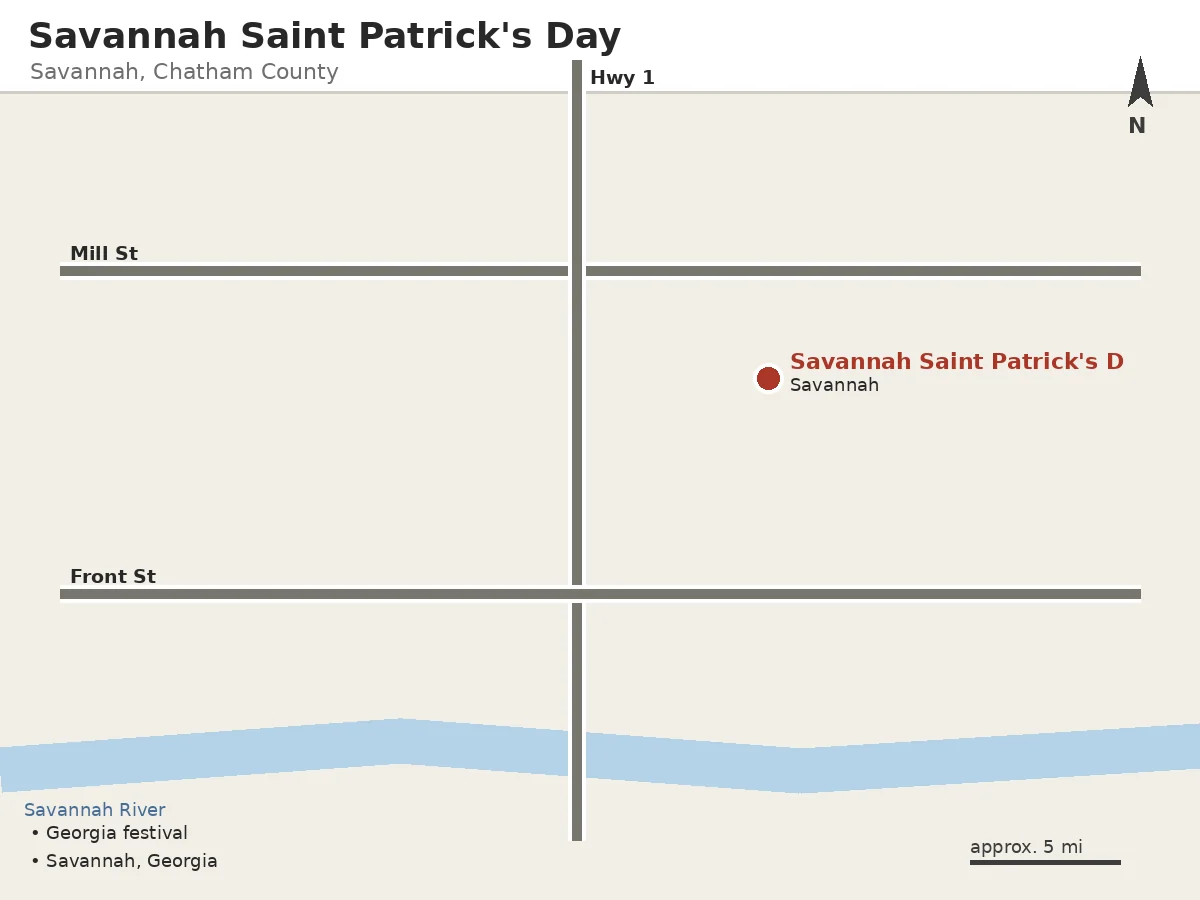
The Savannah Saint Patrick’s Day celebration centers on downtown Savannah, the Chatham County seat, with the parade moving through the historic district’s squares and streets near the Savannah River.
Savannah St. Patrick’s Day: Answers for First-Time Visitors
When is the Savannah St. Patrick’s Day celebration held?
It takes place each March, centered on St. Patrick’s Day itself. Because the holiday can fall on a weekday, the largest gatherings sometimes shift to the nearest weekend, so check the current year’s schedule before you book travel.
Do I need a ticket to watch the parade?
No. Watching from the sidewalks is typically free. Some private events, seated dinners, and ticketed gatherings take place around the same weekend, but the parade itself is open to the public.
How early should I arrive for a good spot?
Seriously early. Locals claim sidewalk space well before the parade begins, and the best corners — where bands turn and pipes echo — fill first. If you want to sit, bring a folding chair and arrive with the sunrise crowd.
Is the weekend suitable for young children?
Yes, and families are everywhere along the route. Plan for noise, bring ear protection for very small children, keep a firm hand in crowds, and choose a spot near the start of the route so you can leave before the final crush.
What should I wear?
Green, if you like, but comfort matters more. Coastal Georgia in March swings between cool mornings and warm afternoons, so dress in layers, wear shoes you can stand in for hours, and bring a light rain layer just in case.
Is parking really as difficult as people say?
On parade day, yes. Many downtown streets close, garages fill early, and rates rise. Rideshare, shuttles, and walking are the better options, and anyone driving should arrive well before the morning rush.
What happens if it rains?
March showers are common and rarely cancel anything. Bring a poncho rather than an umbrella — umbrellas block the view for everyone behind you — and expect the pubs to be even busier than usual.
Are there events beyond the parade itself?
Plenty. Live music, church services, family activities, and food and drink specials run across the weekend, and the dyed fountains and decorated squares give the whole historic district a festive feel for days.
The Next Chapter for Savannah’s March Tradition
The celebration keeps evolving while holding onto what made it work in the first place. Organizers continue to balance growing crowds with the comfort of residents, and the weekend increasingly stretches beyond a single parade day into a broader spring season for downtown Savannah. Visitors should expect the same core experience — early mornings, green fountains, pipes on brick streets, and a county that turns out in force — with more attention paid each year to crowd flow, accessibility, and keeping the historic district livable for the people who call it home.
Last updated: October 2026
If you go, go early, go on foot, and go ready to talk to strangers — that is the Savannah way, and on this weekend it is also the whole point. The parade will pass, the dye will fade from the fountains, and Chatham County will quietly return to its usual rhythm, already thinking about next March.



One Comment