Chase County Kansas Flint Hills Rodeo Festival
Each year, as May gives way to June, Chase County turns its attention to an arena on the edge of Strong City and a rodeo that the published record calls the Flint Hills Rodeo. The sheet title for this article adds the word Festival, yet no layer consulted prints that longer form; the organiser’s own site uses Flint Hills Rodeo, and its descriptive text offers Flint Hills PRCA Rodeo. Whatever the name on the page, the gathering itself is thoroughly documented: three days of professional competition, an arena built for roughly six thousand spectators, and a parade that begins in one town and finishes its winding route through another. The twenty twenty-six edition carries an eighty-eighth annual billing on the organiser’s site, with performances set for May twenty-eight through thirty. Visitors find a working professional rodeo rather than a fairground sideshow, sanctioned within the Prairie Circuit and presented by the rodeo’s own organisation. This article gathers what the credible layers agree on, flags where they part company, and leaves their disagreements standing exactly where the record leaves them.
About
The Flint Hills Rodeo is a professional rodeo staged at the Flint Hills Rodeo Arena beside Highway 50 in Strong City, Kansas. Strong City sits inside Chase County, although the county seat is Cottonwood Falls, the community a short drive north where the rodeo parade assembles. That two-town geography shapes the whole weekend: the competition stays at the arena, while the celebration spills along the road between the two places.
Responsibility for the event sits with the rodeo’s own organisation, which publishes the official site and the edition details quoted throughout the record. A separate venue layer names the operator as the Flint Hills Rodeo Association. Those two descriptions are left side by side here rather than merged, because the layers themselves never reconcile them into a single form.
On the organiser’s site the event also appears under the fuller descriptive style Flint Hills PRCA Rodeo, the initials marking its sanctioning by the Professional Rodeo Cowboys Association. No source read for this article attaches the word Festival to either form, so readers searching under that longer name should know the trail leads to the same arena, the same weekend, and the same three days of riding.
Quick Facts
| Fact | Detail |
| Published name | Flint Hills Rodeo, also styled Flint Hills PRCA Rodeo |
| Host town | Strong City, Kansas |
| County seat | Cottonwood Falls, a separate town |
| Venue | Flint Hills Rodeo Arena on Highway 50 |
| Twenty twenty-six dates | May twenty-eight to thirty |
| Edition billing | Eighty-eighth annual, per the organiser |
| Arena capacity | Approximately six thousand spectators |
| Programme | Eight professional rodeo events plus a parade |
| Admission | Ticketed; the organiser prints no gate price |
History
The deepest disagreement in this rodeo’s record concerns the year it began, and the honest answer is that the layers give two different starting points. The organiser’s own site declares the rodeo was established in nineteen thirty-seven, and that claim anchors the official presentation of the event. One ticket-resale platform, working from its own material, states instead that the rodeo was established in nineteen thirty-four. A further resale account reaches behind both dates and describes informal pasture rodeos held near Strong City during the nineteen thirties as the gathering’s origin. None of these accounts is adopted here over the others; the nineteen thirty-seven and nineteen thirty-four claims stand unmerged, and the conflict remains open for any reader who goes looking.
For a useful comparison, see the Chase County Kansas Music Festival for another county festival.
What the organiser’s site adds around its chosen date is a picture of continuity. It presents the Flint Hills Rodeo as the oldest consecutive rodeo in the state of Kansas, a distinction the site states plainly as its own claim. The same source places the event inside the Professional Rodeo Cowboys Association’s Prairie Circuit, tying the Strong City weekend to the sanctioned professional circuit rather than to unsanctioned exhibition riding. The twenty twenty-six edition is billed on that site as the eighty-eighth annual running. That billing is reproduced here exactly as a billing; arithmetic on annual numbers is a fragile way to date anything, and no founding year in this article rests on counting backwards from it.
The resale layers also carry one description that the organiser’s record flatly contradicts. A platform summary claims the event typically runs for four days in late July. The organiser’s own pattern is three days at the end of May or the beginning of June, and the dated editions in the credible record follow that pattern, so the late July description is set aside as resale content rather than treated as a rival account of the calendar.
What to Expect
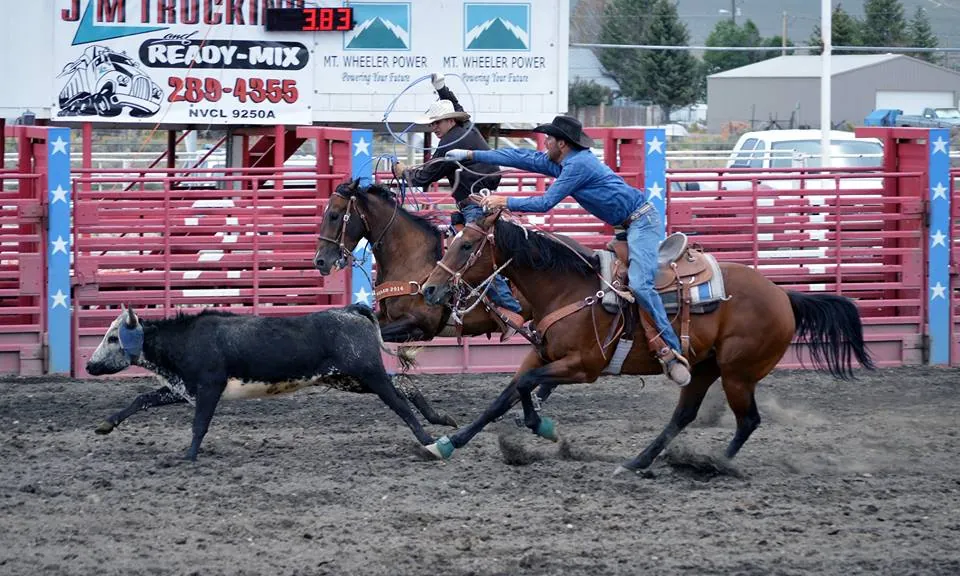
Eight contests make up the arena card, and together they cover the recognised professional programme. Riders open on bareback horses in bareback riding, then the timed events take over: tie-down roping, steer wrestling and team roping against the clock. Barrel racing brings the horses around the pattern at speed, and women’s breakaway roping adds another timed contest that has become a fixture of modern professional cards. Saddle bronc riding returns the focus to the roughstock, and bull riding closes the bill with the event most casual visitors wait all evening to watch. The arena holds approximately six thousand spectators, so a well-attended performance fills a substantial grandstand rather than a small-town bleacher row.
The weekend is not confined to the arena fence. On the Saturday of rodeo weekend the annual parade sets out at two in the afternoon from Swope Park in Cottonwood Falls, then winds its way through both Cottonwood Falls and Strong City. That route gives the county seat its own starring hour inside a weekend whose competition belongs to its neighbour, and it means spectators who only attend the evening performances miss half the occasion’s character. Across three days, then, the rhythm alternates between afternoon celebration in the streets and arena competition at the grounds outside Strong City.
Planning Your Visit
Three separate date pictures circulate for this rodeo, and sorting them out is the first job of any trip plan. The organiser’s own site fixes the twenty twenty-six edition at May twenty-eight to thirty. Ticket platforms already list a twenty twenty-seven running for June three to five at the same arena, but a platform listing is an advance placeholder rather than an organiser announcement, and it should be treated that way until the rodeo itself confirms the weekend. A state festival guide adds a third picture, showing May twenty-seven to twenty-nine with an asterisk warning that those dates are unconfirmed; the guide entry’s year is not pinned down, so it cannot be used to settle either of the other two.
Admission works by ticket, and the organiser’s own pages state no gate price for the editions in the record. Resale platforms quote twenty twenty-seven tickets from around fifty-one dollars, and that figure belongs strictly to the resale market: it is neither the rodeo’s price nor a promise of what a ticket bought through official channels will cost. Anyone budgeting for the trip should hold the ticket line open until official sales information appears, and should be wary of any page that presents resale figures as the event’s own tariff. Arriving for the Saturday parade means reaching Cottonwood Falls before two in the afternoon, and drivers should allow unhurried time for the short road between the two towns on a weekend when both are busy.
A Sample Weekend Itinerary
**Friday** — Arrive in Chase County during the afternoon, settle into your base in either town, and head to the arena outside Strong City for the opening performance of the weekend’s riding.
**Saturday** — Spend the morning in Cottonwood Falls, take up a parade-watching spot near Swope Park well before two in the afternoon, follow the parade as it winds through both towns, and return to the arena for the evening card.
**Sunday** — Use the morning for a slow drive through the surrounding Flint Hills country, then close the weekend with the final day’s competition before the road home.
How the Layers Compare
| Question | Organiser’s own site | Ticket platforms | State festival guide |
| Twenty twenty-six dates | May twenty-eight to thirty | Arena listings for the same weekend | May twenty-seven to twenty-nine, asterisked as unconfirmed |
| Twenty twenty-seven dates | Nothing stated yet in the record | June three to five at the arena | Year of its entry left unpinned |
| Founding year | Nineteen thirty-seven | Nineteen thirty-four on one layer | Nothing stated |
| Ticket price | No gate price printed | Resale figures from around fifty-one dollars | Nothing stated |
Read across the rows, the comparison teaches a single lesson: the nearer a layer sits to the rodeo itself, the more precisely it speaks. The organiser gives firm dates and a firm founding claim. The platforms give dates and prices of their own, useful as signals but detached from official confirmation. The guide gives a date range it flags as uncertain. Planning from the organiser outward, and treating every other layer as provisional, is the approach the record supports.
Rodeo Weekend Checklist
- Confirm the current edition’s dates on the organiser’s own site before booking any travel
- Treat platform dates for twenty twenty-seven as listings rather than announcements
- Keep the ticket budget flexible, because official pages print no gate price in advance
- Reach Cottonwood Falls before two in the afternoon on Saturday for the parade start
- Allow driving time between Strong City and Cottonwood Falls across the weekend
- Pack for three days of open-air grandstand seating in late spring weather
- Disregard resale descriptions that move the rodeo into late July
Beyond the Arena
A rodeo weekend here doubles as an introduction to the way Chase County’s two principal towns share their public life. Cottonwood Falls carries the county’s courthouse duties and the parade’s starting point at Swope Park, while Strong City carries the arena and the competition. The parade route physically stitches the two together, and spectators who follow it get a ground-level tour of both communities in a single afternoon. Around them stretches the Flint Hills country itself, the tallgrass landscape that gives the rodeo its name and its backdrop. Even a short drive between the towns shows why the setting matters to the event’s identity: this is ranching country, and the skills on the arena card grew out of the work the surrounding prairie still demands. Visitors with spare hours around the performances can simply slow down, watch the country change with the light, and let the weekend be as much about the place as about the riding.
Why the Rodeo Matters
For Strong City and Cottonwood Falls, the rodeo is the weekend when the county performs itself for an audience of thousands. The organiser’s claim that this is the oldest consecutive rodeo in Kansas, whatever the unresolved argument over its first year, captures something the dated record supports: an event billed at an eighty-eighth annual running has survived depressions, droughts and every other pressure that ends smaller gatherings. Its place on the Professional Rodeo Cowboys Association’s Prairie Circuit also means the county hosts competitors whose season standings are genuinely at stake, lifting the weekend above local exhibition. The two-town shape adds a rarer quality. Few events divide their honours between a county seat and its neighbour as evenly as this one does, with the parade in one town and the arena in the other, and that shared ownership likely explains part of the rodeo’s long local loyalty.
Frequently Asked Questions
Why does the parade begin in Cottonwood Falls when the riding happens in Strong City?
The record gives the parade a Cottonwood Falls start because that is how the organiser describes the tradition: the procession assembles at Swope Park in the county seat at two in the afternoon on the Saturday of rodeo weekend, then winds through both towns before the arena programme in Strong City. The split is deliberate in the published account, sharing the weekend between the seat and the arena town rather than concentrating everything at the grounds.
What should visitors make of the fifty-one dollar figure attached to twenty twenty-seven tickets?
That figure comes from ticket-resale platforms, which list twenty twenty-seven entry from around fifty-one dollars. It is a resale market number, not a price the rodeo has published. The organiser’s own pages state no gate price at all for the editions covered by the record, so the honest position is that official ticket costs remain unannounced until the rodeo itself prints them.
How many spectators can the Flint Hills Rodeo Arena hold?
Approximately six thousand, according to the organiser’s description of the grounds. That capacity puts the venue well beyond a small community arena and explains how the weekend can draw crowds that dwarf the everyday population of its host towns.
Which founding year deserves belief, nineteen thirty-four or nineteen thirty-seven?
Neither can be confirmed from the layers read, and this article adopts neither. The organiser’s own site claims establishment in nineteen thirty-seven, one resale platform claims nineteen thirty-four, and another resale account points to pasture rodeos near Strong City in the nineteen thirties as the origin. The conflict is genuine, it is left open, and any source that quietly picks one year without mentioning the other is simplifying the record.
What to Expect From the Next Chase County Kansas Flint Hills Rodeo Festival
How often is Chase County Kansas Flint Hills Rodeo Festival held?
The organiser describes the rodeo as a fixture of the turn from May into June, staged across three days at the end of May or the beginning of June. The twenty twenty-six running, billed as the eighty-eighth annual edition, fell on May twenty-eight to thirty, which fits that stated pattern exactly.
When is the next Chase County Kansas Flint Hills Rodeo Festival?
Following the twenty twenty-six edition, the forward dates in circulation belong to ticket platforms, which list June three to five in twenty twenty-seven at the Flint Hills Rodeo Arena. Those are advance listings rather than an announcement from the rodeo, so the next edition’s weekend becomes certain only when the organiser’s own site publishes it.
Will the dates change?
The late May to early June window has the organiser’s own description behind it, and the most recent dated edition sat squarely inside it. Even so, the state guide’s asterisked and unconfirmed date range shows that secondary listings can drift away from the real weekend, so checking the organiser’s site close to the event remains the sensible habit.
Closing Thoughts
The Flint Hills Rodeo rewards visitors who read its record carefully. Trust the organiser for dates and programme, treat resale pages as background noise with occasional useful signals, and leave the founding-year argument where the sources leave it. What remains is a three-day professional rodeo, a two-town parade, and one of the longest-running weekends in Kansas sport.