Champaign County Illinois CU Folk and Roots Festival
Each October, downtown Urbana fills several blocks with performances, dances, workshops and jams for the CU Folk and Roots Festival. The setting matters to the record: Urbana is the seat of Champaign County, a point the county government’s own listing states outright, while the City of Champaign, though the larger of the twin cities, is not the seat. The festival circulates under three published name forms that all name the same event: the organiser’s C-U Folk and Roots Festival, the Champaign-Urbana Folk and Roots Festival used in university and news coverage, and the plainer CU Folk and Roots Festival of listings and the sheet title. An all-volunteer grassroots nonprofit organisation plans it through a volunteer steering committee. Documented editions run from 2013 to a listed 2026 edition, and the 2025 programme alone spread one hundred musicians and artists across more than sixty events. For all that documentation, though, the published accounts of how the festival began do not agree with one another, and the disagreement is part of its record.
About the CU Folk and Roots Festival
The festival is a multi-venue autumn weekend built from performances, dances, workshops, jams, song circles, storytelling and family activities, with a Musical Mayhem Parade woven through the programme. Its organising body is described in organiser layers as an all-volunteer-run grassroots nonprofit organisation, planned by a volunteer steering committee; the organisation’s own formal name is not settled beyond those layers. Brenda Koenig is named as founder in a 2015 news layer that calls her festival founder and director of seven years, and a public-radio layer from 2013 also names her in that founding role. By 2025, the organiser’s own answers named a part-time director, Carrie Chandler. The 2025 venue footprint covered a several-block radius of downtown Urbana: Rose Bowl Tavern, Hotel Royer, C4A, the Gallery, Phillips Recreation Center, Krannert Center and Festival Central in the Cohen Building on West Main Street. No layer read publishes a spectator attendance figure for any edition, so the size of its crowds stays undocumented even where its programmes are listed in detail.
Quick Facts
| Item | Record |
| Published names | C-U Folk and Roots Festival; Champaign-Urbana Folk and Roots Festival; CU Folk and Roots Festival |
| Host setting | Downtown Urbana, Illinois |
| County seat | Urbana, verified in the county government’s own listing; Champaign is not the seat |
| Organiser | All-volunteer grassroots nonprofit organisation with a volunteer steering committee |
| Founder named | Brenda Koenig |
| Director named in 2025 | Carrie Chandler, part-time director |
| Beginning, as published | Spring 2008 gathering layers against 2009 founded layers; neither adopted here |
| Billings in layers | Fifth annual in 2013; seventeenth annual in 2025 |
| Documented editions | 2013; November 2015; 12 to 14 October 2023; 2 to 4 October 2025; 8 to 10 October 2026 |
| Attendance | No spectator attendance figure published in any layer read |
History
The earliest layer of the story is a meeting. In spring 2008, over twenty-five members of the folk arts community gathered at Techline Studio and set the festival’s mission, according to the organiser’s own account and a local-news layer. Those layers treat 2008 as the organising and first-gathering moment. A second set of layers gives a different verb and a different year: a news layer dated 3 November 2015 reports that Koenig founded Folk and Roots in 2009, and that same layer bills 2015 as the festival’s seventh year. The two accounts were never reconciled in print. A 2017 news layer quotes an organiser saying the festival began in 2008, while a February 2025 news layer describes it as founded seventeen years earlier, a phrasing that points back toward 2008 without naming it. The 2018 edition was billed as a ten-year anniversary and described as ten years deep, wording that sits comfortably beside a 2008 start and awkwardly beside a 2009 founding. Billings add their own testimony without settling anything: a news layer dated 4 November 2013 calls that year’s edition the fifth annual, and a local-news layer dated 30 September 2025 calls the 2025 edition the seventeenth annual. Counted strictly, those billings are consistent with each other, but a billing is a claim printed for one edition, not a founding document, and no founding year is adopted here. The anniversary language inherits the same fork: the ten-year billing attached to 2018 matches the arithmetic of only one of the two candidate starting years, and the layers printing it do not say which year they are counting from, so it cannot referee the dispute either.
The editions themselves are better documented than the origin. The 2013 edition occupied several blocks of downtown Urbana and ran on about eighty volunteers, a figure the public-radio layer gives as a volunteer count rather than attendance. In November 2015 the festival stretched across five days and opened with a free show at Krannert Center. The 2023 edition ran from 12 to 14 October. The 2025 edition, billed as the seventeenth annual, ran from 2 to 4 October with one hundred musicians and artists across more than sixty events in downtown Urbana venues. A listing layer and a 2026 local-news guide place the next edition from 8 to 10 October 2026, with the guide billing Dom Flemons as headlining on the Friday at Rose Bowl Tavern, a detail that belongs to that layer alone.
What to Expect
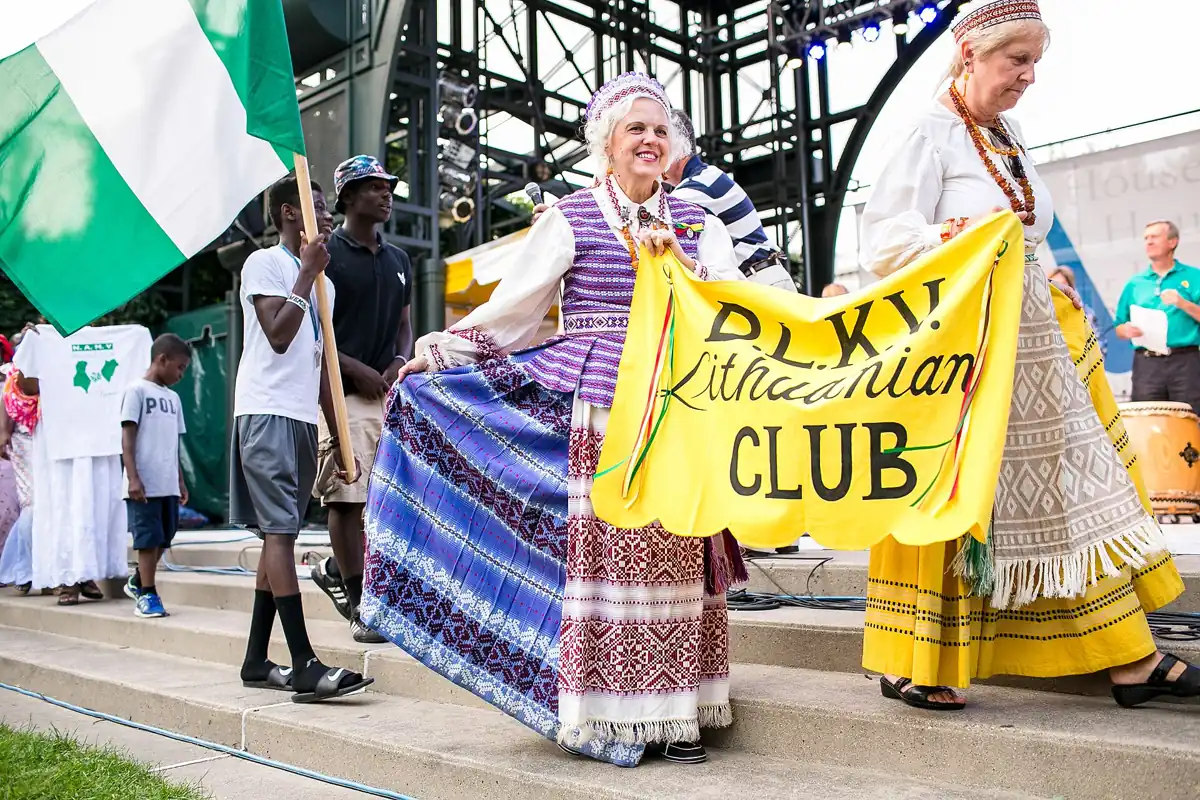
Music is only part of the programme. Across its documented years the festival has combined performances with dances, workshops, jams, song circles, storytelling and family activities, and its Musical Mayhem Parade gives the weekend a moving centrepiece. Dancing has named homes in the 2025 record: Phillips Recreation Center hosted the contra dance, and a milonga appeared among the separately priced venue events. The venues themselves shape the experience, because a single edition is scattered across taverns, a hotel, a gallery, a recreation center and a performing arts center within a few downtown blocks, with Festival Central in the Cohen Building on West Main Street acting as the hub named in the organiser’s 2025 answers. Krannert Center, which hosted the free opening show of the five-day November 2015 edition, also belongs to the festival’s documented footprint. Workshops and jams sit alongside the staged performances rather than behind them, which is why the 2025 free-entry provisions, set out below, cover so much participatory ground. Song circles and storytelling widen the circle further, giving the weekend room for people who arrive to join in rather than only to listen, and the family activities named in the programme keep younger visitors inside the same venues instead of off to one side. Because the rooms differ so much in character, a tavern set, a gallery performance and a recreation center dance are separate experiences that happen to share one festival name and one downtown map.
For a useful comparison, see the Cass County Illinois Beardstown Christkindlmarkt Festival for another county festival.
Planning Your Visit
Every price in this section comes from one document, the organiser’s answers for the 2025 edition, and those figures belong to 2025 alone. Advance tickets for that edition cost fifty dollars plus fees and were on sale until 2 October. At the festival itself, a full festival wristband cost sixty dollars and a one-night wristband cost thirty-five dollars. Single venues also sold per-day admission: Rose Bowl Tavern and the Gallery at twenty-five dollars, C4A and Hotel Royer at fifteen dollars, the contra dance at ten dollars, and the milonga at thirty dollars for dancers and fifteen dollars for non-dancers and students. Against those charges, the same 2025 answers listed a wide free territory: children twelve and under were free to all events, all workshops and jams were free, everything on Thursday was free, all Saturday daytime events before five in the afternoon were free, and all outdoor events were free. Anyone using these numbers for a later edition should treat them as the shape of one documented year, not as standing prices, because no layer read publishes prices for any other year.
A Sample Itinerary From the 2025 Edition
The three days of the 2025 edition, 2 to 4 October, suggest a rhythm a visitor could follow. Thursday carried the lightest wallet load, since everything that day was free under the organiser’s 2025 answers, making it the day for workshops, jams and outdoor events without a wristband. Friday suited the single-venue approach, with per-day admission at rooms such as Rose Bowl Tavern or the Gallery, or a one-night wristband for moving between them. Saturday split in two: daytime events before five in the afternoon were free, including the participatory programme, while the evening belonged to the full festival wristband and the run of performances across the downtown venues. Children twelve and under needed no ticket at any point in that edition. This itinerary describes the documented 2025 shape only; later editions may price and schedule differently.
The Autumn Festival and the Winter Weekend
The same organisation also runs the CU Folk and Roots Winter Weekend, a separate mini-festival held in February at Rose Bowl Tavern and the Iron Post. The two events share an organiser, a musical outlook and at least one venue, but they are not editions of each other. The Winter Weekend is a smaller February gathering in two rooms; the festival documented here is the autumn event that spreads across several blocks of downtown Urbana and, in 2025, filled more than sixty events with one hundred musicians and artists. Anything published about the Winter Weekend’s dates or programme belongs to that event and is not carried into this festival’s record.
Checklist
- Confirm which published name form a listing uses, since the festival appears as C-U Folk and Roots, Champaign-Urbana Folk and Roots and CU Folk and Roots.
- Treat every price in print here as a 2025 figure from the organiser’s answers for that edition.
- Note the free ground in 2025: workshops, jams, outdoor events, Thursday in full and Saturday daytime before five in the afternoon.
- Remember that children twelve and under were free to all events in 2025.
- Locate Festival Central in the Cohen Building on West Main Street, the hub named for 2025.
- Keep the February Winter Weekend separate when reading the organisation’s announcements.
Beyond the Festival Blocks
The festival’s ground is downtown Urbana, and its venues are working rooms of that downtown rather than a single fenced site: a tavern, a hotel, a gallery, a recreation center and Krannert Center all appear in its record. Urbana’s position as county seat gives the weekend an administrative centre as well as a musical one, and the twin-city geography cuts against first assumptions, since Champaign, the larger city next door, is not the seat. The three published name forms themselves map that geography, pairing the initials of both cities in the organiser’s version and spelling both names out in the university and news version. Nothing in the layers read extends the festival’s own programme beyond those documented Urbana venues.
Why the Festival Matters
A volunteer steering committee sustaining a multi-venue festival across documented editions from 2013 to 2026 is itself the story the record tells most clearly. The festival was founder-led, with Brenda Koenig named as founder and as director of seven years in 2015, and it remained volunteer-run into the 2025 edition, when a part-time director was named in the organiser’s answers. Its scale is documented in programme terms, one hundred musicians and artists and more than sixty events in 2025, rather than in crowd claims, and the absence of any published attendance figure is unusual for an event of that footprint. Even its beginning resists a single sentence: the gathering at Techline Studio in spring 2008 and the founding reported in 2009 stand side by side in print, and the festival’s own community has quoted both. That unresolved double origin, preserved instead of tidied away, is a fair emblem of a grassroots event whose paper trail grew up alongside the festival itself.
Frequently Asked Questions
Why do published accounts give two different beginnings?
Because the layers divide. Organiser and local-news accounts describe over twenty-five members of the folk arts community meeting at Techline Studio in spring 2008 to set the mission, and a 2017 report quotes an organiser saying it began in 2008. A news layer dated 3 November 2015 instead reports that Brenda Koenig founded Folk and Roots in 2009. Neither year is adopted here, and the edition billings, fifth annual in 2013 and seventeenth annual in 2025, are recorded as billings rather than converted into a founding date.
How were tickets and wristbands priced in 2025?
The organiser’s answers for 2025 listed advance tickets at fifty dollars plus fees until 2 October, a full festival wristband at sixty dollars and a one-night wristband at thirty-five dollars. Single venues charged per day, from ten dollars for the contra dance to twenty-five dollars at Rose Bowl Tavern and the Gallery. Those figures describe 2025 only.
Which parts of the 2025 festival were free?
A substantial share. Children twelve and under were free to all events, workshops and jams were free, everything on Thursday was free, Saturday daytime events before five in the afternoon were free and all outdoor events were free, all under the organiser’s 2025 answers.
How many spectators does the festival draw?
No layer read publishes a spectator attendance figure for any edition. The numbers in print are programme and volunteer counts: one hundred musicians and artists across more than sixty events in 2025, and about eighty volunteers in 2013.
What to Expect From the Next Champaign County Illinois CU Folk and Roots Festival
How often is Champaign County Illinois CU Folk and Roots Festival held?
Its documented editions cluster in the autumn, with October dates for 2023, 2025 and 2026 and a five-day November edition in 2015. The record shows a recurring autumn festival rather than a fixed calendar rule, and no layer read states a formal frequency.
When is the next Champaign County Illinois CU Folk and Roots Festival?
A listing layer and a 2026 local-news guide place the next edition from 8 to 10 October 2026 in downtown Urbana, with the guide billing Dom Flemons as the Friday headliner at Rose Bowl Tavern. Beyond that October weekend, the layers read carry no announcement of a further edition.
Will the dates change?
They have moved before: the 2015 edition ran across five days in November, while the 2023, 2025 and 2026 editions sit in October. Nothing in the layers read guarantees a fixed weekend, so the October placement of recent editions is a pattern, not a promise.
Closing
The CU Folk and Roots Festival leaves a fuller paper trail than most volunteer-run events, and the trail still forks at the very first step, between a 2008 gathering and a 2009 founding. What follows that fork is consistent enough: a steering committee of volunteers, a ring of downtown Urbana venues, and programmes counted in musicians and events rather than in spectators. Read on its own terms, the record needs no tidying.