Cass County Illinois Arenzville Burgoo Festival
On the first Friday and Saturday after Labor Day, the village of Arenzville in Cass County, Illinois, cooks burgoo on a scale that dwarfs the village itself. The event reaches print under two name forms, kept separate here because the layers behind them never merge them: an organiser and village layer, echoed by a travel guide, calls it simply the Arenzville Burgoo, while news calendar listings in 2011 and 2014 print the longer form, Arenzville Burgoo Festival, the form this article’s sheet title follows.
Arenzville is a village, not a seat of government. The county seat of Cass County is Virginia, a point worth stating plainly, since a county-first title can suggest otherwise. What happens in Arenzville each September is a two-day, volunteer-run festival built around a single dish: burgoo, cooked outdoors in forty-gallon kettles and sold to visitors, with the proceeds directed to community organizations.
The documentation behind this festival is uneven, and the article keeps that unevenness visible. Its most precise programme details come from dated newspaper calendar listings stopping at 2014 in the material read. Its proudest boast, that Arenzville makes the world’s best burgoo, is the village’s own claim, carried on its signs and its organiser layer, and reported here strictly as a claim.
About the Arenzville Burgoo
No named organising body stands behind this festival in any layer read. The organiser layer describes the work in collective terms: the event is organized and produced by volunteers, and all proceeds go to support community organizations.
Where the festival happens is recorded in two forms that stand unmerged: Town Park, in a travel-guide layer, and a West Main street form, with no street number recorded, in the 2011 and 2014 news calendar layers. No layer read reconciles the two forms, so they are reported side by side rather than settled into one address.
For a useful comparison, see the Cass County Illinois Fall Fun Festival for another county festival.
The festival’s centrepiece is the soup itself. A history layer records the cooking at eighteen forty-gallon kettles a day, a soup volume for that layer’s era rather than any count of people, with the full figures set out below.
Arenzville’s own publicity goes further than the documentation does. Village signs and the organiser layer present the local burgoo as the world’s best. It stands here exactly as its makers left it: the village’s own claim about its own cooking, untested by any layer read.
Quick Facts
| Item | Detail |
| Published name forms | Arenzville Burgoo; Arenzville Burgoo Festival |
| Host community | Arenzville, a village in Cass County, Illinois |
| County seat | Virginia; Arenzville is not the county seat |
| Organiser | Volunteers; no named organising body appears in the layers read |
| Proceeds | Directed to community organizations |
| Venue forms | Town Park (travel-guide layer); West Main (news calendar layers) |
| Timing | The first Friday and Saturday after Labor Day, each September |
| Dated editions in the record | 11 to 12 September (2009 layer); 9 to 10 September 2011; 5 to 6 September 2014 |
| Admission | Entry free; the burgoo itself is sold |
| Founding | No founding year stated in any layer read |
A History Written Around a Missing Beginning
This history cannot open with a founding year, because no layer read supplies one and the two pieces of origin evidence that exist refuse to combine into one.
A history magazine layer calls the genesis of the Arenzville Burgoo mysterious and murky. The first official mention it finds is a petition in the town records from nineteen oh six, asking that streets be blocked off for a soup fest. Before that paper trace, the same layer reports oral recollections of earlier burgoo gatherings held in cattle lots. A petition to close streets proves something worth closing streets for already existed by nineteen oh six; it does not prove the event began that year, and it is not presented as a founding here.
Beside that record stands the organiser layer’s different kind of statement: the Arenzville Burgoo has been an annual event for over one hundred years. That is a longevity claim made by the event’s own side, and it is carried here as a claim. It is not converted into a starting year and not treated as documentation. The century claim and the nineteen oh six first mention therefore sit side by side in the record, unmerged, and this history holds both without forcing them to agree.
What the record documents firmly comes later, and thinner. Dated newspaper calendar listings anchor three editions. A 2009 layer covers 11 to 12 September, running from eight in the morning to seven in the evening, with games, carnival rides, concessions, contests, a pet parade and entertainment. The 2011 edition ran 9 to 10 September on the same eight-to-seven hours, and its listings name performers for that year only: Kenny Carlyle & the Cadillac Cowboys on the Friday and Janie Fricke on the Saturday. The 2014 edition ran 5 to 6 September, opening earlier at seven in the morning and closing at seven in the evening, with a craft market, a parade, a food court, contests and evening entertainment. No dated edition later than 2014 appears in the layers read.
What to Expect
Burgoo comes first, and everything else in the documented programme arranges itself around the kettles. Eighteen forty-gallon kettles are cooked each day in the history layer’s account, producing about one thousand four hundred and forty gallons across a day’s cooking — again, a soup volume for that layer’s era, not a crowd measure. A separate account from 1998, a burgoo review, records one thousand eight hundred gallons produced and sold across the two days of that year. That figure belongs to 1998 alone and is not carried forward as a standing output for any other edition.
The history layer also speaks of thousands of visitors, in narrative terms. That phrase is storytelling, not a count — no layer read publishes an attendance figure for this festival — so it is never used as a number here.
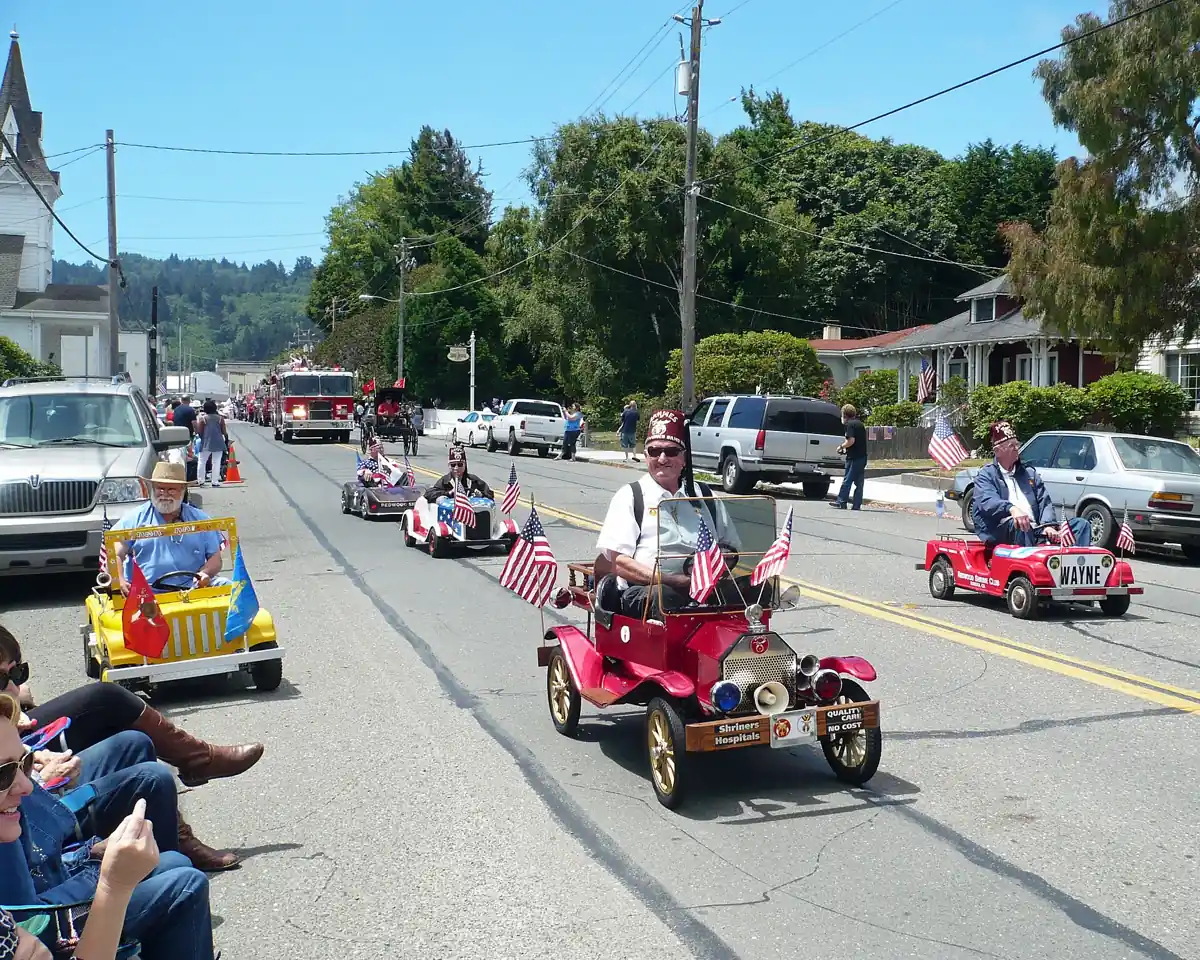
The surrounding programme, as the dated listings print it, mixes fairground staples with local particulars. Across the documented editions the listings name games, carnival rides and concessions; contests; a pet parade, which appears in the 2009 layer; a craft market and a parade, which appear in the 2014 layer; and a food court alongside the burgoo itself. Live entertainment closes the documented days, with the only named performers belonging to the 2011 edition described in the history above.
Planning Your Visit
The timing rule is the firmest planning fact available: the festival takes the first Friday and Saturday after Labor Day, each September, across two days. The dated calendar listings behind this article run to 2014, and no later edition is announced in the material read, so the rule describes how the festival is set rather than confirming any particular future year’s arrangements.
The money arrangement is worth understanding before arrival. Entry is free, according to the travel-guide layer, and the burgoo itself costs money: the soup is a purchase, not an admission ticket. No organiser price list was captured in the layers read, so this article states no soup price, and any figure quoted elsewhere should be treated as unverified against the record assembled here. The proceeds go to community organizations, so a bowl of burgoo is the festival’s fundraising mechanism as well as its lunch.
For finding the ground, the record offers two unmerged forms: Town Park in the travel-guide layer, and a West Main street form in the 2011 and 2014 calendar layers. Documented editions ran long days, from seven or eight in the morning to seven in the evening.
A Sample Two Days, Shaped on the 2014 Edition
The itinerary below follows the shape of the 5 to 6 September 2014 edition, the most fully described of the dated listings, and it should be read as that edition’s pattern rather than a promise about any other year.
Friday in 2014 opened at seven in the morning. A visitor following that edition’s shape would start early among the craft market stalls while the day’s cooking got under way, and treat the food court as the midday anchor: burgoo bought by the bowl. The parade belongs to this edition’s listing, and the contests ran through the day, so the afternoon divides naturally between watching the parade, entering or watching contests, and returning to the kettles.
Saturday in 2014 kept the same seven-to-seven frame. The second day suits a slower circuit: the craft market again for anything missed, the food court for a second bowl while the kettles are still producing, and the contests before the evening entertainment closed the edition. The 2014 listing does not assign its elements to one day or the other beyond the hours, so this division arranges that edition’s documented parts rather than reproducing a printed schedule.
How Arenzville’s Burgoo Compares
Burgoo is a regional dish with more than one claimant town, and its events are easily confused. Chandlerville, in the same county as Arenzville, holds its own separate burgoo event; sharing a county and a dish does not make the two gatherings one festival, and nothing documented about Chandlerville’s event is used here to describe Arenzville’s. Franklin, Illinois, holds a burgoo on 3 to 4 July and advances its own separate claim as a burgoo capital; its July timing alone separates it from Arenzville’s September weekend, and its claim stands as its own, neither confirming nor cancelling Arenzville’s boast.
The fullest contrast is Utica, Illinois, where a county historical society runs a burgoo festival in a different county altogether. Utica’s event carries its own documented history and billing series reaching back to its establishment in 1969. That documentation belongs to Utica: its dates, its billings and its founding are never transferred to Arenzville, whose record states no founding year at all.
A Checklist Drawn From the Record
- Fix the weekend by the rule: the first Friday and Saturday after Labor Day in September.
- Treat the timing rule as the festival’s pattern, not a confirmed announcement; the dated listings stop at 2014.
- Plan to pay for the burgoo itself; entry is free and the soup is the purchase.
- Do not rely on any soup price quoted elsewhere; no price list was captured in the layers read.
- Use both venue forms when asking locally: Town Park, and West Main.
- Allow for long days; documented editions ran from seven or eight in the morning to seven in the evening.
- Keep Arenzville’s event distinct from the burgoo gatherings at Chandlerville, Franklin and Utica.
- Read the world’s-best wording on the village signs as Arenzville’s own claim.
- Leave the founding year blank; no layer read states one.
Beyond the Kettles
What surrounds the cooking, in the documented record, is the festival’s purpose rather than further attractions. The organiser layer ties the weekend to benefit: each September the town hosts the two-day festival to benefit community organizations, and the proceeds go to support them. The burgoo is therefore both the draw and the funding — visitors eat, and the village’s organizations gain.
The village signs that call the burgoo the world’s best extend that presence to the road into Arenzville, a claim met before a single kettle is seen. No linked events, satellite venues or off-site components appear in the layers read.
Why This Small Festival Matters
The Arenzville Burgoo matters in the record precisely because of what its documentation refuses to tidy up. A village festival that claims more than a century of annual cooking, whose first paper trace is a nineteen oh six petition about closing streets, and whose firmest programme evidence is three newspaper calendar listings, shows how much of small-town festival history lives in claims, recollections and ephemera rather than in archives.
Its scale, where the record does measure it, is measured in soup: eighteen kettles a day in one era’s account, one thousand eight hundred gallons sold across two days in 1998. Those volumes describe an operation far larger than the village hosting it, run by unnamed volunteers for community organizations. Keeping that documented substance separate from the unverified boasts around it — the century, the world’s best — is what keeps this record trustworthy.
Frequently Asked Questions
Is entry to the Arenzville Burgoo Festival free?
Yes, on the evidence of the travel-guide layer: entry is free. The burgoo itself costs money, so the soup is a purchase rather than an admission charge, and no organiser price list appears in the layers read to put a figure on a bowl.
How much burgoo do the kettles produce?
The history layer records eighteen forty-gallon kettles cooked each day, about one thousand four hundred and forty gallons, for that layer’s era. A 1998 review separately records one thousand eight hundred gallons produced and sold across that year’s two days. Both figures are soup volumes, not attendance counts.
Who organises the Arenzville Burgoo?
No named body appears in the layers read. The organiser layer says the event is organized and produced by volunteers, with all proceeds going to support community organizations, and no committee or association name is published in that material.
Why is there no founding year in this article?
None of the layers read gives one. The organiser layer claims the event has run annually for over one hundred years, while a history layer’s first official mention is a nineteen oh six street-closure petition; neither is a founding statement, and they are not merged into one here.
What to Expect From the Next Cass County Illinois Arenzville Burgoo Festival
How often is Cass County Illinois Arenzville Burgoo Festival held?
The organiser and travel-guide layers place the festival each September, on the first Friday and Saturday after Labor Day, over two days. The organiser layer’s claim of an annual run over one hundred years is recorded as a claim, not a verified count of editions.
When is the next Cass County Illinois Arenzville Burgoo Festival?
The timing rule points to the first Friday and Saturday after Labor Day in September. The dated calendar listings in the layers read run to the edition of 5 to 6 September 2014, and no later edition is announced in the material read, so the rule gives the pattern rather than a confirmed date for a specific coming year.
Will the dates change?
Nothing in the layers read announces a change: the first Friday and Saturday after Labor Day is the standing rule in both the travel-guide and organiser material. Because that rule is tied to Labor Day rather than to fixed calendar dates, the actual September dates move from year to year even when the rule itself stays the same.
Closing Note
Arenzville’s burgoo weekend survives in the record as a strong dish and a soft archive: free to enter, cooked in forty-gallon kettles, sold for the village’s organizations, and older — by its own side’s claim — than its paperwork can prove. This article leaves the claim and the paperwork side by side, which is where the layers leave them.