Butler County Ohio Fair Festival
Late July in Hamilton turns toward the fairgrounds on Fairgrove Avenue, where the Butler County Fair fills a Sunday-to-Saturday week with livestock judging, open-class exhibits, tractor pulls, a rodeo, demolition derbies, and evening music beside the Farm Zone. It is a working agricultural show first and a summer gathering second, and Hamilton is the seat of Butler County and also the fair town.
What the Butler County Fair Is
The Butler County Fair is the annual county fair of Butler County, Ohio, run by the Butler County Agricultural Society at the Butler County Fairgrounds in Hamilton. Its most recent fully documented edition ran from Sunday, July 26, to Saturday, August 1, 2026, with gates opening at seven in the morning and closing at eleven at night, while the 2027 banner announced July 25 to July 31, 2027, with no programme, price, or edition number.
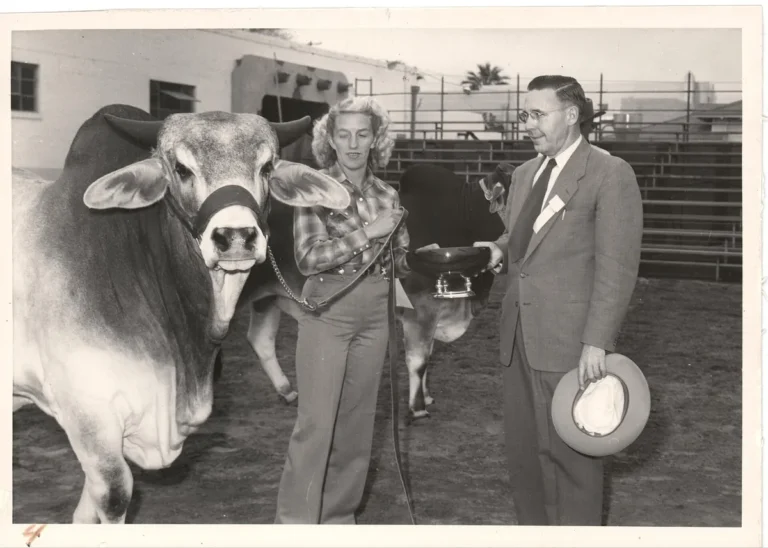
A visitor who expects a midway-first festival will find the order reversed here. The barns and show rings set the rhythm, the halls and the Farm Zone fill the middle of the day, and the grandstand takes over in the evening. Junior Fair exhibitors show livestock, horses, dogs, poultry, rabbits, and special-interest projects, while open-class exhibitors enter beef, goats, swine, sheep, rabbits, dairy cattle, farm products, culinary work, and flowers.
The grounds help explain that order. The grandstand, rebuilt in concrete after a fire in 1913, anchors the track side, while the Art Hall, the Farm Zone Building, the Music Tent, and the livestock barns spread the week across walkable ground, and Kissel Amusements and Rides operates the midway, with ride bands priced separately from gate admission.
Quick Facts
| Detail | Butler County Fair |
| Town and county seat | Hamilton, Butler County, Ohio |
| Grounds | Butler County Fairgrounds, 1715 Fairgrove Avenue, Hamilton |
| Organiser | Butler County Agricultural Society |
| Season | Late July, Sunday to Saturday |
| Most recent documented edition | July 26 to August 1, 2026 |
| Following banner edition | July 25 to July 31, 2027, banner only |
| 2026 daily gate admission | Ten dollars per day |
| 2026 parking | Included in general admission |
| Grandstand week wristband in 2026 | Forty dollars adult, fifteen dollars child aged six to twelve |
| 2026 participant camping | From three hundred twenty-five dollars for the week |
A History Told in Layers
The fair’s own history page does not offer a single founding sentence, and none is invented here. Its first layer dates a first gathering to 1836, when Hamilton residents gathered around the old courthouse to show farming equipment, livestock, and produce. Its second layer says the fair was officially organized in 1851 by the Butler County Agricultural Society, and the state auditor’s reports record the Society as founded in 1851 under Chapter 1711 of the Ohio Revised Code, with a board of ten directors.
For a useful comparison, see the Brown County Ohio Fair Festival for another county festival.
The 1851 date therefore belongs to the Society and to the official organisation, while the 1836 date belongs to the earlier gathering, and neither date is stretched into a claim about the other. Its own history places the fair on a lot on Fourth and Dayton Streets in 1843, then in an oak grove near the Miami-Erie Canal, then at Bigham Grove, and finally in 1856 on thirty-nine acres on Fairgrove Avenue.
That thirty-nine-acre figure is an 1856 history-layer figure, not a present-day surveyed size, and a press-history layer adds an 1874 racetrack, an 1891 purchase of thirteen acres, an outside group controlling the 1896 fair, and a 1920 secretary’s office.
The grandstand story is the most concrete thread in that history. A wooden grandstand was destroyed by fire, and a new grandstand was built in 1913 with three thousand seats at a price of thirty-three thousand dollars, made entirely of concrete. The fair’s own page presents that concrete grandstand as thought to be the first of its kind built in the United States, and that wording is repeated here only as the fair’s own billing.
Extension material billed a 174th fair for July 21 to July 27, 2024, a county paper preview headlined a 175th fair for July 20 to July 26, 2025, and a historical society newsletter billed a 176th annual fair for July 26 to August 1, 2026. No layer fetched states what the count starts from, so no founding year and no unbroken-run claim is derived from that chain, and the 2020 junior-fair-only edition is recorded as such.
The fair book’s constitution states that the organisation shall be known as the Butler County Agricultural Society, and that name is the organiser printed throughout this article. Its working rules also use Senior Fair Board and Senior Fair Board Office, vendor and minutes layers use Fair Board, and a concessions layer carries the parenthetical form Butler County Fairboard, and those forms are not merged.
The 2026 book’s board page names President Doug Turner, Vice President Gary Gerber, Treasurer Jerry Bittner, and Secretary David Vollmer, with directors Mike Green, Chad Idle, Mark Mignery, Tim Ross, Leon Simpson, and Casey Wells, ten in all, and that roster is the 2026 book’s roster only. The Junior Fair bodies are a youth division under the Society, and Butler County itself is not the organiser, since the auditor’s reports state that Butler County is not financially accountable for the Society.
What to Expect When You Walk Through the Gates
The Barns and the Show Rings Before Noon
Mornings belong to judging, and a visitor who arrives at opening will find the fair at its most purposeful. The 2026 schedule moves through grange displays, produce, rabbits, swine showmanship, fine arts, and sheep classes on Sunday, through sheep, poultry, hogs, and goats on Monday, and through swine, horses, skillathon work, and pie judging on Tuesday.
The Farm Zone and the Halls in the Afternoon
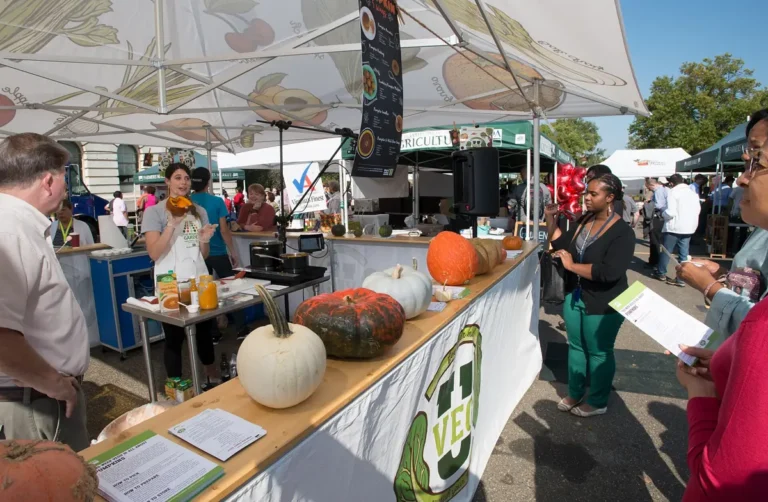
The Farm Zone Building gives families a slower middle of the day, with an interactive children’s area called I am a Farmer, open in the 2026 book from eleven in the morning to seven in the evening, Sunday through Saturday. The Music Tent stands next to the Farm Zone, and the book promises live music there daily from half past five to nine in the evening, with several acts across the week, though no headline act for 2026 is named in any fair-side layer fetched, and none is invented here. The Art Hall holds open-class art and hosts the Cake and Pie Auction.
The Grandstand After Dark
Evenings belong to the grandstand, and the 2026 book prices that side of the fair separately from the gate. A week-long grandstand seating wristband cost forty dollars for an adult and fifteen dollars for a child aged six to twelve in 2026, and it had to be purchased before the event in the fair office. Day events were the Sunday garden tractor pull with no admission charge, the Sunday antique tractor pull at ten dollars for an adult and five dollars for a child, the Monday DCTPA pull at the same ten and five dollars, and the Tuesday Barrett rodeo at ten and five dollars.

Demolition derbies on Wednesday, Thursday, and Friday cost fifteen dollars for an adult and five dollars for a child, the Saturday combine derby carried no admission charge, and pit passes cost twenty dollars per person in 2026, and none of those figures should be read as the price of getting through the gate.
The Midway as Its Own Budget
Kissel Amusements and Rides runs the midway, and the 2026 book’s ride band prices are midway money, never gate money. Sunday, July 26, opened at four in the afternoon at fifteen dollars per person, Monday through Friday opened at one in the afternoon at twenty-five dollars per person, and Saturday, August 1, Family Day, opened at one in the afternoon at eighteen dollars per person.
Planning Your Visit
Gate Admission and Parking in 2026
The 2026 fair book’s general admission page is the only complete gate ladder in the record, and every figure in this section belongs to 2026. General admission per day cost ten dollars, children aged six to twelve accompanied by a paying adult paid five dollars at the gate only, a membership ticket cost forty dollars, a seven-day pass cost thirty-five dollars, a four-day pass cost twenty-five dollars, and Saturday only cost five dollars for an adult.
Senior citizens aged sixty-two, veterans, and Kissel Cares Day on Wednesday, July 29, were free in the book’s grouping, and the 2026 book states no time window for that Wednesday term, so no window is printed here. Parking was included in general admission in 2026, no separate 2026 parking price was published, no admission rule for children younger than six appears in the fair-book layers fetched, and no other year’s gate price is printed.
Participant Camping, Not Public Camping
Camping at this fair is a fair-participant system, and describing it as public camping would mislead a visitor. The 2026 book’s camping rules price the week at three hundred fifty dollars, with Horse Area 1 and Horse Area 2 at four hundred dollars, the fence along the Engineers Office at three hundred twenty-five dollars, and the infield at four hundred dollars, and that fee does not include fair entry, while every camper must hold a week ticket.
Spaces are assigned in the book’s own priority order, starting with families with Junior Fair livestock entries, then families with other Junior Fair entries, then families with open-class livestock entries, then Senior Fairboard and other essential personnel. Campers move in on the Friday before the start of fair, prior-year campers must apply and pay by the Junior Fair entry deadline or lose the space, new applicants join a waiting list, and no motorised vehicles are permitted on the fairgrounds in that rules layer.
Getting Around and Timing a Day
Gates open at seven in the morning and close at eleven at night in the 2026 book, but the programme is staggered, so not every attraction runs all day. Judging fills the mornings, the Farm Zone and Music Tent fill the afternoon and evening, and the grandstand events are fixed evening fixtures, while Sunday, August 2, 2026, is a release day, never an eighth fair day.
A Sample Week in Three Visits
A first-time visitor does best by choosing a shape for the week rather than trying to see everything. One strong shape is a judging day, a grandstand night, and a family day, spread across three visits. A judging day starts at the barns and ends in the halls, a grandstand night pairs a pull or a rodeo with the midway, and a family day centres on the Farm Zone, the halls, and the Music Tent.
How This Fair Compares With a Festival Week
A visitor comparing this fair with a town festival week will notice the difference in what is being judged. A festival week is usually built around a theme, a parade, and entertainments, while this fair is built around entries, judging, and sales, with entertainment fitted around that core. The Cake and Pie Auction, the livestock sale, and the Grand Showman of Showmen contest all belong to a fair’s logic, in which exhibitors are measured against a standard.
A Checklist for Fair Week
- Arrive early for judging and start in the barns
- Keep gate, grandstand, and ride-band prices separate
- Visit the Farm Zone in the afternoon
- Catch Music Tent sets in the evening
- Save the Art Hall for the Tuesday Cake and Pie Auction in 2026
- Treat camping as participant-only
- Remember Sunday is a release day
- Confirm the current year’s dates and prices before travelling
Beyond the Fairgrounds
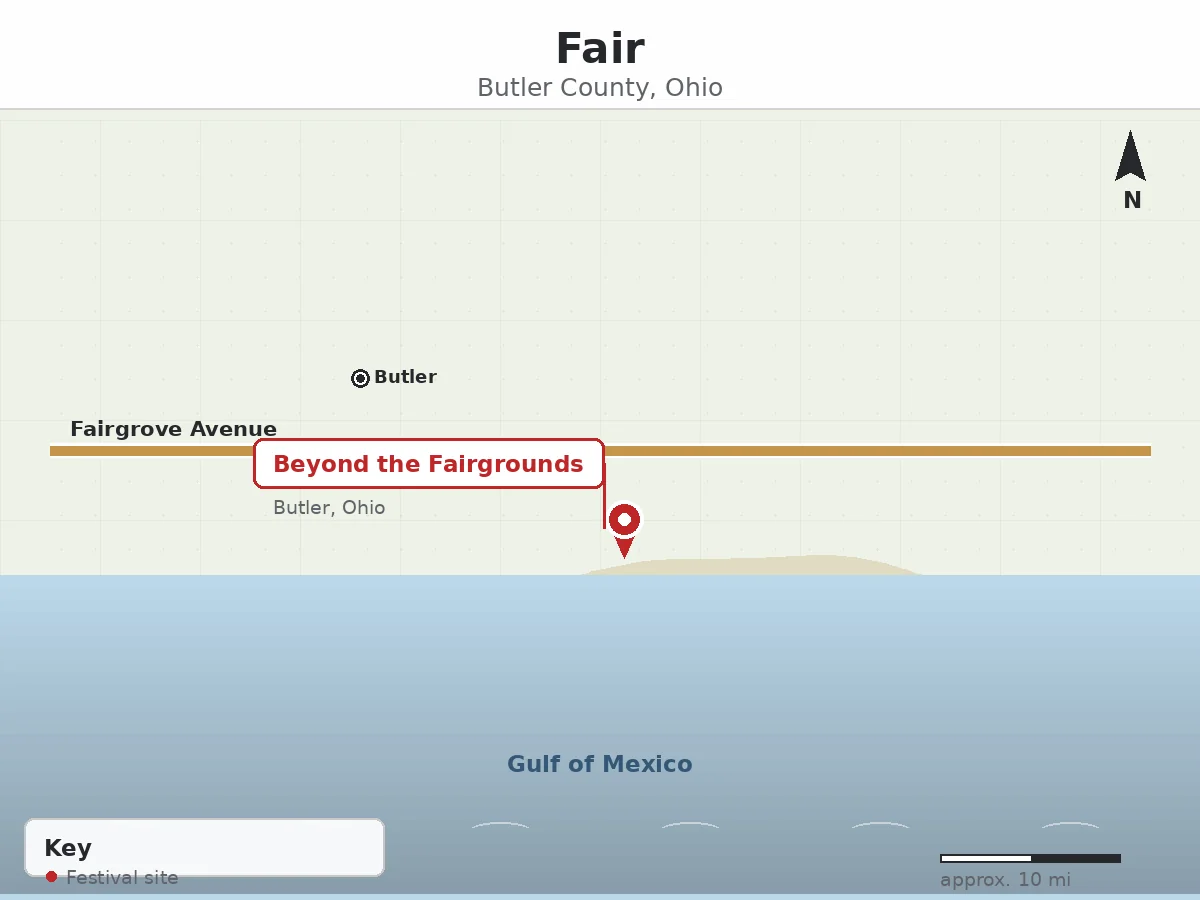
Hamilton gives a fair visitor more than a place to park, because the fair town is also the county seat. A visitor who steps beyond Fairgrove Avenue will find a city shaped by the same river and canal history that appears in the fair’s own moves, from the courthouse square where the earliest gatherings were held to the later grounds on Fairgrove Avenue.
Why This Fair Still Matters to Butler County
The fair matters because it still does the work its Society was formed to do, gathering the county’s agricultural work where it can be judged, bought, and celebrated, in a week long enough for that work to be seen properly. Its layered history shows a fair that has changed its shape without abandoning its core, and its own attendance billing, between eighty thousand and one hundred thousand visitors each year, is billing rather than a counted total.
Frequently Asked Questions
Where is the Butler County Fair held?
The fair is held at the Butler County Fairgrounds, 1715 Fairgrove Avenue, Hamilton, Ohio, and Hamilton is both the county seat of Butler County and the fair town, with the seat verified from the courthouse record and the town verified from the fair’s own site, book, and schedule layers.
How long does the fair run, and when was the most recent documented edition?
The fair runs for a week, Sunday to Saturday, in late July, and the most recent documented edition ran from July 26 to August 1, 2026, with Sunday, August 2, as a release day only.
What did gate admission cost in 2026?
In 2026, daily admission cost ten dollars, children aged six to twelve with a paying adult paid five dollars at the gate only, membership cost forty dollars, a seven-day pass cost thirty-five dollars, a four-day pass cost twenty-five dollars, and Saturday only cost five dollars for an adult, with parking included.
Can any visitor camp on the fairgrounds during fair week?
No, camping in 2026 was participant-only, not public camping, with week prices from three hundred twenty-five dollars to four hundred dollars, a fee that excluded entry, a week ticket required for every camper, and priority for Junior Fair livestock families.
What to Expect From the Next Butler County Ohio Fair Festival
How often is Butler County Ohio Fair Festival held?
The fair is held annually, as a week-long late-July fair in Hamilton, with the Sunday-to-Saturday shape documented in its current layers.
When is the next Butler County Ohio Fair Festival?
The fair’s own site banner announced a 2027 Butler County Fair from July 25 to July 31, 2027, and that banner carried no programme, price, or edition number, so visitors should confirm the current year’s programme and prices before travelling.
Will the dates change?
The dates can shift within the late-July season, as the documented editions show, with the 2024 week running July 21 to July 27, the 2025 week July 20 to July 26, and the 2026 week July 26 to August 1, so check the current year’s dates before visiting.
The Butler County Fair rewards the visitor who treats it as a working fair first and a spectacle second, arriving for judging, lingering in the halls and the Farm Zone, and closing the day in the grandstand. Its layered past, kept in its own layers rather than smoothed into a single founding story, is the best guide to what the week means.