Bracken County Kentucky Augusta Heritage and History Day Festival
Late summer in Augusta, Kentucky, belongs to a festival that celebrates the town’s own past. Across Labor Day weekend the city park fills with craft stalls, food booths, pageant sashes and racing frogs, while the downtown streets a short walk away carry their share of the crowd. Every published source calls the event Augusta Heritage Days, and that printed name is the one used throughout this page, because the longer wording in the title above appears in no guide, newsletter or listing that documents the festival. What the record does print, year after year, is a volunteer-run heritage weekend organised by the Augusta Rotary Club and described in the family-events guides as the longest running festival in town.
The documented run is thick for one stretch and thin at its end. Editions from two thousand fourteen through two thousand nineteen come with full programmes, printed hours and free admission, while a festival-guide layer lists the event on the thirtieth and thirty-first of August two thousand twenty-five, though without any programme detail. Between those poles sits a characterful small-town gathering: part history exhibition, part county fair, part frog race.
About
The name needs settling first, because the festival’s paper trail never uses the wording in this page’s title. Family-events guide layers across many years, a Rotary district newsletter layer, a festival-guide layer and the headlines of a local newspaper layer, as indexed by a genealogy layer, all print the event as Augusta Heritage Days. One family-events layer bills the two thousand fifteen edition as the forty-third Annual Heritage Days Festival, and a Rotary district newsletter layer names a component the Miss Heritage Days Beauty Pageant. No layer prints an Augusta Heritage and History Day Festival, or any Heritage and History Day form at all, so the published name governs everything that follows here.
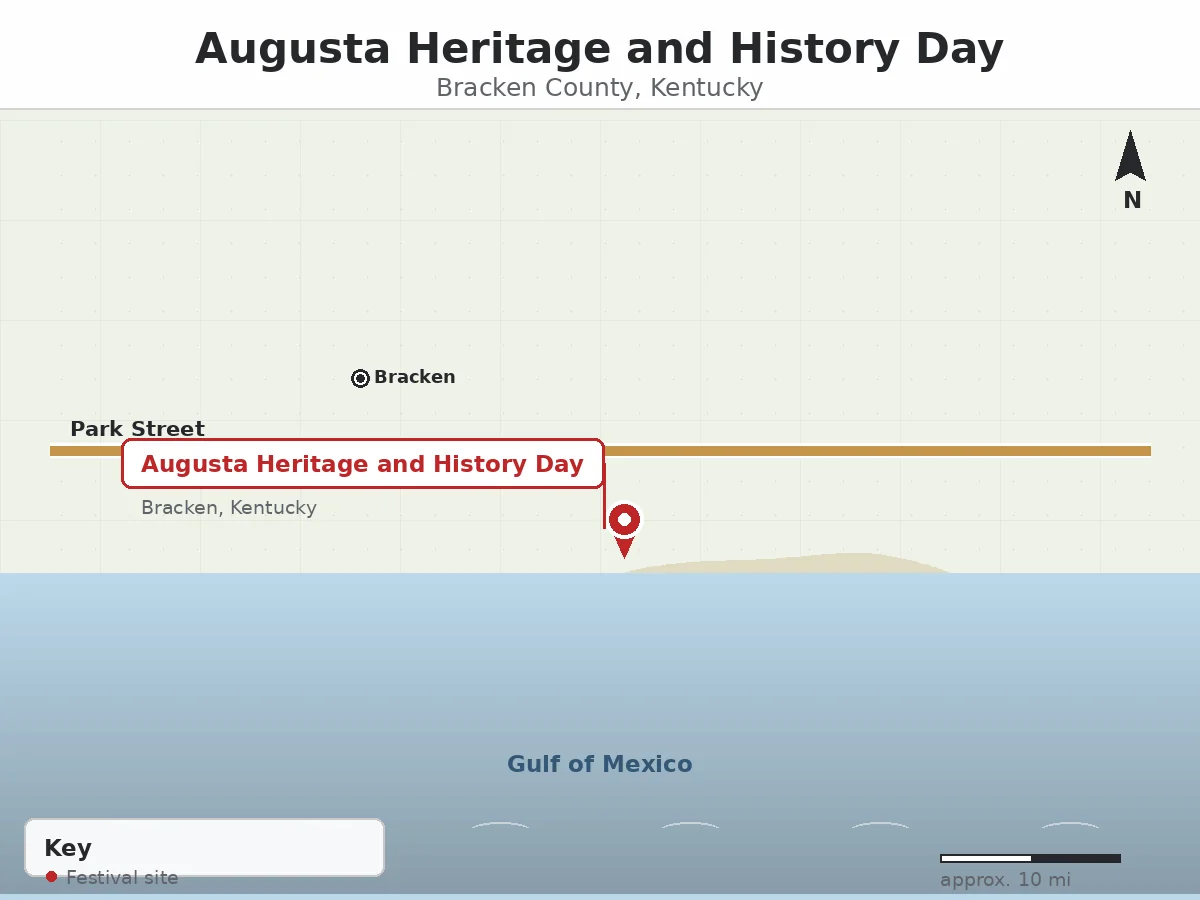
The organising credit belongs to the Augusta Rotary Club, and the layers phrase its role three ways without merging them: the guides say the festival is sponsored by the club, one guide says it is hosted by the club, and the club’s own district newsletter describes the club as the body that organised the event annually. The festival ground is Augusta’s City Park at 2nd and Parkview, with the downtown streets around 2nd Street and Park Street sharing the programme in the mid-decade listings. Augusta is a small Bracken County town, and it is not the county’s present seat; that role belongs to Brooksville, although Augusta held the seat in earlier centuries.
Quick Facts
| Item | Detail |
| Published name | Augusta Heritage Days |
| Title wording | No published source prints a Heritage and History Day form |
| Host town | Augusta, in Bracken County, Kentucky |
| Present county seat | Brooksville |
| Festival ground | City Park at 2nd and Parkview, with downtown streets around 2nd Street and Park Street |
| Organiser | Augusta Rotary Club, printed as sponsor, host and organiser |
| Season | Labor Day weekend, in late August or early September |
| Documented editions | Two thousand fourteen to two thousand nineteen in detail, plus a two thousand twenty-five listing |
| Admission | Printed free for the two thousand fifteen through two thousand nineteen editions |
| Signature attractions | The Frog Derby, a beauty pageant, a baby show, trolley tours and a history exhibit |
History
The festival’s age is carried by its billings rather than by any founding date. A family-events layer bills the two thousand fifteen edition the forty-third Annual, while the Rotary district newsletter for two thousand fourteen states that the club had organised Augusta Heritage Days annually for over forty years, and the family-events guides call the weekend a tradition kept for decades. Those numbers are recorded here exactly as printed. Turning an annual count into a first year would be guesswork, so this page adopts no founding year and derives none from the numbering.
For a useful comparison, see the Boyle County Kentucky Perryville Commemoration Festival for another county festival.
The Frog Derby has its own arithmetic: the two thousand fourteen newsletter prints the derby’s forty-second running that year, closing the festival on the Sunday. A local newspaper headline index, carried by a genealogy layer, adds a civic milestone for two thousand nineteen, recording that Augusta Heritage Days opened with the dedication of a historic marker that August. After two thousand nineteen the detailed guide coverage in the layers read stops, and the record resumes only as the bare two thousand twenty-five listing.
Augusta’s own past gives the heritage theme real depth. A Kentucky atlas layer records that the town served as the seat of Bracken County from seventeen ninety-seven to eighteen hundred, and again from eighteen oh two until eighteen thirty-nine, when the seat moved to Brooksville. A town that once governed the county and then handed the courthouse over has two centuries of story to exhibit, and the festival’s history displays draw on that material.
What to Expect
A Heritage Days weekend spreads itself across two settings, the shaded ground of City Park and the downtown streets around 2nd Street and Park Street, and its programme mixes the earnest with the cheerful. The earnest side is a history exhibit: the two thousand fourteen newsletter describes an Augusta history exhibition holding Native American artefacts, Civil War pieces and memorabilia, and the mid-decade guides add art and museum exhibits, a living history performance, trolley tours and history tours. Crafts and arts vendors line up alongside food booths, and live music, including bluegrass, runs through the weekend.
The cheerful side has its own fixture list. A car show appears in edition after edition, joined in two thousand sixteen by a custom car show billing, and the beauty pageant, travelling under the component name Miss Heritage Days Beauty Pageant, shares the bill with a baby show. Children get a petting zoo and a kids’ zone, and the wider grounds carry wagon rides, inflatables, tree-climbing, sports, games and raffles. Wine tasting appears in the two thousand sixteen programme. Above all of it hops the Frog Derby, also printed as the Frog-Jumping Contest, a fixture the guides list year after year and the newsletter treats as the festival’s closing act.
Planning Your Visit
Aim for Labor Day weekend, the anchor every documented edition shares. The fullest printed hours come from the two thousand sixteen guide and are repeated in the following years’ listings: Friday from five to eleven in the evening, Saturday from half past nine in the morning to eight in the evening, and Sunday from nine in the morning to six in the evening. Those hours belong to the mid-decade editions that printed them, so treat them as the pattern rather than a promise for a future year.
Admission planning is simple on the printed evidence. The family-events guides mark the two thousand fifteen, two thousand sixteen, two thousand seventeen, two thousand eighteen and two thousand nineteen editions free, and no layer read states a gate charge in any year. Money still matters for food booths, raffles and vendor stalls. Because the newest listing carries dates and nothing else, anyone travelling far should confirm the current year’s programme and hours from a fresh listing before setting out, and should plan to move between the park ground and the downtown street blocks rather than settling in one spot.
A Sample Weekend at Heritage Days
Friday evening suits the downtown side of the festival: arrive as the five o’clock opening nears, eat from the food booths, browse the craft and arts vendors, and let the live music set the weekend’s pace. Saturday is the full day, with the printed hours running from half past nine in the morning, so give the morning to the history exhibit and a trolley or history tour while the light is good, then circle back through the car show, the petting zoo and the kids’ zone before the pageant and baby show sessions.
Sunday belongs to the ending. The two thousand fourteen running order closed the festival with the Frog Derby’s forty-second running on the Sunday, so save the derby for last, after a slower pass through the museum exhibits, the raffles and the food booths. Leaving the park by the printed six o’clock close rounds out a weekend built from the documented programme rather than from guesswork about what might appear.
Three Snapshots of One Festival
Comparing the layers against each other shows how the documentation itself changes character. The two thousand fourteen Rotary district newsletter reads like an organiser’s own account: it counts the club’s forty-plus years, details the history exhibit’s contents, and fixes the Frog Derby’s forty-second running as the Sunday finale. The two thousand sixteen family-events guide is the fullest single snapshot, printing the complete hours and the widest programme, from wine tasting and tree-climbing to the living history performance, yet it says nothing about who runs the weekend beyond the guides’ usual sponsorship credit.
The two thousand twenty-five festival-guide listing is the third kind of snapshot: two dates, a name, and silence on everything else. Read together, the three layers describe a festival that was richly documented in the middle of the two thousand tens and only thinly documented since, which is why this page keeps each claim fenced to the edition and the layer that printed it.
A Short Checklist
- Check a current listing for the coming Labor Day weekend’s dates, hours and programme
- Note the two settings: City Park at 2nd and Parkview, and the downtown streets around 2nd Street and Park Street
- Carry small cash for food booths, raffles and vendor stalls even though the documented editions were free
- Give the history exhibit a full hour rather than a passing glance
- Ride a trolley tour or join a history tour early in the day
- Save the Frog Derby for the Sunday close, following the two thousand fourteen running order
- Leave time for the car show, petting zoo and kids’ zone on the Saturday
- Confirm pageant and baby show times on the day, since the guides print them without a schedule
Beyond the Festival Ground
The heritage on display does not stop at the park fence. In August two thousand nineteen the festival opened with the dedication of a historic marker, according to the county newspaper’s headline index, tying the weekend directly to the town’s marked and remembered places. A visitor with the interest can read the downtown streets around 2nd Street and Park Street as part of the same story, in a town that governed Bracken County from seventeen ninety-seven to eighteen hundred and again from eighteen oh two to eighteen thirty-nine before the seat moved to Brooksville.
That older Augusta, the one that appears in the atlas layer’s county-seat dates, is the deep background behind the history exhibit’s Native American artefacts, Civil War pieces and memorabilia. The festival makes the most sense as the town presenting its own long memory in public, with the park as its stage and the surrounding streets as supporting evidence.
What the Festival Means to Augusta
A civic club keeping a festival alive for over forty years, as the club’s own newsletter puts it, is a particular kind of local institution. The Rotary Club’s stewardship explains the weekend’s blend: heritage content serious enough for a museum-style exhibit and a marker dedication, wrapped in the sociable machinery of pageants, raffles, food booths and frog racing that brings neighbours out year after year. The guides’ label, the longest running festival in town, is a claim about endurance as much as entertainment.
For Bracken County, the festival also keeps Augusta’s name in front of visitors even though the county seat sits in Brooksville. On Labor Day weekend the county’s story is told where much of it happened first, and the frogs, trolleys and artefacts together make the telling an occasion rather than a lecture.
Frequently Asked Questions
Why does the festival appear under a different name in the guides?
Because every layer that documents the event prints Augusta Heritage Days, from the family-events guides to the Rotary district newsletter and the festival-guide layer. The Heritage and History Day wording in this page’s title appears in no published source, so the article follows the printed name and treats the title as a filing label rather than the festival’s real name.
What exactly is the Frog Derby?
The layers print its name, its alternate billing as the Frog-Jumping Contest, and its place in the programme rather than a rulebook. The Rotary district newsletter records its forty-second running in two thousand fourteen as the festival’s Sunday closing act, and the guides list it among the fixtures across the decade, which makes it the weekend’s signature novelty event.
Which years of the festival are documented in detail?
The detailed record runs from two thousand fourteen through two thousand nineteen, with programmes, hours and free admission printed for the mid-decade editions. After that the layers read offer only a festival-guide listing for the thirtieth and thirty-first of August two thousand twenty-five, with no programme detail attached.
Is Augusta the county seat of Bracken County?
No. Brooksville holds that role today, according to a state government county-formation table and a Kentucky atlas layer. The atlas layer adds the historical twist: Augusta served as the seat from seventeen ninety-seven to eighteen hundred and again from eighteen oh two until eighteen thirty-nine, when it moved to Brooksville.
What to Expect From the Next Bracken County Kentucky Augusta Heritage and History Day Festival
How often is Bracken County Kentucky Augusta Heritage and History Day Festival held?
The pattern in print is annual and tied to Labor Day weekend. The Rotary district newsletter describes the club as having organised the event annually for over forty years, and the guides print editions on that same holiday weekend across successive years, from two thousand fourteen through two thousand nineteen.
When is the next Bracken County Kentucky Augusta Heritage and History Day Festival?
The trail of print gathered for this page ends with the festival-guide listing for the thirtieth and thirty-first of August two thousand twenty-five. Anyone planning around a future edition should watch for a fresh listing for the coming Labor Day weekend and work from the dates it prints rather than from the older guides.
Will the dates change?
Every documented edition sits on Labor Day weekend, drifting between the last days of August and the first days of September as the calendar moves. A shift away from that holiday anchor would break with the whole printed pattern, but only a current listing can confirm any given year’s exact days.
Closing Thoughts
Augusta Heritage Days earns its place in the county’s calendar the slow way, through a Rotary Club’s decades of organising and a programme that pairs genuine local history with a frog race. The record behind it is uneven, detailed for six editions and bare for the latest one, and this page has kept those limits visible throughout. What survives every layer is the same picture: a park full of neighbours, and a past that Augusta still insists on celebrating out loud.