Bourbon County Kentucky Paris Storytelling Festival
Each May, the county seat of Bourbon County gives its downtown over to the spoken word. Paris, Kentucky, hosts a weekend gathering built entirely around professional storytellers: performers who hold a room with nothing but a voice, a chair and a well-shaped tale. The event is published as the Paris Storytelling Festival, and a television news layer also carries it under the shorter billing Paris Story Fest. No layer read prints the longer county-prefixed form used as this article’s title, so the name on posters and programmes is the shorter one. The weekend follows a steady pattern rather than a sprawling midway format: storytelling sessions for mixed audiences form the core, a small number of special gatherings carry the only charges, and the tellers also spend part of their visit in local classrooms. It is a festival measured in listeners rather than crowds. A state magazine layer documents one edition in full particular, an organiser’s fundraising layer sets out the festival’s shape and rhythm, and a television report catches the gathering reaching a milestone year. Together those layers describe a small, volunteer-run festival with an unusually generous streak: most of what it stages costs the audience nothing at all.
About the Festival
The Paris Storytelling Festival is organised by Paris Storytelling, Inc., a body the organiser’s fundraising layer describes as volunteer-run. The festival settles into venues across Paris rather than a single hall. Two settings anchor the documented programme: the Wallis House, home of The Garden Club of Kentucky, hosts the Saturday storytelling dinner, while the buffet breakfast is served inside the refurbished Trackside Depot train station. Performances for general audiences fill out the weekend between those two set pieces.
The organiser’s fundraising layer fixes the festival’s place in the calendar: it is held during the second weekend in May. The same layer explains the event’s reach beyond ticket-buying adults, because storytellers are brought into classrooms in Bourbon County, in the Paris Independent schools and in neighbouring districts as part of the festival’s work. The gathering also leans on seasoned guidance, with an adviser shaping the programme; that adviser’s own original work appears in the festival’s forward plans, as set out below.
The two published name forms are worth keeping distinct. Print and organisational material use Paris Storytelling Festival, which is also the form the state magazine layer’s contact line attaches to the organiser, Paris Storytelling, Inc. The shorter Paris Story Fest appears in television coverage, and it is under that name that the broadcaster announced the festival’s tenth year in two thousand twenty-six. Neither form should be read as a different event; they are two billings for the same weekend in the same town.
Quick Facts
| Item | Detail |
| Published name | Paris Storytelling Festival |
| Shorter billing | Paris Story Fest |
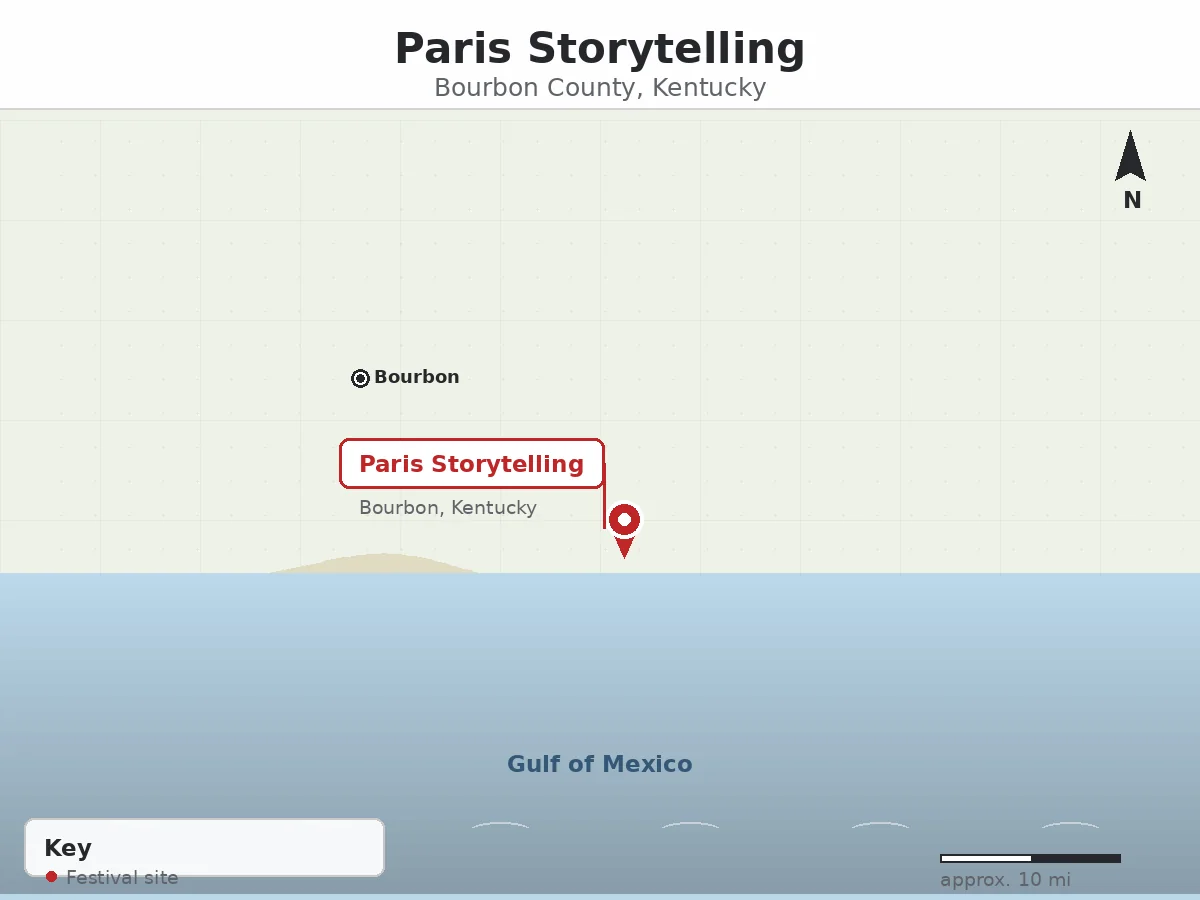
| Host town | Paris, Kentucky |
| County standing | Paris is the seat of Bourbon County |
| Regular slot | The second weekend in May |
| Fully documented edition | Friday the tenth to Sunday the twelfth of May, two thousand twenty-four |
| Storytellers that year | Bil Lepp, Donald Davis, Donna Washington, Andy Offutt Irwin and Carolina Quiroga |
| Organiser | Paris Storytelling, Inc. |
| Cost pattern | Five of seven events free; three special elements carry fees |
| Signature settings | The Wallis House and the Trackside Depot train station |
History
The festival’s past is documented in fragments rather than a continuous chronicle, and this account keeps those fragments exactly as their layers present them. A television news layer reported in two thousand twenty-six that Paris Story Fest celebrates ten years, and that billing is carried here precisely as printed: a milestone claim made by a broadcaster, not a founding date worked out by counting backwards. No layer read states a founding year in words, and none is offered here.
For a useful comparison, see the Bourbon County Kentucky Legends of Bourbon County Festival for another county festival.
What the record does show is a festival already well established by the time a state magazine layer documented the edition of Friday the tenth to Sunday the twelfth of May, two thousand twenty-four, in full particular. Five professional storytellers headlined that weekend, and the shape of the programme then matches the shape the organiser’s fundraising layer still describes: a mix of open performances, a Friday-night session reserved for adults, a station breakfast and a Saturday-night dinner. The fundraising layer’s classroom work adds another strand of continuity, since taking tellers into Bourbon County, Paris Independent and neighbouring classrooms is presented as a standing part of the festival’s purpose rather than a one-off extra.
Later documentation shows the pattern holding. Television coverage in two thousand twenty-six found the festival still running in May and confident enough to advertise a decade of history. The organiser’s fundraising layer, meanwhile, already looks beyond that edition: it previews a programme built around the Cane Ridge Revival, an original piece by the festival’s adviser, scheduled for the Friday and the Sunday of the two thousand twenty-seven weekend. An event simultaneously marking ten years and publishing forward plans looks well established, even though its early editions survive only as that single billing.
What to Expect
Audiences coming to Paris for the weekend can build their days around professional storytelling performances pitched at listeners of all ages. The documented two thousand twenty-four edition fielded five tellers: Bil Lepp, Donald Davis, Donna Washington, Andy Offutt Irwin and Carolina Quiroga. Between them, bills of that kind typically move through tall tales, personal narrative, humour and quieter reflective pieces, all delivered without scenery or amplification of the story beyond the teller’s craft.
Around the open performances sit the weekend’s set pieces. Friday night brings an adults-only storytelling session, a deliberate change of register once younger listeners have gone home. Saturday opens with a buffet breakfast inside the old train station at the Trackside Depot, and the same day closes with a storytelling dinner at the Wallis House. Woven through the festival rather than confined to its stages, the classroom visits carry tellers into local schools, so children meet the art form where they already spend their days.
Practical expectations are simple. Storytelling asks for a seated, listening audience, so sessions reward punctuality and a willingness to stay for a teller’s full set rather than drifting between rooms. The free performances make sampling easy: a visitor can hear several voices in a day without spending anything, then judge whether the dinner or the late session deserves the trip’s entertainment budget. Because five professionals shared the documented bill, contrasting styles sit side by side, and part of the pleasure lies in discovering which teller’s manner suits your ear.
Planning Your Visit
Anchor your planning on the calendar pattern first of all: the festival occupies the second weekend in May, so the exact dates move a little from year to year. Because the programme spreads across venues in Paris, leave walking time between sessions rather than treating the town as a single auditorium. The two meal events repay early attention. The buffet breakfast at the refurbished depot and the storytelling dinner at the Wallis House are among the fee-carrying elements, as is the Friday-night adult storytelling, while the organiser’s fundraising layer confirms that five of the festival’s seven events are offered free to the public.
No prices are printed in the layers read, so budgets for the ticketed pieces cannot be pinned down from this record. A state magazine layer prints an email address for festival information, which is the contact route the documentation itself offers. Visitors who want the dinner or the adults-only session should treat those as the weekend’s limited pieces and arrange them before relying on the free performances to fill the rest of the trip.
A Sample Weekend Itinerary
Friday belongs to arrival and atmosphere. Settle into Paris during the day, take a first walk between the venues so their locations feel familiar, and keep the evening for the adults-only storytelling session, the one programme element aimed squarely at grown-up listeners. Saturday is the fullest day. Begin with the buffet breakfast in the old train station, move into the free daytime performances, and finish at the storytelling dinner in the Wallis House, where the meal and the tales share the evening. Sunday lends itself to a slower pace: catch the remaining performances, revisit a favourite teller if the schedule allows, and leave the afternoon open for the drive home. Looking further ahead, the organiser’s fundraising layer previews the adviser’s original Cane Ridge Revival programme for a Friday and a Sunday in the two thousand twenty-seven edition, a sign of how the weekend’s bookends are used.
Comparing the Festival’s Two Halves
The festival effectively runs on two tracks. The open track is the larger one: five of seven events free to the public, performances for all ages, and classroom visits that push the programme outward into the county’s schools. The reserved track is smaller and carries the fees: the Friday-night adult storytelling, the depot breakfast and the Wallis House dinner. Neither track is an afterthought. The free sessions give the festival its public character, while the paid set pieces supply the occasions people plan a trip around, and the dinner in particular gives the weekend a formal centrepiece that a stage programme alone would lack.
The gathering should also not be confused with other storytelling offerings in the region. The Cave Run Storytelling Festival belongs to Rowan County, and the historical Secretariat Festival in Paris once carried a one-off storytelling event of its own; both are different offerings from this annual Paris festival and neither forms part of its record.
Visitor Checklist
- Confirm the year’s dates against the second weekend in May before booking travel.
- Reserve the storytelling dinner at the Wallis House as early as arrangements allow.
- Set aside money for the three fee-carrying elements, since prices are not published in advance here.
- Plan to attend the Friday-night session only if everyone in the party is an adult.
- Start Saturday with the buffet breakfast at the Trackside Depot.
- Leave walking time between venues scattered across Paris.
- Build the free daytime performances into the middle of each day.
- Ask teachers locally about classroom visits if travelling with school-age children.
- Keep Sunday unhurried for final performances and the journey home.
- Check for the year’s announced tellers before deciding which sessions matter most.
Beyond the Festival Weekend
The festival’s footprint in Paris extends past its stages. The Wallis House, where the Saturday dinner is held, is home to The Garden Club of Kentucky, and the Trackside Depot shows how a working railway building has been refurbished into a gathering place; both venues reward a visitor’s attention in their own right. The classroom strand reaches furthest of all, carrying professional tellers into Bourbon County, Paris Independent and neighbouring schools, so the festival’s audience includes many young listeners who never buy a ticket or attend a public session. For local families, the weekend may be as much about a teller’s school visit as about the public programme downtown. For travellers with extra time, Paris itself is the county seat, a compact town where the festival’s venues sit close enough together that the whole weekend can be walked, and the surrounding county offers the rural Kentucky landscape that frames so many of the stories told on its stages.
Why the Festival Matters
A storytelling festival survives on attention, and this one has arranged its affairs so that attention is easy to give. By keeping five of its seven events free, the organiser lowers the barrier for curious first-timers, families and schoolchildren, while the three fee-carrying set pieces give committed listeners occasions with a sense of ceremony. The volunteer-run structure described in the fundraising layer underpins that balance: the festival is a community undertaking rather than a commercial production. Its classroom work may prove its most durable legacy, introducing young listeners in and around Bourbon County to live narrative told by professionals. There is also a quiet preservation at work: by giving established tellers a Kentucky stage year after year, the festival helps keep an oral tradition in active circulation, performed for new audiences instead of surviving only in recordings and books. The television layer’s ten-year billing for two thousand twenty-six, taken simply as printed, suggests an event that has settled into its town’s calendar and earned a place there.
Frequently Asked Questions
Which tellers headlined the fully documented edition?
The state magazine layer names five professional storytellers for the edition held from Friday the tenth to Sunday the twelfth of May, two thousand twenty-four: Bil Lepp, Donald Davis, Donna Washington, Andy Offutt Irwin and Carolina Quiroga.
Which parts of the weekend are free, and which charge?
The organiser’s fundraising layer states that five of the festival’s seven events are offered free to the public. The state magazine layer identifies the fee-carrying elements as the Friday-night adult storytelling, the buffet breakfast and the Saturday-night storytelling dinner, though no prices appear in the layers read.
Where do the breakfast and the dinner happen?
The buffet breakfast is held in the refurbished Trackside Depot train station, and the storytelling dinner takes place at the Wallis House, the home of The Garden Club of Kentucky, according to the state magazine layer.
How does the festival involve local schools?
The organiser’s fundraising layer says storytellers are brought into classrooms in Bourbon County, in the Paris Independent schools and in neighbouring districts, making school visits a standing part of the festival’s programme rather than a separate outreach project.
What to Expect From the Next Bourbon County Kentucky Paris Storytelling Festival
How often is Bourbon County Kentucky Paris Storytelling Festival held?
The organiser’s fundraising layer places the festival in the second weekend of May each year, and the documented editions fit that rhythm, with the full programme recorded in two thousand twenty-four and a further edition covered in two thousand twenty-six.
When is the next Bourbon County Kentucky Paris Storytelling Festival?
Following the established May pattern, the next edition falls on the second weekend of that month. The organiser’s fundraising layer already previews one element of the two thousand twenty-seven programme: the adviser’s original Cane Ridge Revival programme is slated for Friday the seventh of May and Sunday the ninth of May that year.
Will the dates change?
The second-weekend-in-May anchor has held across the documented record, so the month and the position in the month look stable. The precise calendar dates necessarily shift from year to year as the weekends fall, and only the organiser’s own announcements can confirm a given year’s final schedule.
Closing Thoughts
The Paris Storytelling Festival asks little of its visitors beyond time and attention, and it returns a great deal for both. A county seat town, a handful of gifted tellers, a dinner in a garden club’s house and a breakfast in a restored depot add up to a weekend with a character quite unlike larger, louder festivals. Travellers who time a May trip to Bourbon County around its second weekend will find the free performances easy to sample and the ticketed set pieces worth planning for, and they will leave with stories still echoing.