Bacon County Georgia Blueberry Festival
When the blueberry harvest comes in across Bacon County, Alma turns the occasion into a weekend-long gathering. The Bacon County Georgia Blueberry Festival celebrates the crop that anchors this corner of southeastern Georgia, drawing a mix of local families, day-trippers from neighboring towns, and travelers building a spring loop through the region’s farmland. It is a walkable, homegrown event rather than a big-ticket production, and that is exactly what makes it worth planning around.
This guide is written for people who are actually going. Below you will find what the festival is, how it fits into Alma’s history, what to eat and hear, where to park, what a sensible weekend looks like, and how to pair the trip with the rest of Bacon County. Dates, vendor lineups, and entertainment rosters shift from year to year, so treat what follows as a practical framework rather than a fixed schedule.
Alma Blueberry Festival: Key Details for First-Time Visitors
| Town | Alma, Georgia |
| County | Bacon County |
| County seat | Alma |
| Population | 11,140 (2020 Census) |
| Region | Southeastern Georgia |
| Land area | 286 square miles (Bacon County) |
| Typical timing | Late spring into early summer, timed to the blueberry harvest |
| Admission | Typically free to enter; food, crafts, and extras are purchased separately |
| Setting | Community festival grounds and downtown Alma |
| Features | Blueberry foods and baked goods, vendor booths, live entertainment, family activities |
| Organizer | Local community and civic volunteers in Alma |
What the Alma Blueberry Festival Actually Is
Start with the place. Alma is the county seat of Bacon County, a 286-square-mile stretch of southeastern Georgia with a 2020 population of 11,140. The county is rural and agricultural, and blueberries have become one of its defining crops. The festival is the community’s way of putting that harvest on display: a few days when civic groups, churches, growers, bakers, and vendors all point in the same direction and the town fills up with people who came for pie.
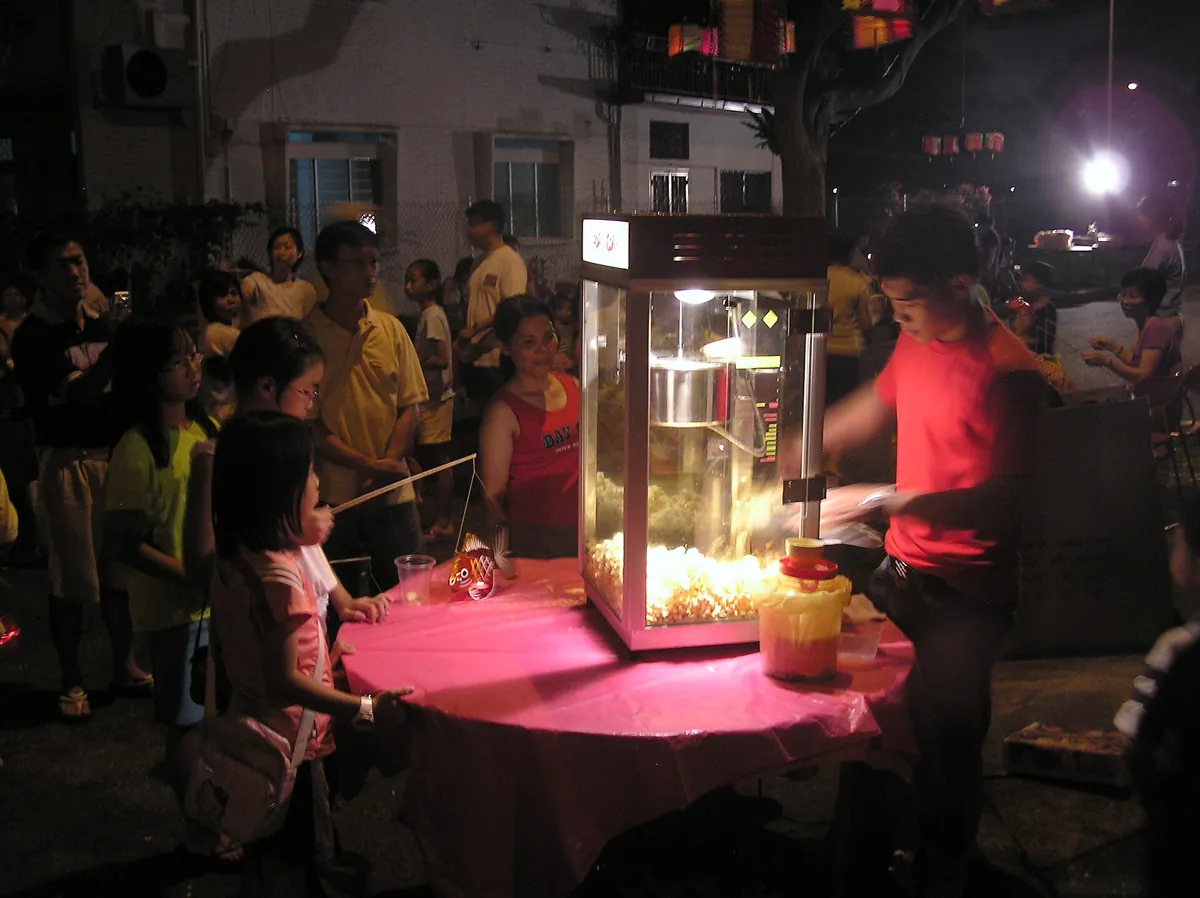
In practical terms, that means a compact, easy-to-navigate event. You will find food booths, craft and merchandise stalls, live entertainment, and activities aimed at children, all wrapped around a blueberry theme that shows up in cobblers, muffins, jams, smoothies, and frozen treats. Because Alma is a small county seat, the festival is genuinely walkable. You can cover most of it in a few hours, or stretch it across a whole weekend if you like to linger and talk to people.
How Blueberries Became a Bacon County Tradition
Blueberries are a relatively modern success story in this part of Georgia. The sandy, acidic soils and long growing season of the southeastern coastal plain turned out to suit rabbiteye and southern highbush varieties extremely well, and over the past several decades the crop moved from a niche planting to a serious source of farm income across the region. Bacon County, set in the middle of that growing belt, was part of the shift, and the harvest calendar soon began to shape the local rhythm of late spring.
The festival grew out of that agricultural identity rather than out of a tourism campaign. It began in the way many small-town celebrations do: a community gathering tied to the harvest, organized by people who wanted a reason to bring neighbors together and a way to support local causes. Over time, vendor rows lengthened, entertainment was added, and the event settled into its current shape as an annual tradition that residents plan their spring around.
What has not changed is the reason it exists. The festival still functions as a showcase for local growers and home bakers, a fundraiser for community organizations, and a homecoming of sorts for families whose roots run through Bacon County. For visitors, that continuity is the appeal. You are not watching a staged production about rural Georgia; you are standing in the middle of it, holding a slice of cobbler.
Inside the Alma Festival: Tastes, Tunes, and Things to Do
Festival weekends in Alma follow a comfortable pattern: mornings are calm and shaded, midday is busy and warm, and evenings bring the biggest crowds and the loudest music. Plan your day around that rhythm and you will enjoy it far more than if you try to do everything between noon and two o’clock.
Blueberry Everything: What to Eat in Alma
Food is the main event. Expect blueberry pie, cobbler, muffins, pancakes, jams, preserves, syrups, smoothies, and ice cream, alongside the standard festival lineup of barbecue, fried favorites, funnel cakes, lemonade, and boiled peanuts. Local bakers often bring the items that sell out first, so if a particular pie is the reason you came, buy it early rather than saving it for the walk back to the car. Prices are set by individual vendors and vary from booth to booth, so carry small bills and keep a little cash on hand.
Live Music and Entertainment in Downtown Alma
Entertainment typically runs throughout the day, with local and regional acts performing country, gospel, bluegrass, and southern rock. Small-town stages like this one are often where you hear a genuinely good band you have never heard of, playing to a crowd of neighbors in folding chairs. Lineups change every year, so check local listings and community pages as the date approaches rather than counting on a particular performer. Bring a lawn chair if you plan to park yourself in front of the stage for an extended stretch.
Family-Friendly Activities for Kids and Grandparents
The festival is designed to be manageable for families with young children and for older visitors who want to sit down regularly. Expect children’s games, crafts, face painting, and the kind of contests that small harvest festivals do well. Strollers handle the grounds fine, though the middle of the day can be hot and crowded. Shade is limited in open areas, so grandparents in particular will want a hat, water, and a chair. Restrooms are usually available on site, and the compact layout means you are never far from your car.
A Sample Blueberry Weekend in Alma and Bacon County
If you are coming from out of town, a two-night stay gives you the most comfortable version of this trip. Here is a workable shape for the weekend.
Friday evening: Arrive in Alma, check in, and take a slow drive through town to get your bearings. Eat a quiet dinner locally, then walk the festival area as vendors set up. This is the easiest time to find parking and to talk to people without shouting over a crowd. If you are staying in a nearby larger town, use Friday night to settle in and make the short drive over in the morning.
Saturday: Get there early, before the heat and the crowds. Start with breakfast and a first pass through the food booths while lines are short, then work the vendor rows for crafts, jams, and produce. Take a midday break in the shade or back at your lodging, and return in the late afternoon for the music. Saturday is the busiest day, so plan your parking strategy around arriving before mid-morning.
Sunday: Come back for a slower morning, buy whatever you regret not buying on Saturday, and then spend the afternoon beyond the festival grounds — a drive through Bacon County farmland, a look at the blueberry fields in season, or a side trip toward one of the larger towns nearby. Head home in the late afternoon rather than late at night, since rural highway driving after dark is tiring.
Getting to Alma and Planning Your Bacon County Trip
Alma is a driving destination. There is no commercial airport in the immediate area, and the town is best reached by car from the surrounding region. That also means your trip planning should revolve around the vehicle: fuel, parking, and how far you are willing to drive for a hotel room.
Driving Routes into Bacon County and Alma
Alma sits in southeastern Georgia within a comfortable drive of Douglas, Waycross, Jesup, and Baxley, and it is a reasonable haul from larger cities farther out in the state. The roads into Bacon County are rural highways, so plan on two-lane stretches, farm equipment, and the occasional slow truck. Fill your tank before you get close, keep an eye out for deer at dawn and dusk, and give yourself extra time rather than trying to shave minutes off the drive.
Where to Stay Near Alma and Bacon County
Lodging in Alma itself is limited, and festival weekend is when it disappears fastest. Many visitors stay in the larger nearby towns, which offer more chain hotels and more restaurant options, then drive in for the day. Book well ahead if you are coming for the festival, and consider a two-night stay so you are not fighting for a single Saturday room. Camping and outdoor lodging options exist elsewhere in the region if you prefer that route.
Parking Near the Alma Festival Grounds
Parking is usually a mix of street spaces, lots, and temporary fields near the event area, generally free or low cost. Volunteers and local law enforcement typically direct traffic, so follow their signals rather than hunting for a spot on your own. The single most useful habit is arriving early: before mid-morning you will park close and walk a short distance, while by midday you may be several blocks out. Note where you parked, since small-town side streets can look alike after a long day.
What Admission and Food Cost in Alma
Admission to festivals of this kind is typically free, with the town making its money through vendor sales, food, and raffles rather than a gate fee. Budget for food and crafts instead of tickets. Bring cash, because small vendors may not take cards and cell service can be spotty in a crowd, and keep a separate small wallet or pocket for the day so you are not digging through a bag every time you buy something.
Late Spring Weather in Southeastern Georgia
Expect warm, humid conditions, with temperatures that can push into the upper 80s or low 90s by afternoon and a real chance of a passing thunderstorm. Dress in light, breathable clothing, wear a hat, and bring sunscreen and a refillable water bottle. Comfortable shoes matter more than you think on grass and gravel. A compact rain jacket or poncho is smarter than an umbrella if storms roll through, and a change of shirt in the car is a small luxury on a muggy day.
Beyond the Booths: The Rest of Alma and Bacon County
The festival is the anchor of the weekend, not the whole of it. Bacon County is farming country, and a slow drive on the back roads during harvest season gives you a sense of the landscape that produced the event in the first place. Ask locally which fields and farm stands are open, since u-pick and roadside sales vary by grower and by week. Downtown Alma is small but worth a walk, and the pace of the town is part of the appeal.
If you want to extend the trip, southeastern Georgia has plenty within reach: the Okefenokee Swamp area to the east, state parks and recreation areas scattered across the region, and the larger towns of Douglas and Waycross for shopping, dining, and chain lodging. A Saturday at the blueberry festival paired with a Sunday of swamp country and back roads makes a well-rounded weekend rather than a single-stop trip.
How Alma Compares with Nearby Southeast Georgia Towns
Alma is the smallest kind of festival town: a rural county seat where the event is genuinely local. Douglas, to the west, is a larger commercial center with more hotels, more restaurants, and a broader retail base, which makes it a practical base if you want comfort over proximity. Waycross, to the east, is bigger still and sits near the Okefenokee, so it works well for travelers who want a festival day plus a nature day.
Baxley and Jesup fall somewhere in between, offering more services than Alma without the size of Douglas or Waycross. The trade-off is simple. Stay in Alma and you get walkability and atmosphere; stay in one of the larger towns and you get easier logistics at the cost of a morning drive. For a first visit, many people split the difference by sleeping nearby and spending the full day in Alma.
Your Alma Blueberry Festival Weekend Checklist
| Book lodging early | Rooms in and around Bacon County fill fast on festival weekend |
| Bring cash | Small vendors may not accept cards, and ATMs are limited |
| Pack sun protection | Hat, sunscreen, and sunglasses for a warm, bright day |
| Carry water | Refillable bottle beats buying drinks all afternoon |
| Wear comfortable shoes | Grass, gravel, and standing in line add up |
| Bring a folding chair | Useful for music sets and for older visitors |
| Add a rain layer | Afternoon thunderstorms are common in late spring |
| Arrive before mid-morning | Best parking and shortest food lines of the day |
| Charge your phone | Service and battery both drain in a crowd |
| Plan a backup activity | A nearby town or park if you need a midday break |
What the Festival Means to Alma and Rural Bacon County
In a county of 11,140 people, a harvest festival is not just entertainment. It is a civic project. The vendors, the volunteers directing traffic, the church groups selling baked goods, and the families who show up every year are all part of the same social fabric, and the festival is one of the few occasions when the whole of Bacon County gathers in one place at one time. That makes it a meaningful event for residents and an unusually honest one for visitors.
It also matters economically. Blueberries are a real crop here, not a decorative theme, and a festival that puts local growers and bakers in front of a crowd has value beyond a single weekend of sales. For a small town, that combination of pride, income, and tradition is hard to manufacture and easy to lose, which is why the event keeps coming back year after year.
Where Alma Sits in Southeastern Georgia
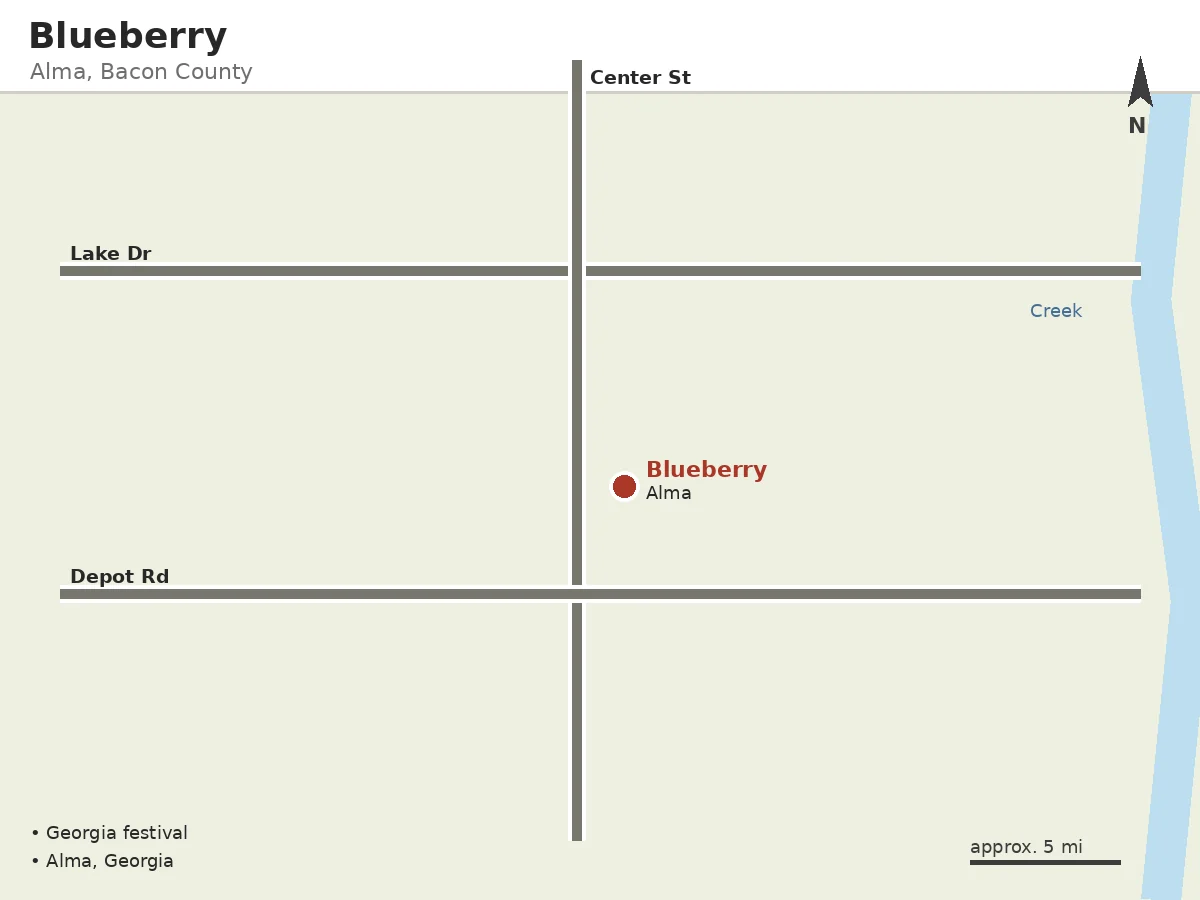
Alma is the county seat of Bacon County in southeastern Georgia, and the festival takes place in and around the town.
Answers for First-Time Blueberry Festival Visitors in Alma
When is the Bacon County Georgia Blueberry Festival held?
It is held each year in late spring into early summer, timed to the blueberry harvest in this part of Georgia. Exact dates are announced locally closer to the event, so confirm the current year’s schedule before you book lodging or take time off work.
Is there an admission fee to get into the festival?
Admission to festivals like this is typically free, with costs coming from food, crafts, and vendor purchases rather than a gate ticket. Bring cash anyway, since individual booths set their own prices and not every vendor will take a card.
Is the Alma festival a good fit for young children?
Yes. The grounds are compact and walkable, there are children’s activities and games, and you are never far from your vehicle if someone needs a break. The main challenge is heat, so aim for morning hours with little kids and keep water and snacks handy.
Where should I park for the festival in Alma?
Parking is generally a mix of street spaces and temporary lots near the event area, usually free or inexpensive, with volunteers directing traffic. Arrive before mid-morning for the closest spots, and note your location so you can find your way back after a long day.
Can I bring my dog to the festival?
Pet policies vary by year and by organizer, and they are usually posted with the event details. If you are traveling with a dog, check the current rules before you go, and remember that crowds, heat, and hot pavement make festival grounds tough on animals even when they are permitted.
What happens if it rains during festival weekend?
Summer thunderstorms in southeastern Georgia are often brief, and events typically continue unless conditions become unsafe. Bring a poncho, expect some mud on grass areas, and be flexible about timing. Check local announcements for any schedule changes before making the drive.
Can I buy fresh blueberries to take home?
Blueberry products are central to the festival, and growers and vendors often sell fresh fruit, jams, and baked goods while supplies last. Availability depends on the harvest and on how late in the day you arrive, so shop early if bringing fruit home is a priority.
Looking Ahead at the Next Alma Blueberry Festival
The festival’s future is tied to the crop and the community that grows it. As blueberry farming continues to matter across southeastern Georgia, Alma has a natural reason to keep investing in an event that celebrates the harvest, supports local organizations, and gives the county seat a weekend of visibility. Expect the format to stay familiar: food, vendors, music, and family activities in a small town that knows how to host.
For visitors, the practical advice is unlikely to change much either. Book early, arrive before mid-morning, bring cash and water, and leave room in your plans for the parts of Bacon County that do not fit inside a festival booth. That is where the trip usually becomes memorable.
Last updated: October 2026
Alma does not try to be a big city festival, and that is the point. A county seat of 11,140 people opens its streets for a weekend, fills them with blueberry pie and small-town music, and sends everyone home full and slightly sunburned. Go for the food, stay for the pace, and plan a little extra time for the back roads on the way out.