Baker County Georgia Independence Day Festival

Planning a Fourth of July trip to Baker County, Georgia, is not like planning a weekend in a big city. Newton, the county seat, sits in a county of 349 square miles with a 2020 population of 2,876. That scale is the appeal: the Baker County Georgia Independence Day Festival is a hometown celebration where the logistics are simple, the crowd is familiar, and the focus stays on community, food, music, and the patriotic holiday itself. This guide is built for travelers who want to arrive prepared, park without circling, keep cool, and still leave room for the slower rhythms of rural southwest Georgia.
Baker County Independence Day: The Newton Planning Snapshot
Before you map the route or pack the cooler, start with the essentials. The table below is designed as a logistics snapshot rather than a schedule. Use it to set expectations, then build your day around the festival’s holiday-week timing and the realities of a small, rural county seat.
| Town | Newton, Georgia |
| County | Baker County, Georgia (founded 1825; named for Colonel John Baker) |
| County seat | Newton |
| Population | 2,876 (2020 census) |
| Region | Southwest Georgia; 349 square miles |
| Typical timing | Around Independence Day, typically early July |
| Admission | Typically free to attend; bring cash for vendors |
| Setting | Small-town Newton, with a community-centered outdoor holiday atmosphere |
| Features | Local food, live music, patriotic ceremonies, family activities |
| Organizer | Local community and civic organizers |
What the Newton Independence Day Festival Means for Baker County
The Baker County Georgia Independence Day Festival is Newton’s way of marking the nation’s birthday without losing the character of a small county seat. The event is typically built around the Fourth of July holiday, when families return home, neighbors set up chairs, and visitors from surrounding communities fold into the local rhythm. Because Newton is the county seat, the festival naturally becomes a gathering point for Baker County as a whole—not just one town’s block party.
Expect a community-centered atmosphere rather than a commercial mega-festival. The appeal is in the details: local vendors, patriotic moments, children running between family groups, and the kind of easy conversation that happens when everyone knows the person behind the grill. For a county founded in 1825 and named for Colonel John Baker, Independence Day carries a layered meaning: it is both a national holiday and a local homecoming.
Admission is typically free to attend, though individual vendors and activities may have their own costs. That structure keeps the festival accessible and puts the emphasis on showing up, settling in, and enjoying the day rather than buying a ticket. For visitors, the best approach is to treat the festival as a full afternoon and evening rather than a quick stop. Arrive with patience, plan for warm weather, and let the pace of Newton set the schedule.

July Fourth in Baker County: From 1825 Foundations to Newton Celebrations
Baker County was established in 1825 and named for Colonel John Baker. Newton became the county seat, and for generations it has served as the administrative and civic anchor for a wide, rural county. In places like this, Independence Day has long been more than a date on the calendar. It is a chance for families spread across 349 square miles to converge, for local organizations to reconnect, and for the county’s small population to feel like one community for an afternoon and evening.
Historically, rural Georgia Fourth of July observances often centered on church picnics, courthouse square gatherings, barbecues, baseball, and patriotic speeches. While the exact shape of every early Newton celebration has changed with the times, the through-line is consistent: food cooked close by, music played live, children given room to run, and a program that honors service, freedom, and local pride. The modern Baker County Georgia Independence Day Festival carries that same impulse into the present.
By the 2020 census, Baker County counted 2,876 residents. That number matters for festival planning. It means the crowd is likely intimate compared with metro Atlanta events, but it also means local resources—parking, seating, shade, restrooms—can be stretched by returning family members and visitors. The festival’s history is not just about patriotic tradition; it is also about a community learning how to host well with the space and infrastructure it has.
1825: Baker County is founded and named for Colonel John Baker. Newton: The county seat becomes the natural civic gathering point for public celebrations. 2020: The census records 2,876 residents across 349 square miles. Present day: The Independence Day festival continues as a Newton tradition, adapting each year while keeping its small-town center.
On the Ground at the Baker County Independence Day Festival
The festival experience in Newton is shaped by the setting. This is not a sprawling fairground with endless rows of corporate booths. It is a county-seat celebration where the scale feels human, the lines move at a local pace, and the best moments often happen between the scheduled highlights. Still, a little forethought helps you get the most from the food, entertainment, and family-friendly areas.
Local Food and Vendor Row in Newton
Food is one of the main reasons people return to a small-town Fourth of July. In Newton, expect the vendor area to lean toward local and regional favorites rather than big-name chains. That might mean barbecue, fried favorites, cold drinks, snow cones, homemade desserts, and the kind of church or civic-group stands that make a festival feel like a community fundraiser as much as a public party.
Because Baker County is rural, vendor availability can vary from year to year. The smart move is to bring cash in small bills, even if some vendors accept cards. If you have dietary restrictions, consider eating before you arrive or packing safe snacks, since a small festival may not have the same variety as a larger city event. A refillable water bottle is also wise; you can usually find water for sale, but having your own backup keeps you comfortable during the hottest part of the day.
Music, Ceremonies, and Evening Entertainment
Live music is a staple of Independence Day gatherings in rural Georgia, and the Newton festival typically leans into that tradition. The entertainment may range from local musicians and cover bands to patriotic programming, announcements, and ceremonial moments that recognize veterans, first responders, and community volunteers. The exact lineup changes, but the rhythm of the day usually builds toward evening, when the temperature drops and the crowd settles in.
If you are logistics-minded, claim your spot early for the main entertainment area. Bring folding chairs or a blanket, but check the day’s setup before spreading out too far; some spaces may be reserved for walkways, vendor access, or emergency vehicles. A small flashlight or phone light helps after sunset, especially if you parked on a side street or grassy area away from the main lights.
Family Activities and Kid-Friendly Spaces
Family activities are central to the festival’s appeal. Expect a mix of games, crafts, inflatables, face painting, and open space for children to move around. Because Newton is small, parents often find it easier to keep an eye on kids here than at a large urban event, but the usual precautions still apply: agree on a meeting point, write your phone number on younger children’s wrists, and keep a recent photo on your phone.
Older adults and visitors with mobility needs should also plan around shade and seating. If the festival is outdoors, bring a lightweight chair and arrive before the midday heat peaks. The ground may be uneven in places, so supportive shoes are a better choice than sandals. If you need a quieter break, look for shaded edges of the gathering area where you can still hear the music without being in the middle of the crowd.
Logistics for Getting to Newton on Independence Day
Newton is a small town in a large county, and that combination shapes every travel decision. You will not be navigating a dense grid of one-way streets or competing with stadium traffic, but you also will not find endless parking decks or a long list of nearby hotels. The best plans are simple, early, and flexible.
Driving Into Newton and Baker County
Most visitors will arrive by car. Fuel up before you get close to Newton, especially if you are coming from a smaller surrounding community or taking a route with long rural stretches. Cell service can be inconsistent in parts of rural southwest Georgia, so download your map before you leave and consider screenshotting the festival location and any parking instructions.
Give yourself extra time for the final few miles. Even a modest holiday crowd can slow things down when everyone is turning into the same area. If you are traveling with a group, consider carpooling to reduce the number of vehicles looking for parking. That single decision can make the arrival experience much smoother for everyone.
Where to Stay Near Newton and Baker County
Newton is a small county seat, so lodging directly in town may be limited. Many visitors treat the festival as a day trip from nearby southwest Georgia communities or stay in a larger hub within driving distance. If you prefer not to drive home late, book early around the Independence Day holiday and be prepared to widen your search radius.
Campers and RV travelers should research local options well in advance, since rural campground availability can fill around summer weekends. If you are staying with family or friends in the area, confirm parking arrangements before the event. A driveway spot a few blocks away can be more valuable than circling the center of Newton at sunset.
Parking Strategy Around the Newton Celebration
Parking in a small town festival usually means a mix of street parking, public lots, church lots, and grass areas that open for the event. Arrive early if you want the closest spots, and follow any directional signs or volunteer instructions. Do not block driveways, mailboxes, or fire lanes, even if you see other cars doing something questionable.
Keep a mental note of your parking location, especially if you arrive in daylight and leave after dark. Drop a pin on your phone map before you walk away. If rain has fallen recently, avoid parking on soft ground unless directed; a rural field can turn muddy quickly. A small piece of cardboard or a mat in the trunk can help if you need to deal with damp grass or dirt later.
Admission, Vendors, and What to Budget
Admission is typically free to attend, which makes the festival an affordable outing for families. Your main costs will likely be food, drinks, games, crafts, and any vendor purchases. Bring cash, including small bills, and set a loose budget before you arrive. That is especially helpful if you have children who want to visit every activity station.
Prices at small festivals are often reasonable, but ATM access can be limited in a rural county seat. Do not rely on finding a machine at the last minute. If you plan to buy raffle tickets, T-shirts, or homemade goods, having cash ready keeps the transaction quick and supports local groups directly.
July Weather and Heat Planning in Southwest Georgia
Early July in southwest Georgia means heat and humidity. Even a short walk from the car can feel draining if you are not prepared. Wear lightweight, light-colored clothing, bring a hat, and use sunscreen. A handheld fan, a cooling towel, and extra water can make a big difference, especially for young children and older adults.
Afternoon thunderstorms are possible in summer, so pack a poncho or compact umbrella. If lightning develops, move to a hard-roofed shelter or your vehicle rather than standing under a tree. The festival may pause or adjust programming during severe weather, so keep an eye on local updates and be ready to be flexible.
A Sample Independence Day Weekend in and Around Newton
Friday: Arrive in Baker County by late afternoon if you are staying overnight. Check into your lodging, drive through Newton to get your bearings, and locate the festival area. Eat dinner at a local spot or pick up supplies for a simple picnic. Turn in early; Saturday will be warm and full.
Saturday: Start with a slow morning and a hearty breakfast. Head to the festival area before midday, park where you have room to exit later, and walk the vendor row before the biggest crowds arrive. Claim a shady spot with chairs or a blanket, then rotate through food, music, and family activities. Stay into the evening for the main entertainment and patriotic moments.
Sunday: Use the morning to explore the quieter side of Baker County. Take a rural drive, enjoy a local breakfast, and let the holiday weekend wind down. If you are heading home, leave before the late-afternoon rush and top off your fuel before the long stretch. The best part of a Newton Fourth of July is that it never feels rushed—so do not schedule yourself into exhaustion.
Newton Compared With Nearby Southwest Georgia Festival Towns
Newton offers a distinctly small-county Fourth of July experience. Compared with larger nearby hubs like Albany, the Baker County festival is quieter, less commercial, and easier to navigate. Albany may offer more dining, lodging, and entertainment options, but it also comes with more traffic and bigger crowds. Newton trades variety for intimacy, and for many visitors that is exactly the point.
River towns such as Bainbridge often build their summer identity around waterfront scenery and a broader downtown district. Newton, by contrast, is a county-seat celebration rooted in a rural landscape of 349 square miles. If you want a festival that feels woven into the civic life of a place, Newton’s scale is an advantage. You can park once, walk the event, and still feel like you have seen the heart of the community.
Thomasville and other southwest Georgia towns bring their own strong local traditions, from historic districts to regional food scenes. A traveler could easily pair a Newton Independence Day visit with a stop in one of those towns on the way in or out. The comparison is not about which is better; it is about matching the festival to your mood. Choose Newton for a slower, neighborly Fourth of July with minimal logistics and maximum local flavor.
Packing and Logistics for a Newton Fourth of July
Use this checklist as a quick pre-departure scan. It is built for the realities of a rural county seat: warm weather, limited cell service, cash-friendly vendors, and outdoor seating.
| Item | Why it helps |
| Folding chairs or a blanket | Gives you a comfortable base for music and evening programming |
| Cash in small bills | Speeds up vendor purchases and helps if cards are not accepted |
| Refillable water bottles | Keeps everyone hydrated during a hot July day |
| Sunscreen and hats | Protects against strong southwest Georgia sun |
| Rain ponchos | Useful for sudden summer showers without carrying a bulky umbrella |
| Bug spray | Helpful for grassy or evening outdoor areas |
| Phone charger or battery pack | Keeps maps, tickets, and photos available if service is spotty |
| Comfortable shoes | Better for uneven ground, gravel, and grass |
Beyond the Festival: Exploring Baker County and the Newton Area
Baker County is a large, rural county, and the festival is only one way to experience it. With 349 square miles of land and a population of 2,876, the area rewards slow driving and unhurried curiosity. The landscape is part of the appeal: open fields, wooded edges, small farms, and roads that let you see the horizon rather than a skyline.
If you have extra time, build in a scenic loop around Newton and the surrounding countryside. Stop for a local meal, take photos of the courthouse area, and talk with residents about what makes the county tick. In a place this size, the best local knowledge often comes from a casual conversation at a gas station, diner, or festival booth.
Visitors should also remember that rural amenities are spread out. Plan your fuel, food, and restroom stops with that in mind. A little patience goes a long way, and the reward is a glimpse of southwest Georgia that feels far removed from interstate travel and chain-store sameness.
What Independence Day Adds to Baker County’s Community Fabric
In a county with fewer than 3,000 residents, a Fourth of July festival is not just entertainment. It is a civic reunion. It gives local organizations a reason to work together, gives families a shared date to circle on the calendar, and gives young people a sense of place. The event also supports the local economy in small but meaningful ways, from food sales to overnight visits by relatives and friends.
The festival also reinforces Newton’s role as the county seat. While Baker County is spread across a wide area, Newton provides a natural center for gathering. On Independence Day, that civic function becomes visible: people from different corners of the county come together, not because they have to, but because the tradition matters to them.
For visitors, the significance is easy to miss if you only look for big-stage entertainment. The real value is in the relationships. A festival like this survives on volunteers, local sponsors, and families who keep showing up year after year. That is what makes it worth planning around—not just a fireworks show or a food truck, but a community choosing to celebrate together.
Where the Newton Independence Day Celebration Sits in Baker County
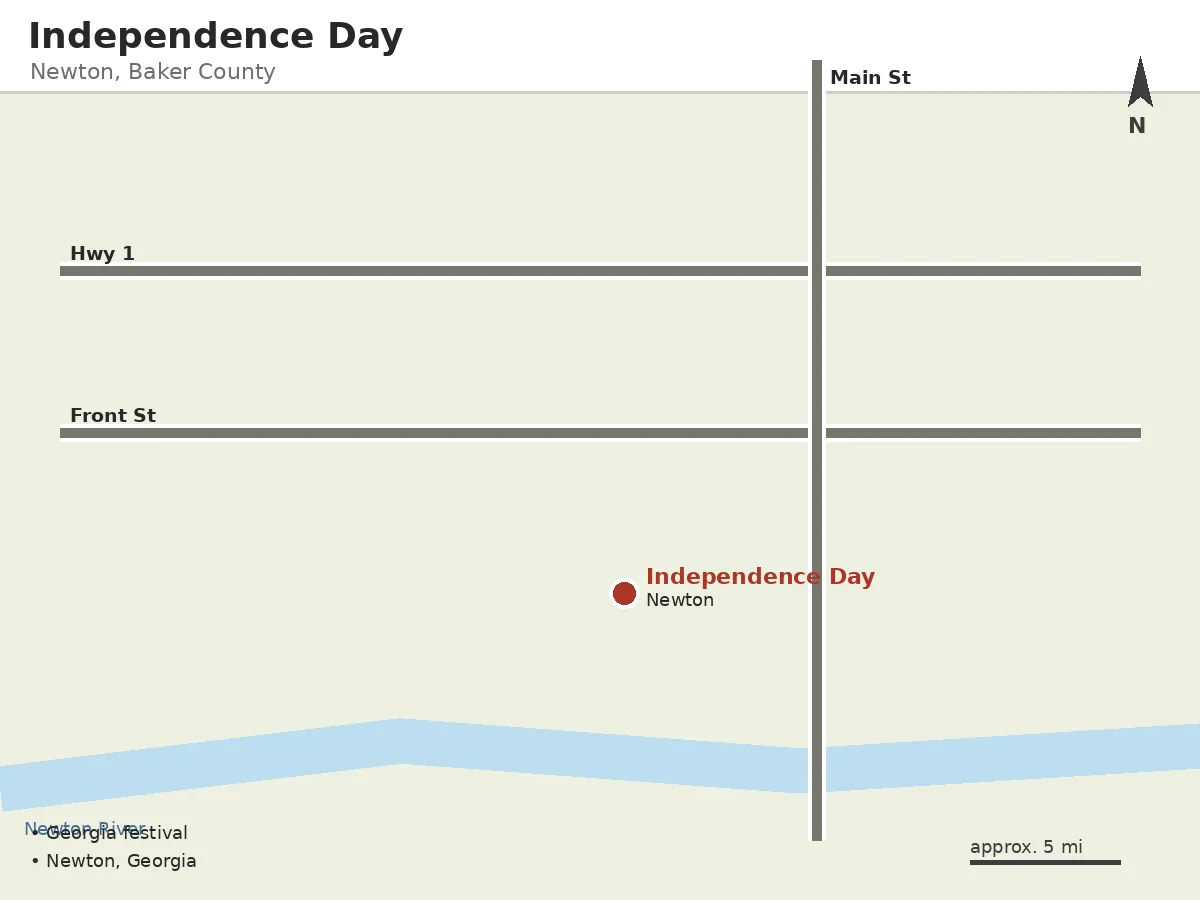
The celebration takes place in Newton, the county seat of Baker County, Georgia.
Independence Day in Newton: What Visitors Ask Before Arriving
Is the Baker County Independence Day Festival free to attend?
Admission is typically free to attend. You will still want cash for food, drinks, games, crafts, and other vendor purchases. Some activities may have individual fees, so a small budget helps you say yes without worrying about card readers or limited ATMs.
Where exactly is Newton, Georgia?
Newton is the county seat of Baker County in southwest Georgia. The county covers 349 square miles and had a 2020 population of 2,876. If you are coming from a larger nearby town, plan for rural roads and give yourself a little extra travel time.
What should I bring to a July Fourth festival in rural Georgia?
Bring water, sunscreen, hats, folding chairs or a blanket, bug spray, and rain ponchos. Cash in small bills is also smart. Comfortable shoes are a must because you may park on grass or walk along uneven edges of the festival area.
Can I park near the celebration?
Parking is usually a mix of street spaces and nearby lots or grass areas. Arrive early for the best options, follow volunteer directions, and never block driveways or fire lanes. Drop a pin on your phone so you can find your vehicle after dark.
Are there hotels in Newton?
Newton is a small county seat, so lodging directly in town may be limited. Many visitors stay in larger nearby communities or make the festival a day trip. If you want to stay overnight around Independence Day, book early and be flexible about your search area.
Is the festival suitable for young children and older adults?
Yes, the small-town scale tends to make it manageable for families and older visitors. Bring a chair for anyone who needs to sit, plan around the hottest part of the day, and set a meeting point in case your group separates. Shade and quiet spaces may be limited, so arrive early if those matter to you.
What happens if it rains?
Summer showers are possible in southwest Georgia, and severe weather can pause or change outdoor programming. Bring rain gear, move to a hard-roofed shelter or vehicle if lightning is nearby, and check local updates for any schedule adjustments.
How early should I arrive?
Arrive before midday if you want easier parking, shorter vendor lines, and a better chance at shade. If you are mainly coming for evening entertainment, aim to get there well before sunset so you are not navigating unfamiliar streets in the dark.
The Next Chapter for Independence Day in Newton
The future of the Baker County Georgia Independence Day Festival will likely depend on the same things that have sustained it so far: local volunteers, community pride, and a willingness to adapt. As Baker County’s population remains small and spread out, organizers may continue to balance tradition with practical questions about parking, shade, accessibility, and weather contingency.
For visitors, that means the festival is likely to stay intimate rather than grow into a massive regional event. That is not a weakness. It is a reason to go. You can experience a Fourth of July that feels personal, where the county seat of Newton becomes a gathering place for neighbors, families, and travelers who appreciate a slower holiday pace.
If you plan ahead, bring the right supplies, and leave room for the unexpected, the festival can be one of the most rewarding small-town Independence Day experiences in southwest Georgia. The key is to respect the scale, support the local vendors, and enjoy the community for exactly what it is.
Last updated: October 2026
Whether you are a Baker County native returning home or a first-time visitor looking for a quieter Fourth of July, Newton’s Independence Day celebration offers a straightforward, neighborly way to mark the holiday. Plan for heat, bring cash, arrive with patience, and let the county seat’s small-town rhythm carry the day.

One Comment