Jefferson County Kentucky St. James Court Art Show Festival
On the first weekend of October, one of Louisville’s historic residential districts trades its quiet for crowds, canvas and craft. The event behind that transformation is published under the name St. James Court Art Show, a juried exhibition of fine arts and contemporary crafts staged across the courts and streets of Old Louisville. The sheet title behind this article adds a county prefix and the word Festival, yet no layer read prints that longer form; every layer knows the gathering simply by the court it fills. What follows stays with what those layers document: a free public show, sponsored by six neighbourhood associations, returning in two thousand twenty-six under a seventieth-year billing.
About the Show
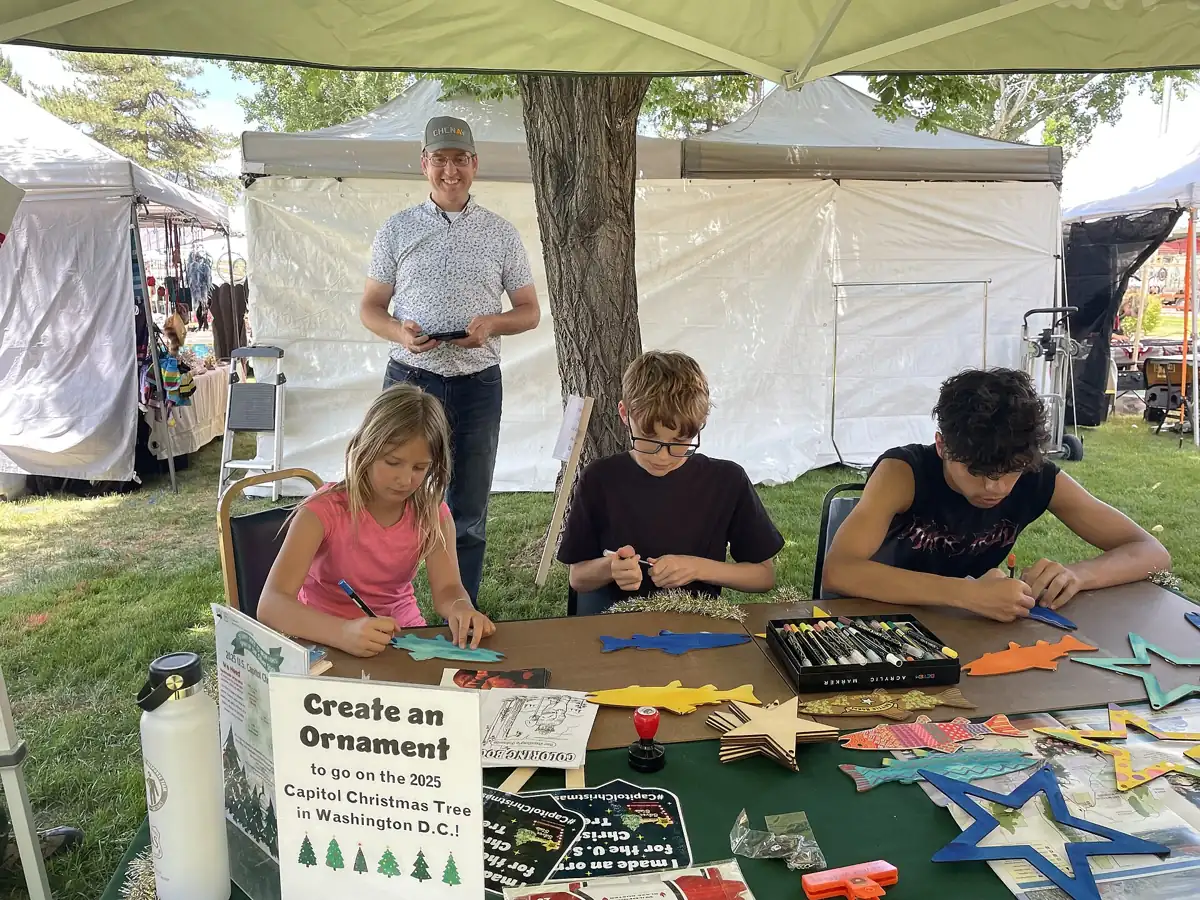
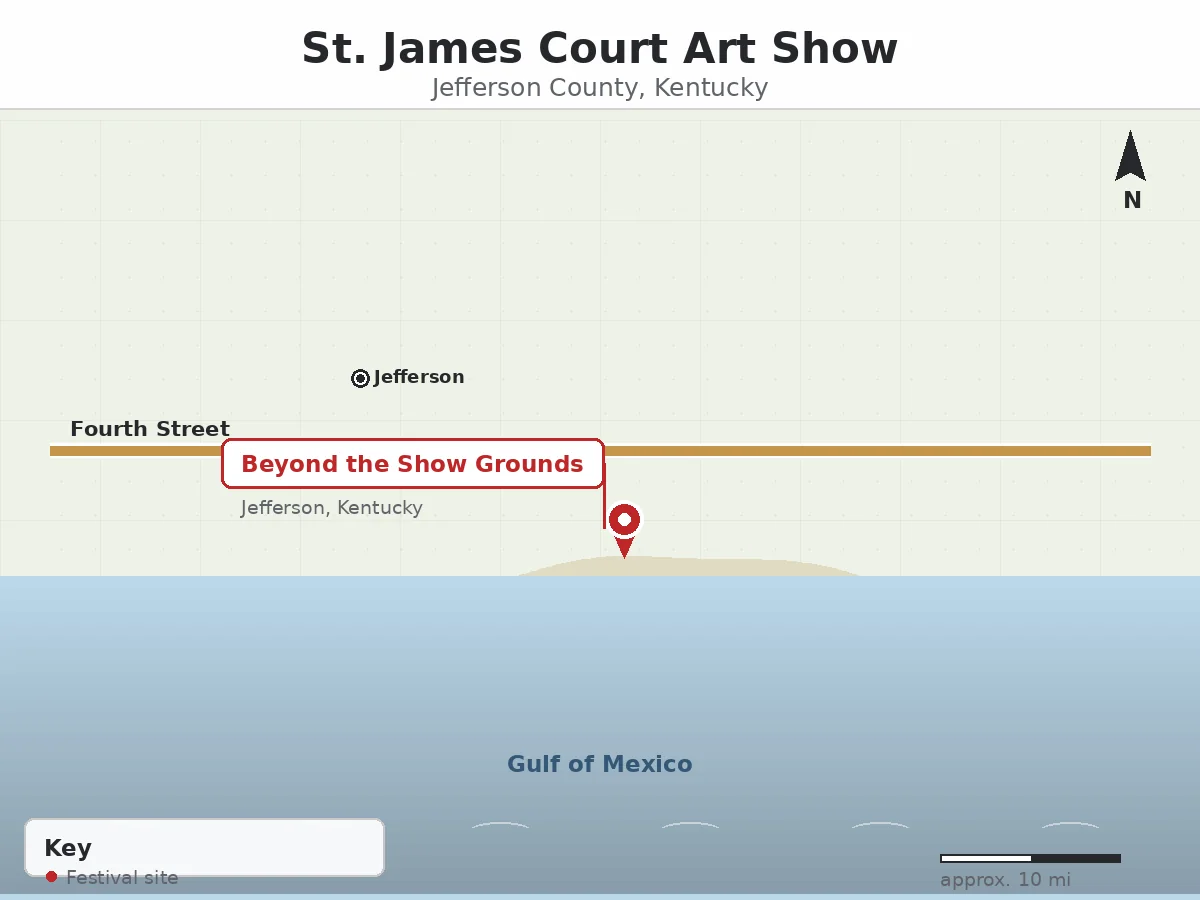
Louisville is the county seat of Jefferson County, Kentucky, and the show sits inside Old Louisville, a district the organiser and newspaper layers describe as holding one of the country’s largest collections of Victorian homes. Against that backdrop, the show spreads across six sections rather than a single field or hall: St. James Court itself, Belgravia Court, Fourth Street, Third Street, the 1300 Section and the grounds of West End Baptist Church, as listed on the organiser’s own site. The exhibition becomes a walk through the neighbourhood’s architecture as much as a visit to its booths.
Sponsorship follows the same pattern. The organiser’s own site states that the show is sponsored by six non-profit neighbourhood associations, one for each section, and the record keeps those associations described as a group rather than merged into one organiser name. Each stretch of court or street therefore carries its own association’s stewardship, while the show presents a single identity to visitors. Contact routes for the organiser exist on the organiser’s own site, noted here by existence only.
Quick Facts
| Item | Detail |
| Name as published | St. James Court Art Show |
| Host city | Louisville, Kentucky |
| County | Jefferson County |
| Neighbourhood | Old Louisville |
| Venue | St. James Court, Belgravia Court, Fourth Street, Third Street, the 1300 Section and the West End Baptist Church grounds |
| Documented edition | The second to the fourth of October, two thousand twenty-six |
| Hours | Friday and Saturday, ten in the morning to six in the evening; Sunday, ten in the morning to five in the afternoon |
| Exhibitors | More than six hundred artists; one organiser layer says more than six hundred fifty |
| Admission | Free, as stated by a reference layer and a travel layer |
| Sponsorship | Six non-profit neighbourhood associations, one per section |
History
The documented history begins with a reference layer’s plain statement that the show has been held since nineteen fifty-seven. That single sentence anchors the event in the late nineteen fifties and makes it one of the longer-running fixtures on Louisville’s autumn calendar, yet the layers read offer no founding charter, no first-edition programme and no early organiser list. The honest history is therefore short: a show with roots in nineteen fifty-seven, still running in the same neighbourhood nearly seven decades later.
One travel layer adds an origin story, claiming the show began in nineteen fifty-seven as a fundraiser for fountain repairs, started by a founder whom that layer names. That account is recorded here as that layer’s claim and nothing more: it is not corroborated by the organiser’s own site or the reference layer in the material read, and the founder is referred to by role only, never by name. Readers should treat the fountain story as local telling attached to the show rather than as settled fact.
For a useful comparison, see the Jefferson County Kentucky Louder than Life Festival for another county festival.
The seventieth-year billing for two thousand twenty-six sits alongside these claims without being reconciled with either of them. Billings of that kind often count inclusively or round for effect, and the layers read do not explain the arithmetic. The organiser presents two thousand twenty-six as a milestone year; a reference layer gives the show a start in nineteen fifty-seven; the two statements coexist in the record without a published bridge between them.
The court at the heart of the grounds is a residential street in Old Louisville, home to the fountain and the Victorian houses that give the show its setting, but the neighbourhood itself is not the event: the show is the temporary, organised exhibition layered onto those streets each October, while the place exists all year.
What to Expect
Browsing is the core activity here, and the scale is considerable. The organiser’s own site describes a juried fine arts and contemporary crafts show, meaning the artists have passed a selection process rather than simply renting space, and it puts the exhibitor count at more than six hundred artists. One organiser layer gives a higher figure of more than six hundred fifty artists. The two counts stand side by side here, unmerged, because the layers read do not reconcile them.
The six sections give the browsing a geography. A visitor can move from the enclosed feel of the courts, where booths line pedestrian ground between Victorian facades, out to the street sections on Fourth Street and Third Street, through the 1300 Section and across to the West End Baptist Church grounds. Each section is sponsored by its own neighbourhood association, and the change of setting keeps a long walk from feeling repetitive.
The setting does real work in the experience. The organiser and newspaper layers both dwell on the Victorian-homes backdrop, describing the show as set among one of the country’s largest collections of Victorian homes: the art is encountered in front of turrets, stained glass and wide porches rather than inside a convention hall. For many visitors the houses are half the exhibition.
Hours reward an early start. On Friday and Saturday the show runs from ten in the morning to six in the evening, while Sunday closes an hour earlier, at five in the afternoon. Those times come from the organiser’s own site and the local newspaper layer for the two thousand twenty-six edition.
Planning Your Visit
The documented edition runs from Friday the second of October through Sunday the fourth of October, two thousand twenty-six, and admission is free: a reference layer describes the show as a free public show, and a travel layer also states free admission. Artist and exhibitor arrangements, where they exist, belong to the participants’ side of the event and are not a charge on visitors walking the grounds.
Because the grounds are working residential streets, treat the six sections as a route rather than a destination. A visitor who walks them in a deliberate order will cover the exhibition without doubling back through the densest stretches at peak hours, and morning arrivals on any of the three days meet the courts before the midday crowds build.

The record’s limits deserve a sentence of their own. The layers read document one edition in detail and say nothing here about parking, shuttle services, food provision or accessibility, so none of those things are promised in this article. What the record does support is the shape of the day: free entry, six sections, hundreds of juried artists and a Victorian streetscape as the gallery. Practical questions beyond that belong with the organiser, whose contact routes exist on the organiser’s own site.
Weather is the one variable no layer can settle. An outdoor show spread across open courts and streets in early October asks visitors to dress for the season and check the forecast before setting out, since the exhibition has no roof.
A Sample Day at the Show
Arrive at St. James Court shortly after ten in the morning, while the light is good and the court is still easy to walk, and give the first hour to the booths along the court itself. Late morning suits a move into Belgravia Court, whose enclosed, pedestrian character rewards slower looking, before the crowds thicken around midday.
Midday can carry the street sections, Fourth Street and Third Street, where the exhibition opens out and the Victorian frontages become part of the viewing; pause there to look up from the booths, because the architecture is documented as part of the show’s appeal. The afternoon then fits the 1300 Section and the West End Baptist Church grounds, completing the six sections in one unhurried circuit, with time on Friday or Saturday to revisit a favourite artist before the six o’clock close. Sunday visitors should plan the same circuit against the earlier five o’clock finish.
How This Show Compares
Louisville supports other art fairs and shows under different names, and those events do not stand as evidence for this one. Where a conventional fair occupies a park or a hall for a weekend, this show occupies a living neighbourhood, dispersing its booths across courts and streets that residents use all year. Where many fairs charge at a gate, the layers here describe a free public show. And where most fairs are run by a single producing organisation, this one is sponsored by six neighbourhood associations, one per section.
The juried element also sets it apart from open-entry craft markets. A juried show asks artists to be selected, and the organiser’s count of more than six hundred exhibiting artists, or more than six hundred fifty on the higher count, suggests selection still leaves a very large field. Visitors who prefer a tighter exhibition may find the scale demanding; visitors who want range will find few Kentucky shows documented at this size.
Visitor Checklist
- Confirm the dates against the organiser’s own site before travelling, since only the two thousand twenty-six edition is documented in detail here.
- Plan a route through all six sections: the two courts, Fourth Street, Third Street, the 1300 Section and the church grounds.
- Start early in the day to walk the courts before peak crowds arrive.
- Remember Sunday closes at five in the afternoon, an hour earlier than Friday and Saturday.
- Carry payment methods for artwork purchases, since admission being free does not make the art free.
- Dress for an outdoor show on residential streets in early October.
- Leave time to look at the Victorian houses as well as the booths.
- Note the organiser’s contact routes on its own site for questions the record does not answer.
Beyond the Show Grounds
Old Louisville rewards the visitor who lingers after the booths close. The neighbourhood’s Victorian streets extend well beyond the six sections, and the same architecture that frames the show lines block after block of residential Louisville. The organiser and newspaper layers describe the district as holding one of the country’s largest collections of Victorian homes, so a simple walk outward from the courts continues the day’s theme.
An October weekend built around the show can comfortably absorb the wider city as well. The record read for this article stays close to the neighbourhood, though, and does not attempt a guide to the city’s other attractions. The documented point is narrower: the show’s setting is not a backdrop borrowed for the weekend but a district whose character explains why the event reads the way it does.
Why the Show Matters
A free, juried exhibition of this scale, sustained in the same neighbourhood across a span that a reference layer traces to nineteen fifty-seven, is a significant piece of Louisville’s cultural furniture. The six-association sponsorship model is part of that significance: the show is not an outside production rented into the district but an event carried by the neighbourhood associations of the very streets it occupies, one association for each section. That arrangement binds the event’s fortunes to the residents who live with its crowds, and helps explain how the show has persisted where a purely commercial fair might have moved on.
The seventieth-year billing, taken as the organiser’s own framing rather than as audited arithmetic, marks the same point from another angle. Whether or not the count is exact, the organiser presents two thousand twenty-six as a milestone, and such milestones are how long-running community events announce that they intend to continue.
Frequently Asked Questions
Which streets and courts make up the show grounds?
The organiser’s own site lists six sections: St. James Court, Belgravia Court, Fourth Street, Third Street, the 1300 Section and the grounds of West End Baptist Church, all in the Old Louisville neighbourhood of Louisville, Kentucky.
How are the exhibiting artists chosen for the show?
The organiser describes the event as a juried fine arts and contemporary crafts show, which means exhibitors pass a selection process. The organiser counts more than six hundred artists for two thousand twenty-six, while one organiser layer gives more than six hundred fifty; the record carries both figures without reconciling them.
What should a first-time visitor know about the hours?
For the documented two thousand twenty-six edition, the show runs Friday and Saturday from ten in the morning to six in the evening and Sunday from ten in the morning to five in the afternoon, across the second, third and fourth of October.
Does the show charge anything to walk the grounds?
No charge on visitors is recorded. A reference layer describes the event as a free public show and a travel layer also states free admission; any arrangements made by exhibiting artists sit on the participants’ side of the event, not at a gate.
What to Expect From the Next Jefferson County Kentucky St. James Court Art Show Festival
How often is Jefferson County Kentucky St. James Court Art Show Festival held?
The layers read document the show as an October event in Old Louisville, and a reference layer states it has been held since nineteen fifty-seven, which supports describing it as a recurring autumn fixture. Only the two thousand twenty-six edition is documented in detail, so the pattern is stated as the record presents it, not as a guaranteed cycle.
When is the next Jefferson County Kentucky St. James Court Art Show Festival?
The documented edition runs from the second to the fourth of October, two thousand twenty-six, billed by the organiser as the seventieth year. No later edition is documented in the layers read for this article, so a future date would need to come from the organiser’s own site when it is published.
Will the dates change?
The documented pattern places the show across a Friday-to-Sunday span in early October, with hours of ten to six on the first two days and ten to five on the Sunday. Dates for any later edition rest with the organiser and the six sponsoring associations, and nothing in the record read fixes a future year to the same days.
Closing
The St. James Court Art Show, as the record documents it, is a free juried exhibition spread across six sections of Old Louisville, sponsored by the neighbourhood associations of the streets it fills, and presented in two thousand twenty-six under a seventieth-year billing alongside a documented history reaching back to nineteen fifty-seven. For a visitor, the offer is simple and unusual: hundreds of selected artists, no gate charge, and a Victorian neighbourhood doing double duty as the gallery.



One Comment