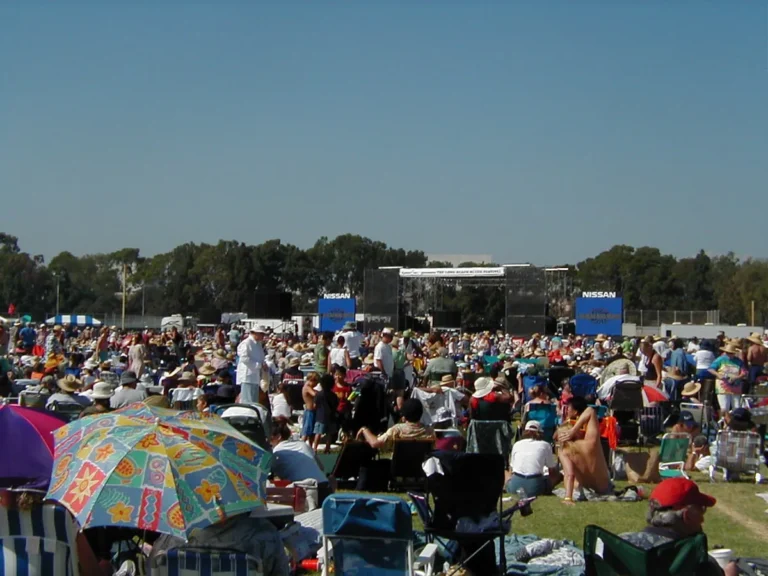
Hancock County Kentucky Independence Bank Sorghum Festival
Late October in Hawesville belongs to sorghum. The Hancock County Kentucky Independence Bank Sorghum Festival gathers demonstrators, vendors and neighbours at the Hancock County Fairgrounds for a gathering built around an old county craft: pressing sweet sorghum cane and boiling the juice down into syrup. Local newspaper layers describe a period when sorghum festivals were regular fixtures in Hancock County, and the modern event exists because that faded tradition was deliberately brought back. The bank’s own events layer, a regional radio layer and a regional events-magazine layer all print the event as the Independence Bank Sorghum Festival, while festival-guide layers shorten the name to Sorghum Festival and older local newspaper layers call it the Hancock County Sorghum Festival. Those printed forms stay separate throughout this article, because no layer merges them into a single title. Everything below rests on documented editions, running from a sixth annual gathering in two thousand six to the fairgrounds edition of two thousand twenty-four, and each claim stays fenced to the layer that carries it.
About the Festival
Hawesville hosts the festival, and a historical-marker reference layer states explicitly that Hawesville is the county seat of Hancock County. The venue in the recent record is the Hancock County Fairgrounds, named by the bank’s own events layer, the regional radio layer and the regional events-magazine layer alike. Independence Bank stands at the centre of the organising account. The events-magazine layer says the bank “was instrumental in revitalizing this annual festival,” and a local newspaper layer from two thousand thirteen says the bank revived the festival itself. No separate committee name appears in any layer read, so none is adopted here. In the two thousand nineteen coverage, the bank’s president personally invited the public to attend; he appears in this article by role only. A regional radio layer prints a bank telephone number alongside its festival coverage, and that number’s existence is noted here without reproducing it. The festival’s subject is sorghum syrup making, demonstrated publicly, surrounded by the craft booths, food vendors, quilts, tractors and music that the documented editions describe.
Quick Facts
| Field | Details |
| Published name | Independence Bank Sorghum Festival |
| Shorter printed forms | Sorghum Festival; Hancock County Sorghum Festival |
| Host town | Hawesville, the Hancock County seat |
| Venue | Hancock County Fairgrounds |
| Organiser | Independence Bank |
| Documented editions | Two thousand six, two thousand nineteen, two thousand twenty-one, two thousand twenty-two, two thousand twenty-four |
| Programme focus | Sorghum syrup making demonstrations |
| Admission in print | Free in the two thousand nineteen and two thousand twenty-one editions |
| Earlier admission | Two dollars in two thousand six, ages six and up |
History
Local newspaper layers state that sorghum festivals were once regular events in Hancock County and that the custom faded during the nineteen fifties. Against that background, newspaper layers also document an earlier incarnation of this festival reaching a sixth annual edition in two thousand six, complete with an official poster. That two thousand six programme showed sorghum making carried out three ways, with motorised, mule-powered and hand methods worked by members of a local family, sweet sorghum juice squeezed and boiled, and sorghum ice cream and biscuit sandwiches served. The revival story belongs to the following decade. Writing in two thousand nineteen, the regional events-magazine layer said the bank had been instrumental in reviving the tradition “seven years ago,” and a two thousand thirteen newspaper layer confirms that the bank revived the festival itself in that year. The layers never state a single founding year for the current series, and this article derives none: the sixth annual billing of two thousand six belongs to the earlier incarnation as printed, and the revival account stands on its own terms, credited to the bank by the magazine and newspaper layers that report it. The revived series then builds its own dated trail. The regional radio layer documents an edition on the thirtieth of October two thousand twenty-one, presented by Independence Bank and running from ten in the morning to six in the evening. A festival-guide layer lists an edition on the twenty-ninth of October two thousand twenty-two, carrying the shortened Sorghum Festival name. The run reaches the bank’s own events layer in two thousand twenty-four, which places demonstrations, food vendors, food trucks and craft vendors at the fairgrounds on the twenty-sixth of October. Each of those editions is recorded here exactly where its layer puts it, with no connecting claims added between them.
What to Expect
Demonstrations anchor the documented programme. The events-magazine and bank layers describe sorghum syrup making shown step by step, with cane ground and the juice boiled, and the two thousand nineteen edition added a sorghum cooking demonstration to the schedule. Around that centre, the two thousand nineteen edition, documented by the regional events-magazine layer, offered a quilt show, antique tractor and equipment exhibits, a petting zoo, inflatables, live music, vendors and food booths. The bank’s own events layer for two thousand twenty-four lists demonstrations alongside food vendors, food trucks and craft vendors. Older layers widen the picture further: the two thousand six poster programme included a car show and a tractor-drawing contest next to the syrup work. A visitor moving through the fairgrounds on a documented edition could therefore watch juice become syrup, browse quilts and craft stalls, eat from the food booths, and finish among the antique tractors, with live music running through the day as the magazine layer describes it. The cooking side deserves attention of its own. Sorghum ice cream and biscuit sandwiches appear in the two thousand six programme, and the two thousand nineteen cooking demonstration shows the syrup moving from the boiling pan into prepared food, so tasting forms part of the documented experience rather than an embellishment added here.
Planning Your Visit
Recent documented editions cluster in late October, so an autumn trip to Hawesville is the working assumption the record supports. The regional radio layer gives the two thousand twenty-one edition hours as ten in the morning to six in the evening, and the bank’s own events layer starts the two thousand twenty-four edition at ten in the morning at the Hancock County Fairgrounds. Admission needs care, because the layers speak by year rather than for the festival as a whole. The events-magazine layer records free admission in two thousand nineteen, and the radio layer billed the two thousand twenty-one edition as “FREE to attend,” with free booth setup besides. The earlier incarnation charged in two thousand six, when its poster set admission at two dollars for ages six and up and free entry for ages five and under. No admission statement for the two thousand twenty-four edition appears in the sources read, so travellers should check the current year’s arrangements rather than assume any earlier year’s terms still hold. The radio layer prints a bank telephone number with its coverage, which offers one printed route for questions. Groups considering a booth should note the radio layer’s mention of free booth setup in two thousand twenty-one, while treating that strictly as that year’s term and confirming whatever arrangement applies to their own edition.
For a useful comparison, see the Greenup County Kentucky Flatwoods Comic and Toy Festival for another county festival.
A Sample Day at the Fairgrounds
A morning arrival fits the documented shape of the day, since the bank’s own layer opens the two thousand twenty-four edition at ten in the morning. Begin at the demonstration ground while the cane grinding and juice boiling are under way, because that craft display is the reason the festival exists. Late morning suits a slow pass through the craft vendors and food trucks the bank’s layer lists, with lunch drawn from the food booths. The two thousand nineteen programme suggests the afternoon pattern: quilts on display, antique tractors and equipment exhibits to walk, a petting zoo and inflatables for younger visitors, and live music carrying the middle of the day. Anyone who attended the two thousand six edition would have recognised the same rhythm, with sorghum ice cream and biscuit sandwiches where the modern food trucks stand. Closing time in the documented record is six in the evening, the hour the radio layer prints for two thousand twenty-one, so plan the last demonstration and a final round of the booths before then.
Two Incarnations, One Tradition
Comparing the earlier series with the revived festival shows how much survived the gap. The two thousand six edition already centred on working demonstrations, three syrup-making methods deep, and it charged a small gate on its poster. The revived editions documented from two thousand nineteen onward keep the demonstrations at the centre but wrap them in a fuller fairgrounds programme of quilts, tractors, inflatables and music, and the layers for two thousand nineteen and two thousand twenty-one describe entry as free. The names in print also mark the change: older newspaper layers speak of the Hancock County Sorghum Festival, while the bank’s own layer and the magazine and radio layers print the Independence Bank Sorghum Festival. Two namesakes elsewhere must not be confused with this event. The Morgan County Sorghum Festival in West Liberty belongs to a different county, and a fall harvest festival in Shelbyville sponsored by the same bank is a separate event in Shelby County.

Visitor Checklist
- Confirm the current year’s date before travelling, since documented editions fall in late October but no single fixed day governs them.
- Recheck admission for the year you attend, because the layers record free entry in some years and a charge in the earlier series.
- Arrive near the morning opening to catch the cane grinding before the grounds fill.
- Allow time for the quilt show and the antique tractor exhibits between demonstrations.
- Bring an appetite for sorghum cooking, from the documented biscuit sandwiches to syrup-based dishes.
- Keep children pointed toward the petting zoo and inflatables listed in the two thousand nineteen programme.
- Treat the bank’s printed telephone contact, carried in the radio layer, as the route for last-minute questions.
Beyond the Fairgrounds
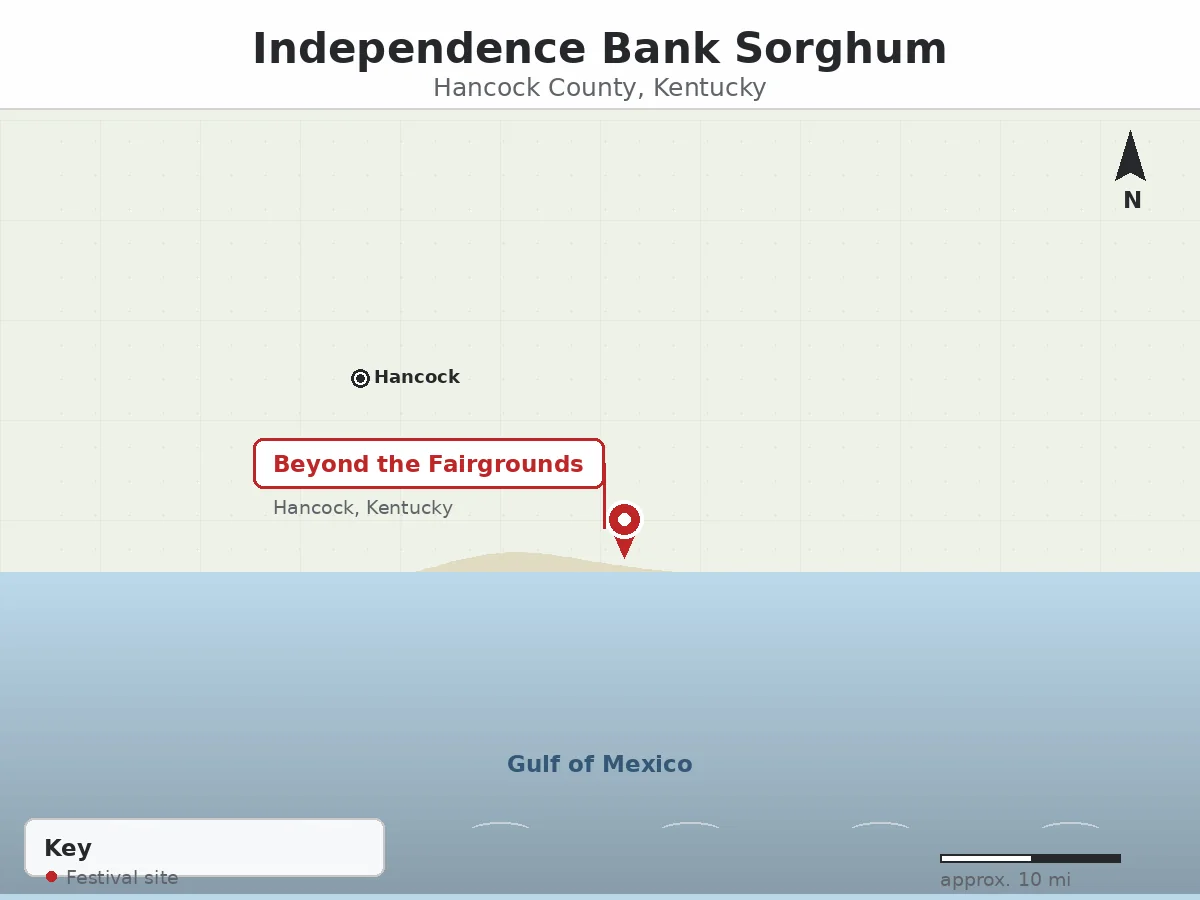
The festival sits inside a county story that the historical-marker reference layer helps frame, with Hawesville confirmed as the Hancock County seat and the fairgrounds serving as the town’s gathering ground in the documented editions. Sorghum itself is the deeper thread: newspaper layers remember when festivals built around the harvest were ordinary events across the county, long before the custom faded in the nineteen fifties. A trip for the festival therefore doubles as a meeting with that older agricultural calendar, visible in the mule-powered and hand methods the two thousand six demonstrators still worked in public. Travellers tempted by the festival’s name should keep their geography straight, since the same bank sponsors a different fall harvest festival in Shelbyville, and Morgan County holds its own sorghum festival in West Liberty. Hawesville’s event is its own, rooted in Hancock County’s fairgrounds and in the revival the bank carried out, and its character comes from that local ground rather than from any shared circuit.
Why the Festival Matters
The significance of this festival lies in rescue rather than scale. A county tradition that newspaper layers describe as faded by the nineteen fifties returned because a local institution chose to revive it, with the two thousand thirteen newspaper layer crediting the bank directly and the magazine layer calling the bank instrumental in the work. The demonstrations preserve practical knowledge in public view: grinding cane, boiling juice, and cooking with sorghum are skills that survive by being shown, and the documented editions show them by motor, by mule and by hand. The festival also hands the county a recurring autumn meeting point where farm craft, quilts, tractors and music share one ground. Because the record fences its claims carefully, that significance rests on documented ground: a sixth annual earlier edition, a dated revival, and fairgrounds editions running through two thousand twenty-four.
Frequently Asked Questions
Which of the printed names belongs to this festival?
The layers use three forms without merging them. The bank’s own events layer, the regional radio layer and the regional events-magazine layer print Independence Bank Sorghum Festival; festival-guide layers shorten that to Sorghum Festival; older local newspaper layers call the event the Hancock County Sorghum Festival. Each form belongs to its layer and period.
What happens at a sorghum demonstration?
The documented demonstrations walk through syrup making in public. Cane is ground, the sweet juice is squeezed out and boiled down, and the two thousand six edition showed the work done by motorised equipment, by mule power and by hand. A sorghum cooking demonstration also appears in the two thousand nineteen programme.
Did the bank start this festival from nothing?
The layers describe a revival, not a creation from nothing. Newspaper layers say sorghum festivals were once regular in the county before fading in the nineteen fifties, an earlier incarnation reached a sixth annual edition in two thousand six, and the two thousand thirteen newspaper layer says the bank revived the festival itself that year.
Are the sorghum festivals in other Kentucky counties the same event?
No. The Morgan County Sorghum Festival in West Liberty is a different county’s event, and the fall harvest festival in Shelbyville sponsored by the same bank is a separate Shelby County event. Hawesville’s festival is documented on its own layers and stands apart from both.
What to Expect From the Next Hancock County Kentucky Independence Bank Sorghum Festival
How often is Hancock County Kentucky Independence Bank Sorghum Festival held?
The events-magazine layer calls the event an annual festival, and the documented editions in the record fall in two thousand six, two thousand nineteen, two thousand twenty-one, two thousand twenty-two and two thousand twenty-four. That spread shows the festival recurring across those years without fixing a guaranteed interval between every edition.
When is the next Hancock County Kentucky Independence Bank Sorghum Festival?
The record assembled here ends with the edition of the twenty-sixth of October two thousand twenty-four at the Hancock County Fairgrounds. No following date is carried in these layers, so the next edition’s day would come from the bank’s own announcements rather than from anything documented above.
Will the dates change?
They have shifted before. The regional events-magazine layer first placed the two thousand nineteen edition on the twenty-sixth of October and then noted the date had been changed to the twenty-seventh of October. Late October held across the recent documented editions, but the month is a pattern in the record, not a promise.
Closing Note
The Hancock County Kentucky Independence Bank Sorghum Festival endures in print as a revived county tradition: an older sorghum custom, a bank-led return in two thousand thirteen, and fairgrounds editions that kept syrup making at the centre through two thousand twenty-four. Its layers disagree on nothing important and merge into nothing they do not say, which is exactly how this article has left them.