Park County Montana Fair Festival
In late July, the Park County Fairgrounds on the edge of Livingston fill with the particular traffic of an exhibitor’s fair: stock trailers easing toward the barns, cakes and quilts and framed artwork carried into the exhibition buildings, and families who have spent the summer rehearsing the entries now waiting for a judge. The Park County Fair is the county’s own midsummer gathering, held in the county seat, and run not by a private promoter but by a county fair board whose published job is to produce the fair and look after the grounds it stands on. This is a fair built from the entry book outward. Its depth sits in its classes and shows rather than in a headline concert, and its honest gaps are part of its character too: the fair publishes no gate price in its own record, and visitors should know that before they set out.
A Board-Run Fair in the County Seat
The event’s real published name is the Park County Fair, and the name arrives in slightly different dress depending on where the record keeps it. The online entry system carries the youth side as the Park County 4-H/FFA Ag Fair and the public side as Open Class Park County, while a statewide listing styles the whole thing the Park County Ag Fair — three labels for one Livingston fair, recorded as the record keeps them rather than fused into a tidier title.
Behind the fair stands the Park County Fair Board, whose own statement of purpose says it exists to produce a successful fair and to manage the appropriate use of the fairground facilities. A Park County Livestock Committee works alongside the board on the animal side, and the grounds are looked after by the county’s Fairgrounds and Parks Department. There is no separate fair association to credit and no commercial operator in the record. That structure explains the fair’s shape: a board-run fair answers to its exhibitors first, so the premium book is thick and the open classes welcome anyone in the community.
Quick Facts
| Item | Detail |
| Fair name | Park County Fair |
| Fair town | Livingston, Montana |
| County seat | Livingston |
| Venue | Park County Fairgrounds |
| Grounds address | 46 View Vista Drive, Livingston |
| Season | Late July |
| Organiser | Park County Fair Board |
| Grounds management | Park County Fairgrounds and Parks Department |
| Admission | No gate price is published in the fair’s own record |
| Camping | The fair publishes a camping page; its terms are not stated in the record |
What to Expect
The Premium Book’s Long Reach
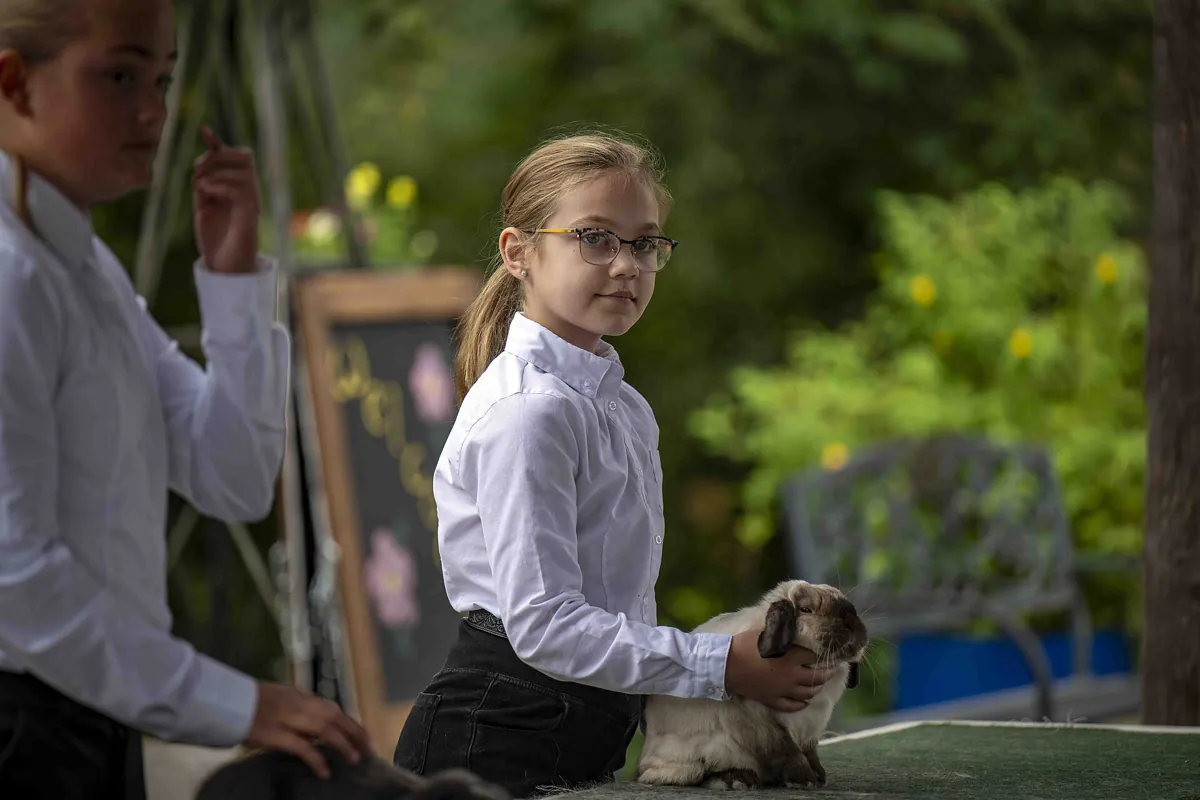
The fair’s published book runs to a surprising breadth of 4-H divisions. Alongside the expected livestock and consumer science classes sit cake decorating, graphic design and art classes gathered under a name of their own, the Sketchbook Crossroads classes. A young exhibitor can arrive with a steer, a decorated cake, a poster or a sketchbook and find a class waiting for each. The book is the fair’s centre of gravity, and walking the exhibition buildings means walking the county’s whole range of youthful skills.
Open Shows That Welcome the Whole Community
Not everything at this fair is fenced to enrolled youth. The fair’s book provides an Open Animal Show, open cattle classes and an Open Dog Agility competition, each open beyond the 4-H membership. The open animal show carries an entry fee of fifteen dollars per head and the dog agility fifteen dollars per dog, and those figures deserve a clear label: they are exhibitor entry fees, charged to the people showing animals, and they say nothing about what a spectator pays at the gate. Dog agility gives the fair a spectator-friendly hour, as handlers run their dogs through the obstacles before a crowd that needs no livestock background to enjoy it.
For a useful comparison, see the Musselshell County Montana Fair Festival for another county festival.
Team Roping at the Arena
The fairgrounds arena earns its keep during fair week. The fair’s own schedule page shows participants in team roping at the Park County Fair and Rodeo, and roping sits naturally in a county where working cattle from horseback remains an ordinary skill rather than a performance invented for visitors. Arena time leans toward the county’s own riders in events drawn from ranch work, giving the programme a local accent quite different from a touring rodeo’s.
A Parade and the Goat Rendezvous
The fair keeps a parade among its published fixtures, carrying exhibitors, floats and fair royalty through the celebration as the week opens up. Listed among the fair’s own pages for getting involved is the Park County Goat Rendezvous, a gathering for the county’s goat exhibitors and enthusiasts. Both fixtures show the fair working as a community occasion as well as a judged competition.
A History the Record Keeps Quiet
Some fairs arrive with a founding year polished and ready. This one does not. Nothing fetched from the fair’s own published material offers a founding year, an edition number or a tidy origin story, and this article will not manufacture one. A board that publishes its classes and its camping page but not its birthday is telling you where its attention goes.
What age the grounds do carry shows in their fabric. The county and tourism record names a historical sale pavilion among the buildings, preserving the memory of livestock changing hands under its roof at sales tied to the agricultural calendar. Around it stand the arena, a main hall with a kitchen and small dining room, and the exhibition buildings — the working plant of a fairground that has served its county across many seasons, even if the exact count goes unstated.
The modern confusion surrounding this fair belongs to the internet rather than to Livingston. Other states keep counties named Park, and their fairs publish richly online under the same county name, so a careless search can dress Livingston’s week in another Park County’s dates within a few clicks. The defence is plain geography: Montana’s Park County Fair is the one at 46 View Vista Drive in Livingston, and everything else wearing the name belongs somewhere else.
Planning Your Visit
Finding the Fairgrounds
The Park County Fairgrounds stand at 46 View Vista Drive in Livingston, the county seat. The plant is compact once you arrive: an arena for the horse events, exhibition buildings for the judged entries, the main hall for gatherings and meals, and the sale pavilion for the livestock business of the week. Livingston is a small city, so the run between lodging, food and the grounds is measured in minutes rather than miles.
The Admission Question, Answered Honestly
Here is the gap a visitor most needs to understand: no gate, pass or parking price appears in any fair-side source fetched for this article. That silence must not be read as a promise. The fair is not described as free anywhere in its own record, and no figure from another fair — certainly none from another state’s Park County — can be borrowed to fill the blank. The only prices the fair’s book publishes are the exhibitor entry fees for its open shows. Bring a modest cash reserve, check the fair’s current information before travelling, and treat any price quoted by a resale or listing site as unverified until the fair itself confirms it.
Camping and Staying Over
The fair’s own information includes a page devoted to camping, so staying at the grounds is plainly part of how this fair expects some exhibitors to manage the week. No rate, rule or booking term from that page was captured in the record behind this article, however, so every camping detail stands unpublished here rather than guessed. Exhibitors planning to sleep on site should contact the fairgrounds office well ahead of the week. Everyone else will find that Livingston, as the gateway town for the northern approach to Yellowstone, keeps a stock of motels and places to eat accustomed to summer travellers.
Key Dates for Exhibitors
Exhibitors work to an earlier clock than spectators. For the 2026 edition, the online entry system carried the 4-H and FFA side across a machinery span of July 18 to 25, while open class entries ran in a window opening on June 10 and closing on July 27. Those dates are entry machinery — the administrative runway of receiving, showing and processing entries — not a promise that every one of those days is a public fair day. The public frame is simpler: this is a late-July fair, and each year’s own published schedule settles its days.
A Day at the Fair
Begin in the exhibition buildings while the morning is cool and the ribbons are fresh, moving from the consumer science and cake decorating displays to the graphic design and Sketchbook Crossroads artwork. Drift to the barns by mid-morning, when the open cattle classes give the grounds their working noise, and pause at the sale pavilion to watch the county’s animal trade in its historic room. Take lunch in or near the main hall, then claim a seat at the arena for the afternoon’s team roping. If the dog agility falls during your visit, give it an hour: it is the fair’s most purely cheerful spectacle. Should your day be the parade day, build the late afternoon around it, then finish with one slow circuit of the buildings to see which entries the judges marked highest.
How This Fair Compares
Measured against Montana’s big late-summer productions, the Park County Fair is deliberately smaller in ambition and closer to its county. There is no midway empire here and no headline concert in the record; the entertainment is the county itself, showing its animals, its baking, its artwork and its roping. Where a state-scale fair asks you to consume a spectacle, this one asks you to inspect a community’s work at close range, ring by ring and shelf by shelf.
The comparison closer to home is the famous rodeo that shares these grounds over the Independence Day holiday earlier in July. That event is a professional production, separately organised and separately ticketed, and it is not the fair. Fair week trades the rodeo’s spotlight for breadth: hundreds of quiet competitions in place of a few loud ones.
Your Fair Checklist
- Confirm the current year’s schedule from the fair’s own published information before setting a travel day
- Carry cash for admission and small purchases, since no gate price is published in advance
- Keep the fifteen-dollar figures in their place as exhibitor entry fees, never as the cost of walking in
- Give the exhibition buildings a full morning for the art and baking classes
- Reserve an afternoon block for arena time and the team roping
- Ask at the grounds about camping terms in person if you hope to stay on site
- Check whether the parade or the goat rendezvous falls inside your visit
- Verify that every detail you rely on belongs to Livingston’s fair, not a same-named fair in another state
Beyond the Fairgrounds
Fair week is also a reasonable excuse to see Livingston properly. The town serves as the northern gateway to Yellowstone National Park, and its streets carry the layered character of a railroad and river town that has hosted travellers for a very long time. Between fair sessions, visitors can eat in town, walk the older commercial streets and watch the Yellowstone River move through its wide valley. The fairgrounds stay busy outside fair week too, most famously when the separate professional rodeo takes over the arena at the start of July.
Why the Park County Fair Matters
A county fair run by a county board is a small piece of civic machinery, and in Park County that machinery still turns on the exhibitors. The fair gives the county’s young people a judged audience for a summer’s work — a steer fitted, a cake perfected, a sketchbook filled — and gives adults open classes in which to set their own animals and skills against their neighbours’. It concentrates the county’s agricultural identity into one late-July week in its seat, on grounds the county maintains. In a county whose visitors often pass through at highway speed toward a national park, the fair is the week the place turns inward and takes stock of its own work, and that stock-taking is worth a traveller’s detour.
Frequently Asked Questions
Where is the Park County Fair held?
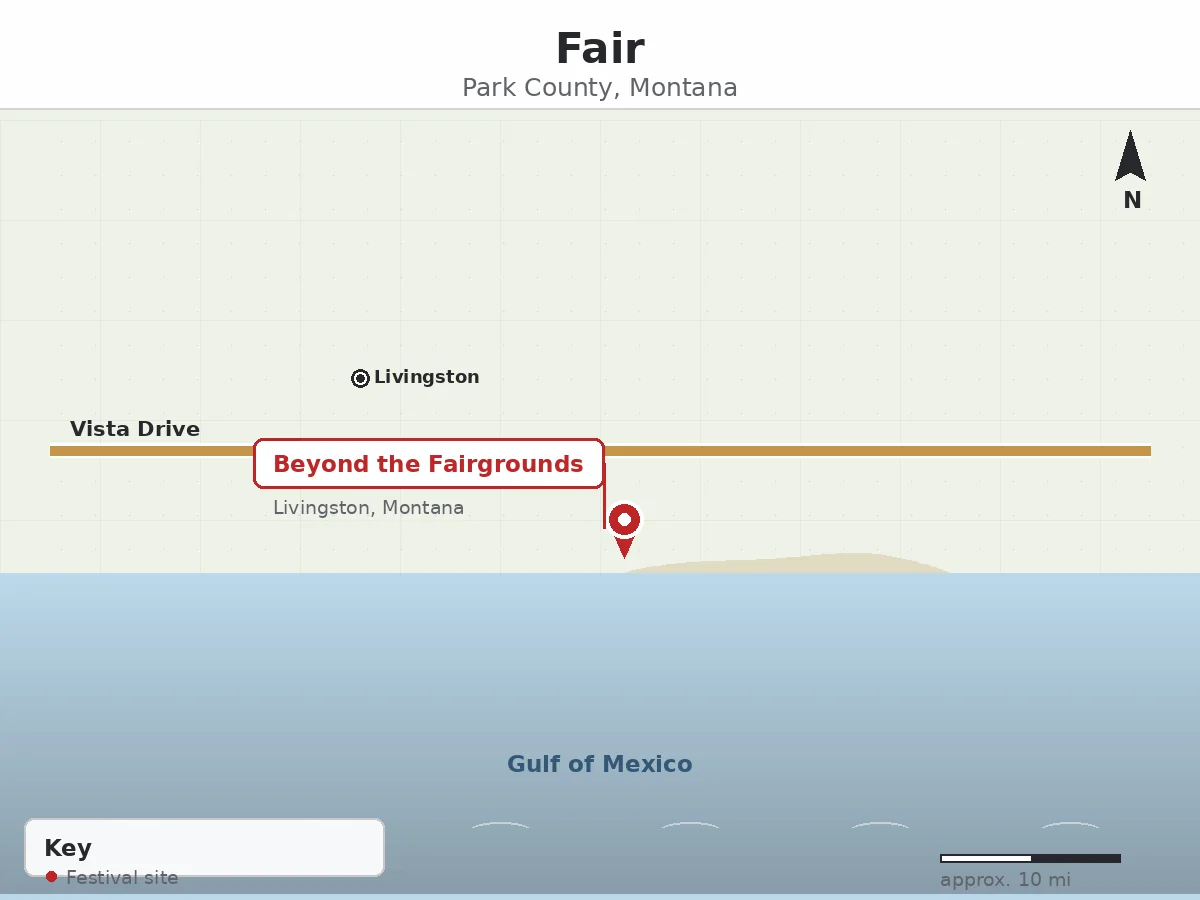
The fair is held at the Park County Fairgrounds, 46 View Vista Drive, in Livingston, Montana. Livingston is the Park County seat, and the grounds bring together an arena, exhibition buildings, a main hall and a historical sale pavilion on one site.
Has the fair published a gate price?
No. The fair’s own record publishes no gate, pass or parking price, so this article cannot quote one, and the fair is nowhere described in its record as free. The only figures its book sets out are entry fees for exhibitors in the open shows. Confirm the current position with the fair before travelling, and carry cash in case a charge applies.
Is the Park County Fair the same event as the Livingston Roundup Rodeo?
No. The rodeo is a separate professional event occupying the same fairgrounds around the Independence Day holiday at the start of July, under its own organisation and ticketing. The county fair follows later in July, built around 4-H and open class exhibits rather than a professional rodeo programme.
In which part of summer does the fair fall?
The Park County Fair is a late-July fair in Livingston. Entry windows for exhibitors open weeks earlier, in June, but the settled public days of each edition come from the fair’s own published schedule for that year, which is the document to consult when fixing a visit.
What to Expect From the Next Park County Montana Fair Festival
How often is the Park County Montana Fair Festival held?
The fair returns every year. Each summer the cycle repeats in Livingston: entries open in the weeks beforehand, the buildings and barns fill, and the county gathers at its fairgrounds for the late-July week.
When is the next Park County Montana Fair Festival?
The next edition belongs to the following summer’s late-July season in Livingston. Because the fair publishes its own schedule for each edition, its exact days will be the ones the Park County Fair Board sets out in that year’s information, and visitors should take their dates from that source.
Will the dates change?
Fair dates can shift by a few days from one year to the next as boards balance calendars and judging schedules. A late-July placing has the weight of habit behind it at Livingston, but habit is not a guarantee, so each edition’s dates should be confirmed against the fair’s own announcement.
The Park County Fair asks a little homework of its visitors — a schedule confirmed, a gate price checked, a namesake fair in another state politely ignored — and repays it with a fair in its most grounded form: a county showing its own work, in its own seat, on its own grounds. Come for the cattle and the cakes, stay for the roping, and leave knowing the difference between the fair and the rodeo that shares its address.