Fayette County Kentucky Roots and Heritage Festival
Each September, the historic East End of downtown Lexington, Kentucky, sets aside a weekend for a celebration of African American roots, music and neighbourhood life. The event is the one this article calls the Fayette County Kentucky Roots and Heritage Festival, although no source gathered here prints that county-prefixed name. Depending on which account a reader opens, the same gathering appears as the Roots and Heritage Festival, as the Lexington Roots & Heritage Festival, or as the Roots & Heritage Festival, and those printed forms are kept separate throughout this article rather than blended into one.
What the record does agree on is the shape of the occasion. It is a three-day street festival built around Elm Tree Lane, with a heritage parade, a marching-band battle of the bands, live music across two stages, vendors and an African American marketplace, children’s programming and a Sunday gospel closing. A university newspaper layer documents the edition held from the fifth to the seventh of September two thousand twenty-five and bills it the 36th annual, while an events-guide layer and a television news layer cover the following year’s run, from the eleventh to the thirteenth of September two thousand twenty-six, billed the 37th annual.
About the Festival
Lexington is both the host city and the county seat of Fayette County. Reference layers describe the city and county as coterminous under the consolidated Lexington-Fayette Urban County Government, so a festival rooted in Lexington is rooted in the county seat itself.
The organising credit also arrives in more than one printed shape. The organiser’s own site works under two forms: its parade rules and payment wording refer to a Roots and Heritage Festival Committee, while the event itself is presented there as the Lexington Roots & Heritage Festival. A television news layer names the festival chair for the two thousand twenty-six edition, who is mentioned here by role only. A university newspaper layer reports that the gathering is funded by the Lexington government, personal donations and local businesses.
Because the sheet title’s county prefix appears in none of the layers, readers comparing sources should search under the shorter printed names, which a city commemoration layer and the city’s tourism layer also use.
For a useful comparison, see the Estill County Kentucky Bash On The Branch Music Festival for another county festival.
Quick Facts
| Item | Detail |
| Published name forms | Roots and Heritage Festival; Lexington Roots & Heritage Festival; Roots & Heritage Festival |
| Host city and county seat | Lexington, seat of Fayette County, Kentucky |
| Setting | Elm Tree Lane, historic East End, downtown Lexington |
| Street range as printed | Third to Short streets in one account; Fourth to Short in another |
| Organiser | Roots and Heritage Festival Committee |
| Funding | Lexington government, personal donations and local businesses |
| Edition documented for two thousand twenty-five | Fifth to seventh of September, billed the 36th annual |
| Edition listed for two thousand twenty-six | Eleventh to thirteenth of September, billed the 37th annual |
| Centrepiece events | Heritage Parade and a marching-band battle of the bands |
| Closing tradition | A Sunday gospel programme ends the weekend |
History
The beginnings of the festival reach the reader through three accounts that agree on a year and differ in almost everything else. A television news layer states that the event started in nineteen eighty-nine as a one-day celebration occupying a single city block. A university newspaper layer, writing about the same year, states that Chester Grundy helped found the festival in nineteen eighty-nine; Grundy is named in this article only in that documented co-founding role. The organiser’s own site contributes a third detail, stating that the first festival featured Alex Haley.
These statements stand side by side here, unmerged, and the later billings are treated the same way. When a university newspaper layer calls the two thousand twenty-five edition the 36th annual, and a television news layer calls the two thousand twenty-six edition the 37th annual, those numbers are recorded as billings only.
A blog layer notes a two-year pandemic hiatus in the festival’s run. That pause is recorded as the blog layer presents it, not treated as either a founding or an ending; the dated editions in the stronger layers anchor the festival’s continuity here.
What to Expect
Saturday brings the weekend’s centrepiece. The Heritage Parade moves along Elm Tree Lane, and in the two thousand twenty-five edition documented by a university newspaper layer it carried a battle of the bands between marching bands that included Bryan Station and Simmons College of Kentucky. Music runs across two stages, according to the same university newspaper layer, while vendors and an African American marketplace line the street.
Programming for younger visitors appears in the organiser and newspaper layers under the forms Kids Fest and Kidsfest, alongside a youth talent show. Plays, storytelling and a fashion show fill out the schedule in those accounts, and the weekend closes on Sunday with a gospel programme. The two thousand twenty-six listing in an events-guide layer gives the fullest timetable in the record: seven to eleven in the evening on Friday, eleven in the morning to eleven in the evening on Saturday, and ten in the morning to five in the afternoon on Sunday. The same listing puts the Heritage Parade on Saturday at ten in the morning, and a television news layer places the run on Elm Tree Lane until Sunday night.
Planning Your Visit
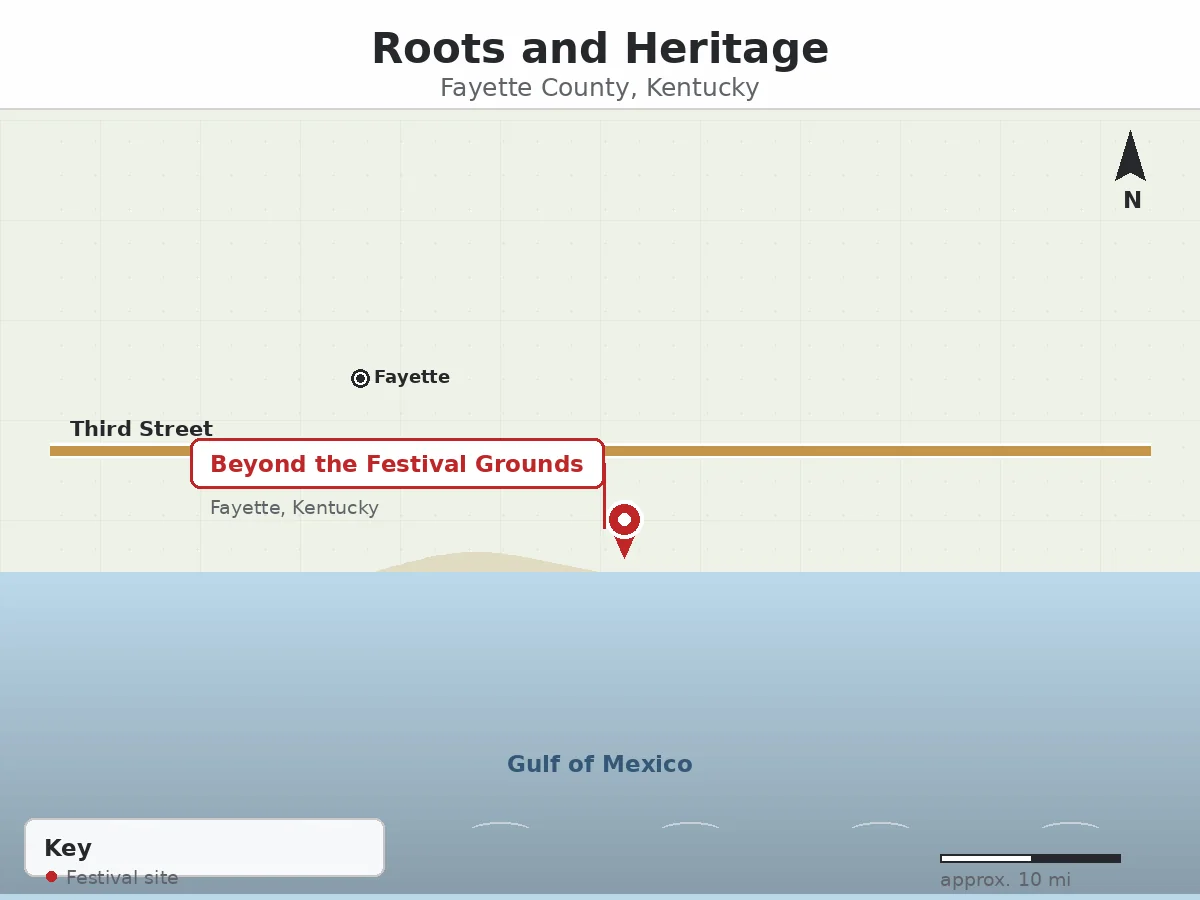
Finding the grounds takes a little care, because the sources do not draw the same map. A television news layer places the festival on Elm Tree Lane between Third and Short streets in downtown Lexington’s historic East End. A travel listicle layer instead describes the run as lying between Fourth and Short streets. Both versions are reported here as printed, and a visitor is better served by aiming for Elm Tree Lane and following the crowds than by trusting either range.
Costs need careful wording here. None of the layers gathered for this article states a general gate price for attending, and none is relied on here for a claim that entry is free. The only charges documented are parade entry fees for participants, printed on the organiser’s own site in a two thousand sixteen layer: one fee for community and non-profit entries and a higher fee for business and commercial entries. Those are charges for taking part in the parade, never a price for watching the festival, and the record does not give their amounts.
Practical follow-up runs through the organiser’s own channels. That site prints a parade mailing address and an information line number; both are noted here by existence only and are not reproduced. Check the current year’s listing before travelling, since the hours quoted here belong to the two thousand twenty-six edition.

A Sample Festival Weekend
Friday evening suits a gentle arrival. The two thousand twenty-six listing opens the festival at seven in the evening and runs to eleven, which leaves room for a first walk down Elm Tree Lane and an early listen at one of the two stages.
Saturday rewards an early start. The Heritage Parade steps off at ten in the morning, an hour before the listed festival day begins at eleven, so parade watchers should be in place before the first band turns the corner. The long middle of the day, through to eleven in the evening, is when the battle of the bands, the marketplace, the youth talent show and the Kids Fest programming all overlap; families may want to anchor the afternoon around the children’s events.
Sunday changes the tempo. The listing runs from ten in the morning to five in the afternoon, and the gospel closing gives the final hours a distinct character before the lane empties. Visitors leaving Lexington on Sunday evening can treat the closing as the natural end point of the trip rather than drifting away mid-afternoon.
How It Stands Alongside Other Lexington Events
Lexington’s calendar holds other large street celebrations, and the record keeps them firmly apart. The Festival Latino de Lexington is a separate event, and so is the Saint Patrick’s Day Parade and Festival; neither belongs to this festival, and nothing from their programmes is imported here. What distinguishes the Roots and Heritage Festival within that company, on the evidence gathered, is its East End setting on Elm Tree Lane and its focus on African American heritage, carried through the marketplace, the gospel closing and the marching-band tradition.
A second comparison sits inside the festival’s own history. The television news layer’s account of a one-day celebration on a single city block in nineteen eighty-nine describes a far smaller occasion than the three-day, two-stage event the recent listings describe. The billings of 36th annual and 37th annual are recorded as printed, and no straight line is drawn here between that block celebration and the modern weekend.
A Visitor Checklist
- Confirm the current year’s dates and hours before booking travel, since the timetable quoted here belongs to the two thousand twenty-six listing
- Arrive along Elm Tree Lane before ten on Saturday morning to secure a viewing spot for the Heritage Parade
- Plan one afternoon block around the Kids Fest programme if children are in the party
- Keep Sunday’s gospel closing in the schedule rather than leaving before it
- Check the organiser’s own channels for parade entry arrangements if entering a group, rather than expecting to register on the day
Beyond the Festival Grounds
The festival’s ground is itself part of the visit. Elm Tree Lane sits in the historic East End of downtown Lexington, a neighbourhood closely tied to the city’s African American history, and the festival’s placement there is part of its meaning rather than a logistical accident. The layers may disagree about whether the run starts at Third Street or Fourth Street, but both fix it on the same lane, in the same quarter of the city.
Lexington also rewards a longer stay. It is the seat of Fayette County, and reference layers note that the city and county are coterminous under the consolidated Lexington-Fayette Urban County Government, so the downtown core doubles as the county’s civic centre. Visitors who come for the festival weekend are therefore staying in the middle of the county’s governmental and commercial life.
Why the Festival Matters
On the evidence gathered here, the festival stands as a long-running public celebration of African American heritage in Lexington, sustained across a run that the billings now count in the high thirties. Its ingredients help explain that durability. The Heritage Parade and the marching-band battle of the bands put school and college musicians at the centre of the street. The African American marketplace gives Black traders and makers the commercial heart of the weekend rather than its edges. The youth talent show and the Kids Fest programming hand the next generation a stage of its own, and the Sunday gospel closing connects the weekend to the community’s gospel tradition.
The funding pattern underlines the civic standing of the event. Support from the Lexington government alongside personal donations and local businesses, as a university newspaper layer reports it, describes a festival that is both a neighbourhood celebration and an officially backed fixture of the city’s year. That combination, carried from a single-block beginning in the founding accounts to a three-day East End weekend, is what the recent editions document.
Frequently Asked Questions
Which of the festival’s printed names should a visitor search for?
Search under the shorter forms. The layers gathered here print Roots and Heritage Festival, Lexington Roots & Heritage Festival and Roots & Heritage Festival, and none of them prints the county-prefixed name. The organiser’s own site works under the Lexington form; the city’s tourism layer uses the ampersand form.
Which bands marched in the two thousand twenty-five parade?
A university newspaper layer documents a Saturday parade with a battle of the bands at the two thousand twenty-five edition, and it names the Bryan Station and Simmons College of Kentucky marching bands among the participants. That detail belongs to the two thousand twenty-five account; no equivalent band list is printed for two thousand twenty-six.
Is there a charge simply to walk into the festival?
The layers gathered here give no general gate price, and none of them is relied on for a claim that entry is free, so this article takes no position either way. The only documented charges are parade entry fees for participants, printed on the organiser’s own site in a two thousand sixteen layer, with one rate for community and non-profit entries and a higher one for business and commercial entries.
Who is credited with helping to found the festival?
A university newspaper layer states that Chester Grundy helped found the festival in nineteen eighty-nine, and he is named here only in that role. A television news layer describes the same year’s beginning as a one-day celebration on a single city block, and the organiser’s own site states that the first festival featured Alex Haley.
What to Expect From the Next Fayette County Kentucky Roots and Heritage Festival
How often is Fayette County Kentucky Roots and Heritage Festival held?
The editions documented in the layers gathered here fall in consecutive years, two thousand twenty-five and two thousand twenty-six, and each occupies a three-day weekend in September. That is the pattern the record shows; no longer unbroken run is claimed, and a blog layer’s note of a two-year pandemic hiatus records that the sequence has paused before.
When is the next Fayette County Kentucky Roots and Heritage Festival?
The latest edition documented here is the run from the eleventh to the thirteenth of September two thousand twenty-six, billed the 37th annual in a television news layer and listed with full hours in an events-guide layer. The sources gathered for this article stop at that edition; look for the following year’s dates through the organiser’s own channels as September approaches.
Will the dates change?
The dates have shifted before, between the two editions documented here. The two thousand twenty-five edition documented by a university newspaper layer ran from the fifth to the seventh of September, while the two thousand twenty-six edition ran from the eleventh to the thirteenth of September. The month stayed September both times, but the particular weekend moved, so fixing travel to one specific weekend a year ahead would be unwise.
Closing Thoughts
The Fayette County Kentucky Roots and Heritage Festival, under any of its three printed names, is a September weekend in Lexington’s East End built on a parade, marching bands, a marketplace and gospel music. Its record is unusually full: two recent editions documented day by day, founding accounts that agree on nineteen eighty-nine while differing on the details, and an organiser whose own site prints the committee’s parade rules. Where the layers disagree, this article has left them disagreeing, and where they fall silent, it has said so, which suits an event devoted to keeping a community’s heritage accurately in view.