Fayette County Kentucky Lexington Pride Festival
Downtown Lexington gives over one of its streets to this celebration, and for a single Saturday the traffic pattern is the least interesting thing about Oliver Lewis Way. The Fayette County Kentucky Lexington Pride Festival fills the stretch from South Broadway to High Street with a parade, stage performances, vendor booths and crowds, turning a working downtown corridor into the city’s most visible gathering of its LGBTQ community and the neighbours who turn out alongside it.
What makes this article’s record unusually firm is its freshness. A television news layer, a newspaper layer and a public-health newsletter layer each describe the same edition — Saturday the thirtieth of May two thousand twenty-six — and between them they fix the date, the street, the hours, the programme and even the reasoning behind a scheduling change. Where those layers disagree, as they do over the closing hour, both versions are carried here side by side rather than quietly reconciled.
About the Festival
The published name behind the sheet title is Lexington Pride Festival, printed in exactly that form by a television news layer, a newspaper layer and an events-aggregator layer. Two further forms circulate in the public-health newsletter layer: Lexington PRIDE Festival in the newsletter’s own prose, and Bluegrass PRIDE Festival in its calendar table. All three forms are reported here as they stand, unmerged, because the layers themselves never settle on a single styling.
Coordination rests with the Lexington Pride Center, which a public-health newsletter layer credits with coordinating the festival. A television news layer quotes the centre’s board president while covering the two thousand twenty-six edition, and that officer is referred to here by role alone. No other organising body is named anywhere in the layers read, so no other is adopted.
Lexington itself is the county seat of Fayette County, a point reference layers confirm, and the festival’s downtown placement puts the celebration in the middle of the city it serves rather than at a fenced ground on its edge. The public-health newsletter adds two measures of scale: thirty sponsors supported the two thousand twenty-six festival, and the two thousand twenty-five festival drew over fifteen thousand individuals. Both figures belong to that layer and are fenced to it.
For a useful comparison, see the Fayette County Kentucky Roots and Heritage Festival for another county festival.
Quick Facts
| Item | Detail |
| Published name | Lexington Pride Festival |
| Further printed forms | Lexington PRIDE Festival; Bluegrass PRIDE Festival |
| Host city | Lexington, Fayette County, Kentucky |
| County seat status | Lexington is the county seat of Fayette County |
| Coordinating body | Lexington Pride Center |
| Documented edition | Saturday the thirtieth of May, two thousand twenty-six |
| Hours as reported | Noon to ten in the evening in the television and newspaper layers; noon to eight in the evening in the public-health newsletter’s calendar table |
| Setting | Oliver Lewis Way, from South Broadway to High Street, downtown Lexington |
| Admission | A newspaper layer states the two thousand twenty-six event was free |
| Billing | Two thousand twenty-six billed as the festival’s 18th year |
History
The honest history of this festival, on the layers read, is a short one with a conspicuous gap in it. Two layers bill the two thousand twenty-six edition as the festival’s 18th year, and that billing is the whole of what the record offers about longevity. No layer read states a founding year in words, and none is worked out here from the billing arithmetic; an eighteenth year tells a reader the event has substantial history without licensing anyone to name the year it began.
The one historical episode the layers do document properly is a scheduling decision. A television news layer reports that the two thousand twenty-six festival was moved a month earlier than the previous year because of heat, leaving late June behind in favour of the thirtieth of May. The move is documented as a one-edition decision by the organiser, taken for the comfort of the crowd, and it should not be read as a permanent relocation of the festival’s place in the calendar.
Beyond that, the record offers scale rather than story. The public-health newsletter’s figures — over fifteen thousand individuals at the two thousand twenty-five edition and thirty sponsors behind the two thousand twenty-six edition — sketch an event that grew into one of the larger gatherings on Lexington’s calendar, even though the layers leave its earliest editions undescribed.
What to Expect
The centrepiece of the documented day is the parade. A newspaper layer fixes it at half past twelve in the afternoon, at High Street and Oliver Lewis Way, which places it early enough in the schedule to gather the crowd before the afternoon programme unfolds. The same layer documents performances by drag performers it names individually; they are referred to generically here, but their presence on the bill is part of what the newspaper chose to record about the day.
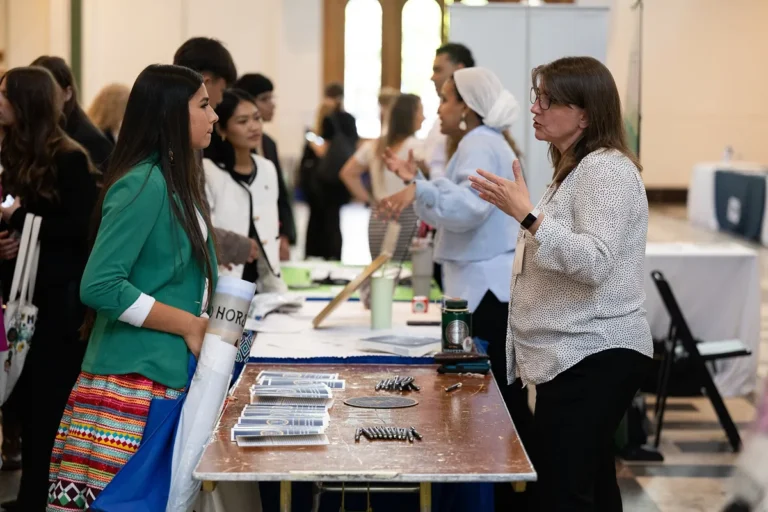
Vendor booths line the celebration, and the health department layer records its own attendance among the vendors, a detail that says something about the festival’s character: public agencies table alongside community organisations and sellers. Around the parade, the stages and the booths, the layers describe community celebration programming more broadly, the open street-festival atmosphere of an event that occupies a downtown corridor rather than a gated venue.
Scale shapes the experience too. With the previous year’s crowd reported at over fifteen thousand individuals and thirty sponsors behind the two thousand twenty-six edition, a visitor should picture a full street rather than a modest block party. The television and newspaper layers give the day a long span, from noon to ten in the evening, while the public-health newsletter’s calendar table closes it at eight in the evening; either way, the documented edition is built as an all-afternoon gathering that runs into the night.
Planning Your Visit
The single most useful planning fact is also the newest one: the two thousand twenty-six edition did not keep the festival’s accustomed late-June slot. Anyone working from memory of earlier years should check the current date rather than assume it, because the organiser has already shown a willingness to shift the celebration a full month earlier when the heat argues for it.
The documented setting is Oliver Lewis Way, from South Broadway to High Street in downtown Lexington, so the day is reached through the ordinary downtown street grid and begins whenever a visitor steps into the closed stretch. A newspaper layer states the two thousand twenty-six event was free, and no layer read prints any ticket price, so the documented edition carried no gate to pass and no ticket to buy in advance.
Timing choices matter on a street this busy. The parade steps off at half past twelve in the afternoon, so arriving before noon secures a place along its route; the closing hour is the one point the layers leave unsettled, with the television and newspaper accounts running to ten in the evening and the public-health newsletter’s calendar table ending at eight. Planning the evening loosely, rather than around a single printed closing time, respects what the record actually says. Organiser contact routes exist on the organiser’s own channels, noted here by existence only, for anyone confirming details closer to the day.
A Sample Festival Day
A morning arrival downtown leaves time to find bearings along Oliver Lewis Way before the street fills. Walking the stretch from South Broadway to High Street early shows where the booths stand and where the parade will pass, and it does so while there is still room to move.
By half past twelve in the afternoon, the parade at High Street and Oliver Lewis Way becomes the fixed point of the day, and the sensible plan is to be settled along its route before it begins. The afternoon that follows belongs to the booths, the performances and the general circulation of a street festival, with the health department’s table somewhere among the vendors for anyone curious about its presence.
Evening brings the day’s one genuine uncertainty. A visitor who treats eight in the evening as a possible close, per the public-health newsletter’s calendar table, and ten in the evening as the later possibility carried by the television and newspaper layers, can enjoy the final hours either way without being caught out by whichever ending the day observes.
How the Festival Compares
Within Kentucky, the obvious comparison is the Kentuckiana Pride Festival in Louisville, and the record is firm that the two are different events in different counties; nothing from Louisville’s celebration is imported into this article, and a reader searching for either should not let an aggregator blur them together. Aggregator layers create a second confusion of their own, surfacing events in Lexington, South Carolina and Lexington, Massachusetts alongside this one; those are not this festival either.
The closer comparisons are internal to the record. The same celebration appears under three printed names — Lexington Pride Festival, Lexington PRIDE Festival and Bluegrass PRIDE Festival — and under two closing hours, ten in the evening and eight in the evening, depending on which layer a reader happens to open. Few festivals in this queue arrive with their paperwork in such visible disagreement, and the disagreements are preserved here because flattening them would misrepresent what each source actually printed.
A Visitor Checklist
- Confirm the current year’s date before travelling, since the two thousand twenty-six edition moved a month earlier than the year before
- Head for Oliver Lewis Way between South Broadway and High Street in downtown Lexington
- Be in place before half past twelve in the afternoon to watch the parade at High Street and Oliver Lewis Way
- Leave the evening open, because the layers report closing hours of both eight and ten in the evening
- Carry nothing for a gate, since a newspaper layer states the documented edition was free and no ticket price is printed anywhere
- Allow time to walk the vendor booths, where community organisations and public agencies table alongside sellers
- Check the organiser’s own channels for contact routes when confirming final details
Beyond the Festival Grounds
The festival’s grounds are, in truth, one downtown street, and stepping off Oliver Lewis Way returns a visitor to ordinary Lexington within a block. That setting is part of the event’s meaning: the celebration does not retreat to a fairground but takes place on the street grid of the county seat itself, in the historic downtown the parade route crosses at High Street.
Nothing in the layers read catalogues the surrounding attractions, and this article does not invent an itinerary beyond the documented street. What the record does support is simpler — a visitor is already downtown, already in Fayette County’s seat, and the festival’s own footprint from South Broadway to High Street anchors the day in the centre of the city rather than at its margins.
Why the Festival Matters
A pride festival on a main downtown street carries a significance that a private venue cannot replicate. The documented edition placed the LGBTQ community’s celebration on Oliver Lewis Way, coordinated by the Lexington Pride Center, backed by thirty sponsors and covered by television, newspaper and public-health layers alike — visibility recorded as a matter of public fact rather than claimed as a slogan.
The numbers in the record reinforce the point. Over fifteen thousand individuals at the two thousand twenty-five edition describe a gathering that belongs to the whole city, and a health department tabling among the vendors shows public institutions treating the day as part of their ordinary civic work. For Fayette County, the festival functions as both celebration and evidence: evidence that the community it honours is woven into the county seat’s public life.
Frequently Asked Questions
Which of the printed names is the festival’s real one?
The layers never agree on a single styling. Lexington Pride Festival is the form printed by the television news layer, the newspaper layer and an events-aggregator layer, and it matches the sheet title’s event name exactly, while the public-health newsletter uses Lexington PRIDE Festival in prose and Bluegrass PRIDE Festival in its calendar table. All three are carried here unmerged.
Why did the two thousand twenty-six edition land in May instead of late June?
A television news layer attributes the shift to heat. The organiser moved that edition a month earlier than the previous year, a one-edition scheduling decision documented as a response to conditions rather than a permanent change of season, so later editions cannot be assumed to keep either slot without fresh listings.
Why do the reported closing times disagree with each other?
Because the sources themselves disagree. The television news layer and the newspaper layer both run the day from noon to ten in the evening, while the public-health newsletter’s calendar table gives noon to eight in the evening. Each figure is fenced to the layer that printed it, and neither is silently corrected here.
Does anyone need a ticket before turning up?
No layer read prints a ticket price for the festival, and a newspaper layer states plainly that the two thousand twenty-six event was free. That free statement belongs to the newspaper layer and to that edition, but nothing anywhere in the record describes advance ticketing or a charge at the street.
What to Expect From the Next Fayette County Kentucky Lexington Pride Festival
How often is Fayette County Kentucky Lexington Pride Festival held?
The billing of two thousand twenty-six as the festival’s 18th year, together with a documented two thousand twenty-five edition that drew over fifteen thousand individuals, describes an event with a yearly rhythm across many seasons. The layers support that pattern without printing a formal statement of frequency.
When is the next Fayette County Kentucky Lexington Pride Festival?
The layers gathered for this article run through the edition of Saturday the thirtieth of May two thousand twenty-six and print no date beyond it. A successor date will have to come from the organiser’s own channels or fresh listings when they appear, and the two thousand twenty-six move into May means the month itself should be confirmed rather than presumed.
Will the dates change?
They already have, once, on the documented record: the organiser shifted the two thousand twenty-six edition a month earlier than the previous year because of heat. A change made for weather can be made again, so the honest answer is that the date is settled edition by edition.
Closing Thoughts
The Fayette County Kentucky Lexington Pride Festival reaches this queue with a record many older events would envy: a current edition fixed by three different kinds of source, a named coordinating body, a documented reason for its date, and disagreements small enough to print in full. What remains unwritten — the founding year behind the 18th year billing — is left unwritten here too, exactly as the layers leave it.