Sedgwick County Kansas Tallgrass Film Festival
For four October days in downtown Wichita, cinema takes over several screens at once, and the gathering behind it carries a name the prairie itself suggested. The Tallgrass Film Festival is the published name of this event, printed by the organiser’s own site, echoed across film-press layers and carried by a state tourism layer, and the sheet title for this article matches that published name word for word. Wichita hosts the festival, and Wichita is also the seat of Sedgwick County, so the county framing in the title and the city framing in the coverage describe one and the same hometown. What follows draws only on the documented record: two recent editions described in detail by the people who run the festival, and the programme shape those descriptions support.
About the Festival
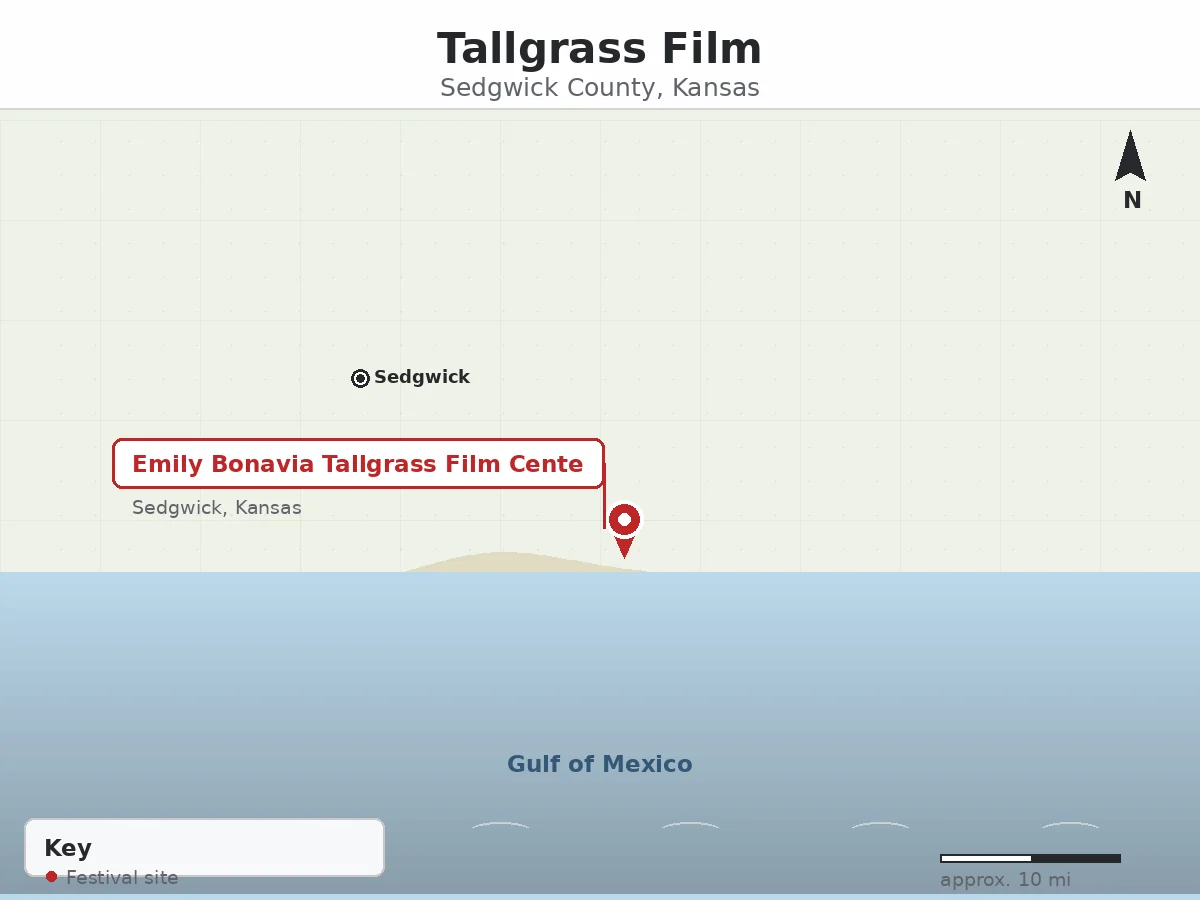
The Tallgrass Film Festival is run by the Tallgrass Film Association, the organiser named on the association’s own site. For the two thousand twenty-five edition, that same site records the festival as presented by the Emily Bonavia Charitable Trust, and both name forms are kept separate here because the record itself keeps them separate: the association organises, while the trust presented the edition most recently described in full. The festival unfolds across venues in downtown Wichita rather than under a single roof. For two thousand twenty-five, the organiser’s own site names Boulevard Theatres at Old Town as the main venue, the Mary Jane Teall Theater at Century II as the home of the gala screenings, and the Emily Bonavia Tallgrass Film Center as part of the footprint. A year earlier, the twenty-second annual festival also used Century II and brought the Orpheum Theatre into its list of screens.
Scale is the other thing the record makes plain. Early announcements for the two thousand twenty-five edition spoke of more than one hundred seventy-five films; the full announcement raised the count to one hundred eighty-eight films and fourteen world premieres. Those figures belong to that edition alone, and they sit comfortably beside the earlier benchmark the organiser published for two thousand twenty-four, when more than one hundred twenty-nine films screened. A gathering of this size is a regional fixture rather than a neighbourhood screening series, yet its own billing insists on a stubbornly independent character, a phrase examined in the history section below. A state tourism layer carries the festival among Kansas events, and that outside listing agrees with the organiser on the essentials of dates, downtown venues and overall scale, which gives a reader two kinds of sources pointing at the same gathering.
Quick Facts
| Fact | Detail |
| Published name | Tallgrass Film Festival |
| Host city | Wichita, Kansas |
| County | Sedgwick County |
| County seat | Wichita serves as the Sedgwick County seat |
| Organiser | Tallgrass Film Association |
| Presenter of the most recent fully documented edition | Emily Bonavia Charitable Trust |
| Edition most fully documented | Twenty-third edition, sixteenth to nineteenth of October, two thousand twenty-five |
| Main venue for that edition | Boulevard Theatres at Old Town, downtown Wichita |
| Gala screening venue | Mary Jane Teall Theater at Century II |
| Admission route | Tallpasses and individual tickets sold online |
History
The organiser’s own material carries the festival’s favourite line about itself: “Stubbornly Independent since 2003.” The digits inside that billing stay exactly as the association prints them, and the line functions as a motto as much as a date. A local-newsletter layer supplies the human half of the origin story, stating that Timothy Gruver started the festival in two thousand three. Gruver is named here because the record names him as the founder; nothing in the layers read adds a co-founder or a founding committee, so none is invented. The two thousand twenty-five gathering was billed as the twenty-third edition by the organiser’s own site, and that numbering is recorded as a billing only. This article does not work backwards from the twenty-third edition to re-derive a founding year, because the newsletter layer already states the start plainly and the motto on the organiser’s material agrees with it.
Between the founding and the present, the layers relied on here grow quiet; they document the recent editions in depth rather than walking through every intervening year. What can be said from the record is that by two thousand twenty-four the festival was presenting itself as the twenty-second annual gathering in downtown Wichita, and by two thousand twenty-five it had settled into a pattern of a main Old Town venue, gala screenings at Century II, a film centre bearing the Bonavia name, and a virtual selection following the in-person days. The founding claim, the motto and the edition numbers are three separate strands of the record, and each is reported here only as its own layer states it.
For a useful comparison, see the Saline County Kansas Zoo Brew Craft Festival for another county festival.
What to Expect
Screenings fill the core of the programme, with feature-length films and short films arranged in competition strands and spotlight strands, a structure the organiser’s own site and the state tourism layer both describe. Around that core, the two thousand twenty-five edition layered gala screenings, panels and parties, and the broader programme description adds gala opening and closing nights, filmmaker awards and a virtual encore week. The gala screenings carry their own address: the Mary Jane Teall Theater at Century II hosted them in two thousand twenty-five, while the everyday traffic of the festival ran through Boulevard Theatres at Old Town as the main venue. The theme chosen for that edition, “Cinema is in our DNA,” is printed here exactly as the organiser printed it.
The virtual selection deserves its own sentence because it changes who can take part. After the in-person days ended on the nineteenth of October, a virtual selection ran from the twentieth to the twenty-seventh of October two thousand twenty-five, extending the festival by a further week for viewers watching from elsewhere. Fourteen world premieres sat inside the full two thousand twenty-five announcement, which means a portion of the audience was seeing certain films before any other festival audience anywhere. Panels put filmmakers in front of audiences between screenings, and parties close the days; the record describes these elements as parts of the edition rather than as optional extras bolted on.
Planning Your Visit
Admission runs through two channels named by the organiser’s own site and film-press layers: passes printed as “Tallpasses,” which cover the festival as a whole, and individual tickets for single screenings. Both are sold online. The layers read print no figure for either a pass or a single ticket, and they take no position on free admission, so this article reports the channels and leaves the amounts to the organiser’s own sales pages at the time of purchase. Choosing between a pass and individual tickets turns on appetite: a viewer aiming at several screenings a day across four days is the natural pass holder, while a viewer with one premiere in mind is served by the single-ticket route.
Movement between venues is a downtown matter. The main venue stands in Old Town, the gala screenings sit at Century II, and the film centre completes a triangle a visitor can cover on foot in stages between screenings. Because the programme spreads across competition and spotlight strands at once, a realistic plan picks a strand or a theme for each day instead of chasing every title. The virtual week that follows the in-person festival also rewards a little patience: a film missed in a crowded room may reappear in the online selection, though the record describes the virtual offering as a selection rather than the complete programme, so no particular title can be promised there.

A Sample Itinerary for a Festival Day
A morning might begin at Boulevard Theatres at Old Town with a shorts block from one of the competition strands, the kind of programme where several filmmakers share a single sitting. Midday suits a panel, when directors and crews talk through how a film was made while the audience still remembers the screening. The afternoon holds room for a feature in a spotlight strand, followed by a pause in Old Town before the evening. Night belongs to the gala: a screening at the Mary Jane Teall Theater at Century II, with a party afterwards if the day’s schedule carries one. A viewer staying the whole four days can repeat the shape with different strands, then let the virtual week supply anything the rooms could not fit.
How the Two Documented Editions Compare
The twenty-second annual festival of two thousand twenty-four and the twenty-third edition of two thousand twenty-five share a skeleton: four October days, downtown Wichita screens, Century II among the venues. The differences are of scale and finish. The earlier edition screened more than one hundred twenty-nine films and used the Orpheum Theatre among its venues, while the later edition’s full announcement counted one hundred eighty-eight films with fourteen world premieres, named Boulevard Theatres at Old Town as its main venue, and attached a named presenter, the Emily Bonavia Charitable Trust, plus a stated theme. The virtual selection also appears in the record as a defined week following the two thousand twenty-five edition, whereas the earlier coverage relied on here does not describe one in the same terms. Read side by side, the two editions show a festival growing its catalogue without moving its centre of gravity away from downtown screens.
Festival Checklist
- Decide between a Tallpass and individual tickets before sales open online
- Mark the gala screenings at Century II as fixed points in the schedule
- Pick a competition or spotlight strand to anchor each day
- Leave gaps between screenings for panels and filmmaker conversations
- Note which missed titles might surface in the virtual selection afterwards
- Keep the main venue, the gala venue and the film centre straight when planning walks
- Save the party evenings for days when the next morning starts late
- Check the organiser’s announcements for the final film count and premiere list
Beyond the Festival Screens
The festival’s footprint invites a visitor to treat downtown Wichita as part of the programme. Old Town surrounds the main venue, Century II anchors the gala nights, and the Emily Bonavia Tallgrass Film Center gives the association a year-round name on the city’s cultural landscape. Between screenings there is time to walk the downtown streets the venues share, and the four-day span leaves room for a slower morning before the first shorts block. Nothing in the record ties particular restaurants, shops or attractions to the festival, so this article recommends the neighbourhoods the venues already occupy and claims no partnerships the organisers have not printed. For a traveller coming from elsewhere in Kansas, the virtual week offers a second door into the same edition once the trip home is done.
Why the Festival Matters
A festival that prints “Stubbornly Independent since 2003” on its own material is making an argument about how films should reach audiences: chosen by a regional association, screened in a prairie city’s downtown rooms, and discussed face to face in panels. The fourteen world premieres in the two thousand twenty-five announcement show filmmakers trusting that argument with work nobody had screened before. The state tourism layer’s decision to carry the festival places it among Kansas’s documented cultural fixtures, and the visitors who fill several venues across four days give Wichita an October weekend built entirely around watching and talking about films. The Bonavia name, carried by both the presenting trust and the film centre, ties the event to local philanthropy rather than to a travelling circuit, which is precisely the independence the motto advertises. Filmmaker awards, listed among the programme elements by the organiser and the state tourism layer alike, give the competition strands a formal finish and give visiting directors a reason to remain in Wichita for the closing night.
Frequently Asked Questions
Who started the Tallgrass Film Festival, and when?
A local-newsletter layer states that Timothy Gruver started the festival in two thousand three, and the organiser’s own material agrees with that era, billing the event as “Stubbornly Independent since 2003.” Gruver is the only founder the layers read name, so he stands here as the documented founder without embellishment.
How large was the two thousand twenty-five edition?
Its full announcement counted one hundred eighty-eight films, including fourteen world premieres, after early announcements had spoken of more than one hundred seventy-five films. The edition ran from the sixteenth to the nineteenth of October, with a virtual selection following from the twentieth to the twenty-seventh.
Which venues hosted the festival in two thousand twenty-five?
The organiser’s own site names Boulevard Theatres at Old Town as the main venue, the Mary Jane Teall Theater at Century II for the gala screenings, and the Emily Bonavia Tallgrass Film Center as part of the downtown footprint.
Can someone take part without travelling to Wichita?
Yes, in part. A virtual selection followed the in-person days in two thousand twenty-five, running a further week online. The record describes that offering as a selection rather than the complete one hundred eighty-eight films, so remote viewers receive a substantial portion of the edition rather than all of it.
What to Expect From the Next Sedgwick County Kansas Tallgrass Film Festival
How often is Sedgwick County Kansas Tallgrass Film Festival held?
The documented editions fall on four October days in consecutive years, with the twenty-second annual gathering in two thousand twenty-four followed by the twenty-third edition in two thousand twenty-five, each rounded out by parties, panels and, in the later year, a virtual week.
When is the next Sedgwick County Kansas Tallgrass Film Festival?
The layers read for this article end with the two thousand twenty-five edition and its virtual selection; announcements for a following edition had not appeared in them. Going by the pattern those layers document, word of the next edition would come from the Tallgrass Film Association’s own announcements, most likely pointing at an October slot in Wichita.
Will the dates change?
The two documented editions both occupied late October, though not identical days: the twenty-fourth to the twenty-seventh in two thousand twenty-four, and the sixteenth to the nineteenth in two thousand twenty-five. That drift within the same month shows the exact days can move, so any future dates should be taken from the organiser’s announcements rather than assumed from earlier years.
Closing Thoughts
The Tallgrass Film Festival gives Sedgwick County a documented October fixture with a motto, a founder, a growing catalogue and a virtual afterlife, all printed by the people who run it. One hundred eighty-eight films, fourteen premieres, gala nights at Century II and a main venue in Old Town make the two thousand twenty-five edition the fullest portrait the record offers, and the twenty-second annual gathering behind it proves the pattern is no one-year flourish.