Martin County Indiana Martin County Fair Festival

By mid-morning on a fair Saturday, the dew has burned off the grass and the parking field is filling one pickup at a time. For the Suttons — a family that has lived in the Martin County area for four generations — the county fair is less an event than a rhythm: the same walk past the same exhibit barns, the same good-natured argument over who gets the last funnel cake, the same slow drift toward the grandstand as the light turns gold.
This article follows that family through a single fair day, from the first livestock check to the last ride on the midway, and folds in what a first-time visitor needs: what the fair is, how it fits a county founded on January 20, 1820, what a day costs, and how to plan a trip to Shoals.
Martin County Fair Essentials for a First Visit
| Town / area | The Martin County area, Indiana |
| County | Martin County, Indiana |
| County seat | Shoals, at the center of the county |
| Population | 9,812 |
| Region | Southwestern Indiana |
| Typical timing | Summer — in most years July or early August |
| Admission | General entry is typically free; rides, games, and food are pay-as-you-go |
| Setting | Fairgrounds in the Martin County area, with Shoals at the county’s center |
| Features | Livestock and youth exhibits, exhibit halls, carnival rides, fair food, live entertainment |
| Organizer | Local volunteer fair board with community and youth groups |
A County Fair Built Around Shoals and the Surrounding Townships
The Martin County Fair is the annual gathering point for a county of 9,812 people spread across 340.41 square miles of southwestern Indiana. Shoals, the county seat, sits at the center of the county, and that central position shapes the fair’s character: nobody drives very far, but almost everyone comes. Farm families arrive with trailers before the gates open; town families arrive later with strollers and folding chairs.
What you find on the grounds is the familiar architecture of a county fair — exhibit halls, a livestock barn, a midway, food trailers, a grandstand, and a show ring. What makes it Martin County’s fair is the scale. With fewer than ten thousand residents, the fair is a place where the person handing you a lemon shake-up is likely someone you sat beside at a school concert. That intimacy is the appeal, and it is why the fair keeps working year after year.

How the Fair Took Shape Alongside a County Founded in 1820
Martin County was founded on January 20, 1820, and Shoals grew into its seat of government at the center of the county. In the decades that followed, Indiana’s rural counties built their calendars around the agricultural year, and fairs became the natural place to compare crops, show livestock, and trade news. Martin County’s fair belongs to that tradition.
For another look at how a community turns its own traditions into a gathering, see the Marshall County Indiana Blueberry Festival for a useful comparison.
The fair’s long arc mirrors the county’s. Early fairs were primarily agricultural, a place for farmers to measure their work against their neighbors’. As the twentieth century progressed, youth organizations moved to the center of the program, and exhibits from school-age members became the fair’s most reliable draw. Carnival rides, food concessions, and evening entertainment were added to keep whole families on the grounds after judging ended.
What has not changed is the season. The fair remains a summer event, in most years falling in July or early August, positioned between planting and harvest when farm work allows a few days of community life. That seasonal logic has kept the fair relevant through two centuries of Martin County summers.
A Day on the Grounds: Food, Music, and Family Time
A fair day has a shape. Mornings belong to exhibitors, afternoons to families with children, and evenings to everyone.
Fair Food That Sets the Pace of the Day
Food is the fair’s clock. Families start with something quick — a sausage sandwich, a corn dog, a paper cone of fries — then graze through the afternoon on whatever the trailers are frying. Funnel cakes, elephant ears, cotton candy, and lemon shake-ups are the standards, and there is usually at least one stand selling a sit-down meal for people who want a real dinner. Bring cash for small purchases and expect to spend more than you planned; the smell of the midway makes budgeting difficult.
Music and Evening Entertainment
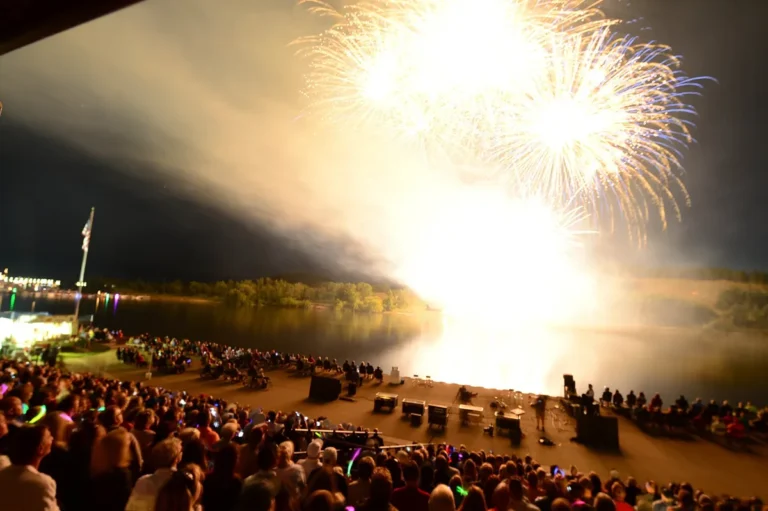
Live entertainment anchors the evening. Local and regional acts — country, rock, gospel, and community groups — typically perform on the grounds, and the grandstand hosts the bigger draws of the week. Between sets, the midway’s noise takes over: ride motors, game barkers, and the bell that rings when someone wins. If you come for only one thing, come for the hour after sunset, when the lights come on and the fair looks the way it does in memory.
Family Activities and the Livestock Barns
The livestock barns are the fair’s heart and the best place to slow down. Children who have spent months raising a hog, a lamb, or a calf stand beside their animals in the ring, and the bleachers fill with parents and grandparents for every class. Beyond the barns, expect the usual attractions: carnival rides for every age, games, equipment displays, exhibit halls full of baking, canning, photography, and crafts, and quiet corners where grandparents can sit with a coffee while the kids ride.
Getting to Shoals and Planning Around the Fair
Driving Into the Martin County Area
Shoals sits at the center of Martin County, which makes the drive straightforward from almost anywhere in the county and reasonable from neighboring counties on every side. Most visitors come by car or truck, following state highways in and then local roads toward the fairgrounds. Allow extra time in the early evening, when the after-work crowd arrives all at once.
Where to Stay Near Shoals
Lodging in the immediate area is limited, and many families simply drive home at the end of the night. Visitors from farther away usually base themselves in one of the larger neighboring towns and treat the fair as a day trip. If you plan to stay overnight during fair week, book early — summer weekends in this part of Indiana fill up quickly.
Parking at the Fairgrounds
Fairground parking is typically a grassy field with volunteers directing traffic, and it fills quickly on weekend evenings. Arrive before the dinner hour for the easiest spot, or come earlier in the day when the lot is nearly empty. Wear shoes you do not mind getting dusty, and note where you parked — rows of trucks look alike after dark.
Admission and What a Day Costs
General admission to the fair is typically free, with costs coming from the things you choose to do: rides, games, food, and any ticketed grandstand events. That structure makes the fair easy on families who want to walk the barns and exhibit halls without spending much, and easy to overspend on once the kids discover the midway. Set a cash limit per child and you will leave happier.
Weather and What to Wear
Summer in southwestern Indiana means heat and humidity, with the occasional afternoon thunderstorm. Dress for a long walk on grass and gravel: comfortable shoes, a hat, sunscreen, and a refillable water bottle. An evening layer helps once the sun drops. If storms roll in, most fairs pause outdoor activity and wait them out rather than cancel, so patience usually pays off.
Two Days, One County: A Sample Fair Weekend
Saturday. Arrive before the gates get busy and head straight to the livestock barns, where judging begins and the aisles are still quiet. Midday, work through the exhibit halls — baking, canning, photography, and youth projects — then eat lunch from the food row. Spend the afternoon on rides and games while the sun is high, take a shaded break in the grandstand, and return in the evening for dinner on the grounds, live entertainment, and the midway after dark.
Sunday. Come back for the final livestock classes and youth awards, which draw the weekend’s biggest crowds. Early afternoon, take a last walk through the equipment displays, then a slow lap past the food stands for something to carry home. Claim a seat for the closing events and stay for the last light on the midway before the drive back.
How the Martin County Fair Compares With Nearby Towns
Martin County’s fair is a small-county fair, and that is its selling point. Neighboring communities in southwestern Indiana — Washington to the west, Bedford to the east, and the French Lick and West Baden Springs area to the south — each run their own summer calendars, and surrounding counties hold fairs of their own in the same season. Those fairs tend to be larger, with longer vendor rows and bigger grandstand names.
What Martin County offers instead is compactness. You can see the whole fair in an afternoon and still feel like you have been somewhere. Families weighing options should ask what they want most: a large midway and crowds, or a fair small enough that you run into half the county before supper.
A Fair-Day Checklist for Martin County Visitors
Before you leave the house, confirm the current schedule, since fair dates shift from year to year and some events run on specific evenings only. Bring cash for food and games, a refillable water bottle, sunscreen, hats, and comfortable shoes. Charge your phone, but expect spotty signal in a crowd. If you have young children, write your phone number on their arm or tuck it into a pocket.
On the grounds, start with the barns while they are cool and quiet, eat before the dinner rush, and set a meeting point in case your group splits up. Take a photo of your parking row. Say yes to the exhibit halls — the baking and craft entries are the part most visitors skip and most locals love. And leave room for one thing you did not plan on.
Beyond the Fairgrounds: Shoals and the Rest of Martin County
The fair is a good excuse to see the rest of a county that covers 340.41 square miles. Shoals, at the center, is the county seat and the natural starting point for a drive through the surrounding townships. The landscape is classic southwestern Indiana — farmland, wooded ridges, and river bottom — and the roads between small communities are quiet enough to make the drive part of the outing.
Pair a fair visit with a meal in town, a stop at a local shop, or an afternoon of back-road exploring before the evening session. Families often turn the fair into a full day out, and visitors from outside the county frequently find that the area around Shoals deserves more than the hour they had planned to spend there.
What the Fair Means to a County of 9,812
In a county of 9,812 people spread over 340.41 square miles, the fair is one of the few occasions when the whole county stands in the same place at the same time. It is where young exhibitors learn to answer questions about their projects, where volunteer groups raise money, where local businesses hang their banners, and where neighbors who have not seen each other since last summer catch up in the shade of a barn.
That function matters more, not less, in a small county. The fair keeps a shared calendar and a shared set of memories alive from one generation to the next. Since the county was founded on January 20, 1820, much about Martin County has changed; the summer fair has endured.
Where the Fair Sits in Martin County
The fair takes place in the Martin County area, with Shoals — the county seat — at the center of the county, putting the grounds within a short drive of nearly every township.
Practical Answers for First-Time Martin County Fairgoers
Is the Martin County Fair free to attend?
General admission is typically free, and you pay as you go for rides, games, food, and any ticketed grandstand events. That means a family can spend an afternoon at the exhibit halls and barns for almost nothing, or budget for the midway if the kids are old enough to want it.
When is the fair held each year?
The fair is a summer event, in most years falling in July or early August. Exact dates change from year to year, so check current local listings before you plan a trip, particularly if you are traveling from outside the county.
What is the best time of day to visit?
Mornings are calmest and best for livestock judging and exhibit halls. Late afternoon and evening are busiest, and best for food, entertainment, and the midway. If you want both, arrive in the late morning and stay through sunset.
Is the fair a good fit for young children and older visitors?
Yes. The grounds are flat and walkable, mornings are quiet, and there are shaded spots to rest. Families with toddlers usually do best before the evening crowd, while grandparents often prefer the barns and grandstand, where seating is available.
The Next Seasons of the Martin County Fair
County fairs survive on volunteer labor, local sponsorships, and the willingness of families to keep entering exhibits and raising animals. Martin County has all three, which is why the fair continues to anchor the summer calendar in a county of 9,812 people. Expect the format to stay familiar: barns and exhibit halls in the morning, food and rides in the afternoon, entertainment and lights in the evening.
The larger questions facing fairs across Indiana — rising costs, shifting summer schedules, competition from other weekend entertainment — will shape the coming years here too. But the fair’s advantage is its size and its position at the center of the county, close to the people it serves. As long as that remains true, the gates will keep opening each summer.
Last updated: October 2026
For the Suttons, the day ends the way it always does: a sleepy walk back to the truck, a cooler lighter than it was at noon, and one child asleep before the county road straightens out. They will be back next summer, and so will the fair — same barns, same midway, same gold light over the grandstand, one more year of a tradition running long before any of them were born.

One Comment