Wyandotte County Kansas Kansas City Renaissance Festival
For seven autumn weekends in Bonner Springs, a sixteen-acre stretch of permanent ground fills with armoured riders, costumed craftspeople and the smell of roasting food drifting between long-standing timber structures. The occasion is the Kansas City Renaissance Festival, published under exactly that name across every layer of the record examined for this article. Shorter forms appear in one local family-guide layer, which calls it the KC Renaissance Festival and the KC Ren Fest. No layer prints the longer county-prefixed title carried at the top of this page, so the published forms are kept precisely as they stand throughout, unmerged and unattributed to any title the sources themselves do not use. A state newspaper layer and a local discount-guide layer document the two thousand twenty-six edition with full particulars, counting sixteen festival days between early September and mid-October. A festival layer adds that a return is already listed for two thousand twenty-seven, which gives this Wyandotte County gathering an unusually firm footing in print.
About the Festival
Bonner Springs hosts the gathering, and the standard reference entries for the county are clear that Bonner Springs is not the county seat; that distinction belongs to Kansas City, Kansas. The festival occupies its own permanent grounds in the town, described by a festival layer as a sixteen-acre site with structures that stand year after year rather than rising for a single weekend, set beside the Azura Amphitheater. Most layers print one street address for the grounds and a state newspaper layer prints a slightly different one; those street forms are venue evidence only, are recorded unmerged, and are not reproduced here. The layers name the event itself as host and publisher, printing the words “The Kansas City Renaissance Festival” where an organiser would ordinarily be credited, and no separate organiser company name appears in the layers relied on. The run is built from themed weekends, seven of them in two thousand twenty-six, and the grounds operate under a dog-friendly policy carrying a printed per-pet charge that the record treats as an element fee rather than part of admission. The record’s layers also agree that the site is a settled one: the same grounds host the festival year after year, which is why the layers describe its structures as long-standing rather than temporary. Visitors therefore encounter a built environment with its own lanes and landmarks, a detail that shapes everything from the jousting ground to the placement of the artisan stalls.
Quick Facts
| Item | Detail |
| Published name | Kansas City Renaissance Festival |
| Shorter published forms | KC Renaissance Festival and KC Ren Fest |
| Host town | Bonner Springs, in Wyandotte County |
| County seat | Kansas City, Kansas, not Bonner Springs |
| Grounds | A permanent sixteen-acre site beside the Azura Amphitheater |
| Run in two thousand twenty-six | The fifth of September to the eighteenth of October |
| Festival days | Sixteen days spread across seven themed weekends |
| Daily hours | Ten in the morning until seven in the evening |
| Youngest visitors | Children aged four and younger enter free |
History
A festival layer states plainly that the event was founded in nineteen seventy-seven as a benefit for the Kansas City Art Institute, and the same layer describes the two thousand twenty-six gathering as marking its fiftieth season. A local family-guide layer bills the occasion slightly differently, calling it a celebration of fifty years in two thousand twenty-six. Those two ways of counting the milestone are recorded exactly as printed, side by side, and this article does not reconcile them with each other; the founding statement stands as the festival layer gives it, and the season billings stand as both layers give them. What the record does support without strain is longevity: a benefit origin in the nineteen seventies, a permanent site whose structures have stood through many editions, and a two thousand twenty-six season confident enough in its calendar to publish a following year as well. The themed-weekend format visible in the current record, with a pirate-themed opening and a haunted closing weekend, reads as the modern shape of a gathering that has had decades to refine how it fills sixteen acres each fall. The benefit origin also helps explain the festival’s continuing closeness to the arts. Artisan crafts are not decoration in the current record but a named strand of the programme, sitting alongside jousting and stage shows in every layer’s summary of the event. A gathering founded to support an art institute has kept makers near the centre of its identity, even as the published emphasis has shifted toward themed weekends and headline attractions.
What to Expect
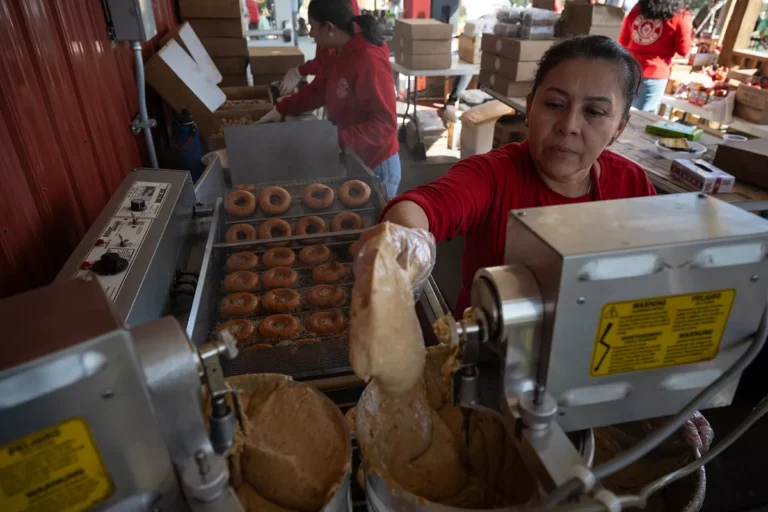
Tournament jousting anchors the daily programme, with jousts running three times a day according to a festival layer, and the riders share the grounds with a rotation of stage shows that a family-guide layer confirms are folded into ordinary admission. Artisan crafts occupy the lanes between performances, so visitors drift from a joust to a workshop stall to a food stand selling the kind of hearty fare that suits a faux-medieval afternoon. Each of the seven weekends carries its own theme; the discount-guide layer highlights a pirate-themed opening and reserves the final weekend, the seventeenth and eighteenth of October, for a haunted finale billed as Haunted Huzzah. Contests run alongside the scheduled entertainment, and daily royal events give the grounds a ceremonial rhythm, although some of those royal occasions are separately ticketed rather than covered by the gate. Dogs are welcome under the published pet policy, subject to the printed per-pet charge, which means four-legged companions form part of the crowd on the lanes. Taken together, the documented programme is less a single show than a small temporary village with its own calendar inside each day. Because admission folds the stage shows and the jousting into the gate, the main choices inside concern time rather than money: which of the three daily jousts to catch, which themed contests to enter or watch, and whether a separately ticketed royal event justifies its extra charge. Food and drink, listed plainly among the programme elements in the layers, fill the gaps between those fixed points.
Planning Your Visit
Choosing a weekend is the first decision, because the two thousand twenty-six run opens on Saturdays and Sundays from the fifth of September through the eighteenth of October, and the state newspaper layer and discount-guide layer both add two Monday openings: Monday the seventh of September, which is Labor Day, and Monday the twelfth of October. Gates keep hours of ten in the morning to seven in the evening, except on the twelfth of October, when the grounds close earlier, at five in the evening. Gate prices for two thousand twenty-six are printed by the state newspaper layer and the discount-guide layer for three groups: adults, children from five to twelve, and seniors of sixty-five and older, while children aged four and younger are admitted free. Parking is included with admission, and all stage shows and the tournament jousting sit inside the same ticket, per a family-guide layer. A discount-guide layer also records season passes and family packages for households planning repeat visits. One festival layer prints a lower “from” price range drawn from the official ticket page; that figure is recorded as that layer’s claim alone and is not merged with the gate prices printed by the newspaper and discount-guide layers. Separately ticketed add-on experiences and the per-pet charge remain element costs on top of admission. Families should note how the printed age bands interact: a child of four or younger enters free, while children from five to twelve carry their own printed gate price, and seniors of sixty-five and older likewise have a dedicated printed price rather than paying the full adult rate.
For a useful comparison, see the Woodson County Kansas HayFest Festival for another county festival.
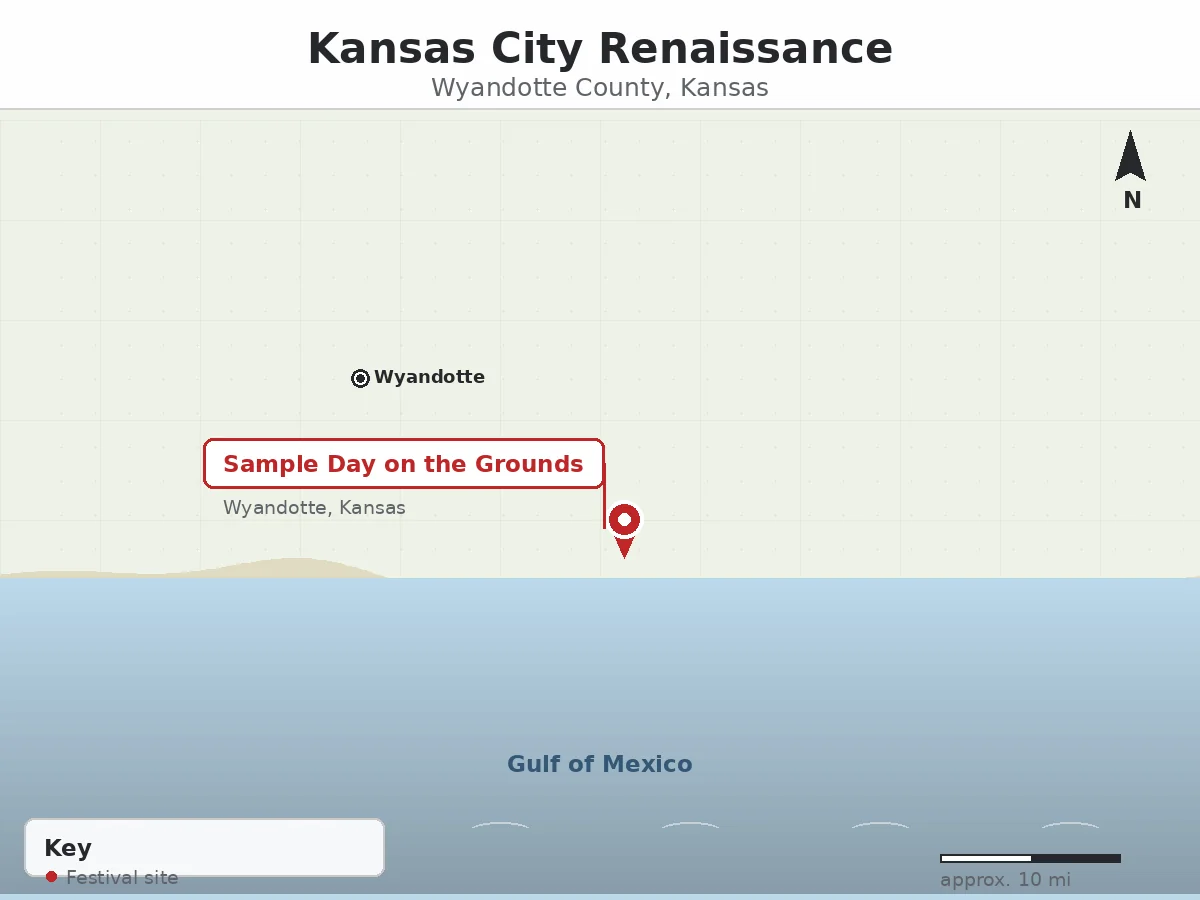
A Sample Day on the Grounds
Arriving near the ten o’clock opening leaves the lanes comparatively quiet for a first pass among the artisan stalls before the crowds thicken. A morning joust makes a natural anchor for the early hours, since three jousts are spread across each day and missing the first still leaves two more chances. Midday suits the food stands and a stage show or two, when the themed weekend’s contests usually compete for attention with the royal events. The afternoon can hold a slower circuit of crafts, a return to whichever performance earned a second viewing, and a pause to watch costumed regulars who treat the grounds as a seasonal home. Anyone staying to the seven o’clock close on an ordinary weekend day will have seen the site in both its bustling and its settling moods; visitors on the twelfth of October should simply shift everything earlier, because that Monday ends at five.
How It Compares
Renaissance gatherings in the region are not all built alike, and the distinctions in the record matter. A separate renaissance festival in the Topeka area of Shawnee County is a different event entirely, unrelated to the Bonner Springs grounds despite the shared genre. The Bonner Springs site also hosts smaller branded occasions under the festival name in other seasons, including a February dining event billed as Romance Under the Stars and a spring egg event in venue-listing layers; both are separately ticketed side events, not editions of the fall festival, and nothing from their programmes is imported here. Against that background, the fall gathering distinguishes itself on paper by sheer documented scale: sixteen acres of permanent structures, sixteen festival days, seven themed weekends and a published return date for the following year, a combination few single-weekend fairs in any county could match from their own record.

Before You Go: A Checklist
- Choose which themed weekend suits your party, from the pirate-themed opening to the haunted finale.
- Mark the two Monday openings, Labor Day and the twelfth of October, if a weekday visit fits better.
- Remember that the twelfth of October closes at five in the evening rather than seven.
- Budget separately for any add-on royal events, since some are ticketed beyond the gate.
- Check the printed per-pet charge before bringing a dog, and weigh a season pass for repeat weekends.
- Confirm the current day’s schedule through the festival’s own published channels before setting out.
Beyond the Festival Grounds
The grounds sit beside the Azura Amphitheater at Bonner Springs, so the site already belongs to a small cluster of event spaces rather than standing alone in a field. The festival brand returns to the same ground outside the fall run through its separately ticketed February and spring occasions, which keep the lanes in use across the calendar without changing what the autumn edition is. Bonner Springs itself handles the visitor traffic of a county whose seat is neighbouring Kansas City, Kansas, and the festival’s sixteen-day span gives the town a recurring autumn anchor documented across newspaper, guide and festival layers alike. Travellers combining the trip with the wider county will find the festival’s own website referenced throughout the layers as the standing source for its calendar, though no contact values are recorded here.
Why It Matters to the County
A benefit for an art institute is an unusual seed for a renaissance fair, yet the festival layer’s founding statement ties the event’s first purpose to supporting art education in Kansas City, and the gathering has evidently outgrown that single evening’s ambition into a permanent institution. For Wyandotte County, the significance is partly economic and partly a matter of identity: a sixteen-acre permanent village that reopens each fall, draws themed-weekend crowds across seven weekends, and already advertises its next return offers the county a dependable seasonal landmark. The unreconciled milestone billings, fiftieth season in one layer and fifty years in another, at least agree on the underlying point, which is that this festival measures its life in half-centuries rather than in single successful years. The same festival layer that carries the founding statement also carries the forward listing for two thousand twenty-seven, so the source that remembers the benefit origin is the one projecting the event’s future. That kind of continuity is what separates a landmark from a novelty.
Frequently Asked Questions
Which name do the sources actually use for this gathering?
Every layer prints Kansas City Renaissance Festival as the full name. A local family-guide layer shortens it in two ways, KC Renaissance Festival and KC Ren Fest, and those forms are reported as printed without being merged into a single preferred style.
On which days of the week do the gates open in two thousand twenty-six?
Saturdays and Sundays form the backbone of the run from the fifth of September to the eighteenth of October. Two Mondays join the calendar as well, Labor Day on the seventh of September and the twelfth of October.
What does one admission actually cover once a visitor is inside?
The family-guide layer states that admission includes free parking, all stage shows and the tournament jousting. Add-on experiences, some royal events and the per-pet charge sit outside that bundle as separate element costs.
How are dogs handled under the published grounds policy?
The record describes a dog-friendly policy with a printed charge applied per pet. That fee is an element charge attached to bringing an animal in, not a change to the gate price paid by human visitors.
What to Expect From the Next Wyandotte County Kansas Kansas City Renaissance Festival
How often is Wyandotte County Kansas Kansas City Renaissance Festival held?
The documented pattern is a single autumn run each year, built from themed weekends between September and October. Sixteen festival days filled the two thousand twenty-six edition, and the following year’s listing keeps the same seasonal shape.
When is the next Wyandotte County Kansas Kansas City Renaissance Festival?
A festival layer already lists the return from the fourth of September to the seventeenth of October in two thousand twenty-seven. That listing promises Saturdays and Sundays plus the Labor Day Monday and the October Monday, following the same hours pattern as the current edition.
Will the dates change?
Dates printed in the layers are the organisers’ published intentions rather than guarantees, and the two thousand twenty-seven listing appeared while the two thousand twenty-six run was still current. Any adjustment would surface through the festival’s own channels first, so checking them close to the season is the sensible course.
Closing Thoughts
Few county festivals anywhere can point to a record this tidy: a named founding purpose, a permanent sixteen-acre home, sixteen documented days of jousting and stagecraft, and a next edition already in print before the current one ends. The Bonner Springs gathering earns its place in the Wyandotte County calendar on evidence rather than enthusiasm, and the layers behind this article agree on nearly everything except a street number and a way of counting fifty years.