White County Indiana 4-H Fair Festival
For one week each July, the rhythm of White County, Indiana changes. Trailers roll toward the fairgrounds before the heat sets in, kids in green 4-H clovers hustle between barns with feed buckets, and by evening the smell of pork tenderloin and funnel cake drifts across the midway. The White County Indiana 4-H Fair is not a show staged for tourists. It is the county’s own reunion, held in the same place, for the same reasons, year after year.
Ask people across the White County area what summer means and you rarely hear “vacation.” You hear fair week — a run of days in July when this county of 24,688 people seems to tilt toward the barns and show rings. The habits are small and consistent. Grandparents arrive early to claim seats near the ring. Parents swap shifts so somebody can watch a niece’s goat showmanship class. Teenagers who spent months on a photography print or a rebuilt small engine check the exhibit building first. Nearly everyone walks the barn row slowly, the way you walk a street you used to live on.
What the White County 4-H Fair Really Is
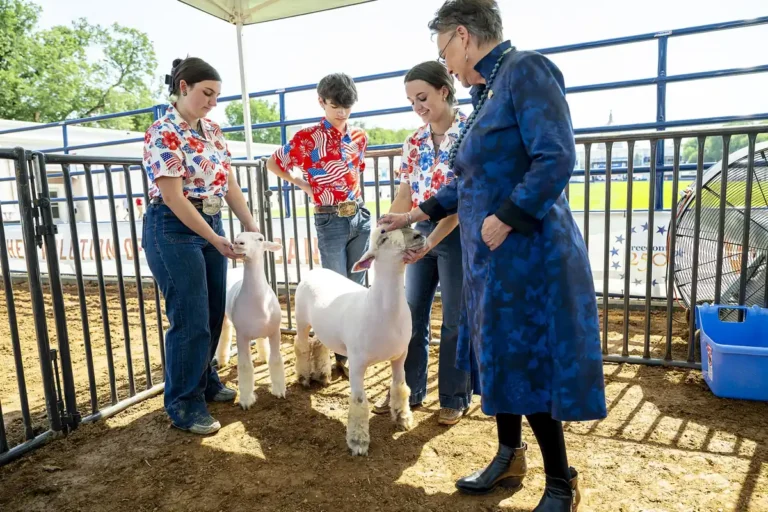
A 4-H fair is a county’s youth program turned inside out for public view. Members of White County 4-H clubs spend the year on projects — livestock, crops, sewing, woodworking, baking, photography, small engines — then bring the results to the fairgrounds to be judged, displayed, and in many cases sold. The fair is where that work becomes visible to neighbors who might otherwise never see it.
The county itself is a large, mostly rural stretch of north-central Indiana: 508.68 square miles, authorized by the state legislature on February 1, 1834, with Monticello serving as the county seat. That scale matters at fair time. Families drive in from small towns and farmsteads scattered across the county, and the grounds become the one place where all of those separate communities are briefly in the same gravel lot.
Admission to the grounds is typically free, which is part of why the fair works as a default meeting spot. You do not have to plan ahead or buy anything to walk through the barns, watch a showmanship class, or run into three people you have not seen since last July.
For another look at how a community turns its own traditions into a gathering, see the Wells County Indiana Bluffton Free Street Fair Festival for a useful comparison.
White County 4-H Fair Basics: County, Timing, and Setting
| Town / place | White County area, centered on Monticello and the surrounding townships |
| County | White County, Indiana |
| County seat | Monticello |
| Population | 24,688 (countywide) |
| Region | North-central Indiana |
| Typical timing | One week in July, mid-summer |
| Admission | Free gate admission in most years |
| Setting | County fairgrounds with livestock barns, show rings, exhibit halls, and a grandstand |
| Features | 4-H livestock shows, project exhibits, food stands, grandstand events |
| Organizer | White County 4-H clubs and volunteer fair organizers |
From an 1834 County Charter to a Summer Institution
White County was authorized on February 1, 1834, in an era when Indiana’s county fairs were agricultural showcases — places to compare draft horses, seed corn, and butter churns. The 4-H movement arrived later, growing out of early twentieth-century rural youth clubs that taught practical farming and home skills to young people who would eventually run those same farms.
What happened in White County is what happened in most Indiana counties: the two traditions fused. The commercial livestock showcase gave way to a youth-centered fair, and the county’s summer gathering became less about buying and selling and more about teaching, judging, and showing up for your neighbor’s kid.
The physical layout carries that history. Barns sit close together. The show ring is small enough that a good crowd feels like a big one. The exhibit hall, with its rows of canned goods, quilts, and poster boards, is the direct descendant of those nineteenth-century display tables — just with more duct tape and glitter.
A Day at the White County Fairgrounds
Fair week has a rhythm that regulars learn without being told. Mornings belong to livestock — feeding, washing, clipping, and the quiet tension before a class is called. Afternoons are for judging in the exhibit halls and for the shade under the grandstand. Evenings draw the biggest crowds, when the midway lights come on and the grandstand fills.
Food: Tenderloins, Funnel Cakes, and 4-H Stands
Food at fair week follows the Indiana county-fair playbook, and nobody is complaining. Pork tenderloin sandwiches, corn dogs, elephant ears, lemon shake-ups, and nachos are the standards. Club and nonprofit food stands do a lot of the cooking, which means the money you spend on a burger tends to circle back into the same community that put the fair on. Many stands still prefer cash, so it is worth carrying some even if a few vendors take cards.
The real social hub is wherever the coffee and the pie are. Older residents tend to claim a table early and hold it for hours, greeting everyone who walks past. If you sit down with a slice of pie, expect to hear about whose grandkid won which class before you finish it.
Music and Entertainment Around the Grandstand
Grandstand programming varies from year to year, but the pattern is familiar: tractor pulls, demolition derbies, and similar draws on the biggest nights, plus live local music, talent showcases, and the kind of entertainment that fills a bleacher without needing a national act. Announcements carry across the grounds, which is how most people know a class is starting or a show is about to begin.
The quieter entertainment is the fair itself. Watching a nine-year-old talk a nervous calf through a gate, or a teenager answer a judge’s question about feed rations, is more compelling than it sounds. Regulars plan their evening around it.
Family Activities Beyond the Show Ring
Some years bring rides and midway games; the constants are the barns, the exhibit hall, and the open space where kids run between them. Families with young children tend to work in loops — barn, water break, exhibit hall, snack, barn again. Pedal pulls, craft tables, and hands-on demonstrations show up often enough that children expect them.
For anyone new to 4-H, the etiquette is simple: ask before touching an animal, keep strollers out of the aisles when a class is loading, and let the members work. Most families are happy to explain what is happening.
Planning Your Trip to White County for Fair Week
Getting There from Monticello and Beyond
White County sits in north-central Indiana, with U.S. 24 and U.S. 421 doing most of the heavy lifting for visitors. Monticello is the practical anchor for anyone coming from out of town, and the county is an easy day trip from Lafayette, Logansport, and the Indianapolis area. Once you are near town, fair-week traffic tends to funnel in one direction — follow the trucks and trailers.
Where to Stay Near White County
Lodging clusters around the lakes, with motels, cabins, and campgrounds serving the summer crowd that comes for water recreation. Because fair week lands in the middle of lake season, rooms in the Monticello area can tighten up; booking early in the summer is the safe move. Visitors who want more chain-hotel options often look toward larger towns within an easy drive.
Parking at the Fairgrounds
Parking is generally on grass and gravel, directed by volunteers, and it fills fast on grandstand nights. Locals carpool and arrive early, both to get a decent spot and to avoid the slow crawl out at the end of the evening. If you are hauling a trailer with livestock, plan to arrive well before the gates get busy.
Admission and What Things Cost
Gate admission is typically free, and walking the barns and exhibit halls costs nothing. Money goes toward food, any rides or games, and ticketed grandstand events. Livestock auctions at the end of the week involve registered buyers rather than casual drop-ins, though anyone can watch.
July Weather and How to Handle It
Expect heat and humidity, with the chance of an afternoon storm rolling through. Mornings and evenings are the comfortable hours. Bring a refillable water bottle, sunscreen, and a hat; wear shoes you do not mind getting dusty or muddy. Barns offer shade but hold warmth, so a midday break in an air-conditioned spot in town is a common local strategy.
A Sample Fair Weekend in White County
Friday evening: arrive before the dinner rush, walk the barn row while it is still light, grab food, and settle in for whatever is on the grandstand. This is the night to run into people — the crowd is relaxed and the week is still ahead.
Saturday morning: come early for livestock classes. The show ring is at its best before the heat builds, and the barn aisles are full of families clipping and rinsing animals. Midday, head into the exhibit hall to see the static projects, then take a break. Saturday evening is typically the busiest stretch of the week, so plan to park once and stay.
Sunday: a slower pace. Catch the final classes, the last look at exhibits, and the closing events. Many families use Sunday to say goodbye to friends they will not see until next July — which is, more or less, the whole point of the week.
White County’s Fair Week Next to Neighboring County Fairs
White County is surrounded by counties that run their own 4-H fairs in the same general stretch of summer, and plenty of families treat them as a circuit. Pulaski County, just to the north around Winamac, and Jasper County to the northwest around Rensselaer both keep the same barn-and-show-ring format. Carroll County, over by Delphi, follows a similar template.
Tippecanoe County, anchored by Lafayette, runs a noticeably larger fair with more commercial draw — bigger midway, bigger crowds. White County’s version is smaller, faster to walk, and easier to navigate with kids. And later in the summer, the Indiana State Fair in Indianapolis pulls the same exhibitors onto a much bigger stage, giving local 4-H members a sense of how far their projects can travel.
Fair-Week Checklist for White County Visitors
| Cash on hand | Food stands and games are easier with bills and small change |
| Water and sunscreen | July afternoons in open lots get hot fast |
| Closed-toe shoes | Barn aisles and gravel are not sandal territory |
| Lawn chairs | Useful for ring-side waiting and evening shows |
| Early arrival | Best parking and seating go before the dinner crowd |
| Patience with animals | Ask before petting, and give members room to work |
Beyond the Barns: White County After the Fair
Fair week is a good excuse to stay a little longer. Monticello sits between Lake Shafer and Lake Freeman, and the summer economy there is built on water — boating, fishing, swimming, and the long tradition of lake-resort recreation that has drawn visitors to this part of Indiana for generations. Indiana Beach, on the shore in Monticello, is the best-known landmark of that tradition.
Downtown Monticello has the county courthouse and a compact business district worth a slow walk. The Tippecanoe River winds through the area, offering quieter water than the lakes. Drive a bit further and you can reach state park land and small-town main streets that look much the same as they did when the county’s fair tradition was young.
Why Fair Week Still Holds White County Together
In a county of 508.68 square miles and 24,688 people, there is no single downtown where everyone crosses paths. The fair solves that. It is a shared calendar entry, a shared set of barns, and a shared reason to drive into town on a hot July evening.
It also does quiet work that does not show up on a schedule. Members learn to keep records, meet deadlines, speak to adults they do not know, and handle an animal that does not cooperate. Parents and volunteers learn how much a county can accomplish when nobody is being paid to do it. And kids who spend a week in the barns tend to come back as adults who spend a week in the bleachers.
Where Fair Week Happens in White County
Fair-week activity centers on the county fairgrounds serving Monticello and the surrounding townships in north-central Indiana, with U.S. 24 and U.S. 421 as the main approaches.
Fair-Week Questions White County Neighbors Hear Every July
Do I need to know a 4-H family to come to the fair?
No. The grounds are open to the public and gate admission is typically free in most years. You can walk the barns, watch classes, browse the exhibit hall, and buy food without any connection to a 4-H member. That said, most first-time visitors end up knowing someone by the end of the evening — that is the nature of a county fair this size.
Is it appropriate to talk to the kids showing animals?
Yes, and most members appreciate it. The etiquette is straightforward: ask before touching an animal, stay out of the aisle when a class is loading, and avoid interrupting right before someone enters the ring. Between classes, members are usually happy to explain what they raised and how they prepared.
What should I bring for a full day at the grounds?
Water, sunscreen, a hat, and comfortable closed-toe shoes. A folding chair helps if you plan to sit ring-side for a while, and cash makes food and games simpler. If you are staying into the evening, a light layer is useful once the sun drops, even in July.
Can visitors buy the animals or projects on display?
Static projects such as baked goods, crafts, and photographs are generally for exhibit rather than sale. Livestock is different: many market animals are sold through a livestock auction near the end of fair week, with registered buyers doing the bidding. Anyone is welcome to watch, and the auction is one of the more memorable parts of the week for families who have never seen one.
What’s Ahead for the White County 4-H Fair
The fair’s future depends on the same thing it always has: enough families willing to raise an animal, finish a project, and spend a July week at the grounds. Volunteer-run fairs across Indiana are competing with summer jobs, travel, and a long list of other commitments, and White County is no exception.
What works in its favor is momentum. Alumni bring their own children back. Grandparents who showed hogs in the same barns now sit in lawn chairs by the ring. The project categories keep expanding — robotics and computer work sit alongside canning and quilting — which keeps the fair relevant to kids who have never lived on a farm. As long as the barns fill in July, the tradition holds.
Last updated: October 2026
If you go, go the way locals go: early, unhurried, and ready to talk to whoever ends up next to you at the ring. The White County Indiana 4-H Fair is not trying to impress anyone. It is simply the week the county comes home, and after a few hours in the barn row, that is more than enough.