Webster County Missouri Fair Festival
Most county fairs borrow a rodeo for one evening and hand the arena back by morning. Marshfield does the opposite, building its whole fair week around two institutions at once. The Webster County Fair runs Wednesday through Saturday in the first week of July at Ellis O. Jackson Park, the Webster County Fairgrounds, and the same grounds host a four-day Independence Day rodeo across the very same days. Exhibit halls fill by daylight, livestock shows rotate through the barns, and at sundown the crowd drifts toward bronc riding and a midway. The City of Marshfield bills this fair as the longest, continuous running county fair in Missouri, starting in 1938 — a claim this article carries exactly as that, the city’s own billing for its fair, and never as an audited statewide ranking.
One Week, Two Institutions
The fair’s published name is the Webster County Fair, and its own livestock flyer styles the combined week the Webster County Fair and Rodeo, which tells you how the pairing is understood locally. Neither half is an afterthought. The fair brings daily livestock shows, two exhibit buildings of judged entries and a carnival midway that lights up nightly, while the rodeo delivers four days of professional-style arena competition inside the same fence line. A visitor does not choose between a fair day and a rodeo night; the week is designed so that both happen in sequence, barns first and arena after dark.
Marshfield is the seat of Webster County, set in the southwest Missouri Ozarks, and the fairgrounds occupy a town park rather than a remote county lot. Two exhibit buildings stand on the grounds, the Ellis Jackson Building and the Centennial Building, and a kitchen building operates every night of the fair. The published record does not name a fair board or association as organiser, and this article invents none; the fair is presented on the city’s own annual-events record as Marshfield’s county fair, and it is written about here on those terms.
Quick Facts
| Item | Detail |
| Event of record | Webster County Fair, also styled the Webster County Fair and Rodeo |
| Fair town | Marshfield, the Webster County seat |
| Grounds | Ellis O. Jackson Park, the Webster County Fairgrounds |
| Season | Wednesday to Saturday in the first week of July |
| Partner event | A four-day Independence Day rodeo sharing the same week and grounds |
| Exhibit buildings | The Ellis Jackson Building and the Centennial Building |
| Livestock shows | Beef, dairy, sheep, meat goat, dairy goat and poultry |
| Midway | Star Amusement rides and games, operating nightly |
| Admission | No gate, pass or parking price is published in the fair’s own record |
| The city’s billing | The longest, continuous running county fair in Missouri, starting in 1938 — the city’s claim |
A Claim Carried as a Claim
Marshfield’s fair history is usually told in one sentence: the city bills the Webster County Fair as the longest, continuous running county fair in Missouri, starting in 1938. That sentence deserves respect and restraint in equal measure. A fair that has genuinely run through the decades since the late nineteen thirties would carry real weight in a state crowded with old fairs, and the billing plainly anchors local pride. But the fetched record contains no year-by-year continuity audit, no founding documents and no edition count, so this article repeats the superlative only as what it demonstrably is: the City of Marshfield’s published claim about its own fair.
What the record does show is a fair with settled machinery. Its own livestock-schedule flyer from an earlier edition lays out a five-day July week, running July 4 to July 8 in that year, with the species assigned their days in a fixed order — sheep on Wednesday evening, dairy cattle on Thursday morning, swine on Thursday evening, meat goats on Friday, beef on Saturday morning and poultry on Saturday. A fair does not print a schedule that choreographed for a one-off. That routine, the two named exhibit buildings and the park grounds describe an institution with habits, even where the paperwork trail stays thin.
For a useful comparison, see the Washington County Missouri Fair Festival for another county festival.
What to Expect During Fair Week
Livestock Shows on a Daily Rotation
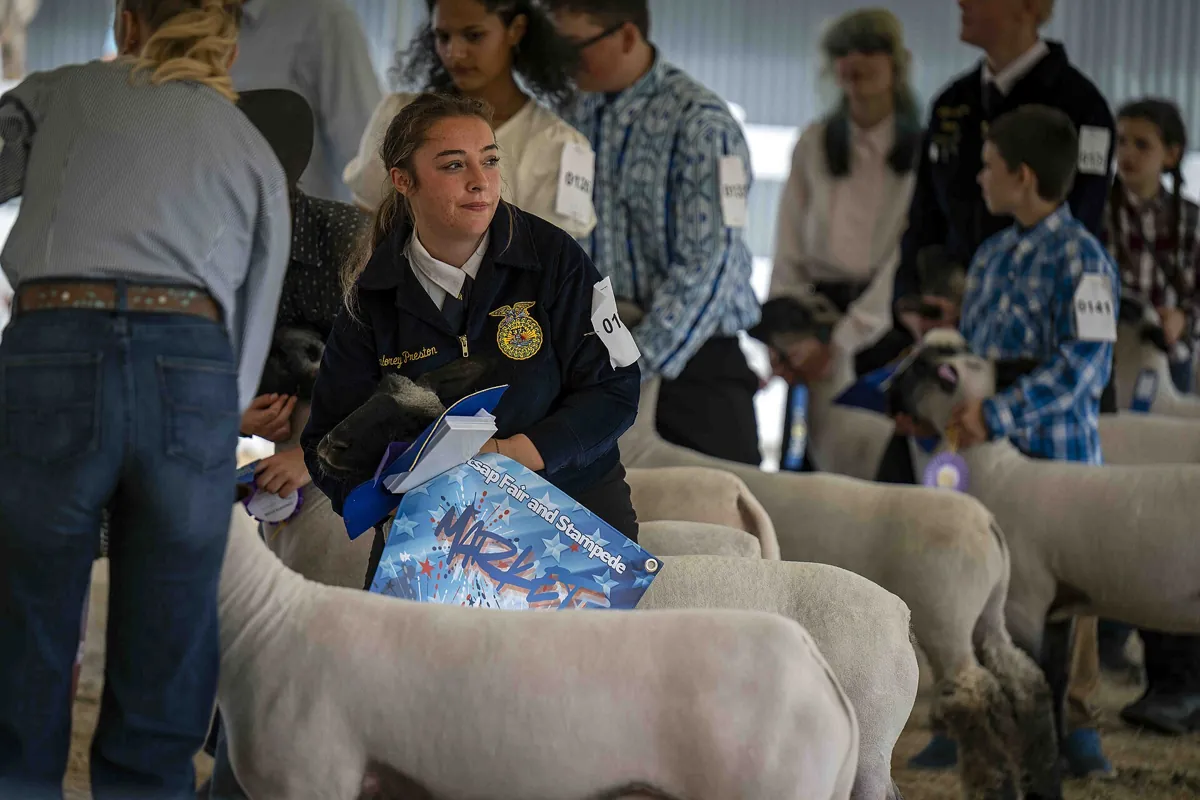
Animals work every day of this fair rather than crowding into a single show day. The documented programme lists daily livestock shows across beef, dairy, sheep, meat goat, dairy goat and poultry. In the one earlier edition whose own flyer survives in the record, the order ran species by species, opening with sheep under the lights on Wednesday and closing with beef and poultry on Saturday. Treat that sequence as a picture of how the week is organised rather than a promise for any given year, and expect the barns to be the fair’s daytime centre of gravity.
Four Days of Rodeo in the Same Fence Line
The rodeo is not a sideshow bolted onto Saturday night. It runs four days inside fair week, and its documented card covers the classic rodeo disciplines: bareback riding, saddle bronc riding, calf roping, breakaway roping, bulldogging, team roping, barrel racing and bull riding. The rodeo’s signature moment belongs to the holiday itself, because the programme closes with a fireworks display on the Fourth of July. For many Webster County families the week’s peak is therefore fixed by the calendar — rodeo action in the arena and fireworks overhead on Independence Day night, with the fair humming along around both.
Star Amusement on the Midway
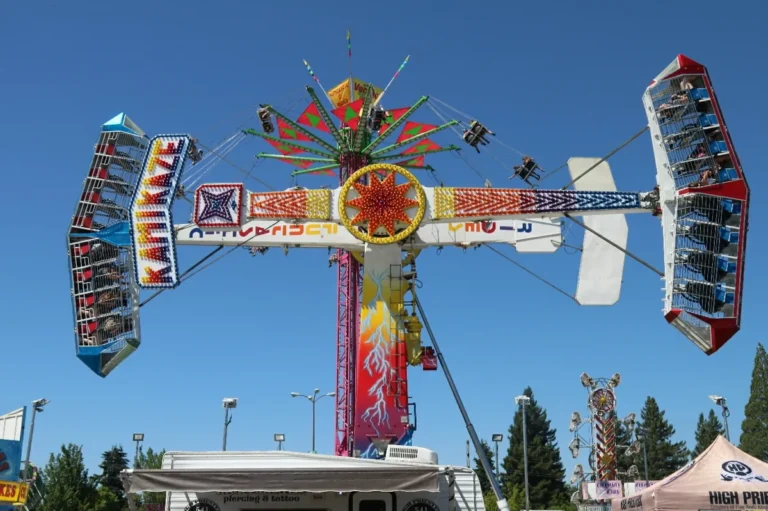
When the arena and the barns wind down, the midway takes over. The documented provider is Star Amusement, whose rides and games operate on the carnival midway nightly through the fair. Nightly operation matters to the week’s rhythm: the midway is no weekend-only attraction but the standing evening destination once shows end, its lights giving the fairgrounds a second shift. No ride prices are published in the fair’s record, so what a night on the midway costs is a question to settle at the ticket box, not in advance.
Pulls, Pies and the Auction Block
Between the barns and the arena sits the fair’s competitive undercard. Arena attractions include tractor and truck pulls, the kind of horsepower contest that draws its own devoted following in farm country. Inside the buildings, the programme lists an art show, talent shows and a pie contest, where the county’s bakers put their reputations into crust and filling. An auction rounds out the documented events, giving fair week a commercial heartbeat alongside the ribbons. Together these are the standard grammar of a Missouri county fair, spoken here in one park across four days.
Two Buildings Full of Exhibits
The Ellis Jackson Building and the Centennial Building hold the fair’s judged exhibits, and the documented categories run wide: baking and canning, garden vegetables, horticulture, photography, crafts and antiques. This is where the county shows itself to itself — preserves lined up by colour, quilts and photographs pinned in rows, the best of the summer’s gardens arranged for judging. Walk both buildings slowly; they explain the fair to a first-time visitor faster than any arena event can.
Supper From a Different Kitchen Crew Each Night
The fair’s most telling social detail is its kitchen. A kitchen building on the grounds serves food every night of the fair, and a different civic group staffs it each night. That rotation turns supper into a small civic relay: the organisation cooking tonight hands the aprons to another tomorrow, and eating at the fair supports whichever club, church or society holds the shift. Menus and prices are not published in the fair’s record, so arrive curious and flexible.
Planning Your Visit
Building the Week Around the Fourth
Timing is this fair’s first planning decision. The fair occupies Wednesday to Saturday of the first week of July, which means the Fourth of July always falls inside or beside the run, and the rodeo’s fireworks display lands on the Fourth itself. If your trip can stretch to only one evening, the holiday night is the obvious candidate, pairing a full fair day with rodeo and fireworks. If you prefer thinner crowds and fuller barns, the opening days carry the early livestock shows with less competition for space along the rails.
The Honest Answer on Prices
Nothing in the fair’s own published record states what admission costs, and this article will not fill that silence with a borrowed number. Same-name fairs in other states publish their own prices, and none of those figures belongs to Marshfield. The fair is also nowhere described as free in its own record, so assuming a free gate would be a second, opposite guess. The practical approach is simple: carry cash for the gate and the midway, and confirm the current year’s arrangements locally in Marshfield before travelling a long distance.
Getting to the Grounds
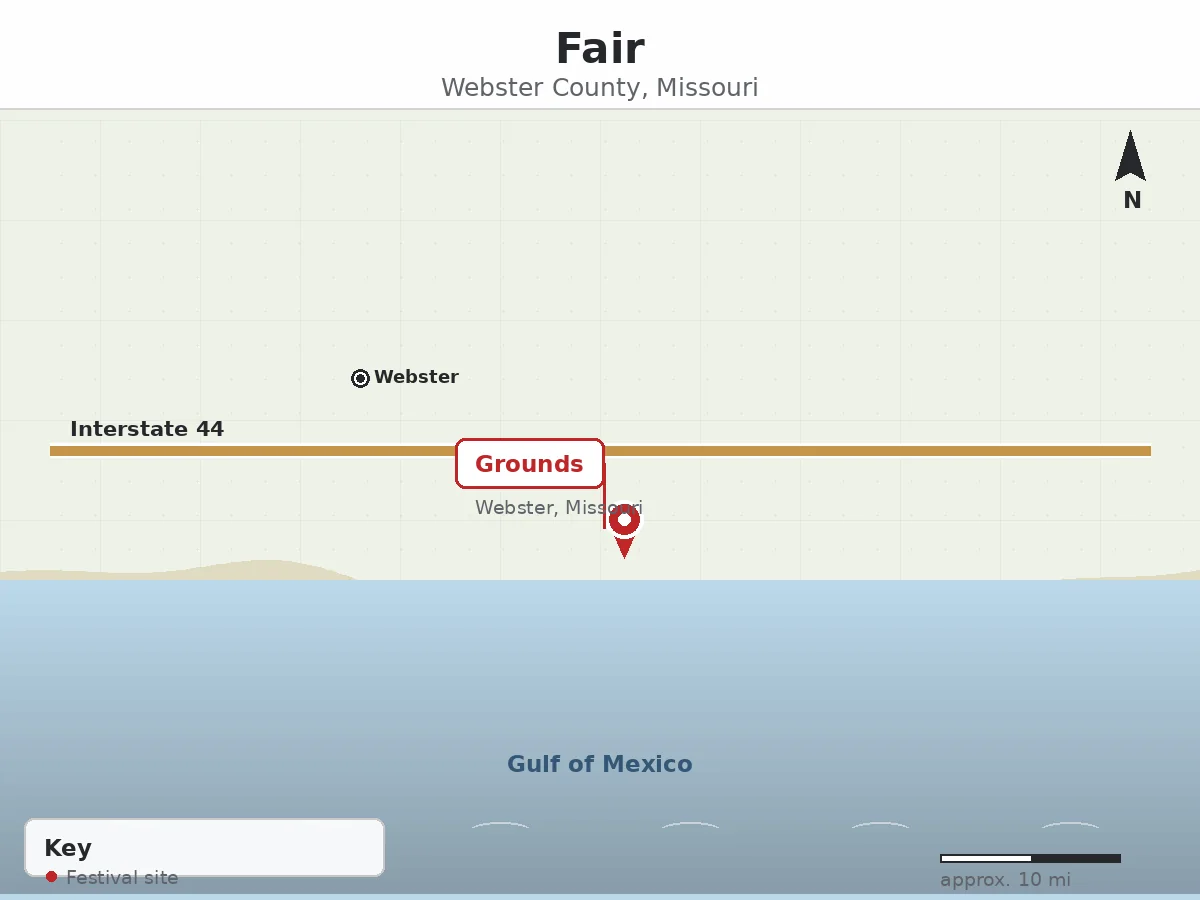
The fairgrounds are Ellis O. Jackson Park in Marshfield itself, so the destination is a town park rather than a rural site at the end of a gravel road. No street address for the grounds appears in the fair’s published record, and none is invented here; navigate by the park’s name, which is how the fair itself directs people. Marshfield sits on Interstate 44 in southwest Missouri, within easy reach of Springfield to the west for visitors who want a larger town’s lodging and restaurants as a base.
A Fair Saturday, Morning to Midway
Start in the barns, where Saturday in the documented pattern brings the beef show in the morning and poultry judging the same day, so arrive early enough to watch exhibitors walk cattle into the ring while the grounds are still quiet. Give the exhibit buildings the late morning, moving from baking and canning to photography and antiques. Save the kitchen building for the evening, when that night’s civic group is cooking. The afternoon suits the art show, the talent stage and the auction. As evening comes on, choose your arena — a tractor and truck pull or the rodeo card, depending on the day’s billing — and finish on the midway under Star Amusement’s lights.
How This Fair Differs
A conventional county fair treats its rodeo as a garnish — one performance, often outsourced, easily dropped in a tight year. Marshfield’s arrangement is structural instead: the rodeo is a four-day institution sharing the grounds, the week and, in the fair’s own flyer styling, the name. The fair also leans into the national holiday rather than merely landing near it, with fireworks written into the rodeo programme on the Fourth. Set against larger Missouri fairs, Webster County’s is compact — one park, two exhibit buildings, a kitchen and an arena — and its character comes from that compression, with every part of the week visible from every other part.
Fair Week Checklist
- Confirm this year’s exact July dates locally before booking travel
- Mark which night of your visit carries the rodeo, and plan to stay for it
- If the Fourth of July falls inside your dates, keep that evening free for fireworks
- Carry cash for the gate and midway, since no prices are published in advance
- Do the livestock barns early in the day, before shows end and heat builds
- Walk both exhibit buildings, Ellis Jackson and Centennial, rather than just one
- Eat at least one supper from the kitchen building to meet that night’s civic crew
- Bring sun protection and patience in equal measure for outdoor arena seating
Beyond the Fairgrounds
Marshfield rewards a slow hour away from the park. It is the hometown of Edwin Hubble, the astronomer whose name the famous space telescope carries, and the county courthouse square anchors the old town centre for a walk between fair sessions. The surrounding country is classic Ozark foothill terrain, all rolling pasture and timbered hollows. Springfield, roughly half an hour west, supplies the region’s deeper bench of hotels, restaurants and rainy-day alternatives, while Marshfield itself keeps the fair week feeling small-town and unhurried.
Why This Week Matters to Webster County
A county fair is a census of what a place values, taken once a year. In Webster County the return shows livestock in the barns by day, preserves and photographs in two exhibit buildings, a different civic group feeding the crowd each night, and a rodeo fused to the county’s Independence Day. The city’s longest-running billing, claim though it remains, expresses something real regardless of the ranking: Marshfield believes this week is an inheritance, not an event series. Institutions fed by rotating kitchen crews and judged by neighbours tend to last.
Frequently Asked Questions
Do the fair and the rodeo run at the same time?
Yes, by design. The county fair runs Wednesday to Saturday in the first week of July, and the four-day Independence Day rodeo occupies the same week on the same fairgrounds at Ellis O. Jackson Park, with fireworks on the Fourth of July.
What does it cost to attend the Webster County Fair?
The fair’s own record publishes no admission, pass or parking price, and it never describes the fair as free either. Treat costs as unconfirmed, carry cash, and check the current year’s local announcements in Marshfield before you set out.
Where exactly in Marshfield is the fair held?
At Ellis O. Jackson Park, which serves as the Webster County Fairgrounds, with exhibits in the Ellis Jackson Building and the Centennial Building. The fair’s published record gives no street address, so navigate by the park name.
Has the fair really run continuously since 1938?
That is the City of Marshfield’s billing for the fair — the longest, continuous running county fair in Missouri, starting in 1938 — and it is carried here as the city’s claim. The fetched record offers no year-by-year audit that would turn the billing into a verified ranking.
What to Expect From the Next Webster County Missouri Fair Festival
How often is the Webster County Missouri Fair Festival held?
Once a year, in the first week of July, following the fair’s established annual pattern of a Wednesday-to-Saturday run shared with its Independence Day rodeo.
When is the next Webster County Missouri Fair Festival?
In the fair’s settled season: the Wednesday-to-Saturday span of the first week of July, with the Fourth of July fireworks inside the rodeo programme. Confirm the precise dates locally as the season approaches, since the fair publishes its details through local channels.
Will the dates change?
The fair’s anchor is the Independence Day week itself, so a move away from early July would break the arrangement the whole week is built on, fireworks included. The exact Wednesday-to-Saturday dates necessarily shift with each year’s calendar, which is why confirming the current year’s dates before travelling remains the sensible habit.
What Marshfield offers in July is not the largest fair in Missouri, and it does not need to be. It offers a fair and a rodeo fused into a single holiday week in a town park, a kitchen run by a different set of neighbours every night, and a city’s proud claim about 1938 riding over all of it. Come for the barns in the morning, stay for the arena after dark, and let the fireworks on the Fourth close the argument.



One Comment