Washington Parish Louisiana Pioneer Christmas Festival
On the first weekend in December, a small settlement of nineteenth-century pioneer cabins on the edge of Franklinton glows with lamplight, wood smoke, and carollers singing from open porches. The gathering is called Pioneer Christmas, and for one weekend each year it turns the Mile Branch Settlement into a living picture of how the parish’s earliest families marked the season. Costumed interpreters staff the cabins, fires burn in the hearths, and visitors move from cabin to cabin at an unhurried pace.
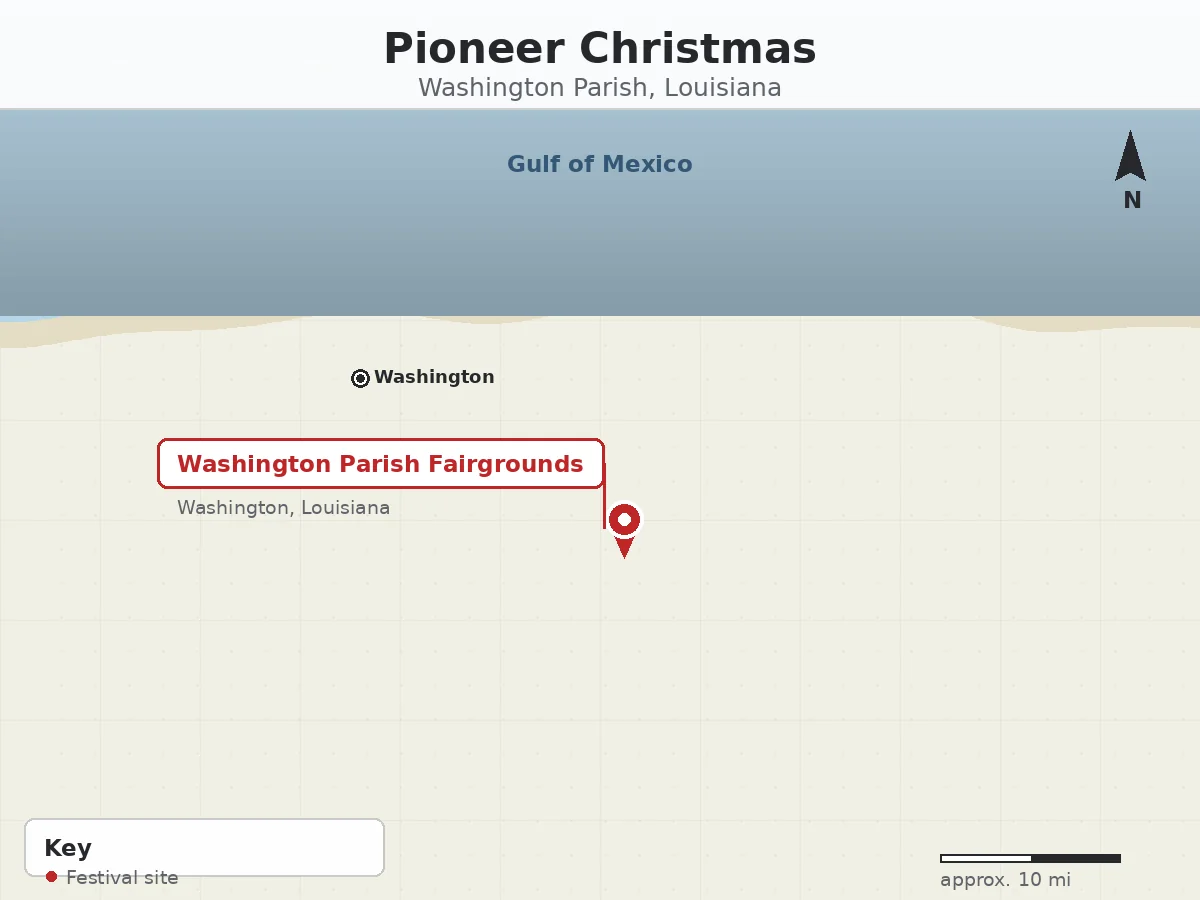
There is nothing hurried or modern about the occasion. Its pleasures are small and deliberate: a song heard from a porch, a cooking demonstration watched at close range, a handmade ornament found on an artisan’s table. Franklinton, the parish seat of Washington Parish, hosts the event at the Washington Parish Fairgrounds, where the settlement stands.
About
Pioneer Christmas is the published name of the event, and it is the name visitors will find on listings and announcements. The sheet title, Washington Parish Louisiana Pioneer Christmas Festival, is never printed exactly. The event belongs to the Mile Branch Settlement, which both hosts it and organises it, and it takes place on the settlement grounds at the Washington Parish Fairgrounds in Franklinton.
The settlement is a collection of nineteenth-century pioneer cabins, and Pioneer Christmas dresses those cabins for the season. Each cabin is decorated, and costumed interpreters staff the buildings, welcoming visitors, answering questions, and showing how pioneer families lived and celebrated. Cabin tours form the heart of the visit. Guests walk from one cabin to the next, stepping into rooms warmed by hearth fires.
Carollers sing on the cabin porches, and their music carries across the grounds between the buildings. Period-costume cooking demonstrations show how holiday food was prepared over open fires and in cast-iron cookware, with interpreters explaining each step as they work. Local artisans exhibit and sell crafts and holiday ornaments, so visitors can take home something made by hand in the parish.
For a useful comparison, see the Washington Parish Louisiana Mardi Gras Festival for another county festival.
The event runs the same weekend as the Festival of Trees, a museum-sponsored event across the street. Pioneer Christmas charges a small admission fee, according to a community bulletin layer, while the Festival of Trees is free. Timing is fixed by the layers to the first weekend in December, and no single dated edition with a calendar date is documented in the layers read, so this article gives no specific date. The settlement also opens for the October Free Fair and a May antique tractor show, but those are separate events.
Quick Facts
| Detail | Information |
| Published name | Pioneer Christmas |
| Host town | Franklinton, the parish seat of Washington Parish |
| Venue | Mile Branch Settlement, at the Washington Parish Fairgrounds |
| Organiser | Mile Branch Settlement |
| Timing | First weekend in December |
| Admission | Small admission fee |
| Setting | Nineteenth-century pioneer cabins |
| Programme | Cabin tours, carollers, cooking demonstrations, artisan crafts |
| Same-weekend neighbour | Festival of Trees, across the street, a separate free event |
| Founding | No founding year documented |
History
No founding year for Pioneer Christmas is documented in the layers read, and this article invents none. The event’s own beginnings are not recorded in the material available, so the history that can honestly be told here belongs to the place rather than to the occasion. The Mile Branch Settlement is a gathering of nineteenth-century pioneer cabins, and those cabins carry the history. They stand as examples of the homes that Washington Parish families built when the parish was young, when timber was cut nearby, when a house rose through the labour of neighbours, and when Christmas was celebrated with what the household could make, grow, or trade for.
Pioneer cabins of that era were small, sturdy, and practical. A family lived, cooked, slept, and welcomed guests in one or two rooms. Heat came from a hearth. Light came from fire and candles. Food came from the garden, the smokehouse, and the woods. Ornaments were made by hand from paper, cloth, dried fruit, and greenery cut close to home. A Christmas in such a house was not a display of wealth. It was a pause in the working year, a time for family and neighbours.
The settlement keeps those buildings standing and open. Interpreters staff them during the event, dressing in period costume, tending the fires, cooking over open flames, and talking with visitors about the details that make pioneer life vivid. The event’s history is the history of the cabins and of the people who built them, preserved by the people who now care for them.
What to Expect
A visit to Pioneer Christmas moves at the pace of a walk between cabins. There is no single stage to face and no schedule that demands attention at a fixed hour. Visitors arrive, pass through the entrance, and find the programme spread across the buildings rather than concentrated in one place. The natural way to enjoy the event is to wander, to step into each cabin in turn, at an unhurried pace.
Inside the cabins, interpreters welcome questions. They can explain the furnishings, the tools, and the decorations, and they can show how the rooms were used when families lived in them. The decorations repay attention. Greenery, handmade ornaments, and simple arrangements fill the rooms, and each cabin shows a slightly different version of how a pioneer family might have dressed a home for the season. The carollers sing from the cabin porches, so the music follows visitors as they move around the grounds.
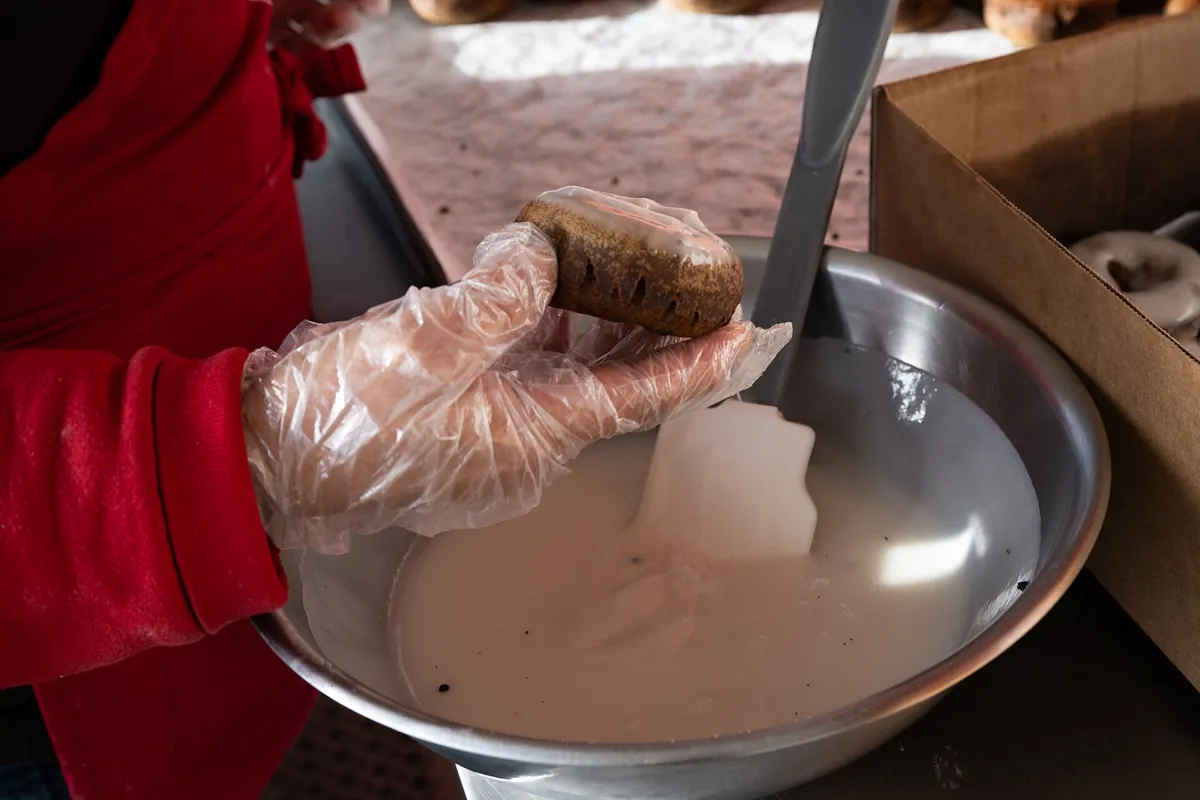
The period-costume cooking demonstrations are worth seeking out. Watching food prepared over an open fire gives a vivid sense of how much labour went into a holiday meal and how much skill it required. Local artisans exhibit and sell crafts and holiday ornaments throughout the event, and browsing their tables is part of the pleasure of the visit. The grounds are outdoors, so dress for cool December weather between cabins. The small admission fee covers entry to Pioneer Christmas itself, while the Festival of Trees across the street is a separate event with free admission.
Planning Your Visit
The first thing to settle is the weekend. Pioneer Christmas takes place on the first weekend in December, according to the state tourism layer, and no specific calendar date is documented in the layers read. Visitors should confirm the year’s dates through the settlement’s own announcements before travelling. Franklinton is the parish seat, and the event takes place at the Mile Branch Settlement on the Washington Parish Fairgrounds.
A small admission fee applies to Pioneer Christmas, so visitors should carry a means of payment and should not assume that entry is free simply because the Festival of Trees across the street charges nothing. Dress for an outdoor visit in December. Layers, a warm coat, and comfortable walking shoes will serve better than anything formal, because the visit is spent moving between cabins on open ground.
Visitors with children should know that the cabins are historic buildings with low thresholds, uneven floors, and open hearths, so young children will need supervision inside the buildings and around the fires. Allow a generous part of the day for the visit. Two or three unhurried hours will show the event properly. Food and drink are part of the programme through the cooking demonstrations. The demonstrations show how holiday food was prepared, and they are a display rather than a meal service, so plan to eat in Franklinton before or after the visit.
A Sample Itinerary
A satisfying visit to Pioneer Christmas can be built around a single unhurried morning or afternoon. Begin at the entrance, take a few minutes to get a sense of the grounds, and then head for the cabins while energy is fresh. Move from cabin to cabin in whatever order the grounds suggest, stepping inside each one and allowing time to look at the decorations and to talk with the interpreters. Ask about the furnishings, the hearth, and the ornaments. Pause on the porches between cabins to listen to the carollers.
Around the middle of the visit, seek out a cooking demonstration. Watching holiday food prepared over an open fire is one of the most vivid parts of the event, and the demonstrations reward visitors who stay to watch a dish take shape rather than glancing at it in passing. After the demonstrations, turn to the artisans. Browse the tables of crafts and holiday ornaments, talk with the makers, and choose a keepsake if one catches the eye. Then take a final slow walk around the grounds, revisiting any cabin that deserves a second look, before leaving. Visitors who want to see the Festival of Trees as well can cross the street afterwards and treat it as a second, separate visit.
Comparison
Pioneer Christmas and the Festival of Trees share a weekend and a street, and visitors often encounter them together, but the two occasions are built on different ideas. Pioneer Christmas is a living-history event. Its setting is a settlement of nineteenth-century cabins, its interpreters wear period costume, and its programme is organised around how pioneer families lived and celebrated. The Festival of Trees is a museum-sponsored display event, with its own organiser, its own free admission, and its own character. One shows the past through people and buildings. The other shows the season through decorated trees. Visitors should not confuse them, and they should not expect the admission arrangement of one to apply to the other.
The settlement’s other openings offer a different contrast. The October Free Fair fills the fairgrounds with the noise and scale of a parish fair, and the May antique tractor show fills them with machines and collectors. Pioneer Christmas is quieter than either. It trades scale for intimacy, and it trades spectacle for detail. Compared with a modern holiday market, Pioneer Christmas is narrower and deeper. A market offers variety, with many sellers and many kinds of goods. Pioneer Christmas offers a single place, a single era, and a single theme, explored thoroughly. The cabins, the interpreters, the carollers, and the cooking demonstrations all serve the same purpose, which is to show how Christmas was kept in a pioneer household.
Checklist
- Confirm the year’s dates before travelling.
- Dress in layers with a warm coat and comfortable walking shoes.
- Carry a means of payment for the small admission fee.
- Allow two or three unhurried hours for the visit.
- Bring a bag for handmade crafts and ornaments.
- Supervise young children inside the historic cabins and around open hearths.
- Plan a meal in Franklinton before or after the visit.
- Treat Pioneer Christmas and the Festival of Trees as two separate visits.
- Ask the interpreters questions, since their answers carry stories no label can hold.
Beyond the Festival
Franklinton itself is worth some time before or after the visit. As the parish seat, it is the town where the parish’s civic life is centred. The fairgrounds sit within easy reach of the town, so the event and the town pair naturally as a day out.
The Washington Parish Fairgrounds are familiar ground to parish residents, since the settlement opens there at other times of the year. The October Free Fair and the May antique tractor show each bring their own crowds to the same grounds, and a visitor who enjoys Pioneer Christmas may well enjoy returning for one of those occasions. For visitors who want to carry the day further, the drive between Franklinton, the seat, and Bogalusa, the parish’s largest city, passes through the countryside the pioneer families settled.
Why It Matters
Pioneer Christmas matters because it keeps a way of life visible. The cabins at the Mile Branch Settlement are not replicas behind glass. They are buildings that visitors can enter, with fires burning and interpreters working inside them, and the event uses the Christmas season to fill them with the life they once held. It is preservation by use, and it depends on people who know the buildings well enough to bring them alive for strangers.
The event also matters because it treats Christmas as something made rather than bought. The ornaments are handmade. The food is cooked over open fires. The music is sung by carollers on porches rather than played through speakers. It recalls a holiday measured by time, skill, and togetherness. For the parish, the event is a gathering place that supports local artisans.
Frequently Asked Questions
What sets Pioneer Christmas apart from an ordinary holiday market?
Pioneer Christmas is a living-history occasion rather than a market. Its setting is a settlement of nineteenth-century cabins, its interpreters wear period costume, and its programme is built around cabin tours, carollers, cooking demonstrations, and artisan crafts. A market offers variety; Pioneer Christmas explores one place and one era thoroughly.
What should children expect inside the pioneer cabins?
Children will find small rooms warmed by hearth fires, interpreters ready to answer questions, and decorations made by hand. The cabins are historic buildings with low thresholds, uneven floors, and open fires, so young children need supervision inside the buildings and around the hearths.
What should visitors know about admission before arriving?
Pioneer Christmas charges a small admission fee, according to a community bulletin layer. The Festival of Trees across the street is a separate event with free admission, and its free entry does not cover Pioneer Christmas. Visitors should carry a means of payment.
Does a visit to Pioneer Christmas include the Festival of Trees?
No. The Festival of Trees is a museum-sponsored event across the street, with a different organiser and free admission. It runs the same weekend as Pioneer Christmas, but they are distinct events.
What to Expect From the Next Washington Parish Louisiana Pioneer Christmas Festival
How often is Washington Parish Louisiana Pioneer Christmas Festival held?
The layers place Pioneer Christmas on the first weekend in December, and the event is an annual December occasion at the Mile Branch Settlement. It returns with the season each year.
When is the next Washington Parish Louisiana Pioneer Christmas Festival?
The next edition falls on the first weekend in December. No single dated edition with a calendar date is documented in the layers read, so this article gives no specific date. Visitors should confirm the year’s dates through the settlement’s own announcements before travelling.
Will the dates change?
The timing the layers state is the first weekend in December, and nothing in the material read suggests a move away from that window. Visitors should still confirm each year’s dates through the settlement’s own announcements.
Pioneer Christmas is a small event with a clear purpose, and it keeps that purpose well. On the first weekend in December, the cabins of the Mile Branch Settlement open their doors, the fires burn, the carollers sing, and visitors step into a Christmas kept the way pioneer families kept it: by hand, by hearth, and together. Franklinton, the parish seat, hosts the occasion on the fairgrounds where the settlement stands, and the day it offers is unhurried, warm, and rooted in the parish’s own past.