Washington County Maine Indian Days Festival
A summer weekend on the Sipayik reservation at Pleasant Point carries a sound that has travelled across Passamaquoddy Bay for generations: drums, singing and dancing shared in the open air. The celebration that the sheet title calls the Washington County Maine Indian Days Festival is known in its own community by older and newer names, and its most recent dated edition fell in August two thousand fifteen, when the fiftieth Ceremonial Indian Day filled five days on the reservation near Perry.
About
The first thing to settle is the name, because the celebration has carried more than one. The layers read print “Ceremonial Indian Day”, “Indian Day” and “Indian Days” for the older editions, and the tribal government layer gives “Passamaquoddy Days” as the current form. The sheet title, “Indian Days Festival”, is never printed exactly as an event name, so a visitor searching for the gathering should look for the published forms rather than the sheet wording. The older forms describe a ceremonial day that grew into a multi-day gathering, and the current form names the people who host it.
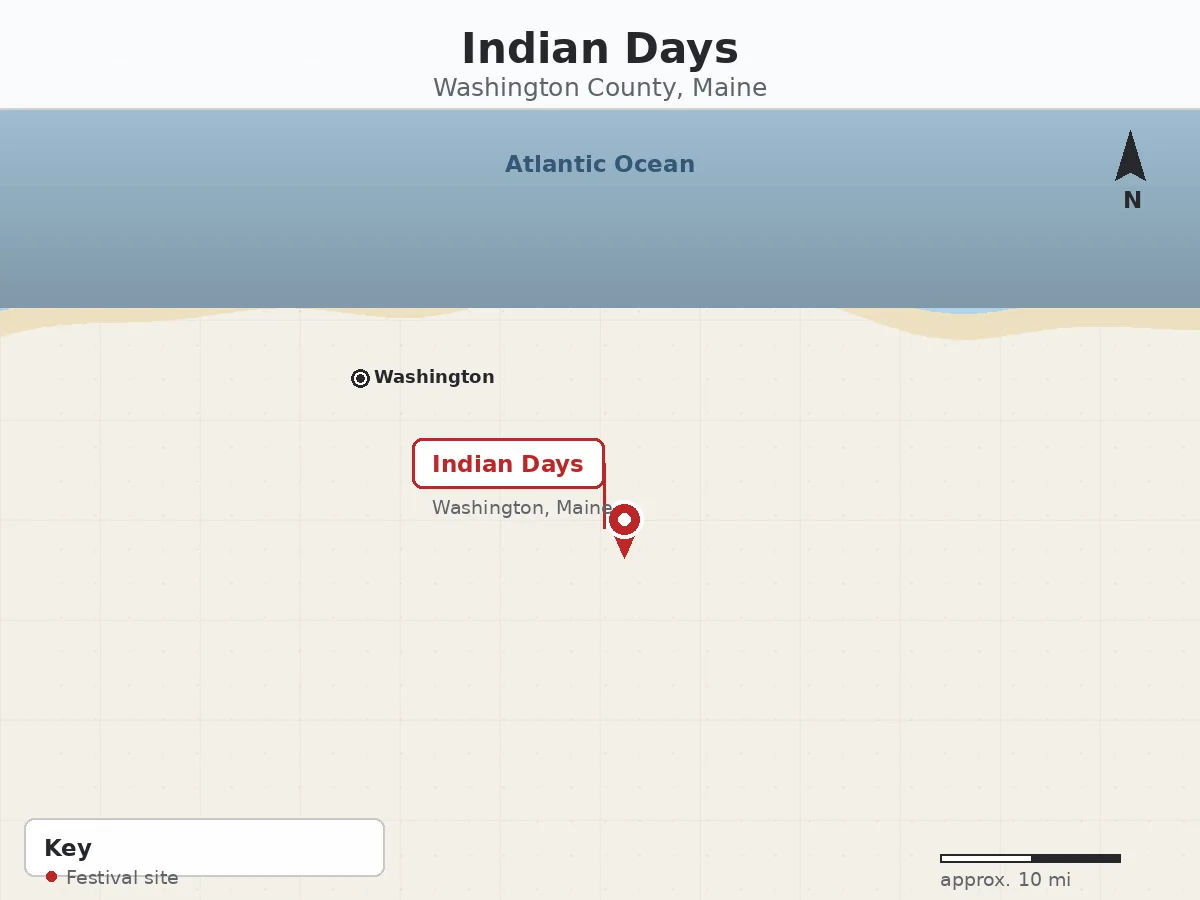
The host community is Sipayik, known in English as Pleasant Point, the Passamaquoddy reservation near Perry in Washington County. Perry itself is not the county seat; Machias holds that place, and the reservation sits on the shore of Passamaquoddy Bay. Events take place across the reservation, with particular gatherings at Split Rock and at the tribal museum.
The Passamaquoddy Tribe at Sipayik organises the gathering, and the tribal government layer also records a Passamaquoddy Days Committee. A newspaper layer records a named member of an Indian Day Committee, referred to here by role only. The installation of a tribal chief and a vice chief formed part of the two thousand fifteen programme, and both are described here by their offices rather than by name. The tribal government layer states that the celebration is always the second weekend in August: the most recent dated edition ran from Thursday the sixth to Monday the tenth of August two thousand fifteen, and an earlier edition, listed in a two thousand two archive layer, ran from Friday the ninth to Sunday the eleventh of August. No later dated edition appears in the layers read.
Quick Facts
| Fact | Detail |
| Sheet title | Washington County Maine Indian Days Festival |
| Published names | Ceremonial Indian Day; Indian Day; Indian Days; Passamaquoddy Days |
| Host community | Sipayik, Pleasant Point, near Perry, Maine |
| County seat | Machias, Washington County |
| Venue | Sipayik reservation, with events at Split Rock and the tribal museum |
| Organiser | Passamaquoddy Tribe at Sipayik; Passamaquoddy Days Committee |
| Usual timing | Second weekend in August |
| Latest dated edition | Thursday the sixth to Monday the tenth of August two thousand fifteen |
| Admission | No admission position documented in the layers read |
| Fiftieth anniversary | Two thousand fifteen |
History
The ceremonial dancing at the heart of the gathering was started in nineteen sixty-five, according to a two thousand fifteen newspaper layer. The fiftieth anniversary in two thousand fifteen sits neatly against that starting point, and the arithmetic is the layers’ own: the anniversary billing and the starting year appear together in the same body of material, so no founding year is computed here from billing arithmetic alone. What the record gives is a continuous thread of dancing, drumming and singing carried forward across five decades.
For a useful comparison, see the Washington County Maine Milbridge Days Festival for another county festival.
The Passamaquoddy themselves are described in an archive layer as the nation’s easternmost tribe and the only coastal tribe in Maine that survived European contact. That description frames the celebration as a public expression of a community that has kept its language, its ceremonies and its place on the bay through centuries of pressure. Over the years the gathering grew from a ceremonial day into a multi-day event. The two thousand fifteen edition stretched across five days, mixing ceremony with sport, games and community business, while the earlier edition in the archive layer ran for three days. The name moved with the growth: “Ceremonial Indian Day” for the earlier, shorter gathering, “Indian Days” as it lengthened, and “Passamaquoddy Days” as the current form.
What to Expect
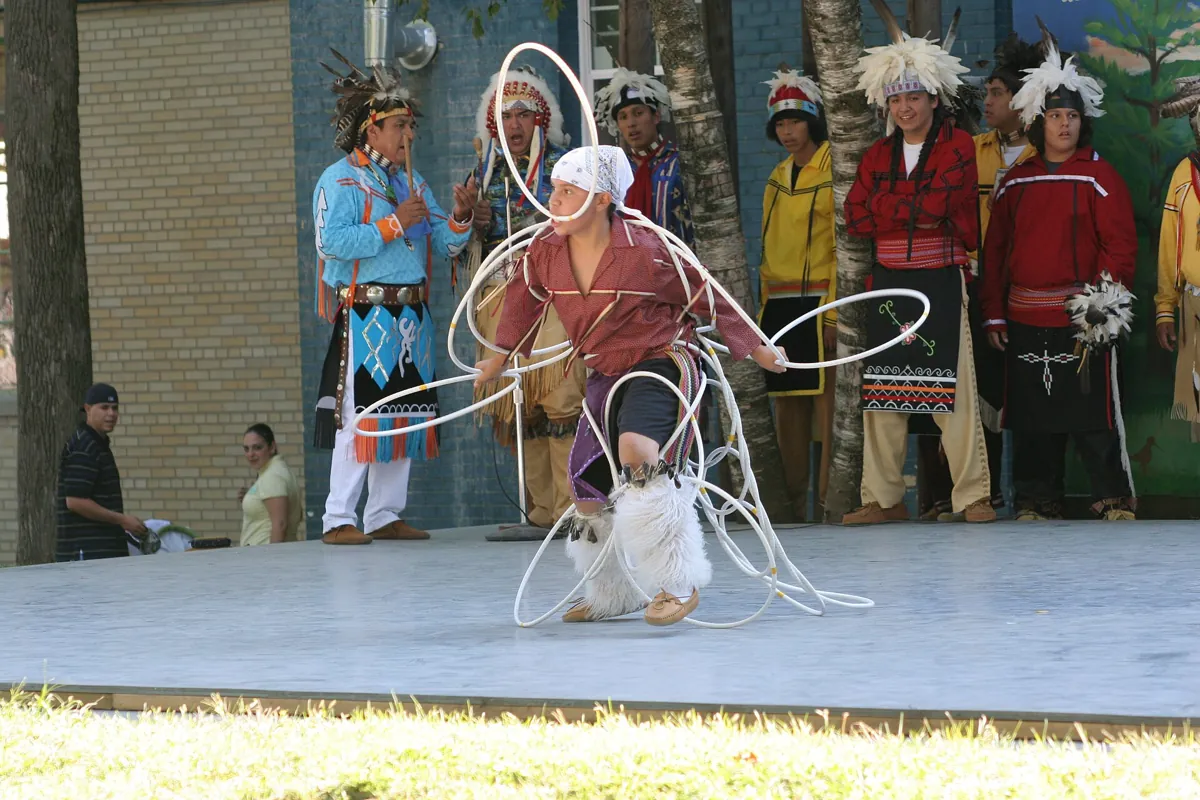
The programme recorded in the archive and newspaper layers mixes the ceremonial with the athletic and the social. Traditional drumming, dancing and singing sit at the centre, and around them sit a warrior canoe trip, a four-mile warrior run, a five-kilometre walk and run, canoe races, a sweat lodge ceremony, museum tours, children’s games, bingo, a health fair, a sunrise ceremony at Split Rock, a golf tournament and fireworks over Passamaquoddy Bay.
The warrior canoe trip is one of the most striking parts of the programme. It begins at Indian Township and travels down the Saint Croix River and across Passamaquoddy Bay to the reservation, a journey that ties two Passamaquoddy communities together by water. The four-mile warrior run and the five-kilometre walk and run give the weekend an athletic spine, while the canoe races on the bay bring the water itself into the celebration. They are part of how the community gathers.
The sunrise ceremony at Split Rock opens the day in a different register, setting a quiet, reflective note against the noise of the games and the fireworks. Museum tours run alongside the outdoor programme, showing baskets, tools and photographs from the longer story of Sipayik, while the children’s games, bingo and health fair keep the weekend grounded in family life. Visitors should come expecting a community event rather than a commercial festival. There is no published gate admission position in the layers read, and the public is invited to attend, according to the archive layer — but that invitation is to a tribal community’s own celebration, and it carries an expectation of respect. The sensible approach is to watch, to listen and to follow the guidance of the hosts.
Planning Your Visit
The steady timing is the best planning anchor available: the tribal government layer states that the celebration is always the second weekend in August, so a visitor aiming for the gathering should look to that weekend. The most recent dated edition ran from a Thursday to a Monday and the earlier one from a Friday to a Sunday, so a visit across the whole second weekend of August covers the shape of the event as documented. Because no later dated edition appears in the layers read, a traveller should confirm the current year’s arrangements through the tribal government before setting out, rather than relying on the two thousand fifteen dates.
Perry is the nearest town, and Machias, the county seat, lies further along the coast; both give a base for a visit, while the celebration itself takes place at Sipayik. The venues named in the layers read — Split Rock and the tribal museum — are places within the community rather than separate festival grounds, so a visitor moves through the reservation itself during the weekend.
No admission position is documented in the layers read, so no ticket price can be quoted here and none should be assumed. The archive layer records that the public is invited to attend, which is the fullest statement the record gives on the question. A visitor should bring the ordinary preparations for a coastal Maine weekend in August: layers for cool evenings by the bay, comfortable shoes, and a willingness to spend long stretches outdoors. Photography deserves care: the respectful course is to ask before photographing people or ceremonies and to accept a refusal without argument.
Sample Itinerary
The outline below follows the shape of the documented programme rather than a printed timetable.
On the opening day, arrive in the afternoon and settle into the rhythm of the reservation. Walk the shore near Split Rock, visit the tribal museum while it is open for tours, and let the first drumming and dancing of the weekend set the tone. The fireworks over Passamaquoddy Bay close the day.
On the middle day, give the morning to the water and the running. The warrior canoe trip arrives from Indian Township down the Saint Croix River and across the bay, and the canoe races and the four-mile warrior run and five-kilometre walk and run fill the day with movement. The afternoon belongs to the family programme: children’s games, bingo, the health fair and museum tours.
On the closing day, return to the museum for a slower look at the objects and photographs that carry the community’s longer story, and spend the remaining hours with the dancing and singing. If the year’s programme includes the installation of tribal leadership, as the two thousand fifteen edition did, witness it with attention. Leave time for a last walk along the bay shore before departing.
Comparison
Two other gatherings are sometimes confused with this one, and the layers read keep them firmly apart. Indian Heritage Days at Indian Township is a separate Wabanaki cultural-arts celebration held in September, at a different Passamaquoddy community and in a different month. It shares a cultural world with the Sipayik gathering — the same nation, the same traditions of drumming and dancing — but it is a different event with its own place and timing, and it should not be merged with the August celebration at Pleasant Point.
The second is a “Passamaquoddy Heritage Festival” organised at a high school in Calais. That is a school event, not the tribal celebration, and its name is close enough to cause confusion in search results. A visitor who finds that listing has found a classroom project rather than the reservation gathering, and should look instead for “Passamaquoddy Days” or “Ceremonial Indian Day” through the tribal government layer.
Checklist
- Look for the published names “Passamaquoddy Days” and “Ceremonial Indian Day” when searching, since the sheet title is never printed exactly.
- Aim for the second weekend in August, the timing the tribal government layer states for the celebration.
- Confirm the current year’s arrangements through the tribal government before travelling, since the latest dated edition in the layers read is two thousand fifteen.
- Remember that Perry is not the county seat; Machias holds that place, and both towns can serve as a base.
- Bring layers for cool evenings beside Passamaquoddy Bay and comfortable shoes.
- Ask before photographing people or ceremonies, and accept a refusal without argument.
- Treat the sweat lodge ceremony and the sunrise ceremony as sacred observances rather than spectacles.
- Do not confuse this gathering with Indian Heritage Days at Indian Township in September, or with the school event in Calais.
Beyond the Festival
The country around Sipayik rewards a longer stay. Passamaquoddy Bay itself is the great feature of the place: a wide, tidal bay shared with New Brunswick, where the water runs fast and the shore alternates between working waterfront and quiet cove. The Saint Croix River, which the warrior canoe trip follows down to the bay, marks the border between Maine and New Brunswick, and its valley holds the early history of European settlement on this coast as well as the much older Passamaquoddy presence.
Machias, the county seat, is the natural next stop, and the drive between Perry and Machias runs through the blueberry barrens and spruce country that define Washington County. Eastport, on its island across the bay, offers another angle on the same water.
Significance
The significance of the gathering rests on the community that holds it. The Passamaquoddy are the nation’s easternmost tribe, and the archive layer describes them as the only coastal tribe in Maine that survived European contact — a statement that carries the weight of four centuries in a single sentence. A celebration that brings that community together each August, on its own reservation, for drumming, dancing, canoeing and ceremony, is a public act of continuity: the same practices, carried forward, in the same place, by the same people.
The ceremonial dancing that began in nineteen sixty-five has now run for six decades, and the fiftieth anniversary in two thousand fifteen marked a generation of dancers who learned from the generation before them. The installation of a chief and a vice chief during that edition shows the gathering doing double work: a celebration and a moment of governance at once. That combination is rare among the summer festivals of the Maine coast, and it is what sets the Sipayik gathering apart.
Frequently Asked Questions
What should a first-time visitor keep in mind when coming to Sipayik for the celebration?
Come as a guest of a tribal community rather than as a customer at a ticketed attraction. The drumming, dancing and ceremonies are the community’s own practices, shared with visitors who are invited to attend. Watch, listen, and ask before photographing people or sacred observances.
Which name should I search for when looking up the gathering?
Look for “Passamaquoddy Days”, the current form given by the tribal government layer, or for “Ceremonial Indian Day” and “Indian Days”, the older published forms. The sheet title “Indian Days Festival” is never printed exactly, so searching for it alone may miss the event.
When in August does the celebration usually fall?
The tribal government layer states that the celebration is always the second weekend in August. The most recent dated edition ran from Thursday the sixth to Monday the tenth of August two thousand fifteen, and an earlier edition ran from Friday the ninth to Sunday the eleventh of August.
Can children take part in the weekend?
The programme recorded in the layers read includes children’s games alongside the drumming, dancing, canoe races and fireworks, and the gathering is a family and community occasion. The health fair and museum tours give younger visitors other ways into the weekend.
What to Expect From the Next Washington County Maine Indian Days Festival
How often is Washington County Maine Indian Days Festival held?
The tribal government layer states that the celebration is always the second weekend in August, which places it on the same August weekend each year. Both dated editions in the layers read fall in that window.
When is the next Washington County Maine Indian Days Festival?
The material read stops at the two thousand fifteen edition, so a later date cannot be given here. The tribal government layer’s standing statement is that the celebration is always the second weekend in August, so confirm the current year’s arrangements through the tribal government before setting out.
Will the dates change?
The pattern in the layers read is steady: the tribal government layer places the celebration on the second weekend in August, and both dated editions fall there. Any single year still needs its own confirmation.
The Washington County Maine Indian Days Festival, under its published names of Ceremonial Indian Day, Indian Days and now Passamaquoddy Days, is a gathering that belongs first to the Passamaquoddy Tribe at Sipayik and second to everyone the community invites to share it. Its drums, its canoe journey down the Saint Croix River, its sunrise ceremony at Split Rock and its fireworks over Passamaquoddy Bay add up to a weekend that is at once a celebration, a reunion and an act of continuity.