Talbot County Maryland St. Michaels Running Festival
Some festivals fill a field with stalls; this one filled the streets of a waterfront town with runners. The St. Michaels Running Festival brought a certified half marathon, a ten kilometre race and a five kilometre race to St. Michaels, a small town in Talbot County on Maryland’s Eastern Shore, with every course starting and finishing on the campus of St. Michaels High School. Its documented editions belong to the past, though: the organiser’s own layer states plainly that the festival will not take place in 2026. What survives is a clear record of two dated editions, a full set of race arrangements, and a cancellation explained in the organiser’s own words, and that record is what this article sets out honestly.
About the Festival
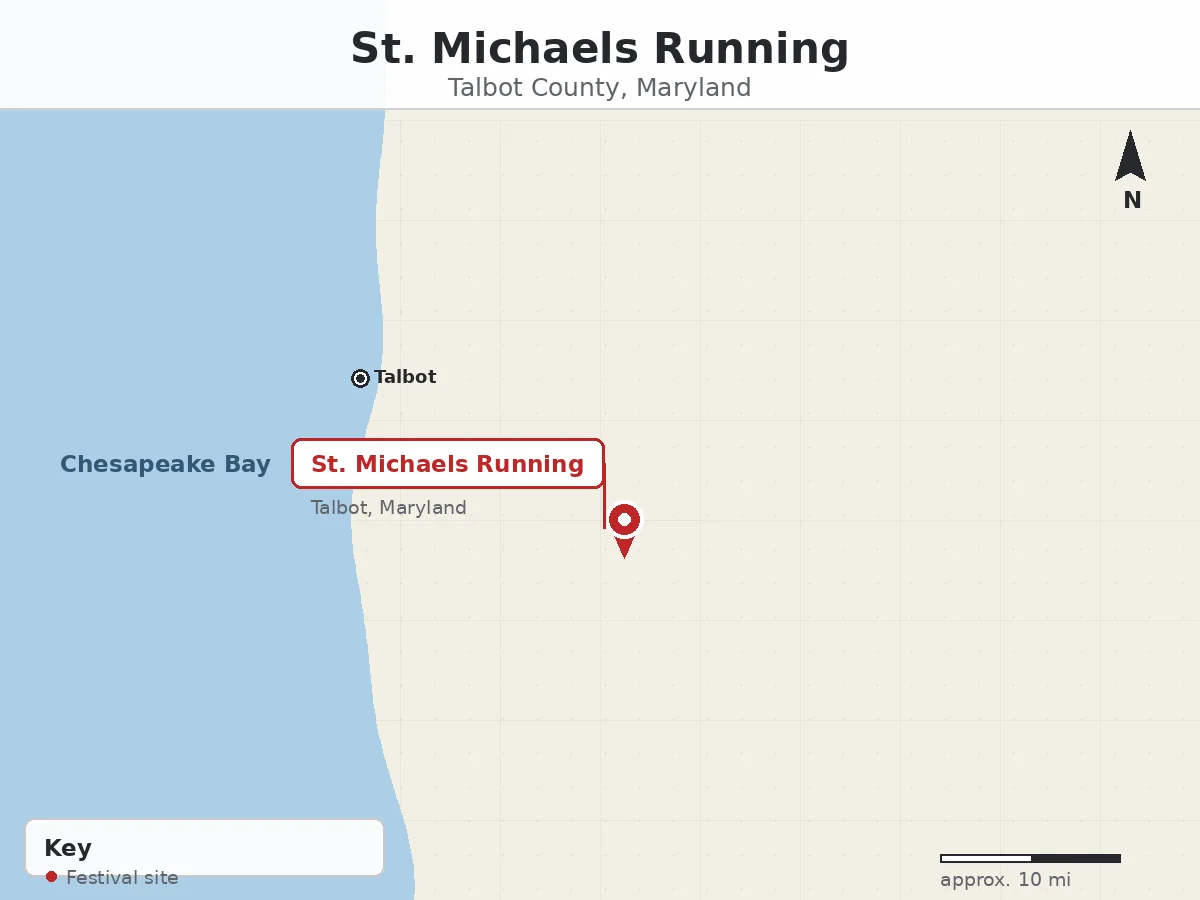
The published name is St. Michaels Running Festival, printed exactly in that form by the organiser’s own layer, by a race-listing layer and by a running-store layer, and the sheet title behind this article carries the same words. The organiser named across those layers is Charm City Run, and a race-registration layer describes the festival as presented by Brooks. The host town is St. Michaels, which sits within Talbot County without holding its seat; Easton, elsewhere in the county, is the Talbot County seat. Every race in the programme used one base: the campus of St. Michaels High School served as both the start and the finish for all three distances, so the whole field gathered in one place each morning and returned to the same ground at the end.
The shape of the event was a runner’s festival rather than a spectator carnival. Three USATF certified races formed the core, each winding along waterfront vistas and country lanes outside the town, and the supporting arrangements — a pre-race shakeout run and organised packet pickup — were built around the competitors. A town visitors-guide layer lists the festival as an annual May event, a description that fits the two dated editions on record, even though the organiser’s cancellation notice for 2026 interrupts that pattern.
Quick Facts
| Item | Detail |
| Sheet title | Talbot County Maryland St. Michaels Running Festival |
| Published name | St. Michaels Running Festival |
| Host town | St. Michaels, Maryland |
| County seat | Easton; St. Michaels is not the seat |
| Venue | St. Michaels High School campus, start and finish for all races |
| Organiser | Charm City Run |
| Presented by | Brooks |
| Documented editions | Saturday 18 May 2019; Saturday 17 May 2025 |
| Edition for 2026 | Will not take place, per the organiser’s own layer |
| Races | USATF certified half marathon, ten kilometre and five kilometre |
History
The earliest dated edition in the record is Saturday 18 May 2019. A race-listing layer covering that running described the festival as now in its 3rd year, a billing that tells the reader the event already had earlier runnings behind it by then. That billing is also where the trail of origins stops. The layers consulted give no first edition, no inaugural date and no account of who founded the race weekend, and turning a third-year billing into a founding year would be arithmetic rather than evidence, so this article leaves the beginning of the story where the sources leave it: undated.
After 2019, the record jumps to Saturday 17 May 2025, the second fully dated edition. A race-registration layer and a running-store training layer both fix that date, and the arrangements described for the festival — certified courses, packet pickup at Charm City Run stores and at St. Michaels High School, a shakeout run before race day — belong to the event as documented around its later runnings. Between the two dated editions, the town visitors-guide layer’s description of an annual May event suggests a rhythm of spring runnings, although the layers do not itemise each intervening year one by one.
For a useful comparison, see the Talbot County Maryland OysterFest Festival for another county festival.
The most recent chapter is a cancellation. On the organiser’s own layer, Charm City Run states that the festival will not take place in 2026, and it ties that decision to adjustments made to the 2026 race plans in response to feedback from the Town of St. Michaels. One race-listing layer still carries a 16 May 2026 date for the event, which puts the two sources in open conflict. The organiser’s notice is the stronger evidence: a listing can linger after plans change, while the cancellation comes from the body that would have staged the races. Any reader weighing the two should treat 2026 as a year without the festival.
What to Expect
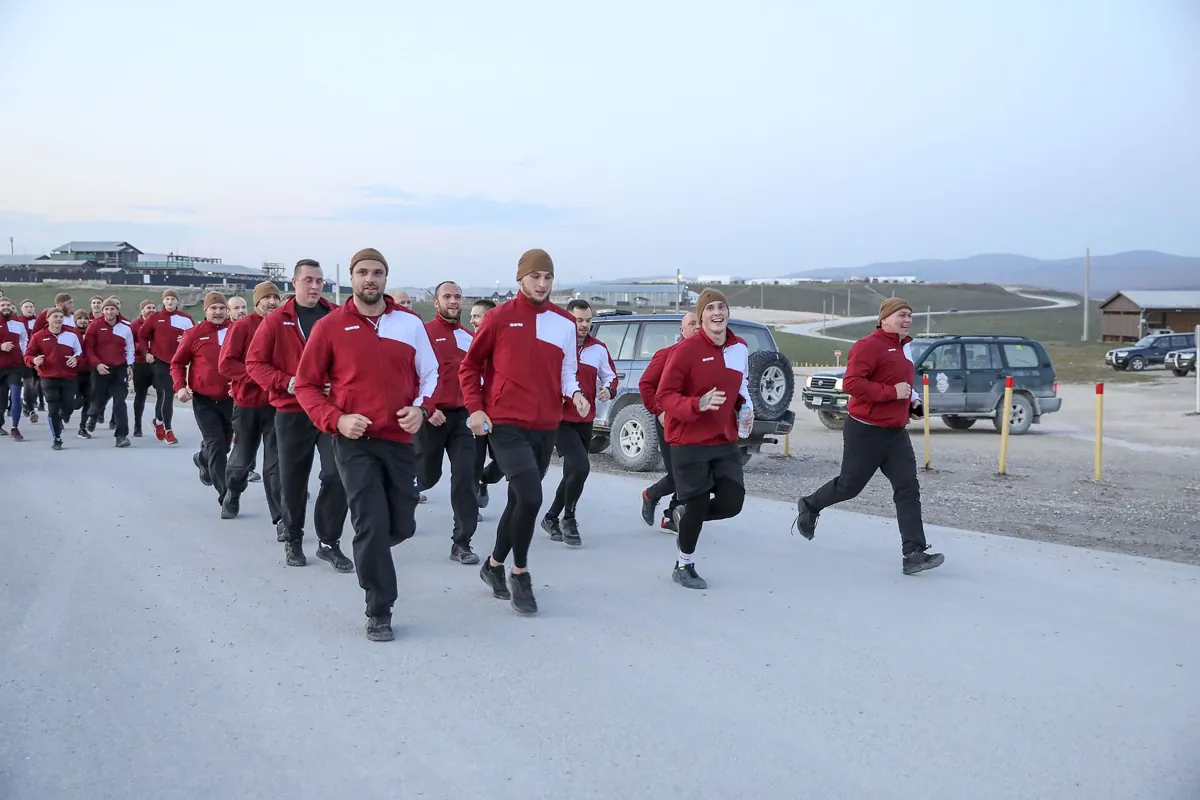
Three races made up the competitive programme, each measured and certified through USATF. The half marathon headed the bill for distance runners, the ten kilometre race offered a middle step, and the five kilometre race gave newer runners and families a shorter way into the morning. All three courses wound along waterfront vistas and country lanes, so the scenery alternated between the town’s shore and the quieter roads of the surrounding county before every route bent back toward the high school finish.
Around the races sat the practical machinery of a well-run race weekend. A pre-race shakeout run let competitors loosen their legs and see part of the ground at an easy pace before the timed events. Packet pickup ran through two channels: runners could collect their materials at Charm City Run stores ahead of time, or at St. Michaels High School itself. Spectators had a simpler arrangement than competitors, because none of the layers consulted describes any charge for watching; the costs of the weekend fell on the people pinning on numbers, not on the people lining the finish.
The spread of distances shaped the morning’s character. Half marathoners committed to the fullest tour of shore and lane, while the five kilometre field drew runners for whom the festival was a first timed event or a family outing with a number pinned on. The ten kilometre race sat between those poles, long enough to leave the town behind and short enough to finish before the day warmed up. All three fields shared the same campus, the same finish and the same certified standard of measurement.
Entry fees were competitor fees only, and a race-listing layer sets them out in two registration windows. In the early window, the half marathon cost sixty-five dollars, the ten kilometre race cost thirty-five dollars and the five kilometre race cost thirty dollars. In the late window those figures rose to one hundred and five dollars, fifty-five dollars and fifty dollars respectively. Those numbers belong to that layer and to the editions it covered; they are a record of what entering used to cost, not a price list for a future running.
Planning Your Visit
Anyone whose plans still point toward a May 2026 running should rebuild them around the cancellation first. The organiser’s own layer is unambiguous that the festival will not take place in 2026, so travel booked on the strength of the lingering 16 May listing rests on the weaker of the two sources. Checking the organiser’s current statements is the only reliable way to learn whether a later year revives the event, and no layer consulted announces such a revival.
For the editions that did run, preparation followed the usual logic of a destination race. Registering inside the early window mattered, since the late window added forty dollars to the half marathon entry and twenty dollars to each of the shorter races. Packet pickup rewarded an early arrival as well: collecting a packet at a Charm City Run store before race weekend removed one errand from the morning itself, while the high school pickup point suited runners who preferred to handle everything in St. Michaels. Because all three races started and finished at St. Michaels High School, a supporter could base the whole day at one campus, watch a runner leave and be standing in the same place when that runner returned.
Supporters planning a day around a runner had the easiest brief of all. With no charge for watching in any layer consulted and a single campus hosting both the start and the finish, a family could arrive once, see a runner off, spend the interval in town and be back in place well before the first finishers returned. That simplicity was part of the event’s appeal: one base, one morning, and no shuttling between scattered venues spread across the county.
A Sample Race Morning
A competitor’s morning at a documented edition might have unfolded like this. The day could begin with the shakeout run, an easy outing that settled nerves and previewed the waterfront stretches the courses would use. Packet in hand — collected from the high school or a Charm City Run store — a runner would then pin on a number, warm up around the campus and take a place at the start line alongside the rest of the field.
From the start, the three fields separated by ambition: half marathoners setting out on the longest loop of waterfront and country lanes, ten kilometre runners on the middle route, five kilometre participants on the shortest. Family members and friends, who paid nothing to attend, could stay near the campus, since every route returned to its starting ground. The finish at the high school closed the loop, with each runner’s race ending on the same campus where the morning began.
How This Festival Compares
St. Michaels hosts another well-known gathering, the OysterFest held by the Chesapeake Bay Maritime Museum, and the two events share nothing beyond the town. OysterFest belongs to the museum and to the water’s harvest; the running festival belonged to certified road racing and to a high school campus. Keeping them apart matters, because a reader searching for one can easily be handed details of the other.
The comparison widens usefully across the county. Easton, the Talbot County seat, holds the Waterfowl Festival, a very different kind of occasion built around the region’s bird life and sporting traditions rather than finish lines. Within the running festival itself, the internal comparison ran by distance: one certified programme offered a five kilometre route within reach of a beginner and a half marathon that asked for months of preparation, with the ten kilometre race bridging the two. Few county events covered so wide a range of commitment inside a single morning.
Beyond the Finish Line
A race weekend in St. Michaels placed visitors in one of Talbot County’s waterfront towns, where the courses themselves doubled as a tour. The waterfront vistas built into each route were not decoration; they were the setting that distinguished this festival from an identical set of distances run anywhere else. Country lanes carried the fields out of town, and the return to the high school campus brought runners back through the community that had hosted them. A visitor who came only to run still left having seen the town’s shore, its edges and its centre in a single morning.
Why the Festival Matters
The running festival mattered first as proof that a small town could carry a certified multi-distance race day. USATF certification across three distances, a start and finish anchored at the local high school, and packet pickup spread between the organiser’s stores and the venue itself describe an event organised with some care. It also mattered as a May fixture in the county’s calendar, sitting apart from the autumn gatherings that dominate the rest of the local season.
Its cancellation carries a significance of its own. The organiser’s explanation — that the 2026 plans were adjusted in light of feedback from the Town of St. Michaels, and the event then stood down for the year — shows a host town’s voice shaping whether a festival happens at all. That is a healthier story than silence would have been: residents spoke, the organiser listened, and the record states the outcome openly rather than letting a stale listing pretend otherwise.
Frequently Asked Questions
Is there a St. Michaels Running Festival in 2026?
No. The organiser’s own layer states that the festival will not take place in 2026, following adjustments to the 2026 race plans based on feedback from the Town of St. Michaels. A race-listing layer still shows a 16 May 2026 date, but the organiser’s cancellation notice overrides that leftover listing.
Which distances could a runner enter?
Three certified races were on the programme: a half marathon, a ten kilometre race and a five kilometre race. Every course was USATF certified, wound along waterfront vistas and country lanes, and started and finished at St. Michaels High School.
Where did runners collect their packets?
Packet pickup was offered at Charm City Run stores and at St. Michaels High School. A pre-race shakeout run also formed part of the arrangements, giving competitors an easy outing before the timed races began.
What did entry cost, and could people watch without paying?
A race-listing layer prices early entry at sixty-five dollars for the half marathon, thirty-five dollars for the ten kilometre and thirty dollars for the five kilometre, rising to one hundred and five, fifty-five and fifty dollars in the late window. Spectators were not charged in any layer consulted; the fees fell on competitors alone.
What to Expect From the Next Talbot County Maryland St. Michaels Running Festival
How often is Talbot County Maryland St. Michaels Running Festival held?
In the years covered by the record, the festival ran as a single May occasion: the dated editions fell on Saturday 18 May 2019 and Saturday 17 May 2025, and a town visitors-guide layer describes it as an annual May event. That rhythm did not carry into 2026, when the organiser stood the event down.
When is the next Talbot County Maryland St. Michaels Running Festival?
No next edition stands in the record. The organiser’s latest word cancels the 2026 running outright, and beyond that cancellation the organiser’s own layer names no substitute year and no return date. A reader who finds a 16 May 2026 listing should treat it as superseded by the organiser’s notice.
Will the dates change?
The question answers itself for 2026, since that edition was withdrawn rather than moved. For any future revival, only this much is grounded: both documented runnings fell on a Saturday in the middle of May, so a return in that same part of the calendar would fit the event’s established pattern, while the actual choice of date would rest with the organiser.
Two dated editions, a detailed race programme and an unusually candid cancellation make up the whole of this festival’s documented story. If the St. Michaels Running Festival returns, the organiser’s own statements will be the place its new date appears first; until then, the honest summary is that St. Michaels hosted a certified three-race festival each May it ran, and that in 2026 it does not.