Rio Arriba County New Mexico Fair Festival
Rio Arriba County’s fair is easy to misplace. The county seat is Tierra Amarilla: aim there and you will find the courthouse but no fair. The county’s largest town, Española, does not host it either. The fair belongs to Abiquiu, a village on State Road 554 in the Chama River country, where the Rio Arriba County Fair Association runs a week at the turn of July into August: animals in the show ring, judged work in the exhibit hall, and a Saturday auction selling champion livestock and champion baking in one ring. Abiquiu’s fiestas, pueblo feast days and painted desert scenery are famous, and none of them is the county fair either: the fair of record is a working 4-H and FFA week governed by a published rule book, with no midway behind it.

About an Exhibitors’ Fair in a Village That Is Not the Seat
The organiser is the Rio Arriba County Fair Association. Its own 2025 rules vest every ruling in the Rio Arriba County Fair Association Board, while the shorter Rio Arriba County Fair Board appears inside the same rules for complaints; the forms stand as published, two styles of one body rather than two organisations. The New Mexico State University Rio Arriba County Cooperative Extension Service is the fair’s entries and programme partner — running online registration, nomination certificates and newsletter reporting — and a partner is all it is, never the organiser.
The grounds answer to several published names for the same place: the Abiquiu Rural Events Center, the Rio Arriba County Fairgrounds, and, in the county’s own facilities list, the Abiquiu Rural Events Rodeo/Fair Grounds. Extension’s larger offices share that campus; the office is not itself the fair. One postal listing attaches an El Rito address to the same highway grounds, but every fair-side source places the fair in Abiquiu, and El Rito is never the fair town. One door stands open, in a fenced respect: young people enrolled in the Los Alamos County 4-H programme may exhibit livestock and enter the homemade baking contest here under the 2025 rules — a cross-county eligibility, not a merger, since each county keeps its own separate fair. The grounds themselves are, in the rules’ own words, a drug and alcohol-free facility.
Quick Facts
| Item | Detail |
| Organiser | Rio Arriba County Fair Association |
| Fair town | Abiquiu, New Mexico |
| County seat | Tierra Amarilla, which does not host the fair |
| Grounds | Abiquiu Rural Events Center, also published as the Rio Arriba County Fairgrounds |
| Address | 122A State Road 554, Abiquiu |
| Season | The last days of July, running into the first days of August |
| Exhibit entry | Online, with no entry charge |
| Admission | No spectator price is published in the fair’s own record |
| Camping | Exhibitor spaces assigned by lottery only |
| Closing event | Junior Livestock and Homemade Delights Auction, on the Saturday of fair week |
A History the Fair Keeps in Its Rule Books
This fair’s own documents carry no founding year. No edition number appears in the Association’s rules, on the Extension’s fair pages or in its newsletter reports. A single online profile bills the 2026 fair as the seventy-second, but that is one profile’s billing and nothing more: nothing fair-side corroborates it, and counting backwards would manufacture a founding date the record never states. The Association’s non-profit paperwork is likewise paperwork, not a birthday.
What the record gives instead is rhythm. The documented spans sit at the same seasonal turn — late July into the first days of August in 2022, again in 2024, and again under the 2025 rules — with the exhibitor’s shape unchanged. The Extension’s report of the 2025 fair used a span starting two days before the rules’ own, covering set-up and check-in; the two starts stand side by side here, unmerged. The 2025 fair ran under the theme “Grow it, Sew it, & Show it,” a theme the Association also put on that year’s rule book cover call, carried here as 2025’s only.
For a useful comparison, see the Quay County New Mexico Fair Festival for another county festival.
What to Expect
The Show Ring, Species by Species
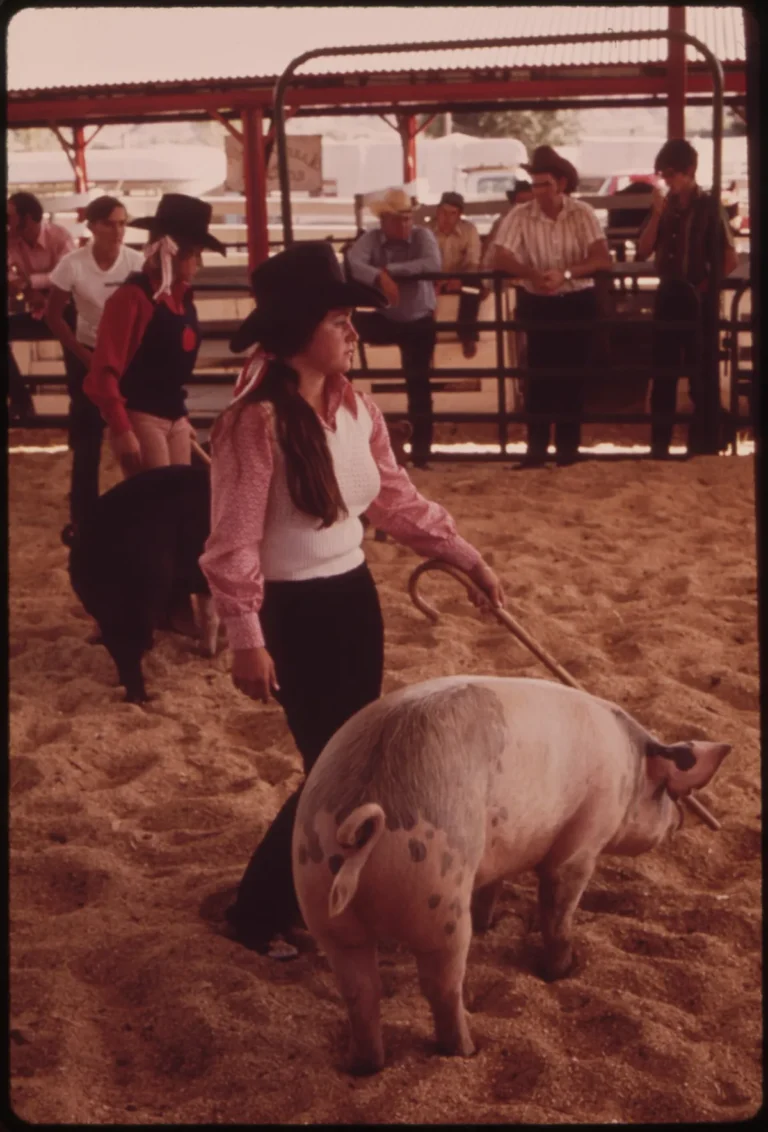
The livestock programme is the fair’s spine. The rules provide for market steers, breeding cattle and heifers, market lambs — Southdowns included in the weight classes — market goats, market swine, poultry including fryer pens, rabbits including meat pens, and horses. Showmanship runs with every species, judged in the Novice, Junior and Senior 4-H divisions, and a Booster Showmanship Show gives children aged five to eight a rung of their own years before the main classes open to them.
Classes Reserved for Animals Bred in the County
Inside the open shows sits the programme that means most locally: the County Bred and Bred and Born classes, including a dedicated steer and heifer show for animals bred and born inside the county. The Association governs these classes itself, rewarding different work from the market shows — not an animal bought well, but a herd built at home over years.
Indoor Exhibits, From Biscochitos to Welding
The exhibit hall runs on 4-H indoor and open entries, all made online. High Point trophies are awarded across Home Economics, Horticulture, Creative Arts and General Indoor classes, with three overall indoor buckles above them, and the 2025 results ran from baking and biscochitos to welding, woodworking and creative arts. Local guides also list contests for locally grown vegetables, fruit and salsa among the open competitions.
A Youth Rodeo, a Pet Parade and a Pancake Breakfast
The Extension’s own summary of fair week lists a youth rodeo, a trade show, a pet parade, concessions and a pancake breakfast. The rodeo is a youth rodeo and nothing grander: no professional rodeo is published in the fair’s record, and none should be expected. No carnival or midway appears in the fair-side record at all: this fair is built around judged work rather than rides, and a visitor looking for a midway will find show rings instead.
Saturday’s Combined Auction in the Show Ring
Fair week closes on Saturday with the Junior Livestock and Homemade Delights Auction. It sells the first- and second-place market animals, the Grand and Reserve Champions and the County Bred Champions — and then it sells baking: the Grand and Reserve Homemade Delights are sold live, while the remaining classes go by silent ringside auction. Each exhibitor is limited to two sale slots, and the rules state flatly that there will not be a secondary auction. Sunday is tear-down and release day in the rules’ own frame, when stalls empty and animals go home — not a further day of public programme.
Planning Your Visit
Finding the Grounds on State Road 554
Set the navigation for Abiquiu and the grounds at 122A State Road 554. Do not navigate by the county seat: the fair is not in Tierra Amarilla. Do not be diverted by the El Rito postal variant attached to the same site in one listing, and do not mistake the Extension office building for the destination — the fair occupies the shared campus around it.
What Admission and Entry Actually Cost
No spectator admission price is published anywhere in the fair’s own record. The Extension’s fair page tells exhibitors, in its own words, that “our Fair is free” — a statement made in its registration sense, meaning exhibit registration completes with no charge at the payment step. That is the whole documented position: exhibitor entry is free, and neither a spectator tariff nor a parking price is published. Any confident dollar figure found elsewhere has not come from the fair.
Entering, Stalls and the Recreational Vehicle Lottery
All entries — livestock, 4-H indoor and open exhibits — are made online before the fair. Livestock exhibitors are assigned their stall spaces, and a recreational vehicle space, by a lottery drawing handled by the Association’s board and committee chairs, held on the Sunday before fair week. That lottery is exhibitor machinery for families living at the grounds while their animals are stalled there — not a public campsite booking system, and no space in it can be reserved by a visitor.
A Saturday Assembled From the Week’s Own Shape
A Saturday built from the week’s documented shape, rather than from any printed timetable, might run like this. Start with the pancake breakfast counted among the week’s fixtures, then watch a morning of livestock judging and showmanship in the ring. Give the middle of the day to the indoor exhibits, whose placings reward slow reading. Be back at the show ring for the combined auction, when the champions and the champion baking sell in turn and the week’s work converts into its results. Plan nothing for Sunday beyond watching the grounds empty.
Where to Sleep, Since the Grounds Are Not a Campground
No public camping offer or rate is published for this fair, and none may be assumed from the exhibitor lottery. Visitors sleep in Abiquiu’s small stock of inns and rentals or drive from Española’s larger lodging supply; at the height of summer both are worth booking well ahead.
Not a Fiesta: Fair Week Beside Abiquiu’s Feast Days
Abiquiu’s own calendar holds observances a visitor could confuse with this fair at a distance. The village’s fiestas — Santa Rosa de Lima and Santo Tomás el Apóstol among them — and the Pueblo de Abiquiu feast days belong to the devotional calendar. The county fair is a different kind of gathering: an organised competition week run by an association under a published rule book, whose central acts are judging and selling rather than observance. Nothing from the fiesta calendar is fair programme, and the auction ring is not a feast-day event. A traveller may meet both kinds of occasion in one trip, and each is better respected kept distinct.
- Aim for Abiquiu, not the county seat: the grounds stand on State Road 554.
- Treat the turn of July into August as the season, and confirm the year’s exact span with the Association before fixing travel.
- Do not plan around next-fair dates printed in online profiles; the fair’s own side has published no such span.
- Exhibitors register online in advance, and registration must be carried through the payment step — at no charge — for an entry to count.
- Livestock families: stall and recreational vehicle spaces come only through the lottery drawn the Sunday before fair week.
- Visitors need booked lodging — there is no public camping — so reserve in Abiquiu or Española early.
- Carry cash, and expectations set by the record: no carnival, concert or admission tariff is published.
- Keep Sunday in its place: tear-down and release day, not another public day.
Beyond the Fairgrounds
Abiquiu rewards the extra day. The village sits in the landscape Georgia O’Keeffe made famous, with Ghost Ranch to the north and Abiquiu Lake below its dam — context that surrounds the fair without forming any part of it. El Rito, a postal shadow over the grounds’ address and nothing more, holds its own arts festival in May; Tierra Amarilla and Española are worth their own hours. Each is the county around the fair, not an extension of it.
Why the Sale Ring Carries the County’s Year
This fair is a ledger of a rural year. The county-bred classes insist that honoured animals were born and raised on home ground, so the championship measures local herds rather than shopping. The Homemade Delights auction performs the same measurement, putting champion baking into the same ring, under the same chant, as a champion steer. Booster showmanship starts the next generation at five, the door opened to Los Alamos 4-H members admits that good neighbours sharpen competition, and the recreational vehicle lottery quietly records how many families move onto the grounds for the week to do the work. None of it needs a midway to justify itself.
Frequently Asked Questions
Which town hosts the fair, if not the county seat?
Abiquiu hosts it, at the Rural Events Center grounds on State Road 554. Tierra Amarilla is the county seat, but the Extension’s own sponsor note says its larger offices sit at Abiquiu and the annual county fair is held there. Española does not host it either, and El Rito appears only as a postal variant for the same grounds in one listing.
Does a published price for admission exist?
No gate price, parking price or tariff of any kind appears in the fair’s own record. What the record publishes is the Extension’s statement, made about registration, that the fair is free: exhibit entry completes online at no charge. Expect no published admission ladder to consult, and treat any precise dollar figure quoted elsewhere as coming from somewhere other than the fair.
When does fair week fall, and what closes it?
The fair sits at the turn of July into August. Under the Association’s own 2025 rules the span ran from July 29 to August 3, with earlier editions at the same turn in 2022 and 2024, and the week closes with the Junior Livestock and Homemade Delights Auction on its Saturday; the Sunday that follows is tear-down and release. For the next edition, no fair-side span has been published, so the season — not a profile’s dates — is the reliable guide.
Is camping available to visitors at the grounds?
There is no public camping at this fair. The rules’ only recreational vehicle provision is for exhibitors: livestock families draw a space, alongside their stalls, in a lottery held the Sunday before fair week. Visitors should book rooms or rentals in Abiquiu, or stay in Española and drive up, rather than arrive expecting a campground.
What to Expect From the Next Rio Arriba County New Mexico Fair Festival
How often is the Rio Arriba County New Mexico Fair Festival held?
Once a year. Documented editions stand in successive summers at the same seasonal turn — the spans recorded for 2022, 2024 and 2025 alike — and a further fair is already carried on the state entry platform for 2026.
When is the next Rio Arriba County New Mexico Fair Festival?
At the same turn of July into August. A 2026 fair exists on the entry platform, but the Association has published no span of its own for it, and the short span one online profile prints is that profile’s layer, not the fair’s announcement. Trust only the dates the Association and the Extension publish for the year itself, and check them before fixing travel.
Will the dates change?
The season has proved steadier than the span. Documented editions have opened on July 27 in one year and July 30 in another, always closing in the first days of August, so the week’s anchor can be relied on while its exact dates are set afresh in each year’s rules.
The fair that Rio Arriba County actually holds asks to be found on its own ground: a village that is not the seat, a ring rather than a midway, and a Saturday on which the county sells what it has raised and baked. Plan for Abiquiu, and the week explains itself.