Riley County Kansas Yuma Street Cultural Festival
Some festivals take generations to find their footing, but the Yuma Street Cultural Festival arrived with its purpose already clear. It unfolds on historic Yuma Street in eastern Manhattan, the seat of Riley County, where a neighbourhood shaped by Black families, churches and businesses has anchored community life for generations. The Black Entrepreneurs of the Flint Hills created the festival to honour that inheritance in public, turning one storied street into an open air gathering of music, food, enterprise and memory.
Local coverage of the first two editions shows an event built around place as much as programme. The Douglass Community Center and Shepard Chapel frame the grounds, historical tours walk visitors through the neighbourhood’s story, and local businesses set up in shopping villages along the street. Money raised through the day supports the restoration of Shepard Chapel and the long planned Yuma Street Cultural Center, so every purchase and performance carries a purpose beyond the afternoon itself.
The festival was first held in two thousand twenty-five and returned as a second annual edition in two thousand twenty-six, each time on a Sunday in late summer. The pages that follow gather what the published record documents about those two editions: who organises the day, what fills it, and how a visitor can make the most of a few hours on Yuma Street.
About the Yuma Street Cultural Festival
The festival is organised by the Black Entrepreneurs of the Flint Hills, a group whose work centres on supporting Black owned businesses and preserving the heritage of the neighbourhoods those businesses call home. Local news identifies Sheila Ellis-Glasper, the organisation’s co-founder and executive director, as the festival’s leader and director, the person guiding both its planning and its public face.
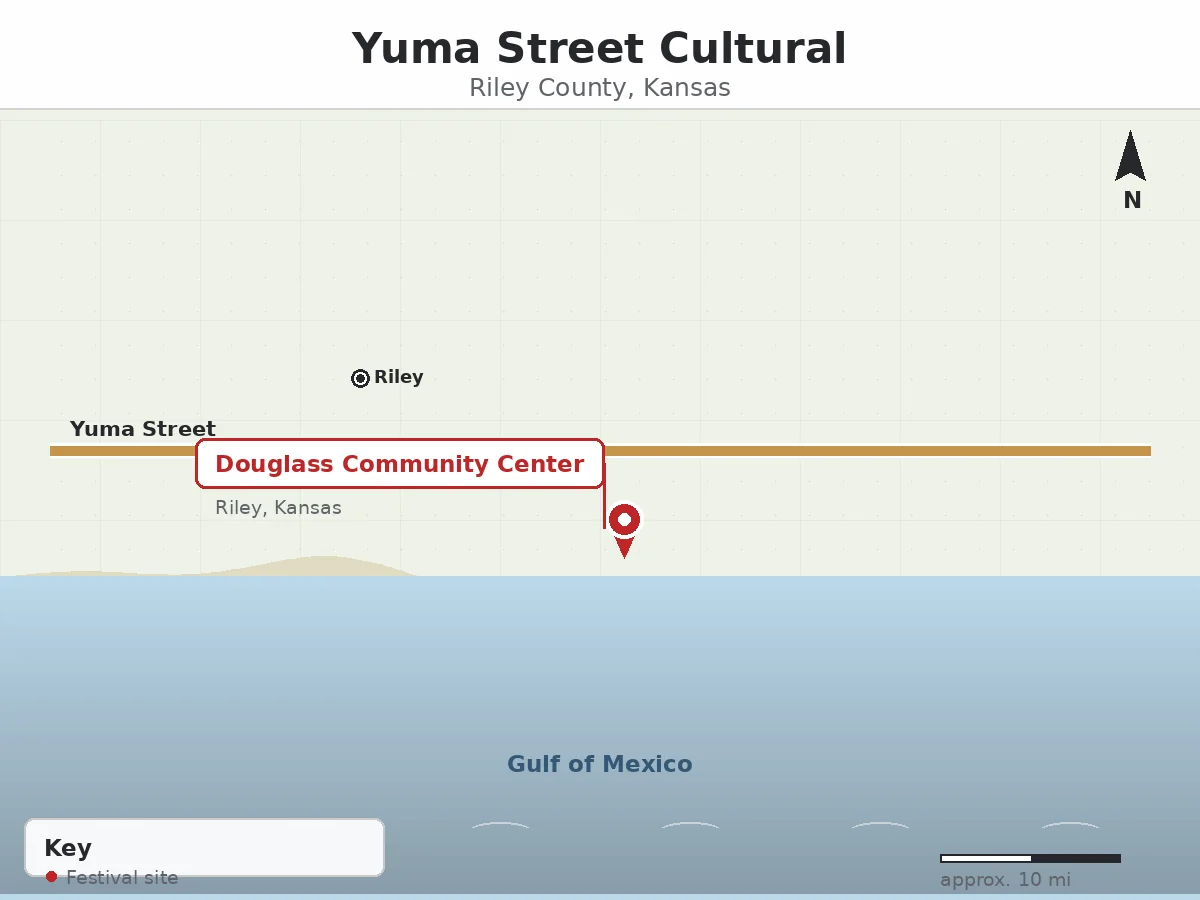
The setting does much of the storytelling. Yuma Street runs through eastern Manhattan, and the blocks around the Douglass Community Center and Shepard Chapel form the festival’s heart. The community center has long served as a gathering place for the neighbourhood, while the chapel stands as one of its cherished landmarks, and its restoration is one of the causes the festival exists to advance. Holding the celebration on the street itself, rather than in a rented hall or a distant fairground, keeps the event rooted in the community it celebrates.
For a useful comparison, see the Riley County Kansas Juneteenth Grilling Cook Off Festival for another county festival.
Both documented editions followed a Sunday afternoon and evening pattern. The inaugural festival ran from one in the afternoon until nine in the evening on Sunday the thirty-first of August two thousand twenty-five. The second annual edition ran from two until eight in the evening on Sunday the sixth of September two thousand twenty-six, under the theme “Reclaim and Rise”. A university newspaper reported on both editions, and a county political newsletter and a volunteer-centre newsletter carried the same date and hours for the second.
Quick Facts
| Detail | Information |
| Published name | Yuma Street Cultural Festival |
| Host town | Manhattan, Kansas |
| County seat | Manhattan is the seat of Riley County |
| Setting | Historic Yuma Street in eastern Manhattan |
| Landmarks on the grounds | Douglass Community Center and Shepard Chapel |
| Organiser | Black Entrepreneurs of the Flint Hills |
| Festival leader | Sheila Ellis-Glasper, co-founder and executive director |
| First edition | Sunday the thirty-first of August two thousand twenty-five |
| Second annual edition | Sunday the sixth of September two thousand twenty-six |
| Second annual theme | Reclaim and Rise |
History
Yuma Street’s story long predates its festival. Local news describes the street as a historic Black neighbourhood, recognised with a listing on the National Register of Historic Places, where churches, homes and businesses formed the centre of Black life in Manhattan across many decades. Shepard Chapel belongs to that inheritance, and its restoration has become a rallying point for residents and supporters who want the street’s landmarks preserved rather than lost.
The Black Entrepreneurs of the Flint Hills grew out of work to preserve that history and to bring the Yuma Street Cultural Center to life as a permanent home for it. Out of the same work came the idea of a festival: a day when the street could present itself to the wider city through its food, its music, its makers and its memories, while raising money and attention for the chapel and the cultural center alike.
The first festival took place on Sunday the thirty-first of August two thousand twenty-five. A university newspaper report published days later described historical tours, music, dancing and local businesses filling the street, a promising debut for an event built from community effort. When the festival returned on Sunday the sixth of September two thousand twenty-six for its second annual edition, it carried the theme “Reclaim and Rise”, a phrase that speaks to both halves of its mission: reclaiming a history worth honouring, and rising to build the institutions that will carry that history forward.
What to Expect
An afternoon on Yuma Street during the festival moves between performance, shopping and storytelling, often within the same block. Food trucks serve the crowds, while shopping villages give local businesses a row of storefronts for the day, turning the street into a market of makers, bakers, artists and entrepreneurs from the community the festival celebrates.
Performance runs through the programme. West African dancing and drumming bring rhythm rooted in heritage, soul line dancing invites the crowd into the movement, and youth dance performances put the neighbourhood’s youngest performers in front of an audience. The Divine Nine Stroll-Off adds a showcase of fraternity and sorority stepping tradition, performed with the precision and pride that define it.
Quieter pleasures balance the stage. Historical tours lead visitors along the street with the neighbourhood’s story as the guide, children’s activities keep younger guests busy, and train rides give families a gentle way to see the grounds. Impact villages, where community organisations share their work and resources, connect the celebration to the services and causes that sustain the neighbourhood all year. Through it all, the Douglass Community Center and Shepard Chapel anchor the scene, reminders that the festival’s fundraising for the chapel restoration and the cultural center runs beneath every song and sale.
Visitors should also expect the day to feel personal in scale. This is a neighbourhood presenting itself rather than a production imported for the weekend, and conversation with vendors, guides and performers becomes part of the programme in its own right. Children drift between the train rides and the dance performances, longtime residents watch from the heart of their own street, and first time guests are folded into the gathering quickly.
Planning Your Visit
Practical planning begins with the festival’s rhythm. Both documented editions fell on a Sunday in late summer, running from the afternoon into the evening, so visitors should think in terms of a long, unhurried afternoon rather than a quick stop. The second annual edition ran from two until eight in the evening, and arriving near the start leaves time for a historical tour before the performances build.
No layer of coverage read for this article states a gate admission for the festival, and none is assumed here. What the record does describe is fundraising: proceeds and donations gathered during the day support the Shepard Chapel restoration and the Yuma Street Cultural Center. Visitors who want to take part in that purpose should come ready to buy from the food trucks and shopping villages, and to contribute if they wish, rather than expecting a ticketed entrance.
Late summer in Kansas can be warm, so light clothing, sun protection and water are sensible companions for hours spent on the street. Families will find the children’s activities and train rides aimed at them, and the mix of tours, shopping and performances rewards those who wander rather than follow a strict schedule. Because the two editions so far have used different dates and slightly different hours, confirming the day and times through the organiser’s announcements before travelling is a wise final step. Those coming from elsewhere in Riley County will find the trip an easy one to make in a day, since everything sits within a few blocks and the programme fills a single afternoon and evening without demanding an overnight stay.
A Sample Festival Afternoon
A visitor following the shape of the second annual edition might arrive as the grounds open at two in the afternoon and begin with a historical tour, while the street is still settling in and the guides’ stories can be heard at their clearest. From the tour, the shopping villages invite a slow browse, with time to meet the business owners behind the tables.
Mid afternoon suits the children’s activities and a train ride for families, followed by something from the food trucks as the performances gather pace. West African drumming and dancing, the youth dance performances and the Divine Nine Stroll-Off fill the heart of the day, and soul line dancing carries the energy toward evening. A final walk past Shepard Chapel and the Douglass Community Center, perhaps with a donation made along the way, rounds out the visit before the grounds close at eight.
How the Festival Compares
The most natural comparison stands close to home. Manhattan’s Juneteenth celebration also gathers around the Yuma Street and Douglass area, and the two events share a neighbourhood and a spirit of Black pride. They are, however, separate occasions: Juneteenth is a June event run by its own committee, while the Yuma Street Cultural Festival is the Black Entrepreneurs of the Flint Hills’ late summer gathering, built around fundraising for the chapel and the cultural center.
The festival’s two editions also repay comparison with each other. The inaugural ran longer, from one until nine in the evening, while the second annual edition tightened the day to two until eight and added a unifying theme, “Reclaim and Rise”. The shift suggests an event learning its shape in public, keeping the tours, villages and performances that defined its debut while giving its second year a sharper identity.
A Festival Checklist
- Comfortable shoes for walking the street and joining a historical tour
- Sun protection and a water bottle for a late summer afternoon
- Money for food trucks and the shopping villages
- A tote bag for purchases from local businesses
- Time set aside for Shepard Chapel and the Douglass Community Center
- A good spot for West African drumming and dancing
- A place in line for the train rides if children are coming along
- Attention for the Divine Nine Stroll-Off and the youth dance performances
- A donation, if you are able, toward the chapel restoration
- An unhurried hour for the impact villages and their community organisations
Beyond the Festival Grounds
The festival’s grounds are worth attention in their own right. Yuma Street’s listing on the National Register of Historic Places marks a neighbourhood whose homes, churches and businesses tell a central chapter of Manhattan’s story, and the historical tours offered during the festival are an introduction to a street that rewards a slower look at any time of year.
The Douglass Community Center serves the neighbourhood far beyond one Sunday, and Shepard Chapel’s restoration is a project visitors can follow as it progresses. The planned Yuma Street Cultural Center, toward which the festival raises money, promises a permanent home for the history the street carries. Around these landmarks sits Manhattan itself, the Riley County seat, whose wider calendar holds many events, though none with quite this festival’s address or purpose.
Why the Festival Matters
For a festival only two editions old, the Yuma Street Cultural Festival carries an unusual weight of purpose. It gives Black owned businesses a showcase on the street where many of them belong, puts young dancers on a stage in front of their own community, and turns an afternoon’s spending into bricks, mortar and momentum for a chapel restoration and a cultural center.
Just as importantly, it treats history as something to walk through rather than read about. The tours, the landmarks and the neighbourhood setting make the past present for every visitor, while the theme of the second annual edition, “Reclaim and Rise”, names the work plainly. If the festival continues to grow, it will do so on foundations that its first two editions have already laid with care.
Frequently Asked Questions
When did the Yuma Street Cultural Festival first take place?
The inaugural festival ran on Sunday the thirty-first of August two thousand twenty-five, from one in the afternoon until nine in the evening. The second annual edition followed on Sunday the sixth of September two thousand twenty-six, from two until eight in the evening, under the theme “Reclaim and Rise”.
Who leads the festival, and which organisation stands behind it?
The Black Entrepreneurs of the Flint Hills organise the festival. Local news names the organisation’s co-founder and executive director, Sheila Ellis-Glasper, as the festival’s leader and director.
Which causes benefit from the money the festival raises?
Proceeds and donations gathered through the festival support two connected causes: the restoration of Shepard Chapel and the creation of the Yuma Street Cultural Center. Coverage of the festival frames that fundraising as its purpose, rather than describing a ticket price for entry.
How is this festival different from Manhattan’s Juneteenth celebration?
The two events share the Yuma Street and Douglass neighbourhood but are separate occasions. Juneteenth is a June celebration run by its own committee, while the cultural festival is a late summer event organised by the Black Entrepreneurs of the Flint Hills, with its own programme and fundraising aims.
What to Expect From the Next Riley County Kansas Yuma Street Cultural Festival
How often is Riley County Kansas Yuma Street Cultural Festival held?
Two editions have been documented so far, in two thousand twenty-five and two thousand twenty-six, each a single Sunday in late summer. The second was billed as the second annual, which points to a yearly intention, though only two editions stand in the record.
When is the next Riley County Kansas Yuma Street Cultural Festival?
No date for a third edition appears in the coverage read for this article. Both editions so far were set for a Sunday in late August or early September, so watching for announcements from the Black Entrepreneurs of the Flint Hills as summer approaches is the surest way to catch the next date.
Will the dates change?
The festival’s short history already shows small shifts. The first edition fell on the thirty-first of August with hours from one until nine in the evening, while the second moved to the sixth of September with hours from two until eight. Anyone planning around the festival should confirm the date and times for the edition they hope to attend.
Closing Thoughts
The Yuma Street Cultural Festival is a young event with deep roots: two documented editions, a street listed on the National Register of Historic Places, and a mission that joins celebration to preservation. For visitors, it offers an afternoon of food, music, enterprise and story. For Manhattan, it offers something rarer, a festival building the very institutions its neighbourhood has long deserved.