Randolph County North Carolina Asheboro Fall Festival
On the first Saturday of October, Asheboro closes a knot of downtown streets and fills them with makers. The Asheboro Fall Festival spreads across Sunset Avenue, Fayetteville Street and Worth Street, with Bicentennial Park at its edge, in a county seat that hosts its own celebration. Juried vendors sell work they have made themselves, food stalls line the closed roads, and the whole day runs as a fundraiser for the arts organisation behind it.
The most recent edition ran on Saturday, October 3, 2026, from ten in the morning to half past five in the afternoon, billed as the 51st Annual. That one-day shape is only the latest version of a festival whose length has swung by year, and whose own record carries conflicts that this article keeps open rather than smoothing away.
About the Festival
The Asheboro Fall Festival is a downtown street festival built around handmade work. Its organiser’s 2026 page puts the emphasis plainly: artists dedicated to making their own creations, selling things they themselves have produced. Crafts, food vendors and family fun make up the published 2026 summary, and a festival map and vendor list were published for that year.
The organiser’s name needs care, because it is published in two forms and no layer explains the change. Older pages belong to the Randolph Arts Guild: its own site carries the festival FAQ, the 2025 vendor registration and the committee wording signed by the RAG Fall Festival Committee. The 2026 edition belongs to the Randolph Arts Council: its own site announces the 51st Annual, and local coverage calls the festival a fundraiser for the Council. Both forms publish the same Sunset Avenue office address, the same post office box and the same telephone number, and the Council’s pages still route some festival contact through Guild-domain email addresses.
That shared contact record is a continuity fact only. No announcement of a rename, a merger or a new organisation appears in any layer, so each year’s credit is given in the form that year published: Guild for the pages through the 2025 vendor cycle, Council for the 2026 edition.
For a useful comparison, see the Polk County North Carolina Saluda Arts Festival for another county festival.
The City of Asheboro supports and permits rather than organises. Its code carries the animal prohibition for the festival, and the Guild’s vendor terms thank the city and downtown businesses for their support while stating that the Guild produces the festival. Downtown Asheboro Inc. and the county tourism authority promote the event, but neither is credited as organiser here.
Quick Facts
| Item | Detail |
| Event | Asheboro Fall Festival, also billed simply as Fall Festival |
| Location | Closed downtown streets of Asheboro, around Sunset Avenue, Fayetteville Street and Worth Street |
| Host town | Asheboro, which is the county seat of Randolph County |
| Timing | Annual festival on the first Saturday of October |
| Most recent edition | Saturday, October 3, 2026, billed the 51st Annual |
| Hours in 2026 | Ten in the morning to half past five in the afternoon |
| Organiser forms | Randolph Arts Guild in its own pages; Randolph Arts Council for the 2026 edition |
| Admission | Free in the organiser’s own words for 2024; described year by year below |
| Character | Juried, handmade-only vendor festival and arts fundraiser |
| Camping | None documented as a festival offer |
History
Two starting points stand in the record, and they cannot both be settled truth. The organiser’s own FAQ states that the inaugural Fall Festival was held in 1972, with just over thirty vendors, located solely on Sunset Avenue. Its 2019 announcement adds colour to that claim: the first event was called the Old-Fashioned Fall Festival and drew roughly thirty to thirty-five vendors. Against that, Downtown Asheboro Inc. bills the event as an Asheboro staple since 1952. No layer reconciles a 1952 staple with a 1972 inaugural, so no founding year is asserted here beyond quoting each claim in its own layer.
Edition billings are likewise carried only as billings. The cancellation headline for 2015 called that year the 43rd Annual. Later layers bill the 47th Annual in 2019, the 48th in 2023, the 49th in 2024 and the 51st in 2026. No organiser layer carries a 50th Annual billing for 2025; the only such claim sits in an excluded aggregator layer. Because the billings, the 1952 conflict and the documented gaps do not line up, no edition number is back-calculated and no total of festivals held is derived.
Interruptions are part of the documented story, so no uninterrupted run is claimed. The Guild’s cancellation notice for 2015 states that the festival was cancelled that year, calling the decision the first of its kind in forty-three years in that notice’s own wording. Its FAQ then records that the festival successfully returned in 2023, in a one-day shape. A secondary layer attributes the preceding year’s cancellation to Hurricane Ian; that attribution belongs to that layer alone, and no held or not-held finding for 2020, 2021 or 2022 is asserted beyond the return wording.
Growth, where it is documented, is measured in streets and stalls. From a single avenue in the inaugural account, the footprint in the 2019 announcement encompassed blocks of Worth, Fayetteville and Sunset, bordered by Cox, Salisbury, Academy and Church. The Guild’s FAQ speaks of over one hundred fifty vendors, while its 2024 homepage gives over one hundred fifty to two hundred vendors; the two forms stand unmerged. Attendance is never counted in an organiser layer: the Guild says only that thousands enjoy the festival annually, a characterisation rather than a gate figure.
The organisation’s own age wordings are kept separate from the festival’s history. A Guild grants announcement gives the Guild as founded in 1970, and its FAQ speaks of serving for over fifty-four years; those are claims about the organisation, never the festival’s founding date.
What to Expect
Handmade Work on Closed Streets
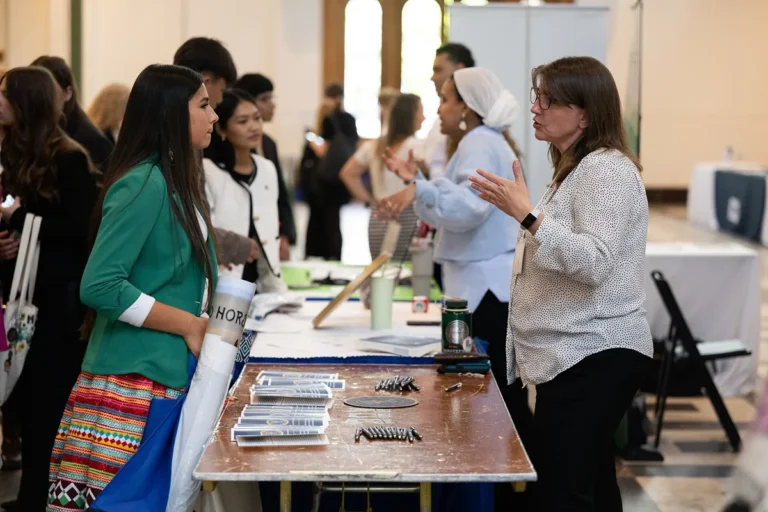
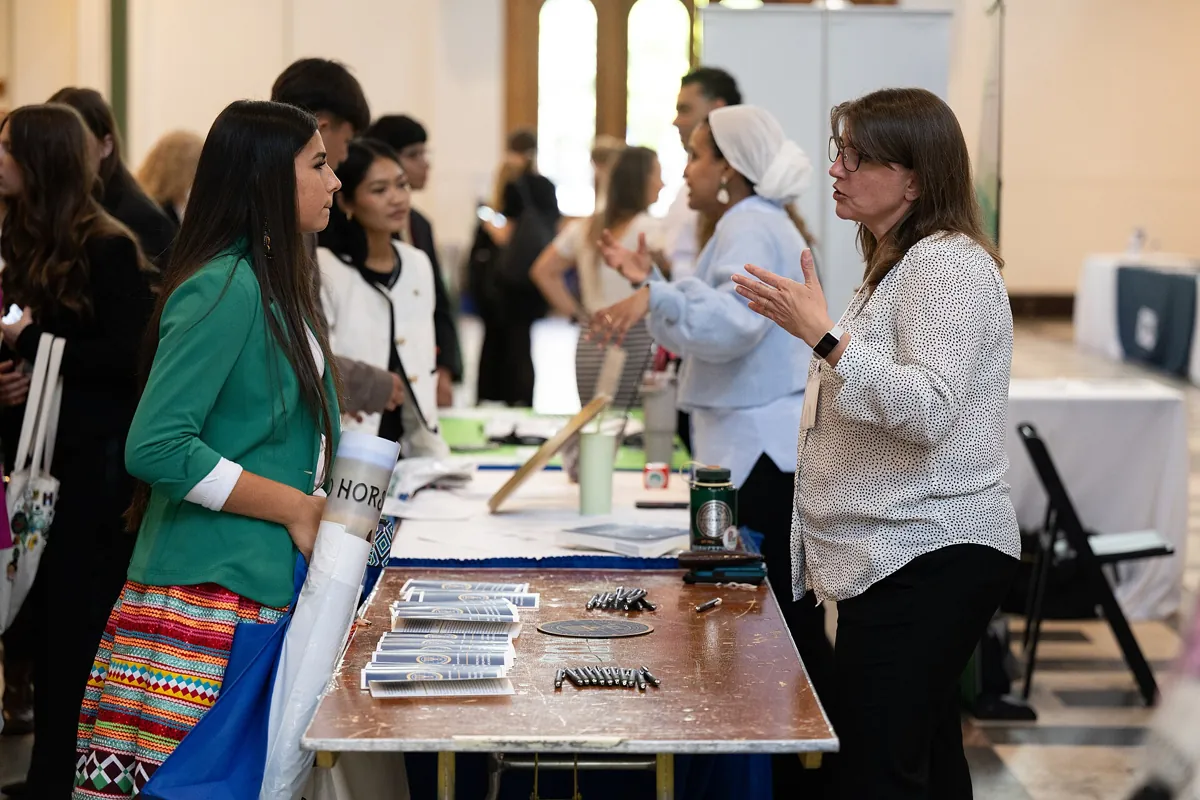
The standing spine is a juried market. The 2025 vendor page lists craft categories running through woodworking, metal work, ceramics, painting, photography, candles, leather craft, glass work, jewellery and fibre arts, and states in its own layer that all crafts must be hand-made. Resellers and direct sellers are expressly not accepted there. The 2026 page promises buyers that what they eat or buy was made by the individuals selling it.
Food, Music and Family Ground
Food is a festival category in its own right. The 2025 page sorts food vendors into concession stands, carnival cravings, cultural cuisine, barbecue, drinks, pre-packaged foods and sweets, and requires non-profit booths to feature a public activity. The 2024 FAQ adds music, dance, craft and live art demonstrations among that year’s artistic genres.
The 2026 Day, in Its Own Layer
For 2026 the Council’s own page promises crafts, food vendors, family fun and more, while Downtown Asheboro’s layer adds craft vendors, live music and favourite foods. A published map and an A to Z vendor list belong to that year. Nothing more specific is claimed for 2026 here, because the richer programme detail in the record belongs to other years and is not carried forward.
Earlier Programmes, Kept in Their Years
The 2019 edition, fenced entire to 2019, opened with a Friday-evening kickoff concert in Bicentennial Park, offered a kidz and teen zone, street performers, and food courts serving barbecue sandwiches, funnel cakes, roasted corn, turkey legs, tamales, tacos, gyros and jerk chicken. None of that detail is printed as any later year’s programme.
Rules shape the day. The Guild FAQ, presented with the 2024 announcement, bars pets except service and assistance animals, matching the city code, and bars skateboards, bicycles and hoverboards while requiring sidewalks to stay clear. No parade, pageant, livestock show, midway operator or contest programme is documented organiser-side, and none is added here.
Planning Your Visit
Which Format, Which Hours
Format and hours move by year, so check the edition in front of you. The festival ran two days in 2019 and again in 2025, and one Saturday in 2023, 2024 and 2026. Saturday hours were nine to six in 2024, half past nine to half past five for the 2025 vendor day, and ten to half past five in 2026. The 2025 Sunday ran from ten to seven as a second day of performance events. No single format or timetable is a standing promise.
Vendor deadlines belong to exhibitors, not visitors: applications closed for 2026 with a deadline of August 23 that year, and the 2025 page set its deadline in late August. The Guild’s 2024 homepage calls the festival a rain or shine event; that wording belongs to that layer and is not stretched into a guarantee for every year.
Admission, Year by Year
Admission is fenced by year and component, never blended. For 2024, the Guild’s FAQ states in its own words that attendance is free and open to the public, as always. For 2026, the organiser’s own page publishes no admission price and no general free statement; the free price line for the 51st Annual appears in the county tourism authority’s 2026 fall festivals guide, a tourism layer rather than an organiser term. For 2025, the whole festival must never be called free: the Guild’s own page gives the Sunday to ticketed performance events across downtown, spelled as ticked in that page, and no ticket price for those performances is published in the page fetched.
Money That Is Not Admission
Exhibitor money is never a gate price. New applicants in the 2025 layer pay a ten dollar non-refundable application processing fee, a figure that also appears in the 2023 layer. Food vendors there pay a booth fee by category and submit ten percent of sales daily, with a card surcharge of three and a half percent documented. Craft booth fees are described only as a flat rate by category and size in a chart whose figures are not in the text fetched, so booth-fee figures are unverified in every year.
Parking follows the same honesty. The 2026 page’s festival map includes restroom and parking locations, and the 2023 vendor terms say parking for vendors will be provided, but neither layer publishes a public parking price or a free-parking offer, so parking cost is unverified for every year.
Finding the Grounds Without a Venue Address
There is no fairground, acreage or permanent festival site. The grounds are the cordoned downtown streets themselves, in the words of the 2026 local coverage. The Guild FAQ lists roads affected along Sunset Avenue, Fayetteville Street, Worth Street and North Street, with Bicentennial Park included, and places the information booth at Fayetteville and Sunset. The city code gives a different perimeter for its animal-prohibition section; that list is an ordinance document, never a festival map, and the two are not merged here.
Two addresses must not be mistaken for the venue. The organiser’s Sunset Avenue office and its post office box are contact details only, never a gate, and the tourism authority’s Albemarle Road office is likewise never a festival address.
A Sample Saturday
Arrive before the ten o’clock opening in the 2026 shape and start where Fayetteville meets Sunset. Walk the handmade rows in the morning, eat at midday, and finish by half past five, because the documented modern festival ends by early evening.
How It Compares
Compared with a county fair, this festival owns no grounds and judges no livestock. A fair fences a site and centres exhibits and animals; Asheboro’s festival opens public streets, fills them with juried makers for one organisation’s fundraiser, and sends everyone home the same evening.
Visitor Checklist
- Check the year’s format first, because one-day and two-day editions both occur
- Use the year’s own hours, since the Saturday timetable changes by edition
- Start from the Fayetteville and Sunset information point in the documented closure layer
- Expect handmade work only, because resellers are not accepted in the vendor terms
- Do not assume the whole festival is free in a year with ticketed components
- Budget separately for food and purchases, since vendor money is not admission
- Leave pets at home unless they are service or assistance animals
- Remember there is no festival camping
Beyond the Festival Grounds
Downtown Asheboro rewards a slower look afterwards. The streets that hold the booths hold the town’s everyday shops, and Bicentennial Park returns to its ordinary role as a gathering green, so leaving the grounds simply means staying in Asheboro a little longer.
Why It Matters
The festival matters because it turns a county seat’s main streets into a marketplace for work made by the people selling it, and its proceeds sustain the arts organisation that stages it. Its record is honestly untidy: two organiser names with no rename story, two starting claims, a swinging format, and admission terms that change by year.
Frequently Asked Questions
Is the Asheboro Fall Festival free?
It depends on the year, and the layers must not be blended. The organiser’s own FAQ calls attendance free for 2024. The organiser’s 2026 page publishes no general admission term, and the free line for that year comes from the county tourism guide. The 2025 edition cannot be called free as a whole, because its Sunday performances were ticketed in the organiser’s own wording, at unpublished prices.
Who organises the Asheboro Fall Festival?
The credit follows each year’s own layer. Randolph Arts Guild pages carry the festival through the 2025 vendor cycle, including its FAQ and its festival committee. The Randolph Arts Council’s own site announces the 2026 51st Annual and is credited in 2026 coverage and the tourism guide. No rename announcement appears in any layer, so no story connecting the two names is asserted here.
When was the festival founded?
No settled founding year is asserted. The organiser’s FAQ states an inaugural festival in 1972 on Sunset Avenue, while Downtown Asheboro bills the event as a staple since 1952, and the edition billings and documented cancellations do not reconcile into a clean count. Each claim stands in its own layer.
Is camping available at the Asheboro Fall Festival?
For this festival, camping is not documented as an offer at all. No camping, recreational vehicle or overnight-stay offer appears on the organiser’s festival pages, the downtown events page or the tourism layers fetched, and the festival’s public face is a daytime street festival ending by early evening.
What to Expect From the Next Randolph County North Carolina Asheboro Fall Festival
How often is Randolph County North Carolina Asheboro Fall Festival held?
The festival is an annual event, held every year on the first Saturday of October in downtown Asheboro, in a one-day or two-day format that has varied by year.
When is the next Randolph County North Carolina Asheboro Fall Festival?
No next edition date is published beyond the held 2026 edition in the layers fetched, and none is invented here. The most recent documented edition ran on Saturday, October 3, 2026, from ten in the morning to half past five, billed the 51st Annual.
Will the dates change?
The dates move every year because the festival follows the first Saturday of October rather than a fixed calendar date: October 3 in 2026, October 4 and 5 across the two-day 2025 edition, and October 5 in 2024.
The Asheboro Fall Festival ends with a county seat giving its streets over for one autumn day to the makers who fill them.