Pendleton County Kentucky Wool Festival
About
The Wool Festival in Falmouth is the Kentucky Wool Festival, the name printed by the organiser’s own site, by an encyclopedia layer, and by newspaper and travel layers alike. Wool Festival is the short form used in the same layers, and Kentucky Woolfest is the spelling carried by a student newspaper layer. The festival has been held on the first weekend of October for more than four decades, a gathering built around sheep, wool products and traditional skills. It began when a small group of Pendleton County residents decided, in January of nineteen eighty-three, that their county needed a community event of its own.

Falmouth is the county seat of Pendleton County, and the festival belongs to Falmouth even though its present home lies outside the town. It started in downtown Falmouth and moved, roughly twenty years before two thousand sixteen, to its current grounds on Concord Caddo Road, about five miles outside downtown and just past Kincaid Lake State Park. There, sheep-shearing and herding demonstrations, spinning and weaving, live animals, more than a hundred arts and crafts booths, live music, food vendors, heritage demonstrations and historical reenactments could all fit together. An event-directory layer prints Kentucky Wool Festival Inc as the organiser.
Quick Facts
| Item | Detail |
| Published name | Kentucky Wool Festival, also Wool Festival, and Kentucky Woolfest in one student newspaper layer |
| Host town | Falmouth, Pendleton County, Kentucky |
| County seat status | Falmouth is the county seat of Pendleton County |
| Venue | Kentucky Wool Festival grounds, Concord Caddo Road, Falmouth, about five miles outside downtown |
| Usual timing | First Friday, Saturday and Sunday of October each year |
| Founded | Nineteen eighty-three, after residents met that January |
| Documented editions | October seventh to ninth, two thousand sixteen; October second to fourth, two thousand twenty-six |
| Hours | Ten in the morning to ten in the evening Friday and Saturday, ten in the morning to six in the evening Sunday |
| Admission in two thousand sixteen | Five dollars per day, children under five free, three-day passes available |
| Programme | Sheep-shearing and herding, spinning and weaving, live animals, craft booths, music, food, heritage demonstrations |
History
The history of the Wool Festival is unusually well documented for a county festival, because its founding is stated rather than inferred. Travel layers record that the festival began in nineteen eighty-three, after a small group of Pendleton County residents met that January to create a community event, working with a University of Kentucky Extension specialist and building the event around sheep, wool products and traditional skills. The first festival was held on the first weekend of October nineteen eighty-three.
The festival’s early home was downtown Falmouth. A newspaper layer records that it started there and moved to its current location roughly twenty years before two thousand sixteen, which places the move in the mid nineteen nineties, though no layer read gives the move a precise year and none is reconstructed here. By two thousand sixteen the festival had been in existence for thirty-four years, according to the newspaper layer that previewed the October seventh to ninth edition that year, which also estimated attendance at thirty-five thousand. The record then runs forward to two thousand twenty-six, when travel layers and an event-directory layer date the edition to October second to fourth, the first weekend of October, with the same hours, at the Falmouth grounds.
What to Expect
A visitor arriving at the grounds should expect a working demonstration festival first and a craft fair second. The sheep are not decoration. Sheep-shearing and herding demonstrations are named in the layers read alongside spinning and weaving, and live animals and petting areas are part of the programme, so the chain from animal to fibre to finished wool product is visible on the grounds rather than merely described. Heritage demonstrations and historical reenactments extend that chain into the past, showing the traditional skills the founders built the event around.
For a useful comparison, see the Owsley County Kentucky Daniel Boone Days Festival for another county festival.
Around those demonstrations sits a large craft market. The newspaper layer for two thousand sixteen records more than a hundred arts and crafts booths, and the wool theme runs through them: the event was built around wool products, and the crafts on sale reflect that origin. Food vendors are part of the programme in every layer that describes it. Music runs through the weekend as well: the layers name live bluegrass, folk, country and gospel music. No layer read names a particular performer or a set time, and none is invented here.
Planning Your Visit
The fixed points for planning are the place, the weekend and the hours. The place is the festival grounds on Concord Caddo Road in Falmouth, about five miles outside downtown and just past Kincaid Lake State Park. A visitor who heads for downtown Falmouth expecting the festival on the streets will be in the wrong place: the festival left downtown roughly twenty years before two thousand sixteen, and its home ever since has been the grounds outside town. Falmouth itself is the county seat of Pendleton County, so the town is the right anchor for a journey, but the final approach is out Concord Caddo Road toward the park.
The weekend is the first Friday, Saturday and Sunday of October, every year. The two documented editions fall exactly on that pattern: October seventh to ninth in two thousand sixteen, and October second to fourth in two thousand twenty-six. The hours, where the layers state them, are ten in the morning to ten in the evening on Friday and Saturday, and ten in the morning to six in the evening on Sunday, for both documented editions. Admission is the one point on which the record is dated: five dollars per day, with children under five free and three-day passes available, is the figure a newspaper layer prints for two thousand sixteen, and no later year’s price is stated in the layers read.
A Sample Day at the Festival
A Saturday at the festival, drawn strictly from the documented shape of the day, might begin with the ten o’clock opening at the grounds. The morning suits the demonstrations: sheep-shearing and herding, spinning and weaving, and the heritage demonstrations that show traditional skills at work. These are the festival’s founding programme, and seeing them early, before the crowds thicken, is the most direct way to understand what the event is for.
Midday belongs to the craft booths and the food vendors. With more than a hundred arts and crafts booths recorded, a midday circuit of the market is a substantial walk in itself, and the wool products that give the festival its name are the natural focus. Food vendors are part of the programme throughout, so lunch is a matter of choosing among the stalls rather than leaving the grounds. The afternoon can return to the demonstrations and the historical reenactments, or it can be given to the music, which runs until the ten o’clock close on Saturday. Sunday closes at six in the evening, so a second day should be shorter and quieter.
How the Wool Festival Compares
Set beside the other festivals of Pendleton County, the Wool Festival’s identity is its age and its grounding in a single material. Balloons and Tunes, the county’s younger festival, is a different event altogether: it merely uses the Wool Festival grounds as its host site, and its programme of hot air balloon glows and live music belongs to a different tradition. The two are not merged here. The Ewe-Nique Art Walk in downtown Falmouth is likewise separate: a newspaper layer describes it expressly as not an official Wool Festival event, a companion event in the town rather than part of the festival on the grounds.
Within Kentucky, the Wool Festival’s founding story sets it apart from festivals that grew out of a harvest or a town anniversary. It began with a deliberate January meeting in nineteen eighty-three, a small group of residents and a University of Kentucky Extension specialist deciding to build an event around sheep, wool products and traditional skills. That is a different origin from a fair that simply accumulated attractions over time, and it shows in the programme: the demonstrations are the point, not an addition to a carnival.
A Visitor’s Checklist
- Aim for the first Friday, Saturday and Sunday of October, and confirm the exact dates before travelling.
- Head for the festival grounds on Concord Caddo Road, about five miles outside downtown Falmouth and just past Kincaid Lake State Park.
- Remember the hours: ten in the morning to ten in the evening Friday and Saturday, ten in the morning to six in the evening Sunday.
- Confirm the current year’s admission; the only price in the layers read is five dollars per day, with children under five free, from two thousand sixteen.
- Start with the sheep-shearing, herding, spinning and weaving demonstrations.
- Allow time for the live animals and petting areas, and for the heritage demonstrations and reenactments.
- Set aside a long stretch for the craft booths — more than a hundred were recorded — and look for wool products.
- Expect live bluegrass, folk, country and gospel music across the weekend.
- Remember that the Ewe-Nique Art Walk is a separate companion event, not part of the festival.
Beyond the Grounds
Falmouth rewards a little attention beyond the festival grounds, because the town is the county seat of Pendleton County and the festival’s original home. The festival started in downtown Falmouth before moving to Concord Caddo Road, so the town’s streets carry the earlier history of the event even though the festival itself no longer occupies them.
Kincaid Lake State Park, just before the grounds on the approach from town, is the landmark the layers use to place the festival, and it marks the change from town to countryside that the festival’s move represents. The grounds sit about five miles outside downtown, past the park, in a setting that suits a festival built around sheep and traditional skills far better than a downtown street could.
Why the Wool Festival Matters
The Wool Festival matters, on the record, because it was deliberately made, and made from what Pendleton County already had. The January nineteen eighty-three meeting — a small group of residents, a University of Kentucky Extension specialist, and a decision to build an event around sheep, wool products and traditional skills — is a founding account with a purpose in it. The festival did not inherit its theme; it chose it, and the choice has held for more than forty years. The demonstrations that anchor the programme are the founding idea made visible: shearing, herding, spinning and weaving are not entertainment added to a fair, but the skills the festival was created to show.
Continuity is the second reason the festival matters. A festival that began on the first weekend of October nineteen eighty-three was still being held on the first weekend of October in two thousand twenty-six, on its own grounds, with the same hours and the same broad programme, and with an estimated thirty-five thousand attendees recorded in two thousand sixteen. That is a long run for a community event. For makers, the more than a hundred craft booths offer a market; for visitors, the grounds offer a working picture of a rural craft; for Pendleton County, the festival is a yearly occasion on which the county presents its own skills to itself and to the region.
Frequently Asked Questions
When is the Wool Festival held?
The festival is held annually on the first Friday, Saturday and Sunday of October, which an encyclopedia layer describes as the first full weekend of October. The documented editions fall on that pattern: October seventh to ninth in two thousand sixteen, and October second to fourth in two thousand twenty-six. Confirm the exact dates for the year of your visit.
Where is the festival held?
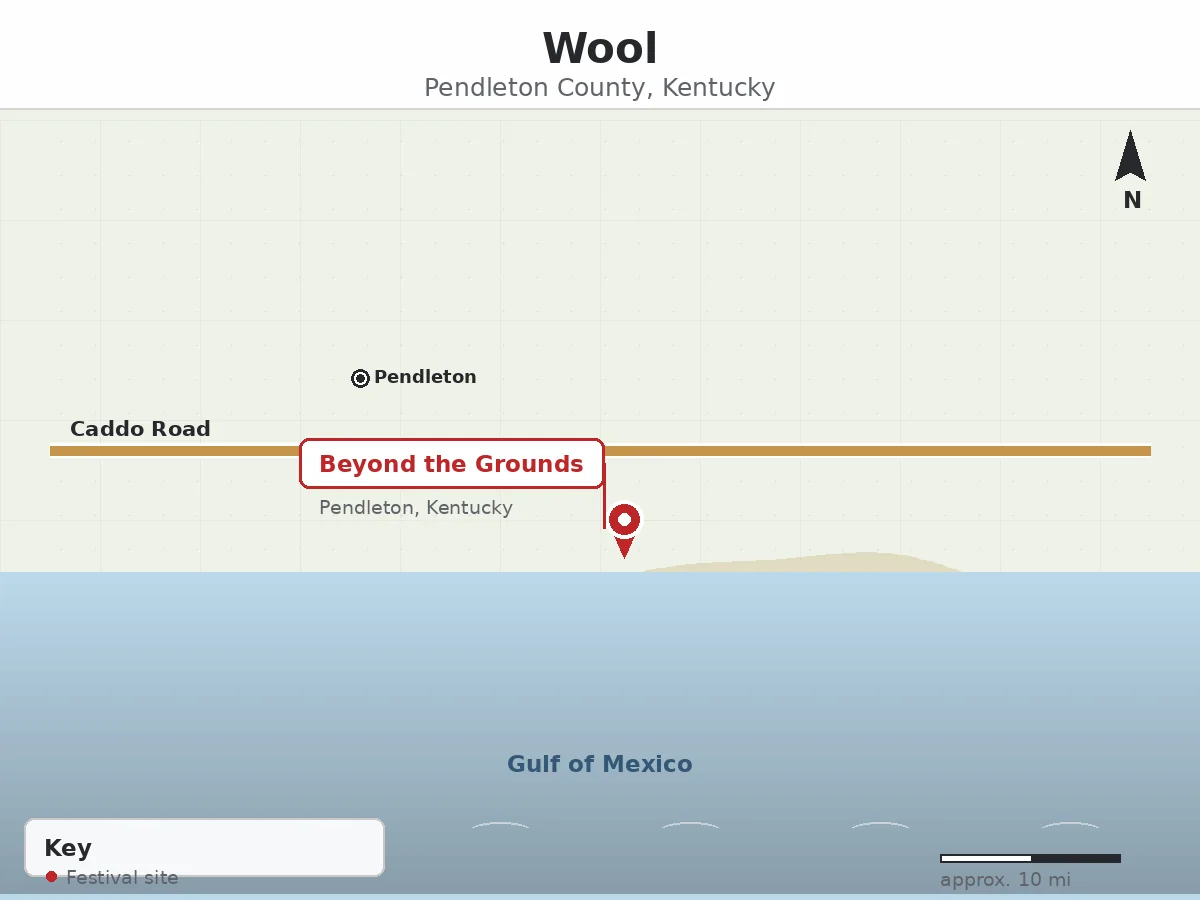
The festival is held at the Kentucky Wool Festival grounds on Concord Caddo Road in Falmouth, about five miles outside downtown and just past Kincaid Lake State Park. It started in downtown Falmouth and moved to its current location roughly twenty years before two thousand sixteen.
What did admission cost in the edition the layers price?
The only admission figure in the layers read is from two thousand sixteen: five dollars per day, with children under five free and three-day passes available, per a newspaper layer. No later year’s price is stated, so the current year’s admission should be confirmed before travelling.
What is there to see and do?
The programme centres on sheep-shearing and herding demonstrations, spinning and weaving, live animals and petting areas, heritage demonstrations and historical reenactments, more than a hundred arts and crafts booths, live bluegrass, folk, country and gospel music, and food vendors.
What to Expect From the Next Pendleton County Kentucky Wool Festival
How often is Pendleton County Kentucky Wool Festival held?
The festival is held every year on the first Friday, Saturday and Sunday of October, a pattern travel layers state and an encyclopedia layer describes as the first full weekend of October. The record runs from the first festival on the first weekend of October nineteen eighty-three through documented editions in two thousand sixteen and two thousand twenty-six.
When is the next Pendleton County Kentucky Wool Festival?
The most recent edition documented in the layers read is October second to fourth, two thousand twenty-six, at the Falmouth grounds, with hours of ten in the morning to ten in the evening on Friday and Saturday and ten in the morning to six in the evening on Sunday. No later edition is given a date in the layers read, so the next gathering will fall on the first Friday, Saturday and Sunday of October in the following year, to be confirmed through the festival’s own announcements.
Will the dates change?
They already vary within the first days of October: the documented editions fell on October seventh to ninth in two thousand sixteen and October second to fourth in two thousand twenty-six, both on the first weekend of the month. A shift of a few days between years is therefore consistent with the festival’s own record, and visitors should expect the precise dates to be settled afresh each year within the first-weekend pattern.
Closing
The Wool Festival, as the layers preserve it, is a Pendleton County event with a stated beginning and a steady record: founded in nineteen eighty-three, when a small group of residents met in January with a University of Kentucky Extension specialist and chose sheep, wool products and traditional skills as the basis for a community event; first held on the first weekend of October that year; moved from downtown Falmouth to its own grounds on Concord Caddo Road; and still held on the first Friday, Saturday and Sunday of October, with sheep-shearing and herding demonstrations, spinning and weaving, live animals, more than a hundred craft booths, live music, food vendors, heritage demonstrations and historical reenactments. What the record shows is a festival that knew what it was for from its first January meeting, and has kept to it for more than forty Octobers.