Orange County Vermont Tunbridge World’s Fair Festival
For four days each mid-September, Tunbridge village in Orange County, Vermont, hosts an agricultural fair whose name reaches far beyond its valley. The Tunbridge World’s Fair fills its grounds beside the First Branch of the White River with livestock judging, pulling contests, harness racing, harvest exhibits and midway rides. It is no exposition in the manner of the famous world’s fairs staged in large American cities, despite the grandeur folded into its title, which traces to a nineteenth-century compliment examined below. Visitors instead find a working country fair of cattle, oxen, sheep, goats, swine, poultry and rabbits alongside antique machinery and floral displays, billed on its own homepage as a perpetual, time-honoured Top Ten event.

A Working Fair Beside the First Branch
The fair’s full published name is Tunbridge World’s Fair, while its own site also uses the header form The Tunbridge Fair and shorter Tunbridge Fair wording. Every fair-side layer places the event at Tunbridge, making that town the host. The grounds address in the fair’s own footer reads 1 Fairground Rd., Tunbridge, VT 05077, which travellers should copy exactly, since listing layers render the street wording differently and those variants are not the fair’s own form. A separate mailing form, Tickets World’s Fair, P.O Box 152, Tunbridge, VT 05077, exists solely for season-ticket mail orders, not for the grounds. Named spaces include the grandstand, Antique Hill, Floral Hall, the Log Cabin Museum and the Children’s Barnyard, with Gate 4 at the south end in the fair’s own education letter. Chelsea enters this record in a different role entirely, as Orange County’s shire town.
Quick Facts
| Item | Detail |
| Event | Tunbridge World’s Fair, a four-day agricultural fair in mid-September |
| Host town | Tunbridge, Vermont, in Orange County |
| Grounds address | 1 Fairground Rd., Tunbridge, VT 05077, in the fair’s own footer form |
| Shire town | Chelsea, named in Title 24, section 10 of the Vermont Statutes, and not the host |
| Organiser | Union Agricultural Society in the fair’s own record, with an Inc styling in directory layers |
| 2026 edition | Thursday, September 17 to Sunday, September 20, 2026, on the fair’s own season page |
| Current gate wording | Sixteen dollars Thursday and Sunday, twenty-one dollars Friday and Saturday, on the fair’s own tickets page as fetched |
| Parking | Free parking in the fields with shuttles, included in the fair’s own current tickets wording |
| Public camping | Closed on the fairgrounds to non-exhibitors and non-concessionaires, in the fair’s own location wording |
Shire Town, Host Town and Organiser Kept Apart
Vermont organises its counties around shire towns, and Orange County’s is Chelsea, proven from the Vermont Statutes alone: Title 24, Chapter 1, section 10 lists Tunbridge among the county’s towns and states that Chelsea is the shire town. That legal fact never moves the fair, because Chelsea does not host this event and appears otherwise only in rotation history, as a sponsor’s town and as one superintendent’s home town. The organiser is the Union Agricultural Society, named throughout the fair’s own record, while directory layers style it Union Agricultural Society Inc, the two forms standing unmerged. Presidents belong to their layers as people, never as the organiser: Euclid Farnham led for over thirty years until after 2009, Alan Howe from 2010 to 2022, and Gordon Barnaby from the 2022 annual meeting. A Tunbridge Agricultural Society in town-history layers belongs only to before the 1867 fair.
Layered Beginnings That Refuse to Merge
No honest single founding year exists here, because the sources tell the opening story in overlapping versions never reconciled. The president-authored history book, written by Euclid Farnham and published in 2008, states that the fair opened in 1867 as an improvised gathering in farmer Elisha Lougee’s North Tunbridge pasture. That layer describes grounds growing around a half-mile racetrack and stands unmerged with the fair-side history wording carried in listing mirrors, which dates the earliest known photograph at the present location to around 1880, describes a one-mile race track for the Tunbridge Trotting Park, and says the fair incorporated under the Union Agricultural Society in 1902.
Town and architectural layers push the roots earlier without displacing either account, describing an Orange County Fair beginning in 1847, alternating among Chelsea, Bradford and Tunbridge, with a first Tunbridge fair on the Lougee farm in 1861 and a reopening in Tunbridge in 1867 after the Civil War, when former Lieutenant Governor Burnham Martin called it a little world’s fair, a phrase printed on 1868 handbills and attached ever since. The same layers record the Union Agricultural Society organised in 1875 with a new fairground below Tunbridge village and Floral Hall built that year, leaving the society dates of 1875, 1897, 1901 and 1902 unmerged. Interruptions conflict too, since a reference layer lists cancellations in 1917 and 1918, from 1942 through 1944, and in 2020, while folklore layers phrase the run as continuous since 1867 except for 1918 and the Second World War, and a magazine layer alone adds the Hurricane of 1938, so no single list is settled. Billings of the 151st fair in 2023 and the 154th in 2026 are billing only, never to be worked backwards, and none were published for 2024 or 2025.
For a useful comparison, see the Lamoille County Vermont Field Days Festival for another county festival.
What to Expect on the Grounds
Animals, Judging and the Pulling Track
Livestock work anchors the fair, with shows and judging for dairy cattle, horses, oxen and steers, sheep, goats, swine, poultry, rabbits and rare breeds. Pulling runs in pony, horse and ox classes alongside tractor pulling, harness racing maintains the track tradition, and garden, harvest, maple and egg classes round out the competitive side.
Antique Hill, Floral Hall and the Children’s Barnyard
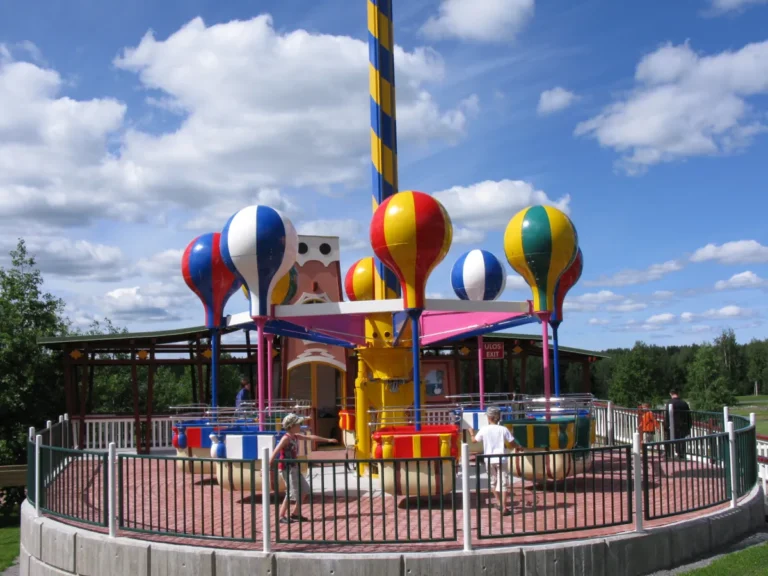
Antique Hill presents working exhibits of older farm practice, and the current tickets page includes it, with free entertainment and livestock shows, in the admission wording. Floral Hall carries flower arrangements with the Junior Division, while the Children’s Barnyard introduces small visitors to farm animals up close. Gillette’s midway rides counterpoint the barns.
The 2026 Programme in Its Own Year
The items here are fenced to 2026 and travel to no other edition. The 2026 Premium Book organises competition into numbered departments covering dairy, oxen and steers, pony, horse and ox pulling, horses, sheep and goats, swine, poultry and rabbits, eggs, garden and harvest, Floral Hall with its Junior Division, maple, rare breeds, tractor pulling and the Children’s Barnyard. It set livestock entries due by August 15 and other entries due by September 1, and carried America 250 as the year’s theme. Agricultural Education Day fell on Thursday, September 17, 2026, and a post-fair news layer recorded four draft-oxen pulls in the Memorial Arena on Saturday, September 19, 2026, the last a free-for-all for teams over three thousand three hundred pounds.
Earlier Bills Stay in Their Years
Guide and event layers preserve the 2025 bill as fibre crafting demonstrations, pony pulling, dairy animal judging, the Silver Circus Show and a Saturday performance by Jamie Lee Thurston at nine o’clock, describing 2025 only. A newspaper layer gives 2023 an education day with veteran appreciation, bracelet riding on Thursday afternoon and through Friday, a Saturday noon livestock cavalcade and Sunday tractor pulling. An older newspaper layer’s Ed Larkin Dancers performance, at a fair billed as the 137th, stays in its own layer.
Planning Your Visit
Choosing Your Days
The fair’s own season page and education letter fix the 2026 edition from Thursday, September 17 through Sunday, September 20, 2026. Guide layers place 2025 from September 11 to 14, news layers put 2024 from September 12 to 15, a newspaper layer carries 2023 from September 14 to 17, and listing layers preserve September 12 to 15 in 2019 and September 15 to 18 in 2016, each span in its own layer. No 2027 dates were published in any layer fetched, the season page’s wish to see everyone in 2027 being a sign-off, not a schedule.
Reading the Current Ticket Ladder
The fair’s own tickets page, in its current form as fetched, warns that its information is subject to change and that final daily prices are posted at the gates. On that page Thursday costs sixteen dollars, with the veteran alone entering free with veteran identification under a veteran appreciation term, and Friday costs twenty-one dollars, with seniors of sixty-five and over paying eleven dollars. Saturday costs twenty-one dollars, Sunday sixteen dollars, a season ticket fifty-one dollars, and children under twelve enter free every day. Cash payment earns one dollar off per ticket, season tickets are sold by mail order after July 1, and credit cards are not accepted for advance sales. The ladder is assigned to no named year; the 2025 guide layer offered only a ten-to-fifty-dollar range with children under twelve free, and an older undated guide ladder of fifteen dollars Thursday, Friday and Sunday, twenty dollars Saturday and fifty dollars a season ticket stands in its layer alone, never merged.
Ride Money Is Not Admission
Ride spending sits on top of the gate and must never be confused with admission. Unlimited-ride bracelets cost thirty-five dollars, or thirty dollars in cash, on Thursday, Friday and Sunday, with no Saturday bracelet in that wording, while ride tickets cost one dollar each, twenty-two for twenty dollars or fifty-five for fifty dollars in cash, every ride taking four or more tickets. Separately, pre-registered school students and chaperones entered free between eight and ten on the morning of Thursday, September 17, 2026, through Gate 4, at one adult for every two to five students, a 2026 school term never offered as general admission.
Parking and the Closed Campground
The current tickets wording includes free parking in the fields, with shuttles, inside the ticket price, no separate parking charge appears in the fair-side record, and a travel-template small-fee claim is set aside against it. The location page states that fairgrounds camping is no longer available for non-exhibitors and non-concessionaires. Exhibitor camping exists only under the 2026 Premium Book, where campers mark camping on the entry form and pay one hundred twenty-five dollars. That book limits camping to exhibitors and those actively assisting them, allows only self-contained campers, runs camper parking from noon Sunday to before dark Wednesday, requires check-in before parking, prohibits awnings, pop-up canopies, dogs, fires, patio lights and air conditioners, and notes restrooms and showers. No concessionaire camping rate was published, so that figure remains unverified.
A Day Worked Around the Barns
Begin a Saturday visit in the livestock barns while morning judging is fresh, then drift towards the pulling track before the heaviest contests. Break near Floral Hall so the flower and Junior Division exhibits fill the early afternoon, and give Antique Hill an unhurried hour for its working demonstrations. Families should fold the Children’s Barnyard into the afternoon, leaving the midway for the cooler part of the day, then close with harness racing or a final pulling class.
Comparisons That Prevent Mistaken Identity
The Connecticut Valley Fair at Bradford is a separate Orange County event, and nothing from its record may be read across into Tunbridge in either direction. The great exposition world’s fairs staged in Chicago, Saint Louis and New York were city spectacles of a different kind, sharing nothing here except a word inherited from an 1868 handbill. Other gatherings use these same fairgrounds across the year under their own organisation and terms, so none of their dates, prices or camping arrangements belongs in this fair’s record.
A Practical Checklist for Fair Week
- Copy the grounds address exactly as the fair publishes it before setting out.
- Recheck the current tickets page close to fair week, because final prices wait at the gates.
- Bring cash if the one-dollar-per-ticket saving matters to your party.
- Keep ride bracelets and ride tickets in a separate mental ledger from admission.
- Leave the camper behind unless you are an exhibitor booked under premium book terms.
- Pack layers for cool September evenings in the river valley.
- Note which programme items belong to the year you are attending.
Beyond the Fairgrounds
Tunbridge village rewards a slow wander once the fair closes, with the grounds resting on flat bottom land below the village and the First Branch of the White River running past the old hayfield flat. Chelsea, the county’s shire town, makes a worthwhile separate trip for its civic role, provided nobody mistakes it for the fair’s home. North Tunbridge carries the oldest layer of the story, since the Lougee pasture there hosts the improvised gathering of the book’s account and the earlier farm fair of the town layers, as history rather than the present grounds.
Why This Fair Matters to Orange County
The fair endures as the county’s largest shared agricultural ritual, returning every mid-September to the same river flat, where its barns and halls give farmers, gardeners, maple producers and young exhibitors one annual arena for work judged in public. Agricultural Education Day formalises that mission by bringing pre-registered school groups through Gate 4 for a morning built around farming. Its archive teaches care with evidence, because conflicting dates and wordings survive side by side instead of being smoothed away.
Frequently Asked Questions
Where exactly is the fair held?
The fair is held at Tunbridge, at the grounds addressed as 1 Fairground Rd., Tunbridge, VT 05077, and the season-ticket box address is a mailing form, never the venue.
Is Chelsea the town that hosts the fair?
No, Chelsea is Orange County’s shire town under Title 24, section 10, proven from the statute alone, while the fair sits at Tunbridge.
Can ordinary visitors camp on the fairgrounds?
Ordinary visitors cannot, because the location page says fairgrounds camping is no longer available for non-exhibitors and non-concessionaires, and exhibitor camping was offered only under the 2026 Premium Book at one hundred twenty-five dollars.
Which founding year should be believed?
None can be promoted alone, since the record carries an 1847 rotating county fair, an 1861 Lougee farm fair, an 1867 opening in the history book and society dates of 1875, 1897, 1901 and 1902, each in its own layer.
What to Expect From the Next Orange County Vermont Tunbridge World’s Fair Festival
How often is Orange County Vermont Tunbridge World’s Fair Festival held?
The fair is an annual event, returning for four days each mid-September, with spans fixed year by year and running Thursday through Sunday in recent editions.
When is the next Orange County Vermont Tunbridge World’s Fair Festival?
The next edition after the September 17 to 20, 2026 fair has no published dates in any layer fetched, so those dates remain unverified until the fair publishes them.
Will the dates change?
Documented spans for 2023, 2024, 2025 and 2026 each begin on a different September Thursday, so the exact days move slightly, while the mid-September, Thursday-to-Sunday shape has stayed consistent.
Closing the Gates on Another September
When the last shuttle crosses the parking fields and the barns empty for another year, Tunbridge returns to its ordinary quiet with unusual speed. What lingers is the discipline of the place: animals judged carefully, antique machines still earning their keep and a name earned from an old compliment.


One Comment