Oldham County Kentucky Railfest Festival
In La Grange, the railway does not skirt the edge of town. Freight trains run straight down the centre of Main Street, close enough that shopfronts sit a few paces from passing wagons, and that single unusual fact shapes everything about the Oldham County Kentucky Railfest Festival. The celebration takes the town’s working railway as its centrepiece, gathering residents and visitors on the very street the trains use.
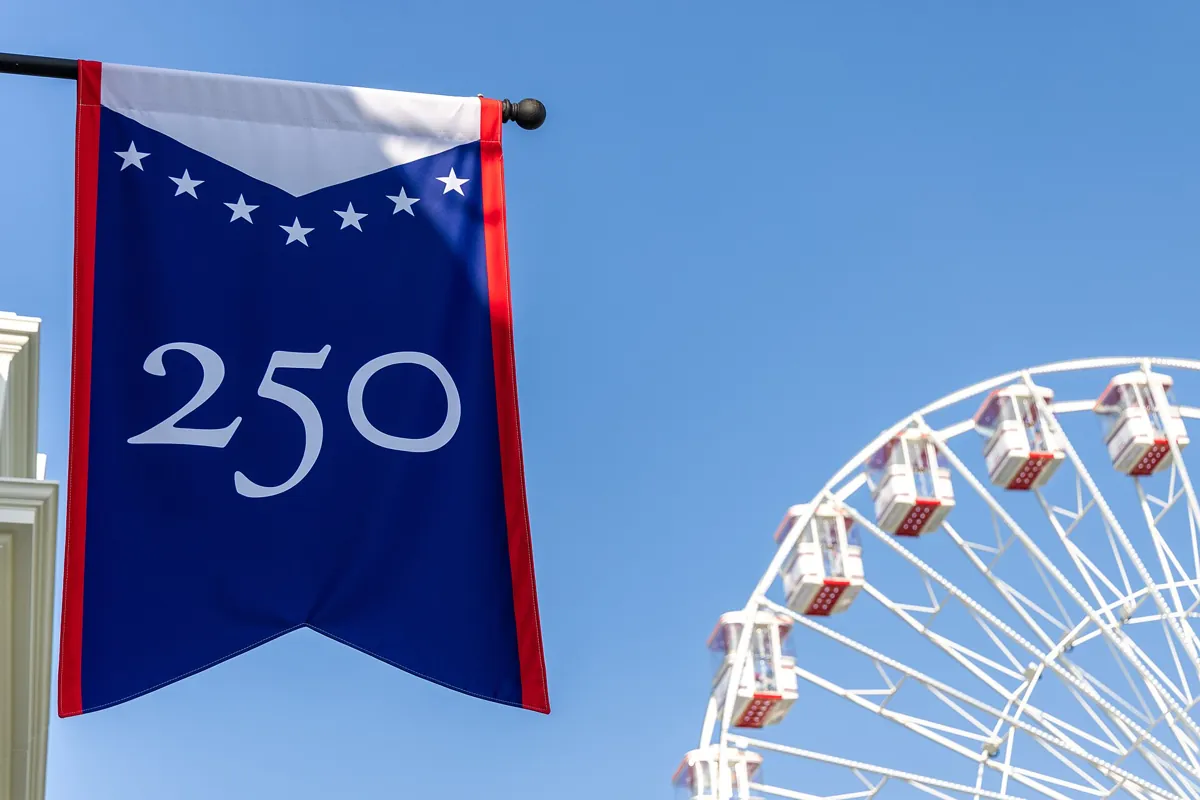
Two editions are documented in the tourism material gathered for this article. The first, staged from the ninth to the eleventh of May two thousand twenty-five, carried the special name RailFest 175 and marked one hundred seventy-five years since the first train travelled through Main Street. The second, held on the eighth and ninth of May two thousand twenty-six, returned under the plainer name RailFest. Both were free, built around live music, exhibits, vendors and family activities, and both treated a freight train rolling through the crowd as the main event.
About
The festival’s name appears in the sources in a small family of forms, kept separate here rather than blended. The county tourism layer uses RailFest for both the two thousand twenty-five and two thousand twenty-six editions. The city tourism layer gives the two thousand twenty-five celebration its own fuller title, RailFest 175, tying the name to the anniversary year. A spaced version, Rail Fest, turns up in the body text of the same layers and in a family-events layer; all three forms describe the same La Grange event.
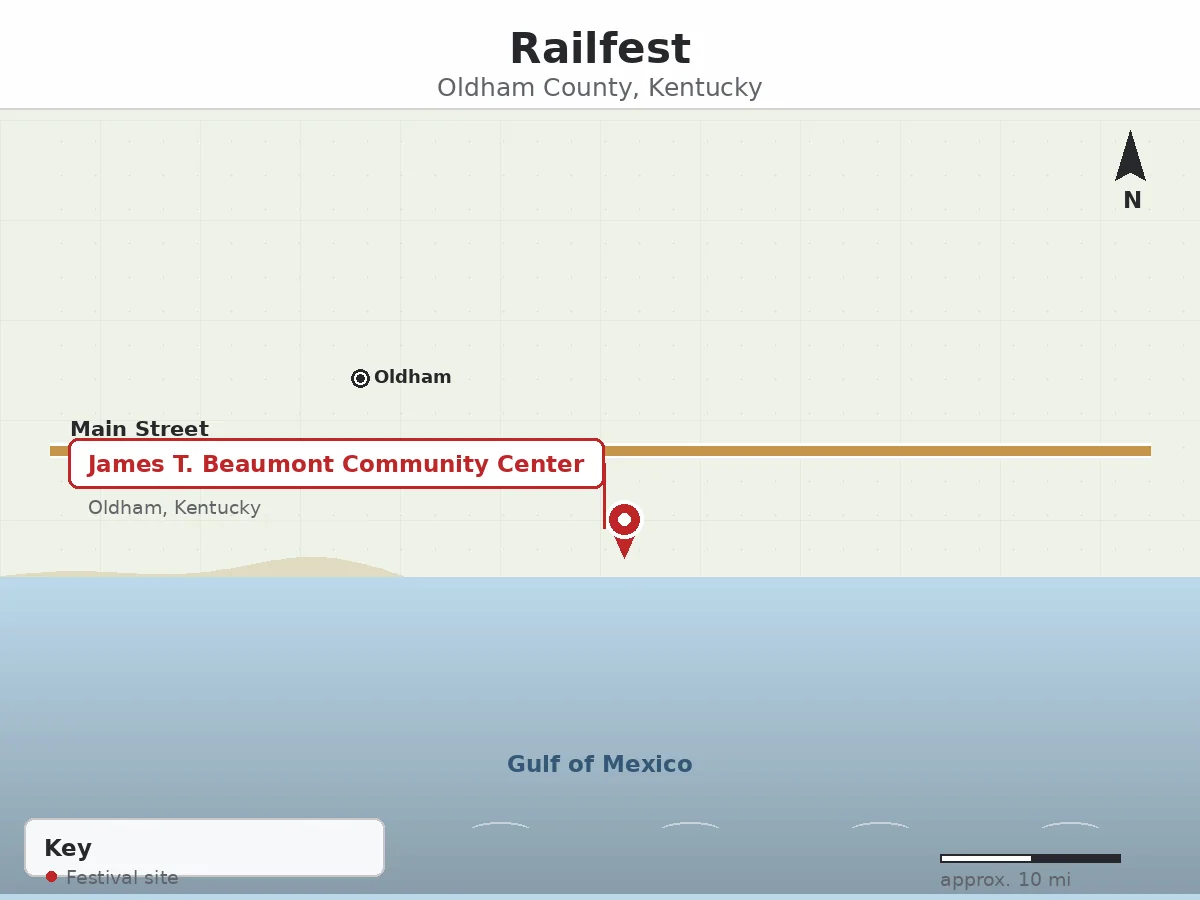
La Grange itself is the administrative heart of its county. A visitor-review layer describes the trains rolling “through this county seat of Oldham County, Kentucky”, and a travel layer calls the town “Oldham County’s seat”, so the festival’s home is the seat town itself. Historic Main Street hosts the core of the gathering, with Springs Park, the James T. Beaumont Community Center and City Place all named in the city tourism layer’s two thousand twenty-five schedule.
Responsibility is described in two voices, likewise left unmerged. The city tourism layer names La Grange Tourism as host of RailFest 175; the county tourism layer promotes the festival across both documented years without naming a separate organiser of its own. An earlier, differently named La Grange celebration on the same theme had a different organising body again, a distinction the history section below preserves.
For a useful comparison, see the Ohio County Kentucky Fordsville Days Festival for another county festival.
Quick Facts
| Item | Detail |
| Published name forms | RailFest; RailFest 175 for the two thousand twenty-five edition; Rail Fest in spaced body text |
| Host town | La Grange, Oldham County, Kentucky |
| County seat status | La Grange is the county seat of Oldham County |
| Principal setting | Historic Main Street, where freight trains run down the centre of the street |
| Further venues named for two thousand twenty-five | Springs Park, the James T. Beaumont Community Center and City Place |
| Host named for RailFest 175 | La Grange Tourism |
| Documented editions | The ninth to the eleventh of May two thousand twenty-five; the eighth to the ninth of May two thousand twenty-six |
| Admission | Free for both documented editions, per the county tourism layer |
| Anniversary marked in two thousand twenty-five | One hundred seventy-five years since the first train, dated to the ninth of February eighteen fifty |
| Programme staples | Historical exhibits, model train layouts, train and craft vendors, live music, family activities and food trucks |
History
The railway story beneath the festival begins long before any organiser printed a schedule. Per the city tourism layer, the first train travelled through La Grange’s Main Street on the ninth of February eighteen fifty. When the town marked one hundred seventy-five years of that railway history on the ninth of February two thousand twenty-five, the anniversary supplied the theme and name for that spring’s celebration, RailFest 175, which also coincided with National Train Day. That anniversary belongs to the town and its railway, not to the festival itself.
RailFest was not the first La Grange festival on this theme. Newspaper layers describe an earlier gathering called the La Grange Railroad & Bluegrass Festival, billed as fourth annual in October two thousand thirteen and in its fifth year in October two thousand fourteen. Those layers credit the idea to a local businessman, referred to here by role only, and name Discover Downtown La Grange as its organiser. That autumn event carried a different name, organising body and season, so it stands here as a predecessor on a shared theme, not as part of RailFest’s own past.
What the sources do not provide is a founding year for RailFest itself. The documented editions fall in two thousand twenty-five and two thousand twenty-six, and the anniversary framing of the first suggests an event shaped for a milestone spring, but no layer states when the festival began, and none of the predecessor’s billing language is transferred to it. RailFest simply enters the written record fully formed, attached to a railway anniversary one hundred seventy-five years in the making.
What to Expect
Steel supplies the headline act. Ordinary freight traffic keeps using Main Street while the festival unfolds around the tracks, so the defining experience, described across the tourism layers, is full-size trains passing through the middle of a street festival while crowds watch from the pavements. Around that moving centrepiece, the programme combines historical exhibits, model train layouts, train and craft vendor stalls, live music, family activities and food trucks.
The two thousand twenty-five edition, RailFest 175, ran a three-day shape. A Friday kickoff gathering filled Springs Park from six to nine in the evening with bluegrass music. Saturday formed the main event, nine in the morning to nine in the evening across Main Street and the parks, and a shorter Sunday session closed the weekend, ten in the morning to noon. The two thousand twenty-six edition compressed the format into two days, the eighth and ninth of May, presented by the county tourism layer as a family-friendly weekend of live music, trains and food on Main Street.
Two thousand twenty-six added its own particular flavours. A trackside bourbon tasting event took place on the Saturday, the ninth of May, between eleven in the morning and four in the afternoon, and a book fair ran the same day. A family-events layer adds that the LaGrange Railroad Museum hosts the Family Fun Zone during the festival, giving younger visitors a dedicated base.
Planning Your Visit
Cost is the easiest part of the planning. The county tourism layer marks both the two thousand twenty-five and two thousand twenty-six editions as free, and the bourbon tasting appears as a component within that free festival rather than a separately priced attraction; no distinct charge for it is printed in the layers gathered. Money is therefore a matter of food trucks and vendor stalls rather than gate money.
Timing deserves more attention than cost. Both documented editions sit in May, and the three-day pattern of two thousand twenty-five shows the spread: an evening opening on Friday, a full Saturday, and a short Sunday late morning. Anyone travelling for a single element, such as the Saturday bourbon tasting or the museum’s Family Fun Zone, should anchor the trip to the Saturday, when every documented strand overlaps.
Practical details beyond the schedule run through the organisers’ own channels; the tourism layers print the organisers’ contact details, noted here by existence only. Because trains keep moving through the festival street, the day’s rhythm pauses whenever a freight service passes.
A Sample Festival Day
A traveller following the documented schedules might begin on Friday evening at Springs Park, where the two thousand twenty-five kickoff paired the weekend’s opening with bluegrass between six and nine. Saturday is the full immersion: arrive for the nine in the morning start, work through the exhibits and layouts, and let the passing freight trains interrupt the browsing.
Within that Saturday, the two thousand twenty-six programme suggests a late-morning detour to the trackside bourbon tasting, which ran from eleven in the morning to four in the afternoon, alongside the book fair held the same day and a stop at the Family Fun Zone hosted by the LaGrange Railroad Museum. Food trucks cover lunch without leaving the street. In two thousand twenty-five the Saturday ran until nine in the evening, leaving the short Sunday session as a gentle coda.
Two Editions Compared
Set side by side, the documented editions show a festival adjusting its scale to its occasion. The two thousand twenty-five RailFest 175 was the anniversary production: three days, a named host in La Grange Tourism, activity spread across Main Street and its parks, and a programme tied to the anniversary and to National Train Day. Its Friday and Sunday sessions framed the Saturday within a longer commemoration.
The two thousand twenty-six RailFest reads as the steadier, repeatable model: two days, the same Main Street setting, the same free admission, and fresh components such as the trackside bourbon tasting and the book fair layered onto the established mix. Both editions differ in name, season and organisation from the older La Grange Railroad & Bluegrass Festival of a decade earlier, and both stand apart from Oldham County Day, a July event, and from the Oldham County Fair, neither of which belongs to this festival’s record.
Visitor Checklist
- Choose the Saturday if only one day is possible; every documented strand overlaps then.
- Arrive early enough to claim a good vantage point on Main Street before a freight train passes through.
- Allow time for the model train layouts and historical exhibits, not only the street stalls.
- Check the organisers’ tourism listings for the current year’s dates and any change of hours.
- Keep children close near the tracks; the trains in the street are real and working.
Beyond the Festival
RailFest ends, but the railway does not. The feature that draws the crowds is an ordinary, year-round fact of La Grange life: freight trains thread the centre of Main Street, a sight the visitor-review layer singles out in describing this county seat. A visitor who misses the festival weekend can still watch the same spectacle from the same street, minus the exhibits, stalls and music.
The town’s railway identity also has an institutional home in the LaGrange Railroad Museum, which the family-events layer places at the festival’s heart through its Family Fun Zone. Museum, anniversary date and street-running trains together give La Grange a railway story the festival celebrates rather than invents.
Why It Matters
For a small county seat, a working railway through the main street could be treated as an inconvenience to be managed. La Grange has instead turned it into the centrepiece of a free civic festival, and the documented editions show how naturally the theme supports exhibits, layouts, music and family programming at once. RailFest gives the town’s most distinctive feature a yearly moment of appreciation, and visitors a reason to stop rather than pass through.
The anniversary edition also showed the festival carrying genuine commemorative weight, marking one hundred seventy-five years since the first train. Events that cost nothing to attend, fill the principal street, and rest on something no neighbouring town can copy tend to endure, and RailFest’s return in two thousand twenty-six under its shorter name is the clearest sign that the idea has taken hold.
Frequently Asked Questions
What does the number in the name RailFest 175 refer to?
The figure belongs to the town’s railway history rather than to the festival’s age. The city tourism layer dates the first train through La Grange’s Main Street to the ninth of February eighteen fifty, so the two thousand twenty-five edition marked one hundred seventy-five years of trains on the street and took its name from the milestone.
Do real freight trains actually pass through the celebration?
They do, and that is the point of the setting. The venue is historic Main Street, where freight trains run down the centre of the street as part of normal operations, and the tourism layers describe the spectacle of those trains passing through the festival street as one of its defining experiences.
Is anything at the festival charged for separately?
The festival itself is free in both documented editions, as the county tourism layer states for two thousand twenty-five and two thousand twenty-six alike. The trackside bourbon tasting in two thousand twenty-six is listed as a component within that free festival, and no separate price for it appears in the layers gathered here. Food and vendor stalls are where money changes hands.
How does RailFest differ from the La Grange Railroad & Bluegrass Festival?
The two are separate events that share a theme. Newspaper layers place the Railroad & Bluegrass Festival in October, billed fourth annual in two thousand thirteen and in its fifth year in two thousand fourteen, organised by Discover Downtown La Grange. RailFest belongs to May and is hosted in its anniversary edition by La Grange Tourism; the earlier festival is a predecessor, not the same event under another title.
What to Expect From the Next Oldham County Kentucky Railfest Festival
How often is Oldham County Kentucky Railfest Festival held?
The documented pattern is a spring gathering in May, with editions recorded in two consecutive years, two thousand twenty-five and two thousand twenty-six. The three-day anniversary edition and the shorter two-day edition that followed it suggest a recurring place in the town’s calendar, although the sources gathered here document those two editions only.
When is the next Oldham County Kentucky Railfest Festival?
The latest edition documented in the tourism layers is the one held on the eighth and ninth of May two thousand twenty-six. A following year’s date has not surfaced in the material collected for this article, so the practical step is to watch the county and city tourism listings, where both previous editions appeared. May is the month to keep free.
Will the dates change?
The length of the weekend has already changed once. The two thousand twenty-five edition spread across three days, from Friday the ninth to Sunday the eleventh of May, while the two thousand twenty-six edition used two days, the eighth and ninth. The month itself has held steady across both, tied in the anniversary year to National Train Day, so a future edition is likelier to vary in length and daily hours than to abandon its May footing.
Closing Thoughts
RailFest asks very little of its visitors: no ticket, no gate, only a willingness to stand on a Kentucky main street and watch the trains come through. What it offers is a festival built on something rare, documented across two free May editions with music, exhibits, layouts and food gathered around a working railway. Whether it keeps the anniversary grandeur of RailFest 175 or the compact shape of two thousand twenty-six, its centre of gravity will remain where it has always been, running on rails down the middle of La Grange.