O’Brien County Iowa Fall Festival
On one hundred sixty acres of prairie in the Little Sioux River Valley, one September Saturday afternoon is given over to the skills and pastimes of the county’s pioneer past. The event filling those hours is published under the names Annual Historical Fall Fest and Historical Fall Fest, and it takes place at the Prairie Heritage Center under the care of the O’Brien County Conservation Board. No layer read for this article prints an event carrying the name on this page’s title line, so the body of the article uses the published names from here on.
The record behind the event is a thin one, and it is better to say so plainly at the outset. Nearly everything documented about the afternoon comes from the organiser’s own event listing, carried on a county parks platform layer. That listing is generous with particulars: it gives the host body, the venue, a full programme, the admission terms and the day and month. What it does not give is a year. The Saturday it describes cannot be pinned to a calendar year from anything in the layers read, and no second edition under any other date appears anywhere.
About the Historical Fall Fest
The Historical Fall Fest is the O’Brien County Conservation Board’s heritage afternoon at the Prairie Heritage Center, the board’s own site in the Little Sioux River Valley. A county parks platform layer carries the board’s listing for the event, and the listing presents it in two forms, Annual Historical Fall Fest and Historical Fall Fest, both recorded here because both appear. The board is the only organiser named anywhere in the layers read.
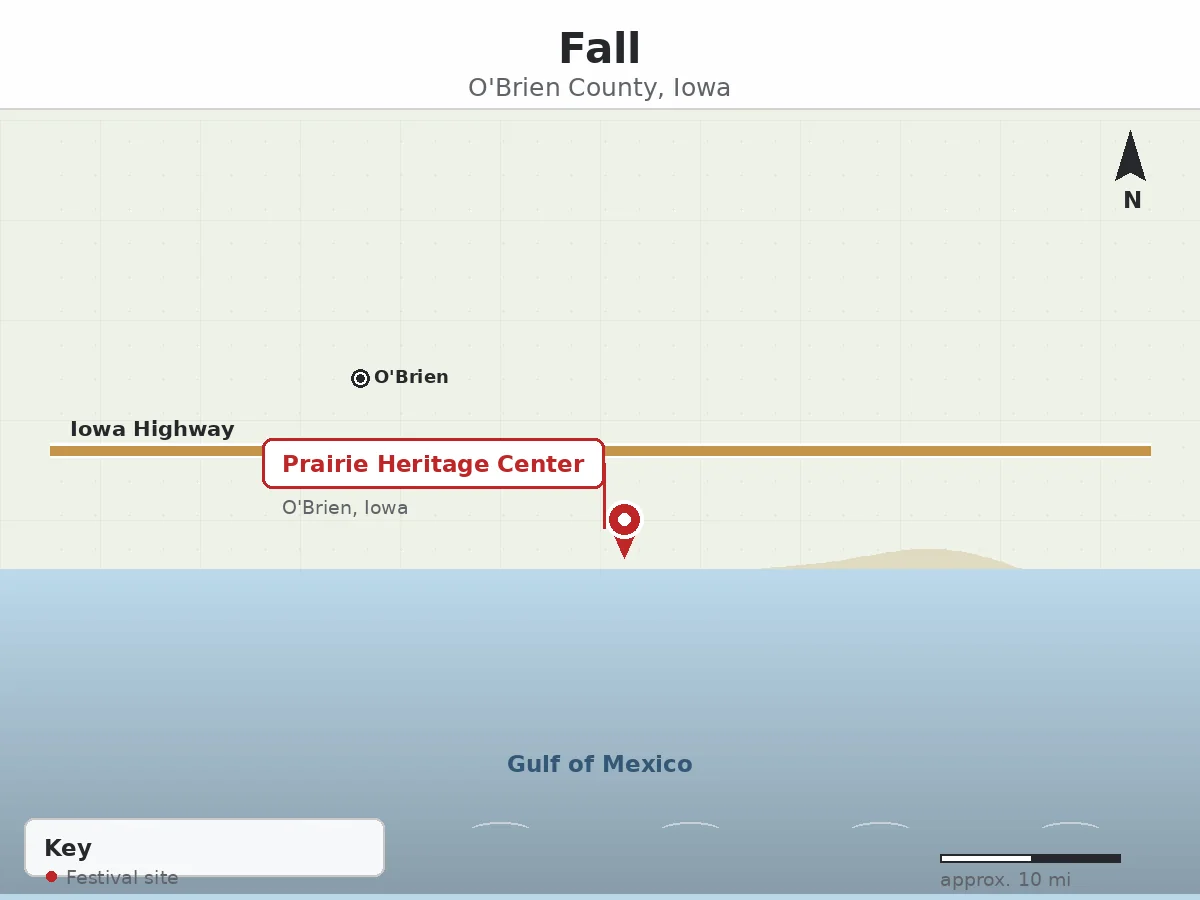
The center stands along Iowa Highway 10 between the towns of Sutherland and Peterson, according to a regional farm newspaper layer. That placement matters to a reader putting the event on the county map: neither Sutherland nor Peterson is the county seat. A county tourism layer describes Primghar as the seat of O’Brien County, so the festival sits away from the county’s administrative centre, out on the valley prairie where its host site belongs.
What the listing promises is a hands-on afternoon rather than a stage programme. Visitors are offered a ride behind horses, tastes of cider pressed on the day, tools from an earlier farming era to handle, and a run of crafts and games, each element set out in the programme section below exactly as the organiser’s listing gives it.
For a useful comparison, see the Muscatine County Iowa FestivALL Festival for another county festival.
Quick Facts
| Item | Detail |
| Published name | Annual Historical Fall Fest, also printed as Historical Fall Fest |
| Name on the sheet | No layer read prints an event named O’Brien County Fall Festival |
| Organiser | O’Brien County Conservation Board |
| Venue | Prairie Heritage Center, in the Little Sioux River Valley |
| Setting | One hundred sixty acres along Iowa Highway 10, between Sutherland and Peterson |
| Date as listed | Saturday, the twenty-second of September, eleven in the morning to four in the afternoon; the listing prints no year |
| Admission | No charge, per the organiser’s own listing |
| Programme highlights | Wagon ride to the pioneer cemetery, cider and popcorn sampling, bison chip throwing contest |
| County seat | Primghar; neither Sutherland nor Peterson holds the seat |
| Documented editions | One; no layer read documents an edition under any other date |
History
The history that can be told with confidence here belongs mostly to the venue. A regional farm newspaper layer recounts that the Prairie Heritage Center took ten years of planning before it opened, and that the opening came in November two thousand five. Those dates belong to the center and its grounds. They are not the birthday of the Historical Fall Fest, and this article does not borrow them for that purpose.
For the Fall Fest itself, the layers read reach back no further than the listing. The organiser presents the event as an annual one, and that billing is recorded here as billing: it tells a reader the board intends the afternoon to recur, without documenting how long it has done so. No anniversary count and no first holding appears in anything read for this article, so the festival’s age is left exactly where the record leaves it, unstated.
The county’s geography forms part of the background a visitor carries in. The seat of O’Brien County is Primghar, as a county tourism layer describes it, while the center sits between Sutherland and Peterson along the highway. The festival therefore belongs to the county’s countryside rather than to its seat town, a pattern set by the conservation board’s ownership of the site.
One further point belongs in an honest history: the layers read contain no report of the event having ended or paused. The listing stands as the board’s own word on its afternoon, and the missing year is a gap in the documentation, not evidence of a cancellation.
What to Expect
The organiser’s own listing is the single source for the afternoon’s programme, and every element in this section comes from it.
The centrepiece is a horse-drawn wagon ride through the prairie to the pioneer cemetery. The ride ties the festival to the ground it stands on: visitors cross the same grass the center preserves, ending at the burial ground of the people whose era the afternoon commemorates.
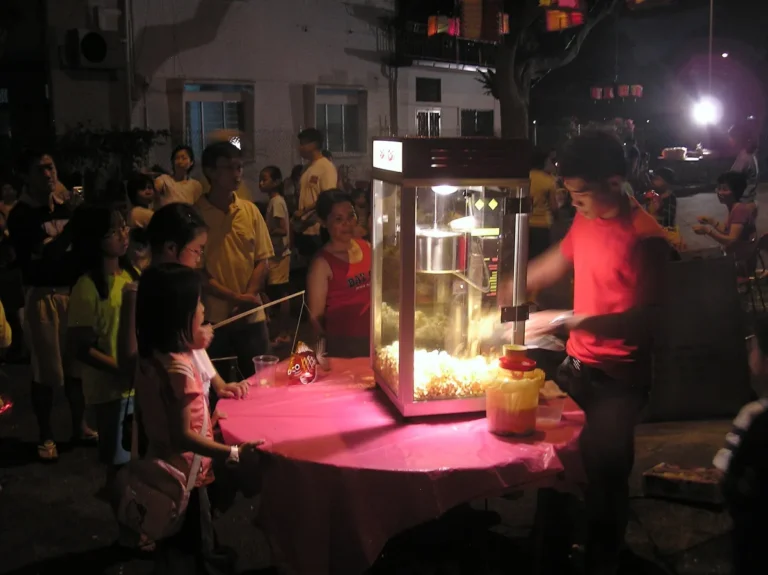
Food at the event takes the form of sampling rather than stalls. The listing offers fresh-pressed apple cider and popcorn for visitors to taste, both of them small productions of the harvest season the festival marks.
Older farm tools are set out for visitors to try, putting the work of an earlier agriculture directly into modern hands. Alongside them, a spinning demonstration shows fibre being turned into yarn by hand, another skill the afternoon keeps in view.
Lighter elements fill out the programme. A bison chip throwing contest turns a prairie by-product into a competition. Visitors can build a Prairie Gnome Home, climb into a covered wagon of the kind that crossed this country in the settlement era, and join in the crafts and games with which the listing rounds out its programme.
Planning Your Visit
Everything a visitor can plan around comes from the organiser’s own listing, so the shape of the day is simple to state. The documented edition falls on Saturday, the twenty-second of September, runs from eleven in the morning to four in the afternoon, and carries no charge. The listing prints no year for that Saturday, and no other layer read supplies one, so a reader planning ahead should treat the listing itself as the living document to check rather than any fixed calendar entry.
The setting is the Prairie Heritage Center along Iowa Highway 10, between Sutherland and Peterson, on the conservation board’s one hundred sixty acres in the Little Sioux River Valley. Primghar, the county seat, is a separate town; the festival does not take place there.
Five hours is the whole window. The programme the listing describes is an outdoor one in its main elements — the wagon ride across the prairie, the throwing contest, the covered wagon — so the afternoon is best approached as time spent out on the grounds, moving between the ride, the sampling, the tools and the crafts at a walking pace. Because the listing is the only documentation, its details are the ones to rely on: the hours, the place and the absence of any admission charge all come from the board’s own words.
A Sample Itinerary
The listing gives no running order, so the afternoon below is arranged from its programme elements alone, at the pace the five documented hours allow, with no year attached because the listing attaches none.
Arrive at the eleven o’clock opening and begin with the horse-drawn wagon ride through the prairie to the pioneer cemetery, while the afternoon is young. Back at the center, take the fresh-pressed cider and popcorn sampling, then spend the middle of the visit on the older farm tools and the spinning demonstration. Give the lighter programme its turn after that: throw in the bison chip throwing contest, build a Prairie Gnome Home, and climb into the covered wagon. Leave the crafts and games for the final stretch, and let the four o’clock close end the visit out on the conservation board’s prairie.
How It Compares
The county’s best-known annual gathering is a different event entirely. The O’Brien County Fair is held in Primghar each July, as the fair’s own site and a university extension county layer record, and it belongs to high summer in the seat town rather than to a September afternoon on the prairie. The two events share a county and nothing else in the record.
Two further fall events in the county are also separate. A regional radio events layer lists a Sheldon celebration under the name Fall In Love With Downtown Sheldon, and a Fall Festival held by Hope Haven. Neither is the conservation board’s afternoon at the Prairie Heritage Center, and neither shares its heritage programme. A reader who meets those names while looking for this festival is looking at neighbours, not at the same event under another title.
Visitor Checklist
- Check the organiser’s own listing before travelling, since it is the only documented source for the day and its hours
- Plan for a five-hour afternoon, from eleven in the morning to four
- Take the wagon ride to the pioneer cemetery early in the visit
- Taste the fresh-pressed cider and popcorn while sampling is under way
- Try the older farm tools and watch the spinning demonstration
- Enter the bison chip throwing contest and build a Prairie Gnome Home
- Remember that the listing states no charge for the event
Beyond the Festival
Beyond the festival afternoon, the Prairie Heritage Center remains what it was built to be: the conservation board’s home ground on one hundred sixty acres in the Little Sioux River Valley. The farm newspaper layer’s account of a decade of planning behind its November two thousand five opening suggests a site meant to last, and the pioneer cemetery reached by the festival’s wagon ride is part of that ground in every season rather than a prop for one day.
The center’s position along Iowa Highway 10 between Sutherland and Peterson makes it a countryside stop rather than a town one, and its prairie setting is the substance of the place. A visitor who comes for the Fall Fest and stays curious about the valley has the center itself, and its grounds, as the further subject.
Why It Matters
The Historical Fall Fest matters in the record as an act of keeping skills visible. Spinning, pressing cider, handling the tools of an earlier farming era and riding behind horses are all activities that slip out of ordinary life without occasions that stage them, and the conservation board’s listing stages every one of them in a single free afternoon. A celebration does not need a long documented past to do that work; it needs a place, a programme and a reason to gather, and the board’s listing supplies all three.
Its setting gives that work weight. The wagon ride ends at a pioneer cemetery, on acres the board holds in the valley those pioneers settled. Programme and ground say the same thing: the heritage being demonstrated is local, and the demonstration happens where the history did.
Frequently Asked Questions
What happens on the wagon ride the listing describes?
The organiser’s listing describes a horse-drawn wagon ride through the prairie to the pioneer cemetery. Visitors cross the center’s own grass behind horses and end the ride at the burial ground of the pioneer generation, which makes the trip both the programme’s centrepiece and its most direct link to the era the afternoon commemorates.
Under which name is the event actually published?
The listing carried on a county parks platform layer presents the event as the Annual Historical Fall Fest, and as the Historical Fall Fest in shorter form. No layer read for this article prints an event named O’Brien County Fall Festival; that name belongs to the sheet this article was commissioned from, and the published names are the ones the body of the article uses.
What is there for younger visitors to do during the afternoon?
The listing’s programme includes crafts and games, the building of a Prairie Gnome Home, and a covered wagon to climb into, alongside the sampling of fresh-pressed cider and popcorn. The bison chip throwing contest and the older farm tools set out to try give older children hands-on elements of their own within the same five hours.
Why does the documented date come without a year attached?
Because the organiser’s own listing prints the day and the month and stops there. It documents one edition on Saturday, the twenty-second of September, from eleven in the morning to four in the afternoon, bills the event as annual, and gives no year for that Saturday. No other layer read supplies the missing year, so this article attaches none rather than guess at one.
What to Expect From the Next O’Brien County Iowa Fall Festival
How often is O’Brien County Iowa Fall Festival held?
The organiser’s own listing bills the Historical Fall Fest as an annual event. That billing is the whole of what the record offers on frequency: one edition is documented in detail, no run of past editions is set out anywhere in the layers read, and the annual description is the board’s own characterisation of its afternoon.
When is the next O’Brien County Iowa Fall Festival?
The listing documents a Saturday on the twenty-second of September, from eleven in the morning to four in the afternoon, and prints no year beside that date. No fixed future date for the event appears in any layer read, so the honest answer is that the organiser’s listing itself is the document to consult when its Saturday next comes round.
Will the dates change?
The layers read contain a single documented date and no discussion of the date moving. With one edition on record and no year printed even for that one, there is no documented pattern from which a change, or a promise of stability, could fairly be drawn.
Closing
The Historical Fall Fest asks very little of its visitors: one September Saturday, five hours, no charge, on a stretch of river-valley prairie in O’Brien County. What it offers in return is documented and distinctive — a wagon ride to a pioneer cemetery, cider pressed on the day, tools and spinning kept in working view, and a contest built from the prairie itself. The record behind it is thin, a single organiser’s listing without a year, and this article has kept that thinness in plain sight. Within those limits, the afternoon stands as the conservation board presents it: a small, free act of remembrance held where the remembered people lie.