Neosho County Kansas Mexican Fiesta Festival
In the third week of September, the town of Chanute in Neosho County turns toward Santa Fe Park for a day given over to food, neighbours and Mexican heritage. The gathering is published locally as the Chanute Mexican Fiesta, and in a shorter form simply as the Mexican Fiesta, while the title carried in this series names the county rather than the town. That difference matters, because every documented detail comes from sources that put the town’s name first. A local newspaper layer reported the edition held on Saturday the twenty-first of September two thousand twenty-four, and a festival-guide layer carries a further date of Saturday the nineteenth of September two thousand twenty-six. Between those two fixed points, the surviving record is modest. No organising body is named in the layers read, no admission terms are published anywhere in them, and no detailed programme survives beyond food vendors serving traditional Mexican dishes inside a community celebration of Mexican culture and heritage. What the record does offer, unmistakably, is longevity: the newspaper billed the two thousand twenty-four gathering as the one hundred seventh annual edition, a figure recorded here exactly as printed.
About
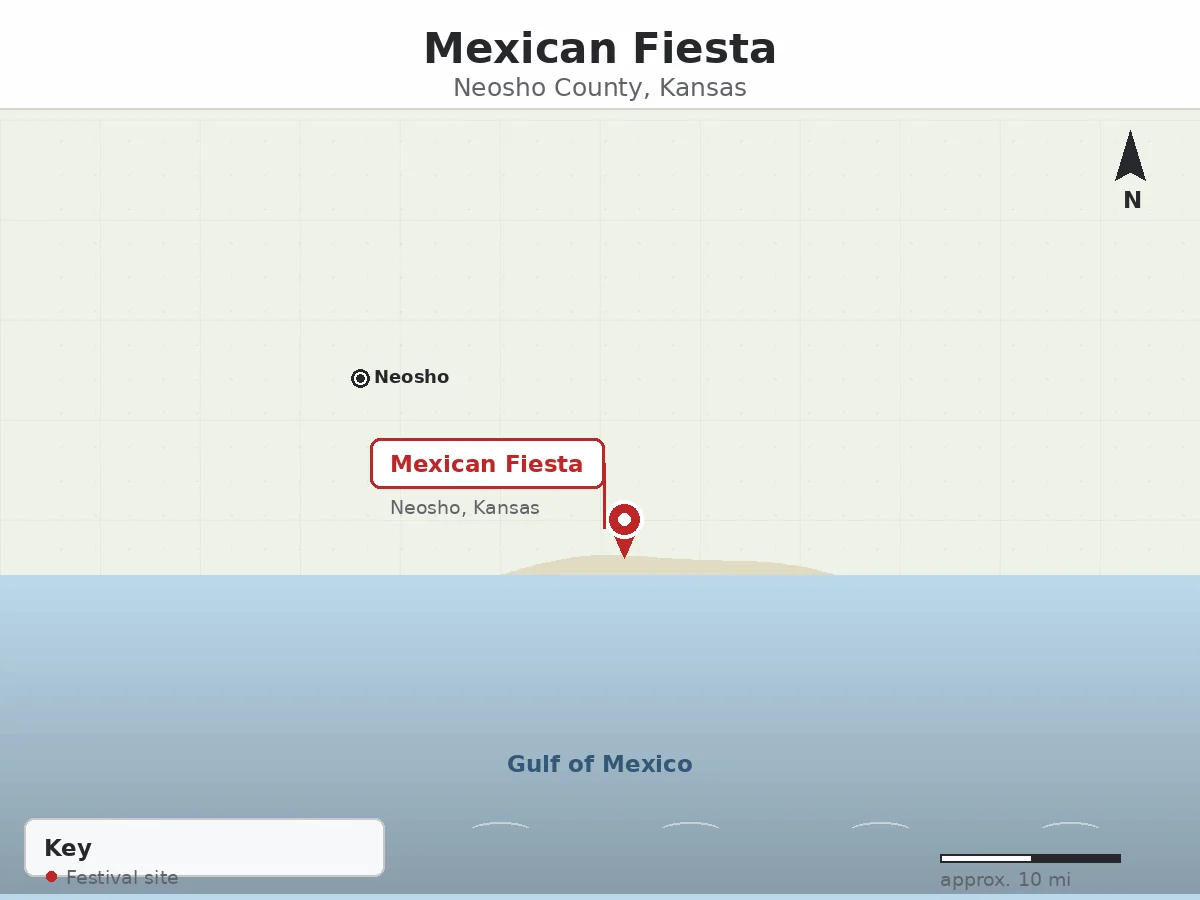
The first thing to understand about this fiesta is the name it answers to at home. Chanute’s own sources call it the Chanute Mexican Fiesta, and a festival-guide layer keeps that same town-prefixed form when it lists the event for two thousand twenty-six. The shorter Mexican Fiesta appears in local coverage as well. The county-named title used in this series appears in no layer read, so searches for announcements should run under the town’s name rather than the county’s. Chanute is not the county seat; reference layers give Erie as the seat of Neosho County, a distinction county-named listings sometimes blur. The documented home of the fiesta is Santa Fe Park in Chanute, named by the local newspaper layer as the setting of the two thousand twenty-four edition. Not one layer read attaches an organiser’s name to the event. The documenting source is the town’s local newspaper, which reported the fiesta without naming a host organisation, so this article names none either. The fiesta is documented as a community occasion covered by its hometown paper, not a production fronted by a named presenter.
Quick Facts
| Item | Detail |
| Published name | Chanute Mexican Fiesta, also shortened to Mexican Fiesta |
| Host town | Chanute, Kansas |
| County seat | Erie, a separate Neosho County town |
| Venue | Santa Fe Park, Chanute |
| Documented edition | Saturday the twenty-first of September two thousand twenty-four |
| Billing as printed | One hundred seventh annual, per the local newspaper |
| Guide-listed edition | Saturday the nineteenth of September two thousand twenty-six |
| Programme core | Food vendors and traditional Mexican dishes |
| Admission | No price or free-entry claim appears in the layers read |
| Organiser | No organiser is named in the layers read |
History
The deepest claim in the record is a number. When the town’s newspaper reported the fiesta held on Saturday the twenty-first of September two thousand twenty-four, it billed that gathering as the one hundred seventh annual Chanute Mexican Fiesta. Such a billing implies a tradition reaching back across generations of Chanute families, yet the layers read state no founding year, and this article derives none. Converting a billing into a start date looks like simple subtraction, but it assumes the count was kept without interruption or error, and nothing in the record verifies that. The honest treatment is to let the billing stand as the newspaper printed it: evidence of a very long-running community habit, not a certificate of origin. Beyond the billing, the trail is thin. The newspaper’s report appeared in its edition of Tuesday the twenty-fourth of September two thousand twenty-four, describing the Saturday just past, which anchors one edition firmly. A festival-guide layer then lists Saturday the nineteenth of September two thousand twenty-six. No layer read documents a two thousand twenty-five edition at all, so none is claimed here; filling that gap with an assumed edition would be invention. What can be said is that the fiesta appears in the record at a mature stage of its life, already counted in three figures by its own hometown billing, with a published rhythm of a Saturday in the second half of September.
What to Expect
Food anchors everything the record describes. The newspaper account of the two thousand twenty-four edition says the fiesta drew crowds to food vendors offering an array of traditional Mexican dishes, and that sentence carries most of what is documented about the day itself. Around that centre, the layers frame the gathering as a community celebration of Mexican culture and heritage: a hometown occasion where heritage is tasted as much as talked about. Visitors should calibrate their plans to that scale of knowledge. No stage schedule, list of performers, contest results or vendor roster survives in the layers read, so this article promises none of them. What a visitor can anticipate, on the record alone, is a park gathering on a September Saturday, built around Mexican food sold by vendors and a town marking its heritage together. The guide listing for two thousand twenty-six repeats the essentials — the town-prefixed name and a mid-September Saturday — suggesting continuity of character without adding programme detail. Anyone needing specifics for a given year, such as hours or a vendor list, must look in Chanute’s own local coverage close to the date, because the layers gathered here do not hold them.
Planning Your Visit
September timing shapes the whole trip. Both documented dates fall on Saturdays in the second half of the month — the twenty-first in two thousand twenty-four and the nineteenth in the guide’s two thousand twenty-six listing — so watch for Chanute’s local announcements as that part of September approaches. Because no organiser is named in the record, there is no official office to point you toward; the town’s newspaper coverage and festival-guide listings are the channels the record itself used, and they remain the sensible places to confirm a year’s date. Admission needs the same honesty. No layer states a gate price and none states that entry is free, so budget around neither assumption; carrying cash for food vendors is prudent, since the documented heart of the day is food sold by vendors. Santa Fe Park is the one firm landmark in the record, so aim for the park and let the day organise itself from there. Travellers from elsewhere in Neosho County, Erie included, should treat the trip as a short county drive ending at a single park, because no second site is named in the layers read. Finally, keep the name straight: directions, listings and local conversation will all use Chanute Mexican Fiesta, and searching under the county-named form may turn up nothing at all.
For a useful comparison, see the Neosho County Kansas Artist Alley Festival for another county festival.
A Sample Day at the Fiesta
A day built from the documented pieces might unfold like this. Arrive at Santa Fe Park late in the morning and make a first slow circuit to see which food vendors are set up and what each is serving. Choose a first plate from the traditional dishes on offer, then drift with the crowd rather than against it. Return to the vendors at midday for a second round, trying something different, because variety across the stalls is the closest thing the record offers to a programme. Spend the afternoon in the unhurried middle of the gathering, treating the heritage celebration as an atmosphere to sit inside rather than a schedule to chase. Before leaving, make one last pass along the food rows and take note of any posted word about future editions. The shape is deliberately loose: the record documents a park, a date pattern and a table of Mexican food, and a good visit follows those three things without demanding more structure than the sources support.
How This Fiesta Compares
Kansas holds several Mexican celebrations with similar names, and the record insists they are not interchangeable. The Garden City Community Mexican Fiesta, held in Garden City in Finney County, is a different event in another county altogether; the searches behind this research documented it reaching its one hundredth annual edition in two thousand twenty-six, and none of its history belongs to Chanute. Topeka’s Fiesta Mexicana is likewise a separate, larger celebration with its own identity, and Wichita’s Mexican Independence celebrations belong to that city as well. None of their programmes, dates or history belongs in Chanute’s story, and each is disowned here in full. Measured against those namesakes, the Chanute fiesta is the quieter entry in the record: a single park, a hometown newspaper as its main witness, and a billing that quietly claims a longer run than many bigger events can show. One further note sharpens the picture. A language-app page built around the phrase Mexican Fiesta Chanute Ks surfaced during research and was set aside; it adds no facts, only a reminder that a name can travel far beyond the town keeping the actual tradition. The fiesta that matters is the one in Santa Fe Park, under the name its own neighbours use.
Checklist
- Search for news under the name Chanute Mexican Fiesta, not the county-named form
- Confirm the year’s Saturday from Chanute’s local coverage or a festival-guide listing
- Aim for Santa Fe Park as the day’s single documented destination
- Carry cash for food vendors, since no admission terms are published
- Plan the meal as the main event, with traditional Mexican dishes at the centre
- Leave the schedule loose, because no detailed programme is documented
- Keep Garden City, Topeka and Wichita events separate in your expectations
- Note any word of the next edition posted or printed around the day itself
Beyond the Park
A visit can stretch past the fiesta without leaving the record far behind. Chanute is the documented setting, and the county around it is Neosho County, whose seat is Erie; a traveller with time to spare can treat the day as an introduction to this corner of Kansas rather than a single stop. The layers gathered for this research describe the fiesta and little else, so this article invents no neighbouring attractions, museum hours or scenic drives to pad the journey. What can be said from the record is narrower and, in its way, more useful: the fiesta belongs to a town that has kept a Mexican heritage celebration alive long enough for its own newspaper to count the editions in three figures. That kind of continuity usually rests on families, recipes and habits handed down locally, and the park gathering is where an outsider can see that inheritance in public for one September Saturday. Visitors who come for the food and stay for the people will have taken the day on exactly the terms the record offers.
Significance
The significance of the Chanute Mexican Fiesta, on the evidence available, is the significance of endurance in a small place. Plenty of festivals announce themselves loudly and vanish from the record within a few years; this one surfaces in the sources already billed as the one hundred seventh annual edition, which means generations had renewed it before the surviving coverage even begins. The frame the sources give it — a community celebration of Mexican culture and heritage, expressed through traditional food in a public park — points to the fiesta’s real function. It is a day when a heritage carried in kitchens and families becomes visible to the whole town at once, shared across a park rather than kept inside private homes. The modesty of the documentation cuts both ways: it limits what any writer can responsibly describe, but it also suggests an event sustained by local habit rather than promotion. Recorded carefully, with its billing unconverted and its gaps unfilled, the fiesta stands as one of Neosho County’s longest-running documented gatherings.
Frequently Asked Questions
What name does Chanute use for its own fiesta?
The town’s sources call it the Chanute Mexican Fiesta, shortened in places to Mexican Fiesta. The county-named title in this series appears in no layer read, so local announcements and listings should be searched under the town-prefixed name.
Which September dates does the published record actually hold?
Two dated points survive: Saturday the twenty-first of September two thousand twenty-four, reported by the local newspaper, and Saturday the nineteenth of September two thousand twenty-six, carried by a festival-guide layer. No two thousand twenty-five edition is documented in the layers read.
What will visitors find to eat at Santa Fe Park?
The newspaper account of the two thousand twenty-four edition describes crowds drawn to food vendors offering an array of traditional Mexican dishes. No vendor names or menus survive in the layers read, so the dishes themselves are best discovered stall by stall on the day.
Does the one hundred seventh annual billing prove when the fiesta began?
No. The billing is recorded exactly as the newspaper printed it, as evidence of a long-running tradition. No layer states a founding year, and none is derived here, because an annual count cannot be converted into a start date without assuming an unbroken run the record never verifies.
What to Expect From the Next Neosho County Kansas Mexican Fiesta Festival
How often is Neosho County Kansas Mexican Fiesta Festival held?
The newspaper’s billing describes an annual tradition, counting the two thousand twenty-four gathering as the one hundred seventh annual edition. The documented dates sit on Saturdays in the second half of September, which is the rhythm the record supports.
When is the next Neosho County Kansas Mexican Fiesta Festival?
The most forward-looking entry in the record is the festival-guide listing of Saturday the nineteenth of September two thousand twenty-six under the name Chanute Mexican Fiesta. Beyond that listing, no later date is announced in the layers read, so future editions should be confirmed in Chanute’s local coverage nearer the time.
Will the dates change?
The two documented points are close together in the calendar — the twenty-first of September in two thousand twenty-four and the nineteenth in two thousand twenty-six — which suggests a settled mid-to-late September Saturday rather than a fixed date. A given year’s exact day can still move, so the date should always be checked against current local listings before travelling.
Closing Thoughts
The Chanute Mexican Fiesta rewards a visitor who arrives on its own terms: a September Saturday, a town park, and food vendors carrying a tradition its hometown counts in three figures. This article has kept the account fenced to what the sources hold — two dated points, one long billing, no invented organiser and no borrowed glory from bigger fiestas elsewhere in Kansas. What remains is still a good day out and a genuinely old community habit, and in Neosho County that is enough.