Montgomery County Kansas Dalton Defender Days Festival
On the first weekend of October, downtown Coffeyville turns its attention to the morning its citizens stopped the Dalton Gang. The gathering that does this work appears in print under more than one name. A state humanities layer calls it Dalton Defender Days, a county economic-development layer calls it Dalton Defenders Days, and a travel guide shortens it to the singular Dalton Defenders Day. No layer read prints the fuller festival title under which this article is filed, and none adds the word festival to the event’s published name at all. What the layers agree on is the core: a community celebration in Coffeyville, in Montgomery County, built around a reenactment of the Dalton Raid on the downtown ground where the original fight happened in eighteen ninety-two. This article keeps the name forms separate rather than merging them, fences each programme item to the layer that printed it, and treats the college marching festival that borrows the name as exactly what it is: separate.
About the Festival
The event belongs to Coffeyville, the most populous city in Montgomery County, though not its county seat; that distinction belongs to Independence. The setting is the downtown core, and the anchor points are the sites of the eighteen ninety-two raid itself: the Condon Bank, Death Alley and the Dalton Defenders Museum. A county layer and a regional fall guide both place the gathering downtown, and the commemorated sites give that placement its meaning, because the celebration unfolds on the very streets where the honoured event happened. Who runs it is a question the record answers only loosely. No layer read names an organising body for the main festival. The state humanities layer says simply that the community hosts Dalton Defender Days, and this article repeats that framing without inventing a committee or corporation no source prints. The dated record is modest but real. The state humanities layer invites attendance on Friday the second and Saturday the third of October two thousand twenty-six, describing the occasion as a festival and historical reenactment. A regional fall guide documents the edition of the sixth and seventh of October two thousand twenty-three with programme details. A county layer gives the standing placement as the first weekend in October, which fits both dated editions.
Quick Facts
| Item | Detail |
| Published name forms | Dalton Defender Days; Dalton Defenders Days; Dalton Defenders Day |
| Host town | Coffeyville, Kansas |
| County | Montgomery County |
| County seat | Independence; Coffeyville is the county’s most populous city, not its seat |
| Setting | Downtown Coffeyville, around the Condon Bank, Death Alley and the Dalton Defenders Museum |
| Standing placement | The first weekend in October |
| Most recent dated edition | Friday the second and Saturday the third of October, two thousand twenty-six |
| Earlier documented edition | The sixth and seventh of October, two thousand twenty-three |
| Commemorates | The defeat of the Dalton Gang’s attempted double bank robbery on the fifth of October, eighteen ninety-two |
| Admission | No layer read states a charge or a free-entry position for the main festival |
History
The story the festival exists to retell began on the fifth of October eighteen ninety-two, when the Dalton Gang attempted a double bank robbery in Coffeyville and the town’s citizens defeated the attempt. Every layer read agrees on that much: the commemoration is anchored to that single morning and to the townspeople who resisted it, which is why defenders, not outlaws, hold the naming honours in every published form. The physical reminders stand downtown still. The Condon Bank was one of the robbery’s targets, Death Alley took its name from the fighting, and the Dalton Defenders Museum preserves the episode for visitors in every season. A local-history layer adds one dated observation: it records that the two thousand twenty-two observance marked the one hundred thirtieth anniversary of the raid. That sentence is worth handling carefully. It is that layer’s framing of the two thousand twenty-two edition, a statement about the age of the event being commemorated, and it is recorded here in exactly those terms. It is not a founding claim for the festival, and this article does not convert it into one. Nothing read states the year the festival itself began, names a first edition, or prints an anniversary billing for the celebration as a whole, so the gathering’s honest history has two parts: a documented morning in eighteen ninety-two, and a present-day tradition whose starting point the layers leave unstated.
What to Expect
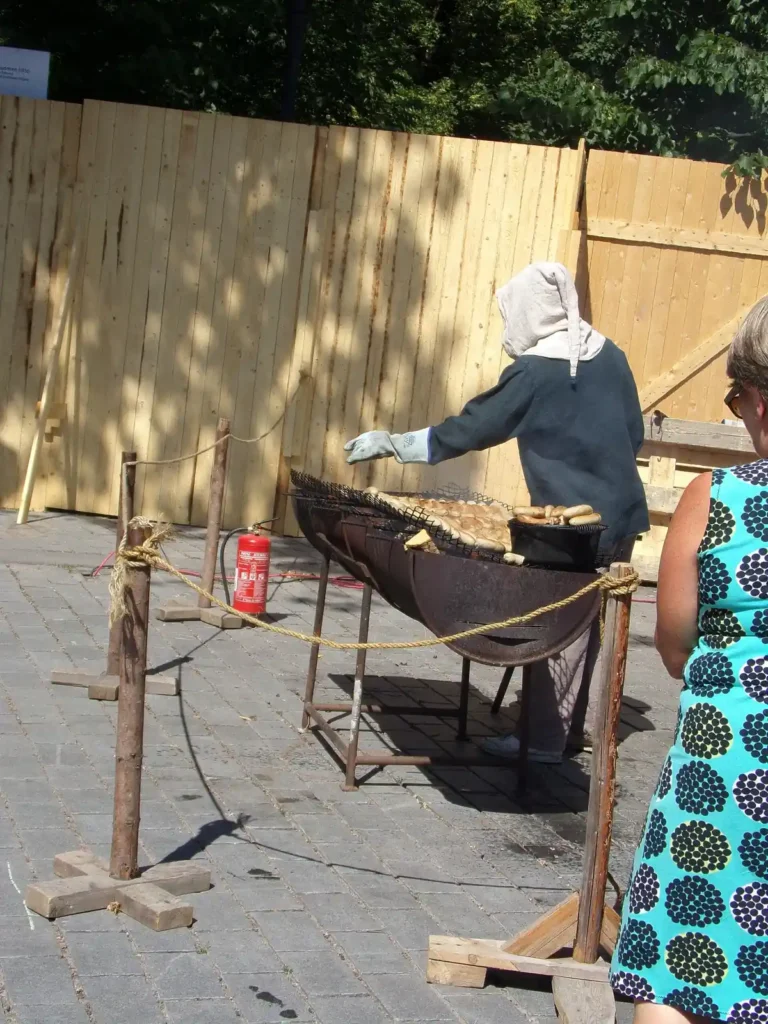
Downtown streets and a story retold in person form the centre of the weekend. The county layer and the regional fall guide both list a reenactment of the Dalton Raid, the set piece that connects the celebration to the ground it occupies. Around it, the county layer lists craft and food vendors and kids’ games, while the fall guide adds square dancing and vendors generally to the picture. Each item is fenced to the layer that printed it, because the two programme-bearing layers describe different weekends, and merging them would invent a programme no source quite prints. The state humanities layer, inviting readers to the two thousand twenty-six edition, describes the whole occasion in a few words as a festival and historical reenactment, which matches the shape the other layers give it: part street fair, part living history, set among the bank, the alley and the museum that carry the original story. Picture a modest community gathering rather than a large produced spectacle: the documented substance is the reenactment, the vendors, the games and the dancing, offered by a town revisiting the morning that made it famous.
Planning Your Visit
Timing is the one firm planning fact the record supplies. The county layer places the event on the first weekend in October, and both dated editions in the record, in two thousand twenty-three and two thousand twenty-six, fall on that weekend, so an early-October trip is the shape of the thing. The setting is downtown Coffeyville, around the commemorated raid sites, so the museum, the bank and Death Alley sit within the same few streets as the celebration, and a visitor can fold festival and historic ground into one walk. The money question has no published answer at all. No layer read states an admission charge for the main festival, and none states that entry is free, so this article adopts neither position; a visitor budgeting for the trip should simply know that the question is open in the published record. One warning deserves emphasis. Coffeyville Community College runs a companion marching festival in the same season under a borrowed form of the same name, at Veterans Memorial Stadium on a weekday, and that event has its own arrangements. Nothing printed about the college event should be read across onto the downtown gathering. October in southeast Kansas can swing between warm afternoons and cool evenings, so layers of clothing and comfortable shoes for standing on downtown streets are the practical basics.
For a useful comparison, see the Montgomery County Kansas Neewollah Festival for another county festival.
A Sample Itinerary
A weekend shaped by the documented programme might run like this. Arrive on Friday and begin at the Dalton Defenders Museum, which is open beyond the festival as a year-round attraction, to ground yourself in the eighteen ninety-two story before the crowds gather. Then walk the downtown sites: the Condon Bank and Death Alley, the ground the reenactment will retell. On Saturday, give the day to the festival itself. Watch the Dalton Raid reenactment, the element every programme-bearing layer names, and time the rest of the day around it. Browse the craft and food vendors the county layer lists, let children loose on the kids’ games, and stay for the square dancing the fall guide records. Because the layers do not print a timed schedule for the main festival, the itinerary stays deliberately loose; the reenactment is the fixed point, and the vendors, games and dancing fill the hours around it. Close the weekend with a slower second pass through the museum or the raid sites on Sunday morning, when the emptied streets make the story easier to read.
How It Compares
Two neighbours in the record need separating from the main event. The first is the Dalton Defender Days Marching Band Festival, run by Coffeyville Community College at Veterans Memorial Stadium. It borrows the name, falls in the same season, and was billed as a first annual event on the fourth of October two thousand twenty-two, with a second edition on the tenth of October two thousand twenty-three and a further edition on the eighth of October two thousand twenty-four. It is a college marching event held on a weekday, not the downtown festival, and none of its dates, venue or arrangements are imported here. The second neighbour is the Dalton Defenders Museum. The museum anchors the festival’s setting and shares its subject, but it is a year-round attraction rather than an annual gathering, open to visitors in seasons when no festival is running. Set against larger Kansas history festivals, the downtown Coffeyville event is smaller and more single-minded: one morning, one town, one act of civic self-defence, retold where it happened. That narrowness is its character, and the record, modest as it is, supports nothing grander.
A Visitor Checklist
- Aim for the first weekend in October, the placement the county layer states.
- Begin with the Dalton Defenders Museum to learn the eighteen ninety-two story before the reenactment.
- Walk the Condon Bank and Death Alley sites while downtown.
- Keep the college marching festival at Veterans Memorial Stadium separate in your plans; it is a different event.
- Bring clothing for both warm afternoons and cool October evenings.
- Do not assume an admission policy; the layers read state neither a charge nor free entry.
- Leave time for the craft and food vendors and the kids’ games.
- Stay for the square dancing recorded by the regional fall guide.
Beyond the Festival Days
The festival’s ground rewards a visitor who lingers. The Dalton Defenders Museum carries the story through the rest of the year, holding the raid’s memory in the town where it happened long after the October crowds leave. The Condon Bank and Death Alley remain standing parts of downtown, so the geography of the fifth of October eighteen ninety-two can be read on foot at any season. Independence, the county seat, sits in the same county for travellers building a wider southeast Kansas trip around the weekend. The honest limits of the record are worth repeating for anyone planning further: no organiser’s own site for the main festival was found, no admission policy is published in the layers read, and the festival’s own first year is nowhere stated. What exists is enough: a named, dated, placed tradition, left here at its true, modest size.
Why It Matters
The celebration’s significance starts with a choice of heroes. Plenty of towns connected to outlaw history market the outlaws; Coffeyville’s published name forms, in every variant, honour the defenders instead, the citizens who fought back on the fifth of October eighteen ninety-two. That choice shapes the event’s tone as the layers present it: a community hosting its own story, in the state humanities layer’s simple framing, rather than a production staged by a named organisation. The split in the published name, defender against defenders, singular against plural, is a small thing that tells a true one: this is a locally kept tradition, documented in county layers and guides rather than a polished organiser’s archive. The two thousand twenty-two observance, framed by a local-history layer as marking one hundred thirty years since the raid, shows the tradition still being used to count the town’s distance from its most famous morning. For Montgomery County, the gathering keeps that morning public property, retold each year on the streets where it happened, for residents and visitors alike.
Frequently Asked Questions
What happened in Coffeyville on the fifth of October eighteen ninety-two?
The Dalton Gang attempted a double bank robbery, and the town’s citizens defeated the attempt. Every layer read agrees that the festival exists to commemorate that morning and the townspeople who resisted it, which is why the defenders hold the name in every published form.
Why do the sources print the event’s name in more than one form?
Because different layers genuinely print it differently. A state humanities layer uses Dalton Defender Days, a county economic-development layer uses Dalton Defenders Days, and a travel guide uses the singular Dalton Defenders Day. This article keeps the forms unmerged rather than pretending one official spelling exists; none of the layers adds the word festival to the name.
Is the marching band festival at the stadium the same event?
No. The Dalton Defender Days Marching Band Festival is a Coffeyville Community College event at Veterans Memorial Stadium, held on a weekday in the same season. It borrows the name but has its own dates, venue and arrangements, and none of them belong to the downtown community festival’s record.
Who organises the downtown celebration?
No layer read names an organising body for the main festival. The state humanities layer says only that the community hosts it, and this article repeats that framing as printed rather than inventing a committee or sponsor that no source names.
What to Expect From the Next Montgomery County Kansas Dalton Defender Days Festival
How often is Montgomery County Kansas Dalton Defender Days Festival held?
The layers describe a recurring annual tradition. A county layer gives the standing placement as the first weekend in October, and the travel-guide layer speaks of the annual festival, so the rhythm the record supports is a gathering each autumn on that first October weekend.
When is the next Montgomery County Kansas Dalton Defender Days Festival?
The most recent dated edition in the layers read is the second and third of October two thousand twenty-six, documented by the state humanities layer. Following the standing placement the county layer states, the next gathering would fall on the first weekend of October; the layers name no specific future dates beyond the two thousand twenty-six edition.
Will the dates change?
No layer hints at any shift. The two dated editions, in two thousand twenty-three and two thousand twenty-six, both sit on the first weekend of October, matching the county layer’s standing placement, so a first-weekend date is the reasonable expectation, best confirmed close to the weekend itself.
Closing Thoughts
Coffeyville’s October gathering is a modest record wrapped around an immodest morning. The layers give a visitor a place, a weekend, a reenactment, vendors, games and dancing, and a town still telling the story of the day its citizens beat the Dalton Gang. They do not give a founding year, an organiser or an admission policy, and this article has invented none of them. What the record supports, it states; where it splits, it says so; and what remains is the real celebration, defenders rather than outlaws at the centre of the town’s own day.