McPherson County Kansas Midsummer’s Festival
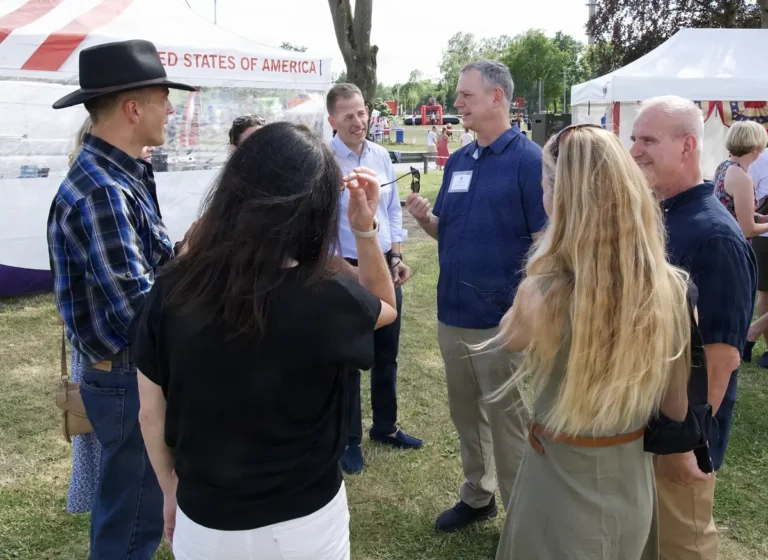
When daylight reaches its longest stretch of the year, the town of Lindsborg in McPherson County greets the Swedish summer solstice with a single day of dancing, food, games, and swimming known as the Midsummer’s Festival. A university events calendar and local news coverage both print the name in exactly that form, and one travel layer adds a Swedish gloss, presenting the occasion as the Midsummer’s Festival (Midsommarfest). The celebration returns on the third Saturday of June, and the fullest account of it, carried by local news, describes a morning fun run, food stalls serving Swedish pancakes and Viking-on-a-Stick, a Kubb tournament, folk dancing, craft demonstrations, and free swimming that carries on into the evening. Lindsborg is not the county seat of McPherson County; that distinction belongs to the city of McPherson. What this town stages instead is a compact gathering shaped by Swedish custom, centred on the corner of Lincoln and Main and on the park beside the municipal swimming pool.
About the Festival
The Midsummer’s Festival is an annual Lindsborg celebration tied to the solstice, the point in the year when the day outlasts every other. Local news and the travel layers agree on its placement: the third Saturday of June, a single day from morning through late evening. Coverage of the day names no formal organising body, and none is claimed here. Local news instead quotes the festival’s president directly, and identifies the Lindsborg Swedish Folkdancers as the group serving food at the event. Eating and activity are split between two anchors in town. The food vendors set up at the corner of Lincoln and Main, while much of the remaining programme unfolds at the park next to the municipal swimming pool, where the swimming itself takes place. For the two thousand twenty-six edition, a university events calendar lists the date as the twentieth of June, that year’s third Saturday, while giving the venue as still to be determined, a reminder that the fine details of each year’s gathering are settled closer to the day itself.
The name itself carries a small lesson in the town’s heritage. Alongside the English form, one travel layer prints the Swedish word Midsommarfest in parentheses, tying the Lindsborg celebration by name to the midsummer festivals of Sweden. The English name, however, is the one used consistently by the sources closest to the event, and nothing in the layers suggests a larger formal structure behind the celebration; it reads as a community occasion, staffed by local groups and fitted into the town’s ordinary public spaces for a single Saturday.
Quick Facts
| Fact | Detail |
| Published name | Midsummer’s Festival, also glossed as Midsommarfest |
| Host town | Lindsborg, in McPherson County, Kansas |
| County seat | McPherson; Lindsborg does not hold that role |
| Annual placement | The third Saturday of June |
| Documented edition | Seventeenth of June, two thousand twenty-three |
| Listed edition | Twentieth of June, two thousand twenty-six |
| Gathering points | The corner of Lincoln and Main, and the park beside the municipal swimming pool |
| Admission | Free; food is sold by vendors |
| Signature elements | Maypole dancing, Kubb, Swedish foods, and free swimming |
History
The roots of the day lie in the Swedish midsummer tradition, the old solstice celebration built around the longest day of the year, when communities gathered outdoors to dance, eat, and mark the height of summer. Lindsborg’s version keeps that shape: dancing around a maypole, flower crowns, traditional dishes, and music performed in the open air. Local news observes that the June festival piggybacks on the town’s much larger biennial tradition, Svensk Hyllningsfest, borrowing energy and audience from a heritage celebration that has long defined how Lindsborg presents its Swedish character to visitors. The layers gathered for this account print no founding year for the Midsummer’s Festival, and no honest age can be assigned to it from them. One caution is worth recording. A content-farm guide describes a festival running for several days, but that portrait conflicts with the local-news account of a one-day event, and it is disregarded here in favour of the reporting produced closest to the town.
What can be said of the festival’s own past is therefore a matter of tradition rather than chronology. The customs on display, the maypole, the flower crowns, the folk dancing, and the shared outdoor meal, are the inheritance of Swedish midsummer as it has been observed for generations, transplanted to a Kansas town whose identity is bound up with Swedish settlement. The connection to Svensk Hyllningsfest places the June day inside a longer local habit of marking heritage in public, even though the surviving layers do not say when the midsummer day itself was first held.
For a useful comparison, see the McPherson County Kansas Svensk Hyllningsfest Festival for another county festival.
What to Expect
A visitor who reaches Lindsborg on the festival morning steps into a day that begins early and stays outdoors. Local news documents the seventeenth of June edition from two thousand twenty-three in full, and its schedule shows how the hours fill. A fun run sets off at eight in the morning. Food vendors serve from nine in the morning until five in the afternoon, offering Swedish pancakes, Viking-on-a-Stick, pulled pork sandwiches, and Swedish limeades, with the Lindsborg Swedish Folkdancers behind the food service. A Kubb tournament gives the lawn games a competitive edge, while two sets of folk dancers perform traditional Swedish dancing across the day. Craft demonstrations run alongside the dancing, and live music threads through the programme. The maypole stands at the centre of the celebration, with dancing around it and flower crowns worn in the solstice manner. Swimming is woven through the schedule rather than added at the edges: the city pool opens for a free swim during the day, and the evening closes with a free swim finale running from half past eight until half past ten, a cool finish after the longest day of the year.
The balance of the programme matters to its character. Nothing in the documented schedule depends on a headline performer or a ticketed enclosure; the dancing is done by local folk dance groups, the food is served by one of those groups, and a visitor can drift between the food corner and the park, catch a dance set, follow the Kubb tournament, and still have the afternoon swim and the evening finale ahead.
Planning Your Visit
Because the whole celebration fits inside one day, arriving in the morning rather than the afternoon makes a real difference to what a visitor can see. The documented schedule starts at eight with the fun run, and the food stalls wind down at five, so anyone hoping to taste the Swedish pancakes or watch the Kubb tournament should plan around those anchors. Admission to the festival costs nothing, according to local news quoting the festival president, although the food itself is sold, so carrying money for the stalls is sensible. The two halves of the day sit in different spots: food at the corner of Lincoln and Main, and the park activities beside the municipal swimming pool, and comfortable shoes help with moving between them. Anyone travelling for the two thousand twenty-six edition should note that the university events calendar listed that year’s venue as to be determined, so checking the event’s own website or social page before setting out is the surest way to confirm where each element will be held.
It is also worth planning the evening, not just the morning. The festival’s most distinctive hour may be its last one, the free swim finale that runs until half past ten at night, so visitors who leave after the food stalls close at five will miss the ending the schedule builds toward. Bringing swimwear, even on the chance of joining the daytime swim, keeps both options open.
A Sample Itinerary
Begin at eight in the morning with the fun run, or simply watch the runners set the day in motion. Move on to the food stalls at the corner of Lincoln and Main once they open at nine, starting with Swedish pancakes and a Swedish limeade while the morning is still cool. Spend the middle of the morning around the craft demonstrations and the first sets of folk dancing, then follow the Kubb tournament as it works through its matches. Return to the vendors before five for a pulled pork sandwich or a Viking-on-a-Stick, since the food service ends in the late afternoon. Take the free swim at the city pool during the day to rest between activities, and keep something in reserve for the evening, when the free swim finale runs from half past eight to half past ten and closes the festival under the long solstice light.
How It Compares
Lindsborg keeps three distinct heritage celebrations on its calendar, and the Midsummer’s Festival is the lightest of them. Svensk Hyllningsfest, held in October of odd-numbered years, is the town’s major biennial Swedish festival, a far larger production to which local news explicitly links the June day. Millfest, arriving on the first Saturday in May, is another separate event with its own identity. Against those neighbours, the Midsummer’s Festival stands out for its brevity and its focus: one day, one season, and a programme built tightly around solstice customs of dancing, food, lawn games, and swimming rather than around parades or headline acts. Its free admission and its pool-party finish give it a relaxed, neighbourhood feel that the bigger October gathering, for all its scale, does not try to reproduce.
Festival Checklist
- Confirm the third Saturday of June for the year of the visit
- Arrive before eight in the morning to catch the fun run
- Carry money for the food stalls, since dishes are sold rather than given
- Try the Swedish pancakes and a Viking-on-a-Stick before service ends at five
- Watch both sets of folk dancers and the dancing around the maypole
- Leave time for the Kubb tournament and the craft demonstrations
- Pack swimwear for the free daytime swim at the city pool
- Stay for the free evening swim finale, ending at half past ten
- Check the event’s own website before travelling, since venues can be listed as to be determined
Beyond the Festival
A trip built around the third Saturday in June can stretch into a short education in how Lindsborg organises its year around Swedish heritage. The same town that dances around a maypole in June welcomes visitors back in October of odd-numbered years for Svensk Hyllningsfest, its principal heritage festival, and opens the season earlier still with Millfest on the first Saturday in May. Each event is run separately and carries its own character, so a traveller who enjoys the informality of the midsummer day can return for the larger autumn gathering with fresh eyes. Even within the festival day itself, the park beside the municipal swimming pool and the food corner at Lincoln and Main show how the town folds its celebrations into everyday public spaces rather than fencing them away in a dedicated ground.
Why the Festival Matters
The significance of the Midsummer’s Festival lies in how directly it keeps a solstice custom alive as a living practice rather than a museum piece. The maypole is raised and danced around, flower crowns are worn, folk dancers perform in sets, and traditional foods are cooked and served by a local folk dance group, all of it passed along by participation. Keeping the day free to attend widens that participation, letting neighbours and visitors alike join without a ticket barrier. The festival also sustains the rhythm of Lindsborg’s heritage calendar, holding a place in June between Millfest in May and the biennial October celebration, so that the town’s Swedish identity is renewed across the year instead of being carried by a single weekend.
There is a further, quieter significance in the way the celebration assigns its work. The food is served by folk dancers, the president speaks for the day in the local press, and the town’s pool and park supply the stage. Heritage here is not presented by an outside organisation; it is cooked, danced, and swum by the community itself.
Frequently Asked Questions
Why does the festival fall on the third Saturday of June?
The placement follows the solstice itself. Local news and the travel layers agree that the celebration is held each year on the third Saturday of June, which keeps it close to the longest day of the year, the occasion the Swedish midsummer tradition exists to honour.
Which dishes did the food vendors serve at the documented edition?
Local news lists Swedish pancakes, Viking-on-a-Stick, pulled pork sandwiches, and Swedish limeades, served from nine in the morning until five in the afternoon at the corner of Lincoln and Main. The Lindsborg Swedish Folkdancers are identified as the group serving the food.
How does swimming fit into a heritage festival?
Quite naturally, according to the local-news schedule. The park beside the municipal swimming pool hosts much of the day, the city pool offers a free swim during the day, and the programme ends with a free evening swim finale from half past eight until half past ten.
Is this the same celebration as Svensk Hyllningsfest?
No. The two are separate Lindsborg events. Svensk Hyllningsfest is the town’s biennial heritage festival, held in October of odd-numbered years, while the Midsummer’s Festival is a one-day June celebration, although local news notes that the June day draws strength from the older tradition.
What to Expect From the Next McPherson County Kansas Midsummer’s Festival
How often is McPherson County Kansas Midsummer’s Festival held?
Local news and the travel layers describe an annual event fixed to the third Saturday of June, and the dated listings fit that rhythm: the seventeenth of June in two thousand twenty-three and the twentieth of June in two thousand twenty-six are each the third Saturday of their month.
When is the next McPherson County Kansas Midsummer’s Festival?
The latest dated listing in the record is the university events calendar entry for the twentieth of June, two thousand twenty-six. Working from the established pattern, the following celebration would fall on the third Saturday of June in the next year, with its details announced nearer the time.
Will the dates change?
The calendar date moves every year, because the festival is pinned to the third Saturday of June rather than to a fixed day of the month. The placement itself has stayed consistent across the layers, although smaller details can shift, as shown by the two thousand twenty-six listing giving the venue as to be determined.
A Final Word
For a single day each June, Lindsborg turns the longest stretch of daylight into a programme of dancing, traditional food, lawn games, and evening swimming. The Midsummer’s Festival asks little of its visitors, no ticket and no planning beyond showing up in the morning, and it gives back a clear picture of how a small Kansas town keeps Swedish solstice customs woven into its ordinary streets and parks.