Lowndes County Alabama Okra Festival
On the last Saturday of August, a small community in the Alabama Black Belt fills with the smell of fried okra, the sound of live music, and the bright colors of folk art. The Lowndes County Okra Festival celebrates the one crop that survived an unusually hot summer in 2000 and grew into one of the county’s proudest traditions.
Lowndes County sits in central Alabama, part of the fertile Black Belt, with Hayneville as its county seat and Fort Deposit as its largest town. The festival is held in Burkville, a small community west of Montgomery, and it draws okra lovers from across the state for a day of food, art, and community.
What started as a neighborhood gathering has become a significant event featuring area artists and farmers. It is a festival with a purpose: celebrating local African American culture, supporting rural artists, and giving a county with few resources a day to be proud of.
| Festival name | Lowndes County Okra Festival |
| Location | Burkville, Lowndes County, Alabama |
| Typical timing | Last Saturday in August |
| Format | Community food, art, and music festival |
| Admission | Free |
| Organizers | REACH (Rural Enrichment Assessing Community Hands) |
| Signature features | Okra dishes, folk art, live music, quilt education |
About the Okra Festival
The Okra Festival is a celebration of Southern culture and community held each August in Burkville. Its centerpiece is okra itself, prepared in dozens of ways: fried, boiled, baked, stuffed, sauteed, spiced, and folded into gumbo. Food vendors serve recipes that put the vegetable to work in dishes both familiar and surprising.
Beyond the food, the festival is an arts event. Area artists and craftspeople set up booths, live music plays through the day, and an art education component teaches the history of quilt making and the stories told by quilt patterns and paintings. The result is a festival that celebrates both the land and the people who work it.
The event is run by a local nonprofit that focuses on rural community enrichment, and it has become a bright spot for a county that faces real economic challenges. Readers who value festivals rooted in a region’s own heritage may also appreciate the Limestone County Alabama Athens Storytelling Festival, which preserves another Southern tradition.
How the Festival Began
The festival’s origin story is a good one. It began in 2000, after an unusually hot summer left one crop standing in local fields: okra. Neighbors gathered to celebrate the vegetable that had survived the heat, and the gathering grew. What was a small community party became a yearly event and, over time, one of Lowndes County’s most popular occasions.
Two local women, Barbara Evans and the late Alice Stewart, founded the festival, and it expanded under the leadership of a local nonprofit. As it grew, the organizers moved it to a larger site and added attractions for families, including a bounce house for children and an art contest for young people. Attendance has reached the hundreds and continues to climb.
- Started in 2000 to celebrate a surviving okra crop
- Founded by Barbara Evans and the late Alice Stewart
- Grew from a neighborhood party into a county-wide event
- Expanded with art contests and family activities
- Now draws hundreds of visitors each August
Lowndes County’s Okra Heritage
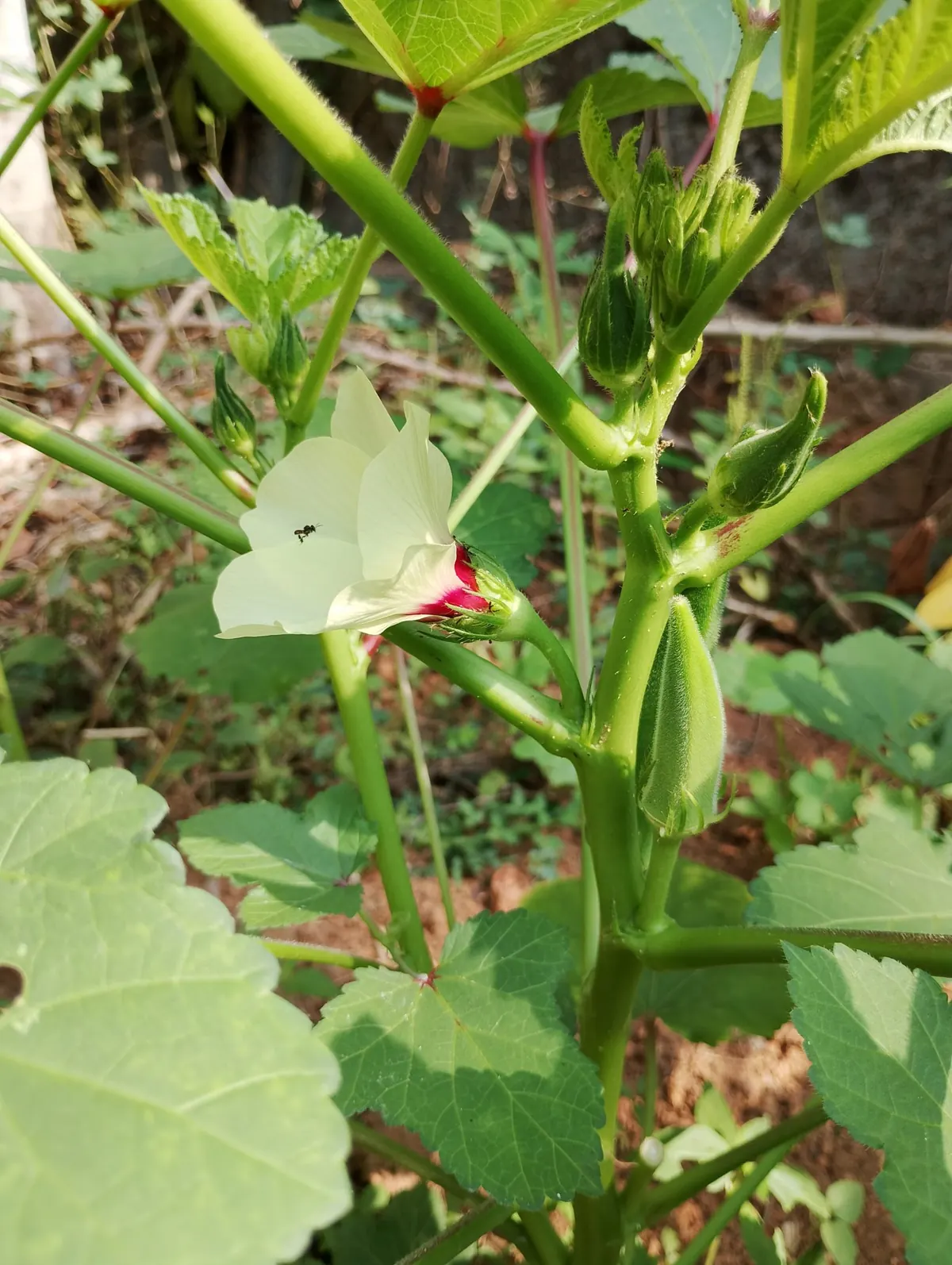
Okra is a fitting emblem for Lowndes County. The vegetable came to the American South from Africa and became a staple of Southern cooking, especially in the Black Belt, where the soil and the growing season suit it. In a county with a large African American population and a deep agricultural history, celebrating okra is also a way of celebrating that heritage.
Lowndes County was founded in 1830 and named for a South Carolina congressman. Its Black Belt soil once supported vast cotton plantations worked by enslaved people, and the county later became a landmark in the civil rights movement. The Okra Festival turns that complex history toward something forward-looking: a day of good food, local art, and shared pride.
What to Expect at the Festival
Okra in every form
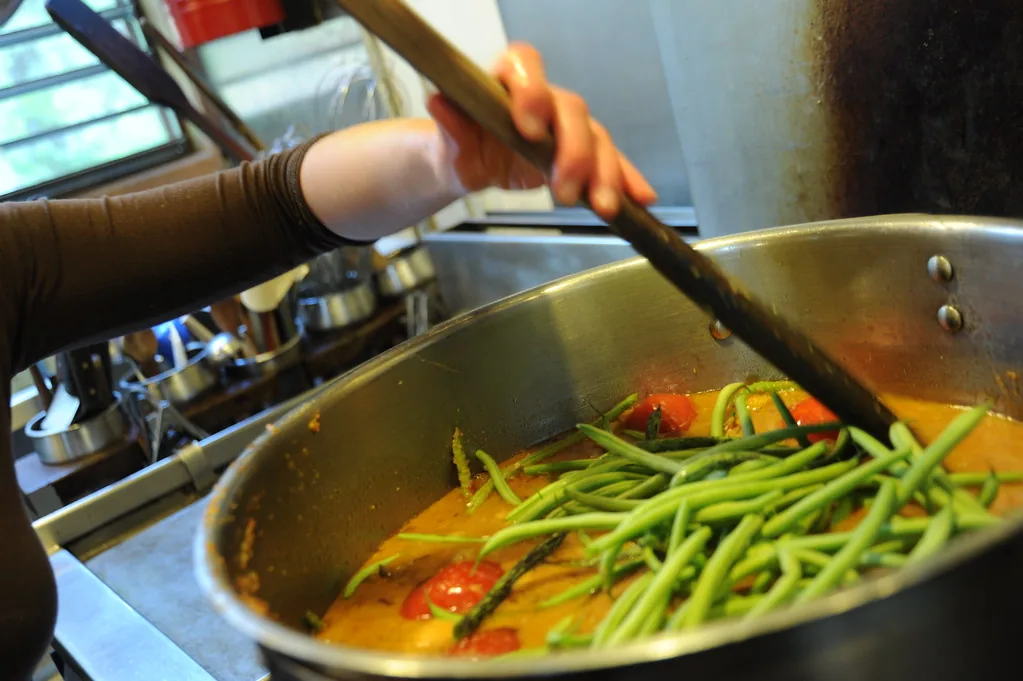
The food is the main draw. Vendors serve okra fried crisp, stewed with tomatoes, baked into casseroles, and folded into gumbo, along with plenty of other Southern fare. For anyone who has only eaten okra one way, the festival is a chance to taste how versatile the vegetable can be. Fresh okra is usually available too, for those who want to cook it at home.
Folk art and crafts
Art is woven through the festival. A local folk art house sits at the center of the action, filled with brightly painted work and messages about the region’s history. Area artists and craftspeople sell paintings, quilts, and handmade goods, and the art education program teaches visitors about the stories hidden in quilt patterns. Even paper made from okra stalks has appeared at the festival.
Music and family activities
Live music from visiting and local performers plays through the day, giving the festival a relaxed, celebratory feel. Families with children find plenty to do, including a bounce house and an art contest for young people. The atmosphere is welcoming and unhurried, which is part of why visitors return year after year.
Planning Your Visit
Getting to Burkville
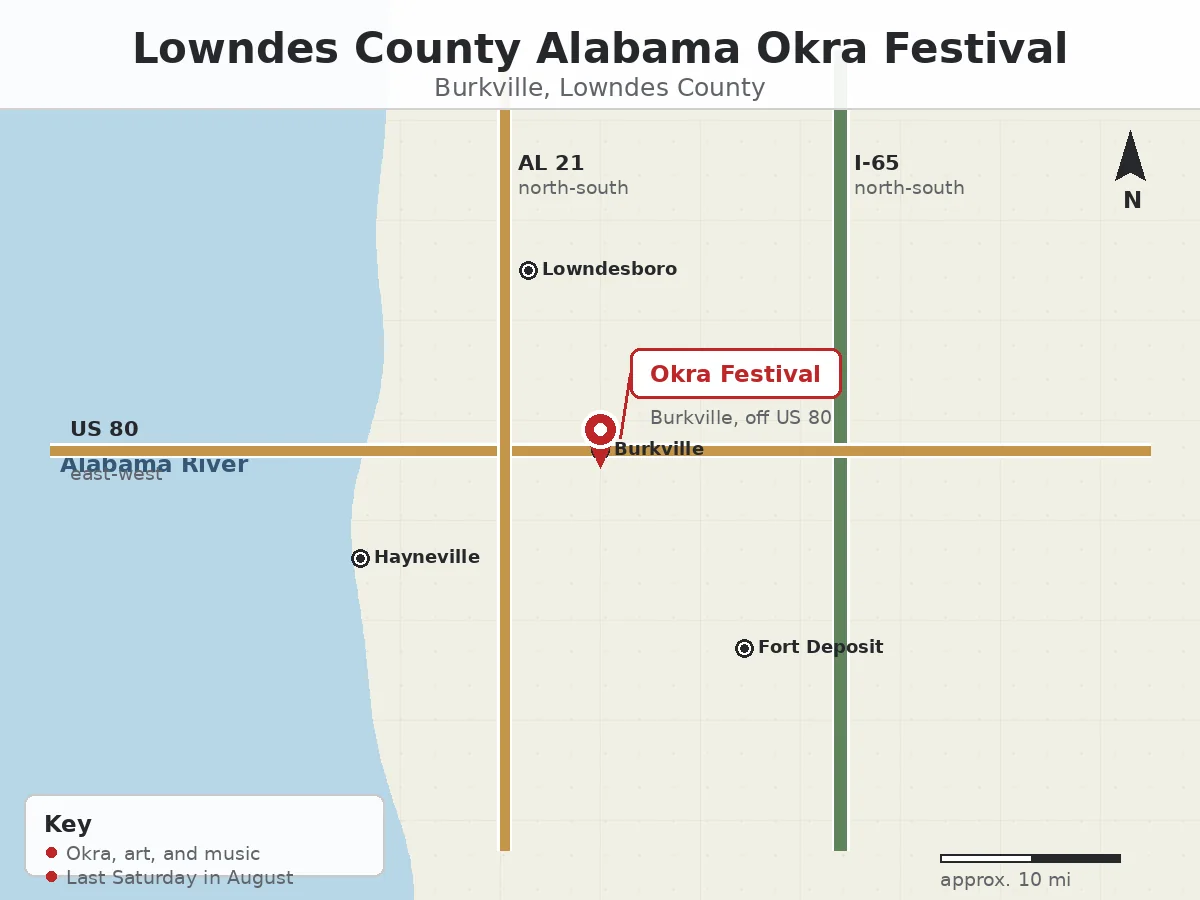
Burkville sits about 20 miles west of Montgomery, reached by U.S. Highway 80 and Alabama Highway 21. The festival site is on Alabama Highway 21 North, and signs usually direct visitors from the main road. The drive from Montgomery takes about half an hour, and the trip from Birmingham is roughly an hour and a half.
Where to stay
Lodging is limited in rural Lowndes County, so most out-of-town visitors stay in Montgomery and drive in for the day. Montgomery offers a full range of hotels, restaurants, and other attractions, making it a convenient base for a festival weekend.
Admission and logistics
The festival is free to attend and runs from mid-morning into the late afternoon. Bring cash for food and crafts, wear comfortable shoes, and plan for August heat, since the event is largely outdoors. Parking is available near the site, and the atmosphere is casual.
A Day at the Okra Festival
A visit to the Okra Festival moves at an easy pace. Arrive in the morning to browse the crafts and get a first plate of okra before the lunch rush. The middle of the day is the busiest, with music, food, and art all in full swing.
Between bites, visitors wander the vendor booths, watch the musicians, and stop into the folk art house to see the paintings and the messages inside. Families often spend time at the children’s activities, and the art contest gives young visitors a chance to show their work.
By late afternoon the crowd thins and the festival winds down. Many visitors use the rest of the day to explore the surrounding Black Belt, stopping in Hayneville or Lowndesboro on the way back to Montgomery.
How It Compares to Nearby Events
The Black Belt has a distinctive festival culture, and the Okra Festival is one of its best-known gatherings. The table below places it alongside a few other events in the region.
| Festival | Focus | Typical season |
| Okra Festival | Okra, folk art, and live music | August |
| Calico Fort Arts and Crafts Fair | Arts and crafts in Fort Deposit | Spring |
| Black Belt Juneteenth Festival | Juneteenth commemoration and culture | June |
| Orrville Festival | Community festival in Orrville | Fall |
A Festival Checklist
- Bring cash for food vendors and craft booths
- Arrive early for the best selection of fresh okra
- Wear a hat and bring water for the August heat
- Take time to visit the folk art house on site
- Plan a stop in Hayneville or Lowndesboro on the way home
Beyond the Festival
Lowndes County rewards a slower look. Hayneville, the county seat, holds a Greek Revival courthouse still in use from the 1850s and sits on the Selma to Montgomery March National Historic Trail. The Lowndes Interpretive Center tells the story of the voting rights struggle that made the county a landmark in American history.
Nearby Montgomery adds the state capital’s museums, the Alabama River, and a deep civil rights legacy. For visitors who come for the Okra Festival, extending the trip to explore the Black Belt turns a single afternoon into a fuller understanding of the region.
Why the Okra Festival Matters
The Okra Festival matters because it celebrates a place on its own terms. In a rural county with limited resources, the event brings people together, supports local artists and farmers, and gives residents a day to share their culture with visitors from across the state.
It also keeps a piece of Southern food heritage alive. Okra traveled from Africa to the South and became part of the region’s cooking, and a festival devoted to it honors that history in the most direct way possible: by cooking it well and sharing it with anyone who comes.
Festival Area Map
The Okra Festival is held in Burkville, Lowndes County, Alabama, about 20 miles west of Montgomery off U.S. Highway 80 and Alabama Highway 21 in the heart of the Black Belt.
Frequently Asked Questions
When is the Okra Festival held?
It is held on the last Saturday in August each year, typically from mid-morning until late afternoon. The exact date is announced by the organizers ahead of the festival.
Where is the festival held?
It takes place in Burkville, in Lowndes County, Alabama, about 20 miles west of Montgomery. The site is on Alabama Highway 21 North, with signs directing visitors from the main roads.
Is there an admission fee?
No. The festival is free to attend. Food and crafts are sold by vendors, so it helps to bring cash, but there is no ticket required to enter.
What food is available?
Okra is served in many forms, including fried, stewed, baked, stuffed, and in gumbo, along with other Southern dishes. Fresh okra is usually available for purchase, and food vendors offer a range of options for the whole family.
Is the festival family-friendly?
Yes. The festival includes activities for children, such as a bounce house and an art contest for young people. The atmosphere is relaxed and welcoming, making it a good outing for families.
Who organizes the festival?
It is organized by a local nonprofit focused on rural community enrichment, with help from volunteers and sponsors. The festival was founded by two local women and has grown under community leadership.
What to Expect From the Next Okra Festival
The festival has been held every year since 2000 and continues to grow, with attendance reaching the hundreds and new activities added along the way. Organizers announce the date each summer ahead of the August event.
How often is the Okra Festival held?
It is held annually, once each summer, on the last Saturday in August.
When is the next Okra Festival?
The next edition is expected the following August, following the pattern of previous years. The exact date is announced by the organizers in advance.
Will the location change?
The festival has been held at its current site on Alabama Highway 21 North in recent years. Check with the organizers before you go, as details can be adjusted from year to year.
Last updated: October 2026
The Lowndes County Okra Festival is a reminder that the best festivals often start with something small. A single heat-hardy crop, a neighborhood gathering, and a few dedicated organizers grew into a celebration of food, art, and rural life that draws visitors from across Alabama. For anyone who loves Southern cooking and community spirit, it is an August date worth the drive.


One Comment