Logan County Kentucky Dog Days of Summer Festival
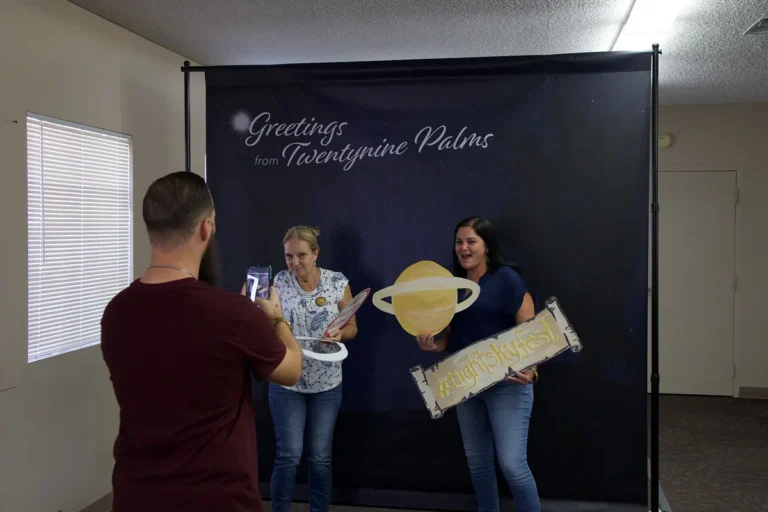
August in Auburn has a festival named for the season itself. Festival guide layers print the event as the Dog Days of Summer Festival, the wording carried on the sheet behind this article, and they place it in downtown Auburn, in Logan County, Kentucky. The county tourism commission’s newsletters, which carry most of the surviving record, use shorter name forms, set out in the About section below exactly as printed. Between the guide layers and the newsletters, dated listings survive for four Augusts in a row: two thousand twenty-three, two thousand twenty-four, two thousand twenty-five and two thousand twenty-six. One of those editions, the two thousand twenty-four festival, comes with an hour-by-hour timetable. The remaining listings are thinner but agree on the shape of the day: vendors downtown from three in the afternoon, a band in concert, and music from seven to ten in the evening.

About
The published name takes several shapes, kept separate here rather than blended. Festival guide layers print “Dog Days of Summer Festival”. County tourism commission newsletter layers print “Dog Days of Summer” and “Auburn’s Dog Days of Summer”, and the two thousand twenty-four newsletter form is “Annual Dog Days of Summer in Auburn”. Each wording belongs to the layer that printed it, and none is treated as the one official title.
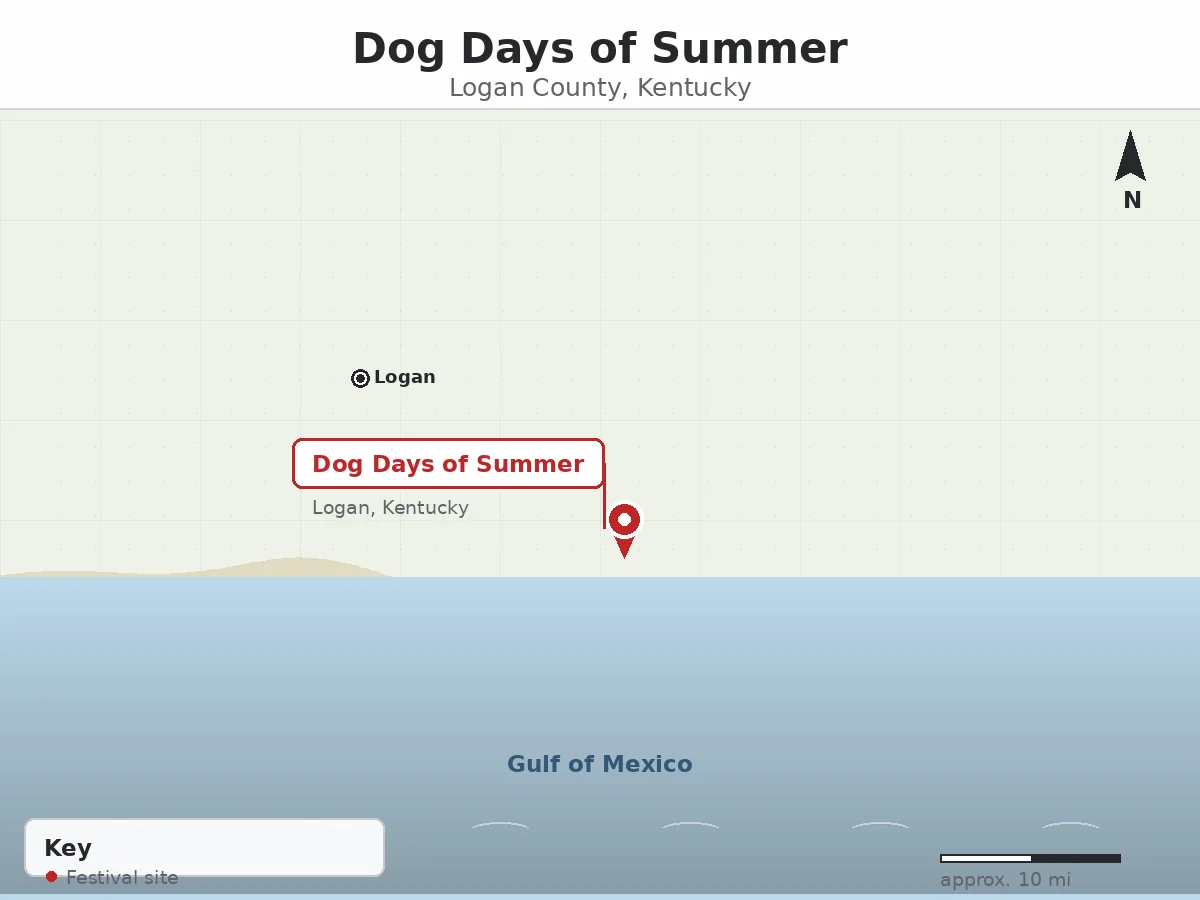
Auburn is a small town in Logan County, in the southern part of Kentucky. Auburn does not hold the county seat: historical-marker and reference layers place it at Russellville, and the festival record never claims the seat for Auburn. The festival belongs to downtown Auburn, where its vendors, games and parades are set, with companion events at Auburn Park.
Auburn Tourism hosts the event. The county tourism commission’s two thousand twenty-four newsletter bills it as “Hosted by Auburn Tourism”, and the listings through which the festival is documented appear in the newsletters of the Logan County Tourist & Convention Commission. The layers read name no further organising body. The newsletters print Auburn Tourism telephone numbers, recorded here for their existence only and not reproduced.
Quick Facts
| Item | Detail |
| Published name | Dog Days of Summer Festival |
| Newsletter name forms | Dog Days of Summer; Auburn’s Dog Days of Summer; Annual Dog Days of Summer in Auburn |
| Town | Auburn, Logan County, Kentucky |
| County seat | Russellville, not Auburn |
| Setting | Downtown Auburn, with companion events at Auburn Park |
| Host | Auburn Tourism |
| Listings carried in | Logan County Tourist & Convention Commission newsletters |
| Documented editions | August two thousand twenty-three, two thousand twenty-four, two thousand twenty-five and two thousand twenty-six |
| Admission | No price stated in the layers read |
History
The layers read offer no beginning for this festival. No founding year appears in them, and no first-edition account is printed, so no origin story is constructed here and no date is worked out from the run of listings. What the record holds instead is a sequence of dated appearances, and that sequence is the history written here.
For a useful comparison, see the Logan County Kentucky Tobacco and Heritage Festival for another county festival.
The earliest listing found is for the twelfth of August two thousand twenty-three, when a festival guide layer lists the “Dog Days of Summer Festival – Auburn” on that date. A state tourism-promotion layer adds colour for the same year, describing food trucks, vendors, raffles and games in downtown Auburn. The fullest account arrives a year later. For the ninth and tenth of August two thousand twenty-four, the county tourism commission’s newsletter prints a timetable detailed enough to reconstruct the whole occasion, and that timetable anchors the What to Expect section below.
The ninth of August two thousand twenty-five brings “Dog Days of Summer in Auburn” with vendors from three in the afternoon and a band in concert. In two thousand twenty-six the festival appears on the fifteenth of August, and for the first time in the layers read it gains a companion event on the evening before. Four consecutive August listings, all carried in the county’s own tourism channels, are the whole of the documented past, and they are enough to show a settled annual fixture without showing where it began.
What to Expect
The two thousand twenty-four timetable is the best guide to the festival’s character. The county tourism commission’s newsletter prints craft vendors from three to seven in the afternoon and concessions from three to ten in the evening, so the downtown ground is occupied from mid-afternoon until the music ends. A silent auction runs from three to six in the afternoon, a raffle is held, and a coloring contest appears among the afternoon items. Inflatables and carnival games run from three to six in the afternoon.
Golf carts get two outings of their own. A golf cart show runs from three to five in the afternoon, and a golf cart parade follows at eight in the evening, after the light has begun to fade. Between them, a kids parade steps off at half past six in the evening. Live music closes the day, running from seven to ten in the evening, so the final hours belong to the concert while the concessions are still serving.
Later listings keep the same skeleton in shorter form. The two thousand twenty-five newsletter listing keeps vendors from three in the afternoon and a band in concert, with music from seven to ten in the evening. The two thousand twenty-six listing again puts the festival downtown at three in the afternoon with a band in concert, and adds the companion “Dog Days of Summer Glow Run 5K” at Auburn Park at six in the evening on the fourteenth of August, the day before the festival itself. In some years, then, the occasion stretches across two settings and two evenings; in others it sits inside a single downtown afternoon and night.
Planning Your Visit
The documented festival runs from afternoon into evening, and planning follows from that. In every dated listing the downtown programme begins at three in the afternoon, so the documented day is built from mid-afternoon onward, and there is little reason to arrive in the morning. The two thousand twenty-four timetable is the fullest guide to pacing: the vendor and auction hours sit in the afternoon, the parades fall in the early and later evening, and the music runs to ten at night, so anyone wanting the whole arc should stay until the concert ends.
Because the fullest timetable belongs to two thousand twenty-four, treat its hours as the shape of the event rather than as a promise for any other year. The two thousand twenty-five and two thousand twenty-six listings confirm the downtown start at three and the evening concert without repeating every item, so a future edition’s own newsletter listing is where the running order should be confirmed before travelling. In two thousand twenty-six the companion glow run fell on the evening before the festival, at Auburn Park rather than downtown, and anyone entering it needs a separate plan for that night.
On admission, the layers read are silent: none of them prints a price, and none is quoted here. The newsletters do print Auburn Tourism telephone numbers, so questions the listings leave open can be put to the host directly using the numbers published there.
A Sample Itinerary
A sample day built from the two thousand twenty-four timetable might run as follows. Arrive downtown for the opening of the craft vendors and concessions at three, and give the first hour to the stalls. The silent auction runs until six, so bids belong in the earlier part of the afternoon; the golf cart show, which runs from three to five, fits the same window. Families can split the middle of the afternoon between the inflatables and carnival games, which also end at six, and the coloring contest.
At half past six, gather for the kids parade. Then take supper from the concessions, which serve until ten, and settle in for the music from seven. The golf cart parade at eight interrupts the concert evening, decorated carts rolling through while the band plays on either side of it. Stay to ten for the end of the music. In a year with a glow run, the evening before belongs to Auburn Park: the run starts at six, leaving that night clear of any clash with the downtown programme.
How the Documented Editions Compare
The four editions are not documented to the same depth, and the differences are worth stating plainly. Two thousand twenty-three is known from a festival guide listing and a state tourism-promotion description, enough to fix the date, the downtown setting and a handful of elements, and no more. Two thousand twenty-four is documented hour by hour, the only edition for which a full timetable survives. Two thousand twenty-five returns to listing level, with a start time, a concert and music hours. Two thousand twenty-six matches that brevity but adds something new, the companion glow run at Auburn Park on the previous evening.
Read together, the listings show a stable core and a changing edge. Vendors from three in the afternoon and an evening concert appear in every account that gives hours at all. The parades of children and of golf carts, the auction, the raffle and the games are documented fully only for two thousand twenty-four, though the programme summary across the layers names them among the festival’s regular elements. What changes year to year, on this record, is chiefly the exact August date: the twelfth in two thousand twenty-three, the ninth and tenth in two thousand twenty-four, the ninth in two thousand twenty-five and the fifteenth in two thousand twenty-six.
A Visitor Checklist
- Arrive downtown by three in the afternoon, when the documented programme begins
- Bring cash for the raffle, the silent auction and the concession stands
- Check the current newsletter listing for the year’s own running order
- Give children time at the inflatables and carnival games before six
- Be in place by half past six for the kids parade
- Stay past eight in the evening for the golf cart parade
- In a glow run year, plan the previous evening at Auburn Park separately
Beyond the Festival Ground
The festival’s second setting is Auburn Park, which hosts the companion “Dog Days of Summer Glow Run 5K” at six in the evening on the fourteenth of August two thousand twenty-six. As the newsletters present it, the run belongs to the festival weekend but sits away from the downtown streets, giving the occasion two homes, the park and the town centre.
Two similarly named items in the same sources are not this festival, and they are kept apart here. A Louisville brewery holds a same-named “Dog Days of Summer” event for a beer release, in a different county, and it has nothing to do with Auburn’s weekend. The Logan County Animal Shelter’s recurring “Doggie Day” dates appear in the same county newsletters as the festival listings but form a separate item in those pages. Neither is imported into this article’s account of the Auburn event.
Why the Festival Matters
In the county’s own tourism newsletters, the Dog Days of Summer is Auburn’s August anchor, the listing that gives the town a full afternoon and evening of its own in the late-summer calendar. Its significance, on the documented record, lies in the mixture. Craft vendors and concessions give it the shape of a street fair; the silent auction and raffle give it a fundraising flavour; the inflatables, carnival games and kids parade aim it at families; and the golf cart show and parade give it a character no generic fair quite has, turning an everyday vehicle into the parade itself.
The glow run added in two thousand twenty-six suggests the event is still extending itself, reaching from the downtown blocks to Auburn Park and from one evening to two. A festival whose past cannot be dated can still be shown to be alive, and four consecutive August listings in the county’s own channels show exactly that.
Frequently Asked Questions
Which of the printed names is the festival’s real title?
The layers do not settle on one. Festival guide layers print “Dog Days of Summer Festival”, while the county tourism commission’s newsletters print shorter forms, including “Auburn’s Dog Days of Summer” and the two thousand twenty-four form “Annual Dog Days of Summer in Auburn”. This article keeps each form with the layer that printed it.
What does the fullest timetable show?
The two thousand twenty-four newsletter prints an hour-by-hour schedule: vendors and concessions from three in the afternoon, a silent auction and carnival games until six, a kids parade at half past six, live music from seven to ten in the evening and a golf cart parade at eight.
Is a gate price given anywhere in the sources?
No admission price appears in any of the layers read, and none has been assumed in this article. The newsletters print Auburn Tourism telephone numbers, the documented route for questions the listings leave unanswered.
Does the festival reach beyond downtown Auburn?
In two thousand twenty-six it did. The companion “Dog Days of Summer Glow Run 5K” was listed at Auburn Park at six in the evening on the fourteenth of August, the night before the downtown festival on the fifteenth.
What to Expect From the Next Logan County Kentucky Dog Days of Summer Festival
How often is Logan County Kentucky Dog Days of Summer Festival held?
Dated listings appear for four Augusts running, two thousand twenty-three through two thousand twenty-six, in the county tourism commission’s newsletters and festival guide layers. That run of listings is the documented pattern: an August occasion listed afresh each year.
When is the next Logan County Kentucky Dog Days of Summer Festival?
The latest dated listing in the layers read is the fifteenth of August two thousand twenty-six, with its glow run on the evening before. A date beyond that has yet to appear in the sources read, so the next edition’s day will come from a future newsletter listing.
Will the dates change?
The August placing has held across every documented edition, but the exact day has moved: the twelfth in two thousand twenty-three, the ninth and tenth in two thousand twenty-four, the ninth in two thousand twenty-five and the fifteenth in two thousand twenty-six. A shift of days inside the month is the pattern to expect.
Closing
The Dog Days of Summer Festival is documented the way many small-town festivals are: not by an origin story, but by the listings its own county keeps printing. Four Augusts of listings, one of them hour by hour, show an Auburn afternoon of vendors, games, auctions and parades that ends in music at ten at night. That is the festival the record supports, and it is enough.