Kauai County Hawaii Matsuri Festival
Every autumn, the Kauaʻi War Memorial Convention Hall in Līhuʻe fills with taiko drums, festival food and the slow work of hands pounding mochi. The occasion is the island’s long-running Japanese cultural festival, organised by the Kauai Japanese Cultural Society and published under several names the record never merges into one: the society’s own form is Matsuri Kauai, a 2008 news layer called it the Matsuri Kauai Japanese Cultural Festival, a tourism-authority and visitors-bureau layer billed the 2024 edition as the Kauaʻi Matsuri Festival, and listing layers use the form this page carries, Kauai Matsuri Festival. The layers agree on the event itself — a free, one-day celebration of Japanese arts, crafts, performance and food in the county seat. They do not agree on how long it has been running, or even which month it belongs to, and both disagreements are kept here where the record leaves them.
About the Kauai Matsuri Festival
The festival is organised by the Kauai Japanese Cultural Society, the organiser named in every layer captured. The society’s own history is recorded in two unmerged forms: its own 2015 history booklet says the society was organised in the winter of 1984/85, with its first officers installed in the spring of 1985, while a Japanese Cultural Center of Hawaiʻi resource layer gives the shorter form, founded in 1985. Either way, the society’s beginning is the society’s history. It is never treated here as the festival’s founding — no layer captured states a first-edition year for the festival itself.
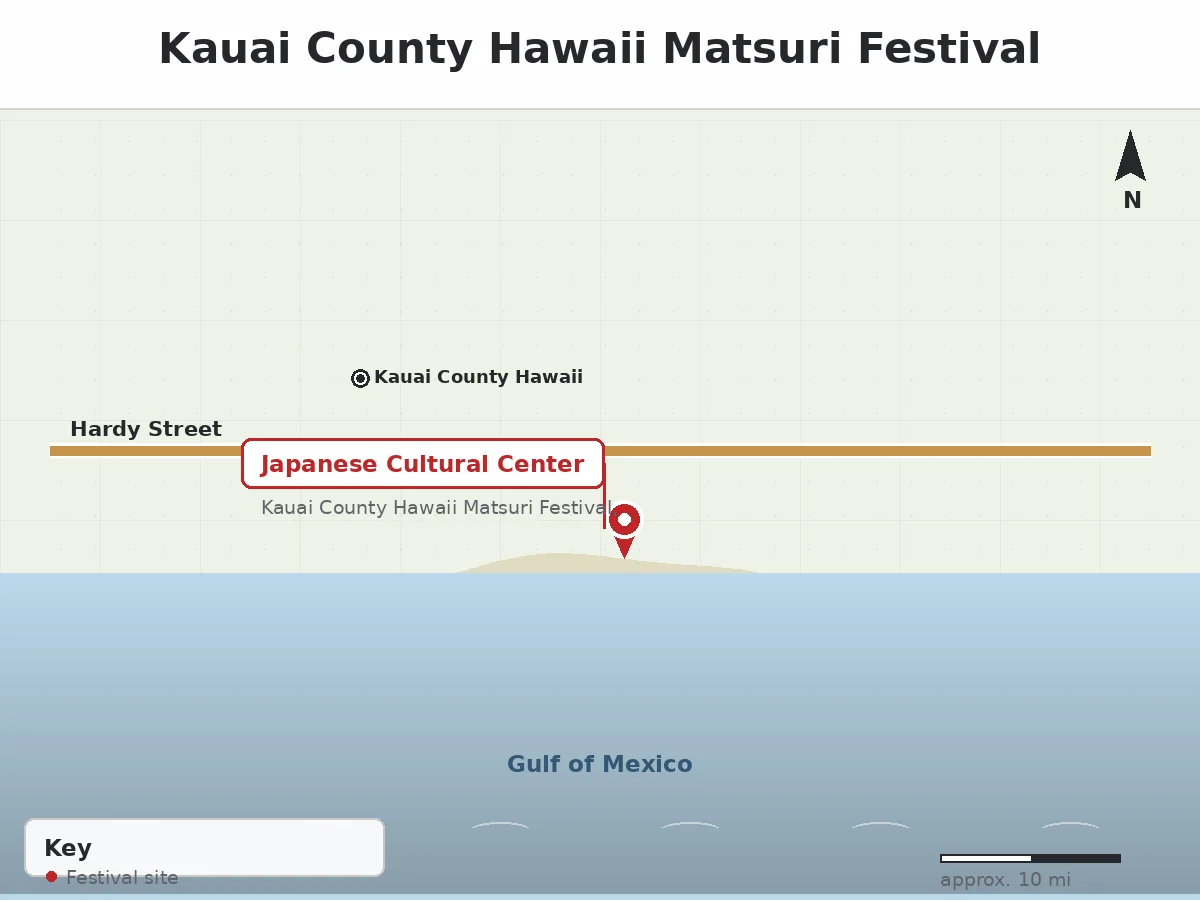
Līhuʻe, where the festival is held, is the seat of Kauaʻi County, and the venue has been constant across the layers: the Kauaʻi War Memorial Convention Hall. A 2010 calendar layer prints the hall’s address as 4191 Hardy Street. The festival occupies that single hall for a single day in the documented editions, making it a compact, indoor celebration rather than a sprawling fairground event.
Quick Facts
| Item | Detail |
| Organiser | Kauai Japanese Cultural Society |
| Published names | Matsuri Kauai (the society’s form); Kauaʻi Matsuri Festival (tourism-authority and visitors-bureau layer, 2024); Matsuri Kauai Japanese Cultural Festival (a 2008 news layer) |
| Host town | Līhuʻe, the seat of Kauaʻi County |
| Venue | Kauaʻi War Memorial Convention Hall, 4191 Hardy Street, Līhuʻe |
| Season | Autumn — documented editions fall in both September and October, and the layers never settle the month |
| Admission | Free in every layer that states it; donations accepted |
| First edition | No layer captured states a first-edition year, and none is derived here |
| Edition billings | Ninth annual in 2009, twenty-ninth in 2014, thirtieth in 2015, thirty-ninth Annual in 2024 — a set that cannot all be correct |
| Latest documented edition | 2024 |
| Attendance | No published figure was captured in any layer |
History of the Kauai Matsuri Festival
The society’s own 2015 history booklet traces the festival idea to a specific moment: the 1985 Kanyaku Imin centennial, the hundredth anniversary of Japanese immigration to Hawaiʻi. In the booklet’s account, Matsuri has been held every year since that beginning, with two exceptions — the year of Hurricane Iniki in 1992, and the year of the 2011 Japan earthquake and tsunami. That is a claim about continuity, recorded here as the booklet’s own account. It is never converted into a first-edition year: the booklet gives an idea and a run of years, not a dated first festival, and arithmetic on a continuity claim would manufacture a founding the sources do not state.
The published edition numbers tell a story that contradicts itself. A 2009 news layer calls that year’s event the ninth annual, in the same report that marks the society’s twenty-fifth anniversary. A temple and news layer bills October 2014 as the twenty-ninth Matsuri, and a magazine layer bills September 26, 2015 as the thirtieth Matsuri Kauai — a pairing at least sequential with itself. Then a tourism-authority and visitors-bureau layer bills the 2024 festival as the thirty-ninth Annual Kauaʻi Matsuri Festival. These series cannot all be correct: a ninth annual in 2009 cannot lead to a twenty-ninth five years later, and no layer captured explains the jump. This article settles none of them. Each billing is recorded with the layer and year that carried it, and the conflict is left standing, because choosing one series over another would be editorial invention rather than fact.
For a useful comparison, see the Kauai County Hawaii Lights Festival for another county festival.
What can be dated firmly is a run of individual editions. A newspaper layer documents September 30, 2006, from 9:30 a.m. to 3:30 p.m. News and calendar layers place editions on October 11, 2008 and October 9, 2010. September returns in 2018, when a local calendar layer gives a September date running from 9:00 a.m. to 3:00 p.m. The most recent documentation is for 2024: the visitors bureau’s October 2024 report records tourism-authority sponsorship, and a photographer’s portfolio layer also lists Matsuri Kauai 2024. Against those September editions stands a current cultural-centre layer describing the festival as held every October. Neither form is rewritten to match the other, and the festival’s month is treated throughout as unsettled — an honest gap in an otherwise rich record.
What to Expect
A Matsuri day is built from demonstration as much as performance. Across the layers, the programme includes mochi pounding, the tea ceremony, bonsai, sumie painting, ikebana flower arranging, origami and oshibana crafts, judo and kendo demonstrations, taiko drumming, traditional and classical dance, a bon dance, and food booths. The elements are recorded with the layers that carry them rather than generalised into a promise about every year, but together they show the festival’s method: culture shown by doing, in front of the audience rather than behind glass.
The festival also carries a sister-city dimension. Delegations from Suo-Oshima, Iwaki and Moriyama appear in the programme layers, and the 2024 destination layer adds Ishigaki to that list. The newest documented edition brought the programme’s only recorded additions: a cosplay fashion contest and kendama, the Japanese cup-and-ball skill toy. Both belong to 2024 in the record and are fenced to that year — never projected backward onto earlier editions or forward onto future ones.
Admission is simple. A 2006 news layer describes the festival as free with donations accepted, and a 2018 calendar layer likewise lists it as free. No organiser layer publishes any admission price, so there is no ticket to plan around — visitors give what they wish, or nothing.
Planning Your Visit
Begin with the one fixed point every layer shares: the venue. All documented editions use the Kauaʻi War Memorial Convention Hall in Līhuʻe, printed in a 2010 calendar layer at 4191 Hardy Street, so directions are the easy part of any Matsuri trip.
The harder part is the date, and honesty matters here. The documented editions fall in both September and October — September 30 in 2006, September 26 in 2015 and a September date in 2018, against October editions in 2008, 2010 and 2014 — while a current cultural-centre layer describes the festival as held every October. Until an organiser announcement for a given year is in hand, treat the month itself as something to confirm rather than assume. The record documents the festival through 2024 and no later edition, so anyone planning around a future Matsuri should watch for the society’s own announcement.
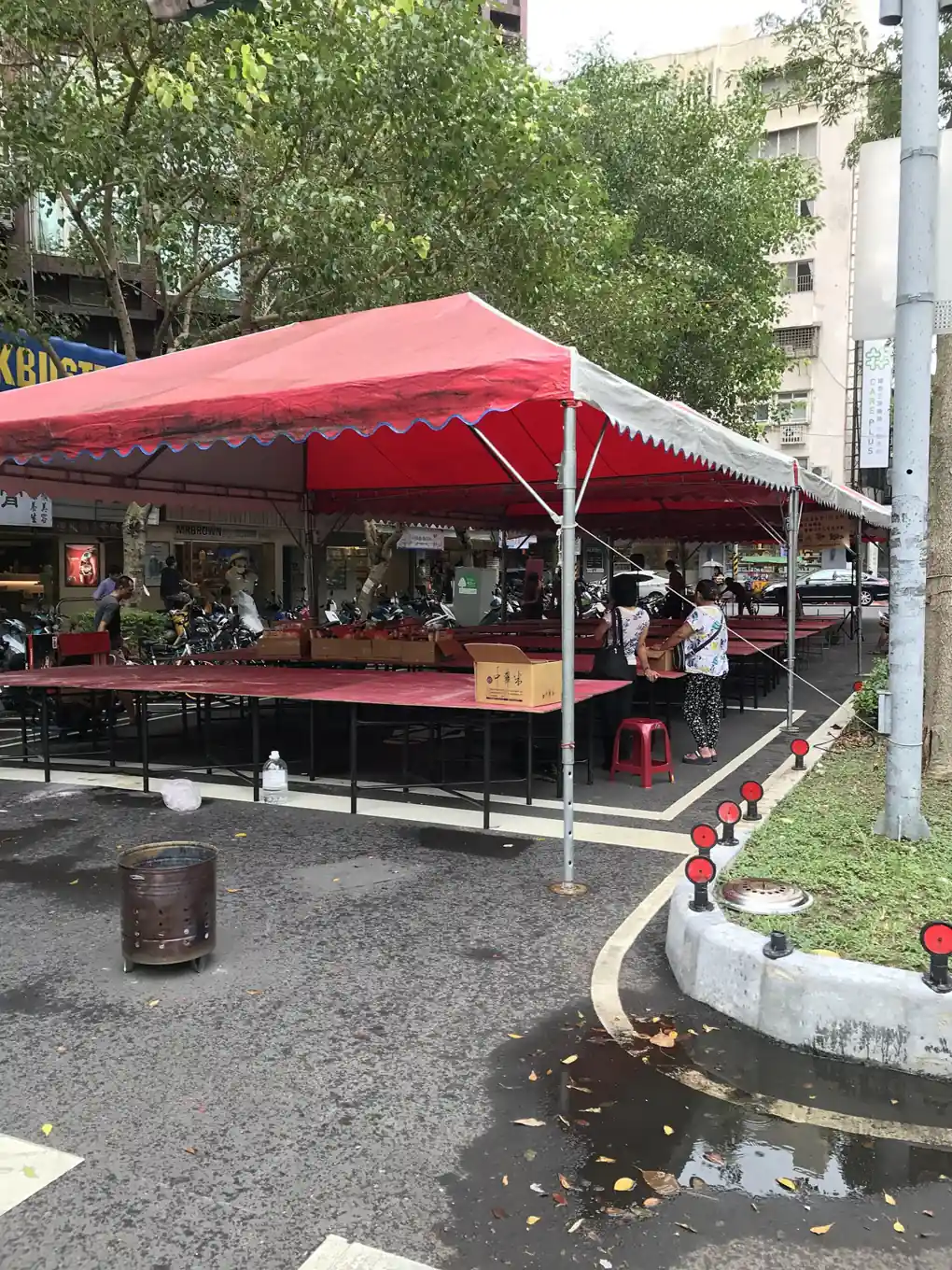
Hours, where layers give them, describe a daytime event: 9:30 a.m. to 3:30 p.m. in 2006, and 9:00 a.m. to 3:00 p.m. in 2018. That shape suits a morning arrival. The hall is a single indoor venue, so the whole programme sits within one building, and a visitor can see every demonstration area in one unhurried pass before choosing where to linger.
A Sample Matsuri Day
The itinerary below follows the shape of one documented edition — September 30, 2006, when the festival ran at the Kauaʻi War Memorial Convention Hall from 9:30 a.m. to 3:30 p.m. It is offered as that edition’s shape, not as a schedule for any future year.
Arrive at the hall shortly before the doors open at 9:30 a.m. and make a first circuit of the floor while the crowd is still thin, noting where the bonsai, sumie and craft tables sit. Spend the late morning with the demonstrations — mochi pounding rewards early attention, and the judo and kendo demonstrations give the hall its first energy. Take lunch from the food booths around midday, when the selection is widest. Give the early afternoon to the stage: taiko drumming and the traditional and classical dance performances anchor that part of the day in the programme layers. Watch the bon dance as the afternoon gathers, then finish with a slower pass through the ikebana, origami and oshibana crafts before the 3:30 p.m. close, dropping a donation on the way out.
How Matsuri Compares
Two neighbours in the island’s Japanese cultural calendar need to be kept distinct from this festival. The Kauaʻi Museum holds its own Japanese cultural festival events under its own organisation; any resemblance in programme comes from a shared culture rather than a shared event. Temple obon and bon-dance season events, held across the island through the summer, are likewise separate occasions run by their own temples. A bon dance appears inside Matsuri’s own programme, but that single shared element never merges the autumn festival with the island’s obon season — the dance is one programme item here, and an entire season of observance there.
Checklist for Your Visit
- Confirm the year’s date and month against the society’s own announcement before travelling, since editions fall in both September and October
- Note the venue in advance: the Kauaʻi War Memorial Convention Hall at 4191 Hardy Street in Līhuʻe
- Plan for a daytime event, arriving near the opening hour to catch the demonstrations at their freshest
- Carry a little cash for the donation box, since admission is free and donations are accepted
- Leave time for the food booths around midday rather than eating beforehand
- Give the craft tables — bonsai, sumie, ikebana, origami and oshibana — a slow pass rather than a glance
- Stay for the bon dance if it appears in the year’s programme, even as a spectator
- Keep the museum’s Japanese cultural events and the temple obon season on separate lines of your calendar; they are different events
Beyond the Festival Hall
A Matsuri trip need not end at the hall doors. Līhuʻe is the working centre of Kauaʻi County — its seat of government and one of its principal towns — so a festival day can extend naturally into the town around it. The sister-city delegations in the festival’s record point outward too, toward the Japanese communities formally tied to the island. Visitors wanting more of the island’s Japanese heritage afterwards will find the temple communities and the museum’s own programming to be separate doors into it.
Why the Kauai Matsuri Festival Matters
Matsuri’s significance lies in the continuity it represents for Kauaʻi’s Japanese community — the community whose immigration centennial in 1985 gave the festival its idea, in the society’s own account. A cultural society that organises demonstrations rather than spectacles keeps skills in circulation, giving practitioners an audience and beginners a first sight of the work. The festival also turns the island’s formal sister-city ties with Japan into handshakes, performances and shared meals. That its edition numbers are contradictory does not diminish any of this; its meaning is simply better documented than its arithmetic.
Frequently Asked Questions
Why do the published edition numbers for the festival disagree with each other?
Because the layers behind them were never reconciled. A 2009 news layer called that year’s event the ninth annual, a temple and news layer billed October 2014 as the twenty-ninth Matsuri, a magazine layer billed the following year as the thirtieth, and a tourism-authority and visitors-bureau layer billed 2024 as the thirty-ninth Annual. Those figures cannot all belong to one count, and no layer captured explains the differences. Each billing is recorded here with its source layer and year, none is settled, and no founding year is derived from any of them.
Does the festival charge anything at the door?
No admission price appears in any organiser layer. A 2006 news layer describes the festival as free with donations accepted, and a 2018 calendar layer also lists it as free. Visitors who wish to support the society can contribute at the door, but entry itself carries no charge in the record.
Which month should a visitor actually plan around?
The honest answer is that the record does not settle it. Documented editions fall on September 30, 2006, September 26, 2015 and a September date in 2018, and on October dates in 2008, 2010 and 2014, while a current cultural-centre layer describes the festival as held every October. Both patterns are real in the layers, so the society’s own announcement for the year is the only safe guide for a specific trip.
Is Matsuri connected to the Kauaʻi Museum’s Japanese cultural events?
No. The museum’s Japanese cultural festival events are run by the museum’s own organisation and are separate occasions. Matsuri belongs to the Kauai Japanese Cultural Society and meets at the War Memorial Convention Hall. The two share a cultural heritage, not an organiser, a venue or a date.
What to Expect From the Next Kauai County Hawaii Matsuri Festival
How often is Kauai County Hawaii Matsuri Festival held?
The society’s own history booklet states that Matsuri has been held every year since its beginning, with the Hurricane Iniki year of 1992 and the year of the 2011 Japan earthquake and tsunami as the exceptions. That is the booklet’s continuity claim, recorded as its own account; the dated editions documented in other layers run from 2006 through 2024.
When is the next Kauai County Hawaii Matsuri Festival?
No edition after 2024 is documented in the record captured, and no future date is confirmed here. The documented pattern is a single autumn day at the Kauaʻi War Memorial Convention Hall, in September or October depending on the year — the layers have never settled the month — so the next date will be the one the society itself announces.
Will the dates change?
They already have, across the documented run: editions are recorded on September 30, 2006, in October of 2008, 2010 and 2014, on September 26, 2015 and again in September 2018. A one-day festival that moves between two neighbouring months should be expected to keep some flexibility, and each year’s announcement — not any past pattern — fixes its date.
For all its unresolved arithmetic, the Kauai Matsuri Festival remains one of the clear fixtures of the island’s autumn: a free day of Japanese arts, crafts, performance and food in the county seat’s convention hall, carried by a cultural society whose own account ties it to the centennial of Japanese immigration to Hawaiʻi. The record leaves its founding year unstated, its edition numbers contradictory and its month unsettled — and the festival itself, documented through 2024, stands comfortably on the other side of those gaps.

One Comment