Jessamine County Kentucky Wilmore Arts and Crafts Festival
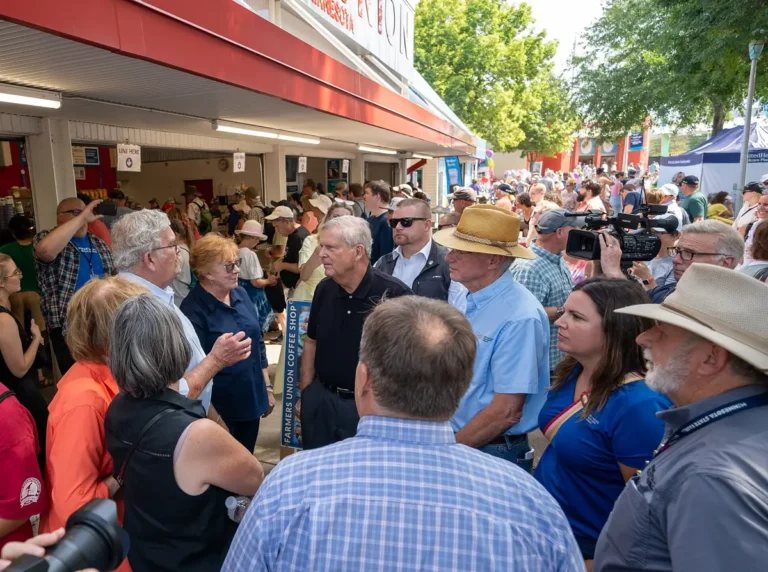
On the first Saturday of October, the centre of Wilmore gives itself over to makers. Rows of juried stalls line East Main Street, children’s activities spread across the Downtown Green, and a small Jessamine County city spends one autumn day as a marketplace for handwork. The event is printed under several related names: the city government’s newsletter layers and a university layer use Wilmore Arts & Crafts Festival, the city newsletter also spells the name out in full as Wilmore Arts and Crafts Festival, and the city calendar layers shorten it to Arts & Crafts Festival. The three forms are kept separate here, exactly as each layer prints them. What the layers agree on is the substance: a juried fall arts and crafts festival, presented every October according to the city’s own site, and documented for two thousand twenty-three, two thousand twenty-five and two thousand twenty-six.
About
Wilmore sits in Jessamine County, Kentucky, and reference layers are plain that it is not the county seat; that role belongs to Nicholasville. The festival’s ground is the city’s own downtown: East Main Street carries the vendor rows and the Downtown Green hosts the children’s side of the day, a pairing the city newsletter, university family-weekend and college newspaper layers all repeat.
Who presents the day depends on which layer is speaking, and the two accounts are kept apart. In its own newsletter layers, the City of Wilmore presents the festival. A college newspaper layer from two thousand twenty-three states instead that the Wilmore Community Development Board was in charge of the event. Neither account is preferred over the other in this article, and no single organiser form is adopted.
One naming caution is worth clearing away early. A county tourism layer calls the event the Wilmore Art and Craft Fair, but that phrasing points back to this same October tradition, not to a rival fair. The genuinely separate Wilmore date is GINKGO GALORE, a new festival set for the twenty-fourth of October, two thousand twenty-six, which shares only the town and the month with it.
Quick Facts
| Item | Record |
| Published name | Wilmore Arts & Crafts Festival; also printed Wilmore Arts and Crafts Festival and Arts & Crafts Festival |
| Host town | Wilmore, Jessamine County, Kentucky |
| County seat | Nicholasville; Wilmore is not the seat |
| Setting | East Main Street and the Downtown Green |
| Presenting accounts | City of Wilmore in its newsletters; Wilmore Community Development Board in a two thousand twenty-three college newspaper layer |
| Documented editions | Two thousand twenty-three, two thousand twenty-five and two thousand twenty-six |
| Usual timing | The first Saturday of October |
| Hours in print | Nine in the morning to four in the afternoon in most layers; nine to five in one university layer |
| Vendor counts in print | Fifty-six in the two thousand twenty-six city newsletter; over eighty in university layers |
| Admission | No gate price and no free-entry statement appears in the layers read |
History
The honest history of this festival is a history of billings. A college newspaper layer covering the edition of Saturday the seventh of October, two thousand twenty-three, bills that year as the twenty-third year. The city government’s October newsletter for two thousand twenty-six bills that edition as the twenty-seventh. Those two numbers sit side by side in this article exactly as printed. They are not reconciled with each other, no arithmetic is performed on them, and no founding year is drawn out of them, because the layers themselves never state one.
For a useful comparison, see the Jessamine County Kentucky GINKGO GALORE Festival for another county festival.
What can be said on firmer ground is descriptive. The city’s own site describes a successful juried fall arts-and-crafts festival presented every October, and the surviving layers bear that description out across three years. The two thousand twenty-three college newspaper account puts the festival on Main Street and the Downtown Green from nine in the morning to four in the afternoon, and names the Wilmore Community Development Board as the body in charge. By two thousand twenty-five a university family-weekend layer is listing the festival for its visiting families, and by two thousand twenty-six the city newsletter is counting fifty-six vendors along East Main Street. The tradition the layers show is not a founding story but a rhythm, repeated often enough that a college paper, a university and the city itself all document it independently.
What to Expect
Vendors are the heart of the day, and the city newsletter layers describe a juried field rather than an open one. The printed inventory of what those vendors sell runs long: kettle corn, jewelry, crocheted items, soaps, baskets, weaving, artwork, wooden items, wreaths, wrought iron, children’s toys and clothing, and candles. Food trucks work the same streets, live music plays through the day, and the children’s activities gather on the Downtown Green, where the two thousand twenty-six city newsletter places them from ten in the morning to noon.
The scale of the field depends on the layer doing the counting, and the counts are left unmerged. The city government’s October newsletter for two thousand twenty-six counts fifty-six vendors on East Main Street. A university layer for that same weekend says over eighty vendors, and a university family-weekend layer for two thousand twenty-five also says over eighty, adding food trucks and live music and noting that the festival is held rain or shine. Hours shift in the same way: the two thousand twenty-five university layer gives nine in the morning to five in the afternoon, while the college newspaper layer for two thousand twenty-three and the city newsletter for two thousand twenty-six both give nine in the morning to four in the afternoon. Read across the layers, the shorter day is the safer planning assumption.
Planning Your Visit
Timing deserves care because the printed hours disagree. The college newspaper layer for two thousand twenty-three and the city newsletter for two thousand twenty-six both run the day from nine in the morning to four in the afternoon, while the university family-weekend layer for two thousand twenty-five stretches it to five in the afternoon. Planning around the four o’clock close is the cautious reading; anything open later is a bonus, not a promise.
The geography is compact. Vendor rows stand along East Main Street and the children’s activities use the Downtown Green, so the whole documented festival fits inside a short downtown walk. Families aiming at the children’s programme should note the one firm window in print: the two thousand twenty-six city newsletter puts those activities between ten in the morning and noon on the Green. Arriving near the nine o’clock opening leaves the full street to browse before that window begins.
Weather is part of the bargain in at least one layer’s telling: the two thousand twenty-five university layer describes the festival as held rain or shine, so a forecast of showers is not, on that account, a reason to stay home. The city newsletter prints municipal contact details, noted here by existence only, for the questions the layers leave open — admission largest among them.
A Sample Day on East Main Street
A workable shape for the day can be built from the hours the city newsletter printed for two thousand twenty-six. Reach East Main Street near the nine o’clock opening, while the vendor rows are fresh, and work the full length of the street once without buying, noting the juried stalls worth a second pass. Late morning belongs to the Downtown Green if children are along, since the printed children’s activities run from ten in the morning to noon. Midday is for the food trucks and the live music. The early afternoon suits the second, slower pass along the stalls — the wreaths, wrought iron, baskets and wooden pieces reward unhurried looking — and the day can wind down toward the four o’clock close the city and college layers both print. The two thousand twenty-five university account, with its five o’clock close, adds an extra hour of slack to the same shape.
How It Stands Beside Its Neighbours
Two comparisons sharpen what this festival is. The first is with GINKGO GALORE, Wilmore’s new arts and music festival, documented for Saturday the twenty-fourth of October, two thousand twenty-six. The two events share a town and a month, but the record treats them as entirely separate: the arts and crafts festival is the long-running early-October tradition with billings reaching back through a twenty-third year and a twenty-seventh, while the ginkgo event arrives in the layers as something new, three weeks later. Choosing between them means choosing between an established juried street fair and a newcomer, not between two editions of one event.
The second comparison is with the festival’s own shadow name. The county tourism layer’s Wilmore Art and Craft Fair is not a competing fair at all; it is this same October tradition described in looser words. Keeping that straight matters, because the Wilmore record otherwise doubles events that were never doubled. Against both comparisons, the festival’s strength is the depth of its documentation.
Before You Go: A Checklist
A short list covers what the layers reward:
- Set out for the first Saturday of October, the slot the college newspaper layer documents.
- Plan the day around a four o’clock close, the ending printed by both the city newsletter and the college layer.
- Put the Downtown Green between ten in the morning and noon if children are coming, matching the printed activities window.
- Dress for weather that will not cancel the day, since one university layer bills the festival as rain or shine.
- Leave time for two passes along East Main Street, one to survey the juried stalls and one to buy.
- Check the city’s own newsletter layers for the current year’s hours, because the printed hours differ between layers.
- Bring the admission question with you unresolved; no layer read answers it.
Beyond the Festival Grounds
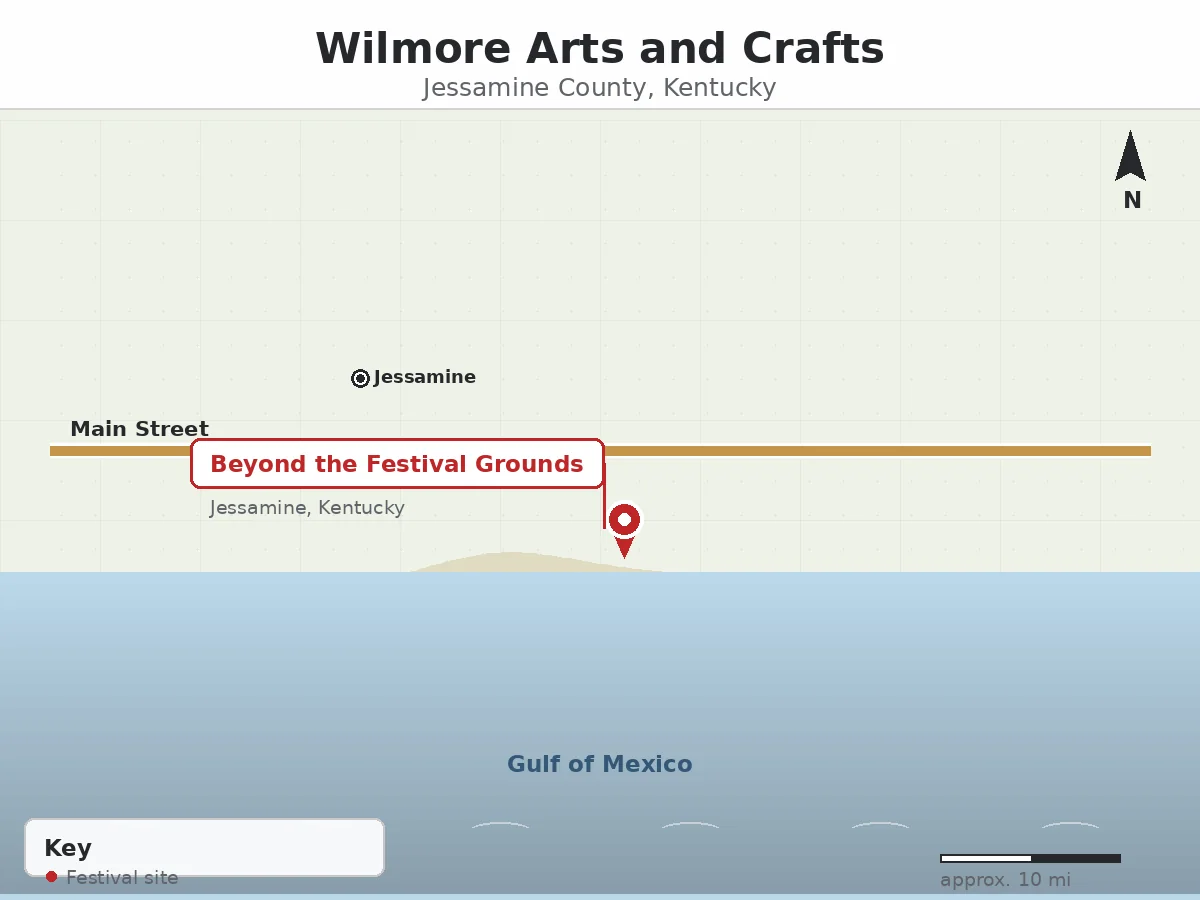
The festival’s footprint is small — one street and one green — but the day it makes reaches further. East Main Street is Wilmore’s downtown spine, and filling it with juried stalls turns an ordinary Saturday’s shopping street into the city’s showroom. The Downtown Green, given over to children for the middle of the day, keeps the festival from being only a market; families who never buy a wreath still have somewhere in the programme that belongs to them.
Wilmore itself is a small city in a county whose seat is Nicholasville, and the festival record reflects that scale: the documenting layers are a city newsletter, a college newspaper and university family-weekend pages, the paperwork of a place where a university weekend and a city festival naturally overlap. October holds more than this one Saturday in Wilmore — GINKGO GALORE follows later in the month as a separate event — but the arts and crafts festival remains the month’s established anchor in the layers read.
Why the Festival Matters
A juried gate is a quiet statement about standards. Because the city newsletter layers describe the vendors as juried, the festival is not simply renting pavement; it is selecting the work that represents Wilmore’s downtown, from kettle corn and candles to wrought iron and weaving. That selection, repeated each October in the city’s own description, is what turns a craft fair into an institution with billings in the twenty-third and twenty-seventh years.
The festival also matters as evidence of how a small city keeps its own calendar. Three different kinds of layer — a municipal newsletter, a college newspaper and university pages — each recorded the same event for their own readers, and their small disagreements about hours and vendor counts are the sign of independent witnesses rather than a copied press release. For Jessamine County, whose seat is Nicholasville, the Wilmore festival is proof in print that the county’s October belongs, at least for one Saturday, to the smaller city and its green.
Frequently Asked Questions
Which of the festival’s printed names is the right one to use?
All three forms stand in print: Wilmore Arts & Crafts Festival in the city newsletter and university layers, Wilmore Arts and Crafts Festival spelled out in the city newsletter, and Arts & Crafts Festival in the city calendar layers. This article keeps them unmerged rather than crowning one, since each layer uses its own form consistently.
Who is actually in charge of the day?
The layers give two answers and both are reported. The City of Wilmore presents the festival in its own newsletter layers, while a college newspaper layer from two thousand twenty-three states that the Wilmore Community Development Board was in charge of the event. No single organiser form is adopted here.
Why do the hours and vendor counts change from layer to layer?
Because the layers were written for different years and different readers. The two thousand twenty-five university layer runs the day to five in the afternoon with over eighty vendors; the two thousand twenty-six city newsletter closes at four with fifty-six vendors counted on East Main Street. The figures are printed side by side, unmerged.
What do the layers say about paying to get in?
The layers are silent on the point: none prints a gate price, and none describes entry as free, so this article takes no position either way. Anyone who needs certainty can ask through the municipal contact details the city newsletter prints.
What to Expect From the Next Jessamine County Kentucky Wilmore Arts and Crafts Festival
How often is Jessamine County Kentucky Wilmore Arts and Crafts Festival held?
The city’s own site describes the festival as presented every October, and the documented editions fall on the first Saturday of the month in the college newspaper layer’s account. The pattern in print is an annual October Saturday.
When is the next Jessamine County Kentucky Wilmore Arts and Crafts Festival?
The layers read document editions through Saturday the third of October, two thousand twenty-six, and print no later date. On the pattern those layers establish, a further edition would be expected on the first Saturday of a coming October, but that expectation is an inference from the pattern, not a date any layer states.
Will the dates change?
The day of the week and the early-October slot look settled across the documented years, but the details around them have already shifted in print: closing time moves between four and five in the afternoon, and counted vendors move between fifty-six and over eighty. The date is the stable part; the hours deserve a fresh check against the city’s newsletter each year.
Closing Thoughts
What the record supports, it supports well: a juried October Saturday on East Main Street and the Downtown Green, documented by the city, a college paper and university layers alike. Read with its disagreements left visible, it needs no founding year and no single organiser to be real.