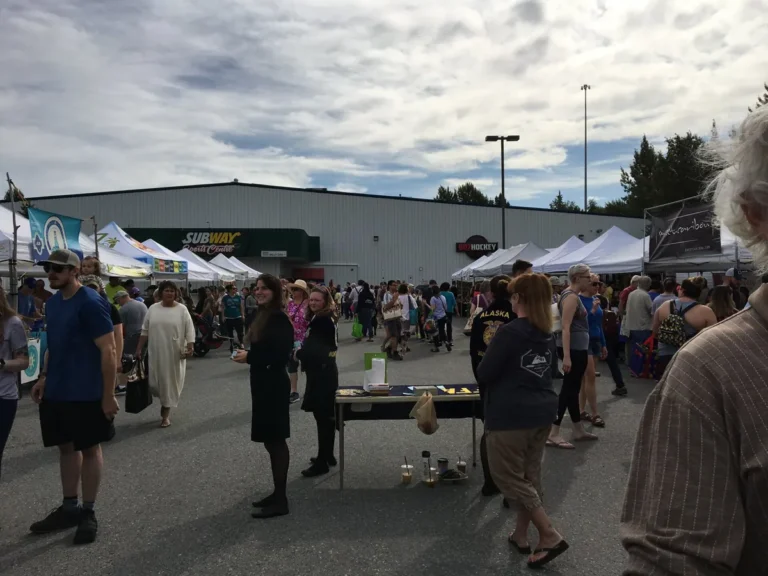
Houghton Michigan Potato Festival
Houghton welcomed its potato celebration back on Saturday 24 October 2026, when a single autumn day of exhibits, tastings and games ended a silence that one regional exchange layer measures from 2007. The returning event travels under shorter names than the one carried at the head of this article: local news layers call it the Potato Festival, the Potato Fest and the Houghton Potato Festival, and none of the layers gathered here prints the full sheet form with the word Michigan inside the name. The day divided itself between two settings in downtown Houghton. At the Carnegie Museum of the Keweenaw, an agricultural exhibit and children’s crafts filled the early afternoon, while down at the waterfront pier, food vendors, live music and a set of competitive Potato Games carried the gathering through to seven in the evening.

About
The revived gathering belongs to Houghton, the seat of Houghton County in Michigan’s Upper Peninsula, and its modern documentary record rests mainly on local news layers and a regional exchange layer that covered the October 2026 return. A local news layer states that the City of Houghton announced the comeback, so the city stands as the organiser form the layers actually print; a destination and exchange layer describes the museum exhibit and the waterfront festivities without naming any separate organising body, and the two accounts are kept apart here rather than blended into a single invented committee. The published name forms are likewise left unmerged. Alongside Potato Festival, Potato Fest and Houghton Potato Festival, the layers also print Houghton Potato Fest, while a much older exhibition name, the Potato, Hay, Grain and Rutabaga Show, belongs to the event’s traced roots in 1929 rather than to the modern Houghton day. Readers should also understand the shape of the evidence. Outside the 2026 revival, which several credible local layers document with full particulars, the earlier Houghton editions survive only in summary form, and this article fences every claim about them to the layer that carries it.
Quick Facts
| Item | Detail |
| Sheet title | Houghton Michigan Potato Festival |
| Published name | Houghton Potato Festival |
| Other published forms | Potato Festival; Potato Fest; Houghton Potato Fest |
| Host town | Houghton, Michigan |
| County | Houghton County |
| County seat | Houghton |
| Documented revival edition | Saturday 24 October 2026 |
| Venues | Carnegie Museum of the Keweenaw; Houghton waterfront pier |
| Organiser named in layers | City of Houghton |
| Earlier incarnation | Last held in 2007, per a regional exchange layer |
History
Local news and exchange layers trace the roots of the Houghton celebration back to October 1929, when a first Upper Peninsula-wide exhibition, originally named the Potato, Hay, Grain and Rutabaga Show, was organised in Escanaba with Extension Service support. That geography matters. The 1929 exhibition stood in Escanaba, not in Houghton, and the layers present it as the rootstock of the tradition rather than as a Houghton founding, so no founding year for a Houghton festival is claimed anywhere in this article. What the layers do offer for Houghton itself is a broadcast summary layer describing the town’s festival, in its own wording, as a community staple running from the 1920s through 1980. That is a broad-brush characterisation rather than a run of dated editions, and it is reported here exactly on those terms. The exchange layer then supplies the one firm later marker: the last incarnation of the current Potato Fest was held in 2007. Between that year and the autumn of 2026 the layers record no Houghton editions at all, and no particulars of the 2007 gathering — no venue, no programme, no attendance — are given in anything read for this article. The modern story therefore resumes with the City of Houghton’s announcement of a return, and with the single documented day that followed on 24 October 2026. A tradition that had lived in summary and memory acquired, on that Saturday, a fresh set of particulars: named venues, published hours, a tasting trail, a games contest and a museum exhibit tying the day back to the agricultural past from which the older layers say it grew.
What to Expect
The 2026 revival arranged itself as an afternoon in two halves. From noon until four, the Carnegie Museum of the Keweenaw held an agricultural and potato-history exhibit alongside children’s crafts, which one news layer describes as free as part of the museum portion of the day. From three in the afternoon until seven in the evening, the action shifted to the Houghton waterfront and the downtown pier. There, a food-vendor tasting billed as the Potato Prowl let visitors sample their way along the stalls, live music played across the waterfront hours, and potato-themed activities filled the gaps between the set pieces. The competitive climax came at six in the evening with the Potato Games, in which five community-nominated Keweenaw farms competed for the title of Potato Royalty. A broadcast summary layer also mentions potato sack races among the day’s activities, an appropriately humble discipline for a festival honouring a humble crop. One local news layer states that the 2026 event was free and open to all; that statement belongs to that layer and to the revival year alone, and the prices, if any, attached to the vendor tasting are nowhere stated. Anyone picturing the day should picture something compact and walkable: a museum room full of farming history at one end, a pier full of food and music at the other, and a farm-versus-farm contest to finish.
Planning Your Visit
Because the documented modern edition occupies a single Saturday, planning revolves around sequencing rather than endurance. The museum exhibit and crafts run from noon to four, and the waterfront programme runs from three to seven, so the natural order is to begin at the Carnegie Museum of the Keweenaw, take in the agricultural displays while children work at the crafts, and then drift down to the pier as the overlap hour arrives. Arriving at the waterfront before six keeps the Potato Games in view, and the games are the one element with a fixed evening hour. On cost, hold only what the layers support: a single local news layer describes the 2026 revival as free and open to all, while nothing read for this article prices the Potato Prowl tastings, so a visitor budgeting for food should treat the stalls as ordinary vendors until told otherwise. Late October in the Keweenaw can turn cold once the sun drops over the water, which argues for warm layers across the three-to-seven waterfront stretch. The news layers quote a city representative and a visitor-bureau representative among their contacts, which tells readers where announcements of any future edition would most plausibly surface, even though no contact values are reproduced here. Finally, temper expectations with the evidence: this is a one-day revival documented in detail once, not a long programme published seasons in advance.
For a useful comparison, see the Houghton Michigan Winter Carnival Festival for another county festival.
A Sample Saturday
A relaxed reading of the published hours suggests the following shape for the day. Reach the Carnegie Museum of the Keweenaw a little before noon and give the agricultural and potato-history exhibit the first hour, while the rooms are still quiet. Let younger visitors settle into the free children’s crafts described in the news layer, then take a second, slower pass through the displays with the 1929 exhibition story in mind. Around three, walk down to the waterfront pier as the outdoor programme opens, and work along the Potato Prowl stalls gradually rather than all at once, leaving room for whichever vendor’s line looks shortest twice over. Settle near the music for the middle of the afternoon. At six, be in place for the Potato Games, when the five nominated Keweenaw farms contest the Potato Royalty title, and stay to the seven o’clock close before finding supper in the downtown streets nearby.
How It Compares
Michigan hosts more than one potato celebration, and the differences are instructive. The Posen Potato Festival, held in Posen in Presque Isle County, runs for three days each September with Polish food and polka, and one layer dates it to 1952; it is a different festival in a different town, with a settled annual rhythm that the revived Houghton event does not yet claim. The Houlton Potato Feast Days in Maine is unrelated altogether, sharing nothing but the crop. Within Houghton itself, the university’s Festival of Nations is a separate occasion and should not be confused with the potato gathering. The sharpest comparison, though, is with the festival’s own past. The incarnation that ended in 2007 left no particulars in the layers read, whereas the 2026 revival is documented hour by hour, so the modern event is at once the best-evidenced edition and, in the written record, almost a beginning.

Visitor Checklist
- Confirm the date before travelling, since the modern record holds one documented edition rather than a fixed annual slot
- Start at the Carnegie Museum of the Keweenaw, where the exhibit and crafts run from noon to four
- Keep the waterfront hours in mind: festivities on the pier run from three to seven in the evening
- Be in place by six for the Potato Games and the contest for the Potato Royalty title
- Carry some cash for the Potato Prowl stalls, whose tasting prices are not stated in the layers read
- Dress for a cold October evening on the water once the afternoon light fades
- Treat the free-admission description as belonging to the 2026 revival as one news layer reported it
Beyond the Festival Grounds
A visitor with hours either side of the programme will find the festival’s two venues reward lingering in their own right. The Carnegie Museum of the Keweenaw anchors the museum end of the day, and its agricultural exhibit places the potato inside the wider farming story of the peninsula rather than treating it as a novelty. The downtown waterfront and its pier give the evening half its setting, with the harbour front serving as the town’s natural gathering ground once the stalls and music are set up. Houghton’s position as the seat of Houghton County makes it the administrative as well as the social centre of its stretch of the Keweenaw, and the compact downtown means the museum, the pier and the town’s cafés and shops all sit within an easy walk of one another. Anyone extending the trip can treat the festival Saturday as the fixed point and build quieter exploration of the town around it, but the layers read for this article document the festival itself rather than a wider itinerary, so other excursions are best planned from local sources on the ground.
Why the Festival Matters
A revival after a gap measured from 2007 is a statement about what a town refuses to let go. The potato is an unglamorous crop, and that is precisely the point: the exhibit at the museum connects the celebration to the Upper Peninsula’s agricultural exhibitions of 1929, and the broadcast layer’s description of the festival as a community staple from the 1920s through 1980 suggests generations for whom the gathering simply belonged to the calendar. The Potato Games give that inheritance a living form, since the competitors are working Keweenaw farms nominated by their own community, and the title they chase, Potato Royalty, marries pride to good humour. Just as significant is the manner of the return: announced by the city, staged between a museum and a pier, and described in one news layer as free and open to all. Whether the revival becomes a habit again is a question the evidence cannot yet answer, but the 2026 edition restored the festival from summary and memory to a documented day that residents could actually attend. For a county whose seat town once treated the gathering as part of the year’s furniture, that restoration carries weight beyond the size of the programme itself.
Frequently Asked Questions
Under which names does the revived Houghton event appear in print?
Local layers print Potato Festival, Potato Fest, Houghton Potato Festival and Houghton Potato Fest, keeping the forms unmerged. The full sheet form with Michigan inside the name appears in none of them, so searches under the shorter published names will serve a reader better.
What fills the afternoon at the Carnegie Museum of the Keweenaw?
One news layer places an agricultural and potato-history exhibit at the museum from noon to four, alongside children’s crafts described as free within that museum portion of the day. The museum strand ends as the waterfront programme, which begins at three, reaches its stride.
How do the Potato Games decide their champion?
At six in the evening, five community-nominated Keweenaw farms compete in the Potato Games for the title of Potato Royalty. The layers name the prize and the number of farms but record no individual winners, and a broadcast layer adds potato sack races to the day’s competitive colour.
How does the Houghton gathering differ from the potato festival at Posen?
Posen’s festival, in Presque Isle County, runs three days each September with Polish food and polka, and one layer dates it to 1952. Houghton’s documented modern edition is a single October Saturday built around a museum exhibit, a waterfront tasting and the farm games, and the two events share only the crop they celebrate.
What to Expect From the Next Houghton Michigan Potato Festival
How often is Houghton Michigan Potato Festival held?
The honest answer is that the layers show an irregular pattern rather than a settled cycle. A broadcast layer describes a festival that served as a community staple from the 1920s through 1980, an exchange layer marks a last incarnation in 2007, and the next documented edition is the single-day revival of 24 October 2026, so no dependable annual rhythm can be read out of that sequence.
When is the next Houghton Michigan Potato Festival?
No date for a subsequent edition appears anywhere in the material gathered for this article. The 2026 revival is the latest documented edition, and any future announcement would most plausibly come through the city, whose representative is quoted in the news layers covering the return.
Will the dates change?
Given the record, change is the safest assumption. The tradition has already moved across decades, paused after 2007 and resurfaced as a one-day October event in 2026, so a future edition could easily land on a different date or in a different shape, and readers should verify any plans against fresh local announcements rather than this article.
What endures from the 2026 revival is a modest but genuine achievement: a county-seat town in the Keweenaw brought back a celebration rooted in the agricultural exhibitions of 1929, gave it a museum, a pier, a tasting trail and a contest among its own farms, and wrote its name back into the county’s calendar of documented days.