Hawaii County Hawaii Island Slack Key Guitar Festival
Hilo is a rain town on the windward edge of Hawaii Island, wrapped around a bay that fills with mist most mornings and backed by long green ridges where plantation fields once ran. Music has always moved alongside that water. Up in the uplands, and out across the big ranches that spread over the island, Hawaiian cowboys known as paniolo learned to loosen their guitar strings, thumb a steady bass, and pick melodies in the open spaces between. That style — kiho’alu, slack key — is the reason a festival carrying the island’s name gathers players and listeners in Hawaii County.
The Hawaii County Hawaii Island Slack Key Guitar Festival sits inside a wider family of slack key celebrations staged across the islands, but its center of gravity is local: ranch country, family tunings, and the players who kept the style alive through decades when it was easier to book almost anything else. The festival is where that inheritance gets played out loud, in public, for anyone who wants to sit down and listen.
This guide covers what the festival actually is, how slack key reached Hawaii Island in the first place, what a festival day feels like, and how to build a trip around it without wasting an afternoon of your stay.
Hawaii Island Slack Key Guitar Festival: The Essentials
| Town / place | The Hawaii County area, Hawaii Island |
| County | Hawaii County, Hawaii |
| County seat | Hilo |
| Population | 200,629 (Hawaii County) |
| Region | Windward Hawaii Island, with Hilo as the main gateway |
| Typical timing | A weekend in summer, in most years |
| Admission | Typically free |
| Setting | Open-air community stages with shaded seating and lawn space |
| Features | Live slack key sets, talk-story moments between players, and local food stalls |
| Organizer | Local slack key musicians and community volunteers |
What Kiho’alu Sounds Like When a County Throws a Party
Slack key is a solo instrument tradition at heart, which makes it an unusual fit for a festival. There is no wall of amplifiers, no drum kit driving the crowd. What you get instead is a row of guitarists working through open tunings, each one holding a bass line with the thumb while the fingers pick out a melody above it. The result sounds unhurried even when the playing is technically ferocious.
The Hawaii County festival leans into that intimacy. Sets tend to run shorter than a concert-hall program, with players trading stories between songs — where a tuning came from, which uncle taught it, why a particular song belongs to a particular family. Older masters and younger players often share the same stage, which is the entire point: slack key survives by being passed hand to hand rather than written down.
Because admission is typically free, the crowd is a genuine cross-section of the island. Families spread blankets, visitors drift in from Hilo hotels, and longtime residents greet each other across the lawn. You do not need a ticket, a reservation, or any prior knowledge of Hawaiian music to enjoy it. You need a chair, a little patience, and ears.
From Paniolo Camps to County Stages: Slack Key’s Timeline on Hawaii Island
The story starts with cattle. In the nineteenth century, Hawaiian ranchers brought in Mexican vaqueros to teach horse and herd work, and those vaqueros carried guitars. Hawaiian hands learned the instrument quickly and then did something of their own with it: they slacked the strings to open tunings, so a single player could carry bass, rhythm, and melody at once. The paniolo tradition on Hawaii Island — the upland ranches around Waimea, the working pastures, the long nights after a day in the saddle — gave the style a home and a purpose.
For generations slack key stayed close to the family. It was played at gatherings, at parties, at the end of a workday, taught by ear and rarely notated. Through the middle of the twentieth century a handful of players began recording it, and by the 1970s a broader Hawaiian cultural revival pulled slack key out of the living room and onto bigger stages. Names like Gabby Pahinui, Sonny Chillingworth, Leonard Kwan, and Raymond Kane became reference points for anyone learning the style, and the tunings they favored are still passed along today.
The festival circuit followed. Slack key celebrations took shape across the islands as a way to put multiple generations of players in one place, and the Hawaii County edition became part of that network — a Big Island stop where the ranch-country roots of the tradition are never far from the conversation. What began as after-hours music in paniolo camps now fills a public lawn in the county seat’s orbit, with the same tunings and the same unhurried feel.
Inside Festival Day: Food, Music, and Keiki Time
Food and Drink Around the Grounds
Expect the usual island festival spread: plate lunches with kalua pork or teriyaki chicken, loco moco, spam musubi, shave ice, and coolers full of juice and soda. Vendors are usually local, which means the food is part of the regional story rather than an afterthought. Bring cash for smaller stalls, and bring a refillable water bottle — even a shaded afternoon in Hawaii County can dry you out faster than you notice.
Slack Key on the Stage
The program rotates through solo players, duos, and larger groupings, often with a host who keeps the talk-story going between sets. Listen for the differences in tuning: some players favor a deep, resonant sound close to the older recordings, others lean brighter and more percussive. If a set catches you, stay for the next one — the same song can sound like a different composition in another player’s hands.
Keiki and Family Activities
This is a comfortable festival for children. There is room to move, the volume stays reasonable, and families commonly set up on the grass with mats and snacks. Kids who already play guitar often end up hovering near the stage, watching fingering patterns up close. Plan for a shorter visit if you have very small children, and bring sun protection for the open stretches between shaded areas.
Planning Your Trip to the Hawaii County Festival
Getting to Hawaii Island and Hilo
Most visitors fly into Hilo International Airport on the windward side, which puts you within easy reach of the county seat and the festival area. Kona International Airport on the west side is an alternative, but the drive across the island takes a couple of hours and passes through dramatically different country — dry lava fields on one end, rainforest on the other. If you are coming from Kona, treat the drive as part of the trip rather than a chore.
Where to Stay in Hawaii County
Hilo has the widest choice of hotels, inns, and vacation rentals, plus the restaurants and shops you will want in the evening. If you prefer cooler air and a slower pace, look at the Waimea area upcountry or the small towns along the Hamakua Coast to the north. Volcano Village, near the national park, is another option for travelers who want to pair music with hiking.
Parking and Local Transport
Arrive early. Festival parking fills quickly, and the difference between a relaxed morning and a stressful one is usually thirty minutes. Carpooling helps, and a rideshare or taxi from a Hilo hotel is a reasonable choice if you plan to stay for the full day. Once you are on site, everything is walkable.
Admission and Costs
Admission is typically free, which is part of what keeps the audience so mixed. Your real spending is food, drinks, and any recordings or merchandise you decide to take home. Bring some cash even if you mostly use a card, and consider dropping something in a donation jar if one is out — community events like this run on goodwill and volunteer hours.
Weather and What to Bring
Hilo is one of the rainiest places in the country, so pack as if a shower is likely and you will rarely be wrong. A light rain jacket, a hat, sunscreen, and a mat or folding chair cover most situations. Trade winds keep things mild, but the sun still bites during long open stretches. Layers work better than a single heavy layer.
A Sample Weekend Around the Slack Key Festival
Friday. Land in Hilo, settle in, and spend the late afternoon walking the bayfront and the farmers market area. Eat an early dinner, then get to bed reasonably early — festival mornings start sooner than you think.
Saturday. Arrive at the festival grounds before the first set, claim shade, and stay through the afternoon. Eat from the vendors rather than leaving for lunch; the programming is continuous and you will miss something good. In the evening, drive up to Waimea or stay in Hilo and find live music downtown.
Sunday. Take the day slowly. A morning at Rainbow Falls or the Liliuokalani Gardens, a short drive up the Hamakua Coast, or a loop through Hawaii Volcanoes National Park all fit comfortably. If the festival runs a second day, trade the sightseeing for more guitar.
Monday. Fly out, ideally with a slack key album or two in your bag and a new appreciation for open tunings.
How the Slack Key Festival Compares With Other Island Gatherings
Hilo also hosts the Merrie Monarch Festival, the hula competition that draws enormous crowds each spring and fills every room in town months ahead. Slack key’s festival is a quieter, more local affair by comparison — easier to attend on short notice, less pressure on lodging, and built around listening rather than spectacle.
On the west side, the Kona Coffee Cultural Festival in Kailua-Kona each autumn celebrates a different island industry with farm tours, tastings, and a very different landscape. Upcountry, Waimea’s paniolo heritage events trace the same ranch history that produced slack key in the first place, so pairing one of those with the guitar festival makes a coherent trip.
A Short Pre-Trip Checklist for Hawaii Island
Book lodging early if you are traveling in a busy season; confirm the current festival weekend before you lock in flights, since timing shifts from year to year; pack a rain jacket and sun protection in the same bag; bring a folding chair, mat, or cushion; carry cash for vendors and donations; charge your phone and bring a portable battery; download offline maps for the Hamakua and Volcano drives; and leave one afternoon unscheduled for whatever the island suggests.
Beyond the Stage: What Else Hawaii County Offers
Hawaii County is larger than most visitors expect, and the slack key festival is a good excuse to see more of it. East of Hilo, the Hamakua Coast runs past waterfalls, old plantation towns, and dramatic gulches on the way to Waipio Valley. South of town, Hawaii Volcanoes National Park offers steam vents, craters, and trails across a landscape that changes by the mile.
In Hilo itself, the Liliuokalani Gardens, Rainbow Falls, and the Pacific Tsunami Museum fill an easy half day, while the farmers markets supply picnic provisions for the road. Upcountry, Waimea combines ranch land, cool air, and a growing food scene. Wherever you go, the drive is rarely just transport — it is the scenery people fly here for.
Why Slack Key Still Matters in Hawaii County
Slack key is not a museum piece. It is a living practice, and the festival is one of the mechanisms that keeps it that way — by paying older players respect in public, by giving younger ones a stage, and by letting an audience hear the connection between the two. In a county of 200,629 people spread across a very large island, that kind of gathering matters. It is a chance for ranch families, town families, and newcomers to sit in the same space and hear the same thing.
There is also an economic argument, quietly made: a free community event gives visitors a reason to stay another night in Hilo, eat at local restaurants, and see a side of Hawaii Island that resorts do not show. The music is the point, but the ripple is real.
Locating the Slack Key Festival on Hawaii Island
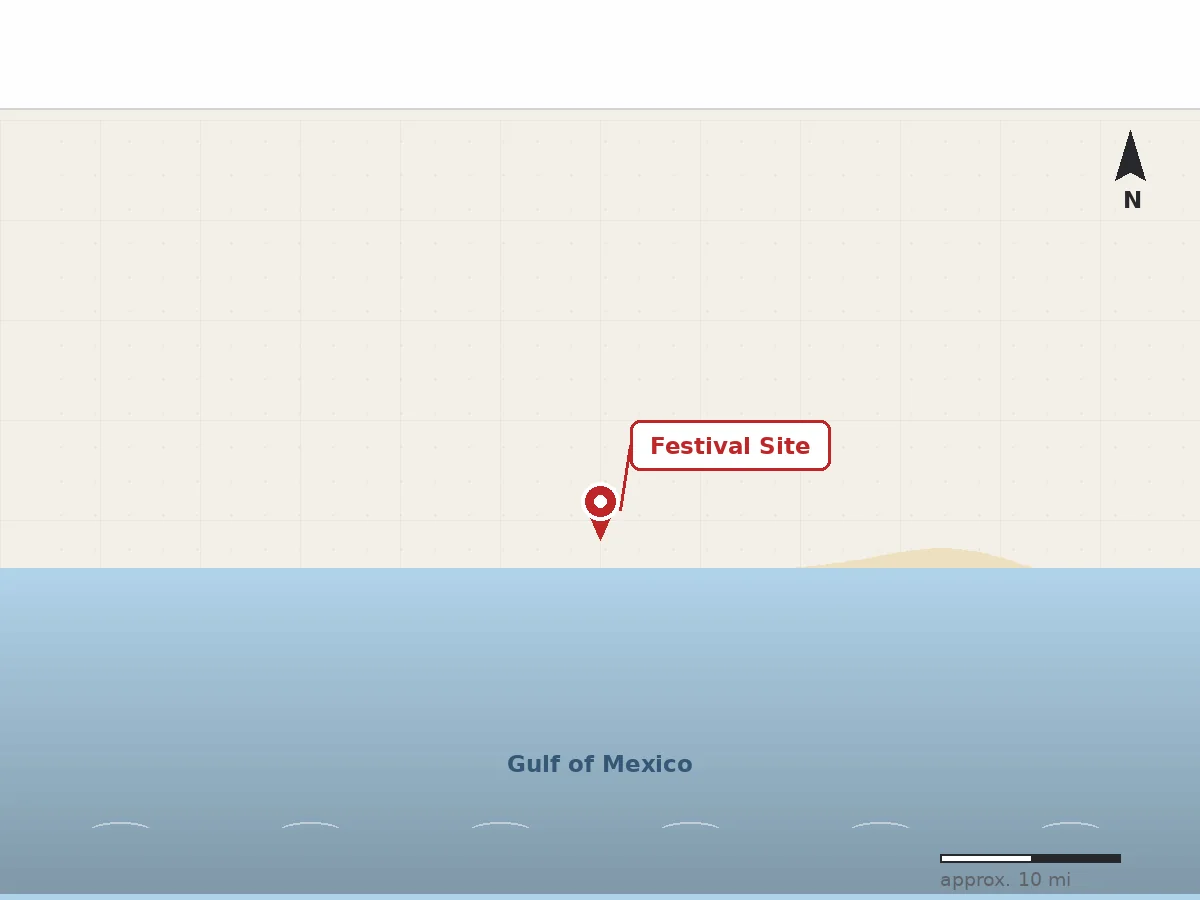
The festival takes place in the Hawaii County area on Hawaii Island, with Hilo — the county seat — serving as the main gateway for most travelers.
Good to Know Before You Tune Up
Is the festival free to attend?
Admission is typically free, which is central to the festival’s community character. You will still spend money on food, drinks, and merchandise, and donations are usually welcome. Check locally before you travel in case a particular year’s program includes a separate ticketed element.
Do I need to know slack key to enjoy it?
Not at all. The music is melodic and unhurried, and hosts generally explain what you are hearing between sets. If you play guitar yourself, you will get extra out of it — but plenty of people in the audience have never touched the instrument.
Is the festival suitable for children?
Yes. It is an outdoor, daytime event with room to move and reasonable volume. Bring shade, water, and snacks, and be ready to leave earlier than you might if you were on your own.
When should I arrive?
Early. Parking and shade both disappear as the day goes on, and the opening sets are often the most relaxed. If you can only come for part of the day, the first half usually rewards you more than the last.
What’s Ahead for Slack Key on Hawaii Island
The tradition’s future depends on who is holding the guitar. Younger players are learning the old tunings while writing new material in them, and festivals like this one remain the most reliable place where that exchange happens in public. Expect the Hawaii County event to keep its informal character — free admission, local vendors, a mix of generations on stage — because that format is what has kept it going.
For travelers, the practical takeaway is simple: confirm the weekend, book lodging early if you are visiting in a busy season, and treat the festival as the anchor of a longer Hawaii Island stay rather than a single afternoon.
Last updated: October 2026
Slack key rewards patience. A player sits down, tunes to something that sounds almost wrong, and then builds a whole song out of it. Sitting on a lawn in Hawaii County while that happens, with the trade winds moving through and a plate lunch going cold beside you, is a very specific pleasure — one that has been passed down from paniolo camps to public stages and shows no sign of stopping.