Grand Traverse Michigan Traverse City Film Festival
For six days at the height of summer, downtown Traverse City used to hand itself over to filmgoers. Queues formed outside a restored movie palace, audiences drifted between a second cinema near the waterfront and a bayfront lawn where family films played free under the open sky, and panels, premieres and late parties filled the hours between screenings. That gathering is the Traverse City Film Festival, shortened in print to TCFF, whose documented editions run from a first festival in 2005 through to a return edition in 2022. The long title at the head of this page follows the county-and-state pattern of the source sheet; no layer read prints that full form, while the shorter published name appears exactly as written here across reference, news and magazine layers.
Currency needs stating plainly at the outset. A reference layer lists the festival’s present status as on hiatus, and no credible layer read documents an edition after the 2022 return. One low-credibility dates layer projects dates in 2026, yet nothing stronger supports it, so this article sets that projection aside. What follows describes a richly evidenced event across its documented years, rather than a promise about a coming summer.
That honesty cuts both ways. The same record that refuses to invent a future edition preserves a run of dated ones in detail, from the improbable scale of the first festival to the deliberately smaller return, and those editions repay close reading.
About the Festival
The festival was organised by a charitable and educational non-profit body, described in a magazine layer as an organisation that also ran year-round venues in the city. Its stated mission phrase was “Just Great Movies”, and the programme built around that promise mixed independent, foreign and documentary screenings with premieres, revived classics and free outdoor family films. Panel discussions and parties sat alongside the screenings, and filmmaker honours formed part of the week, among them a Michigan Filmmaker Award and a Founders Prize; this article names the awards only, never their recipients.
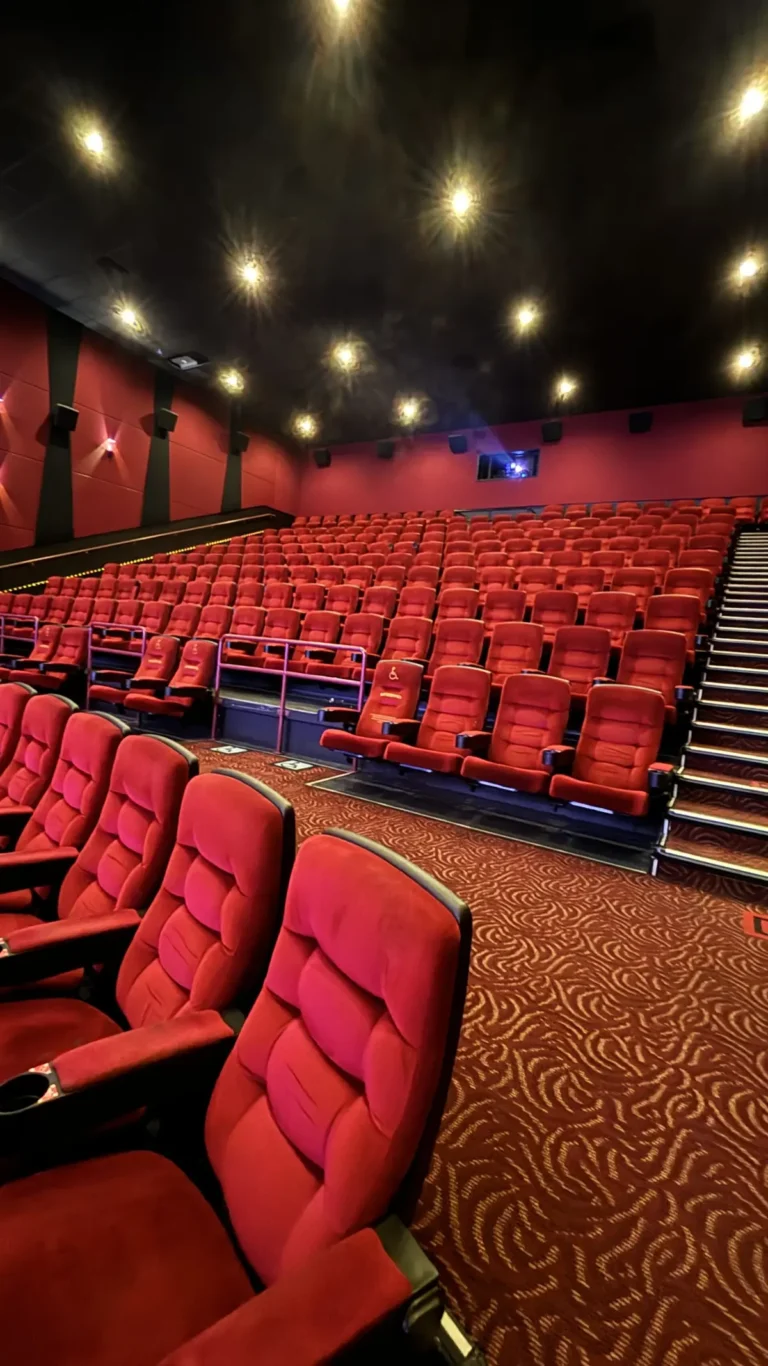
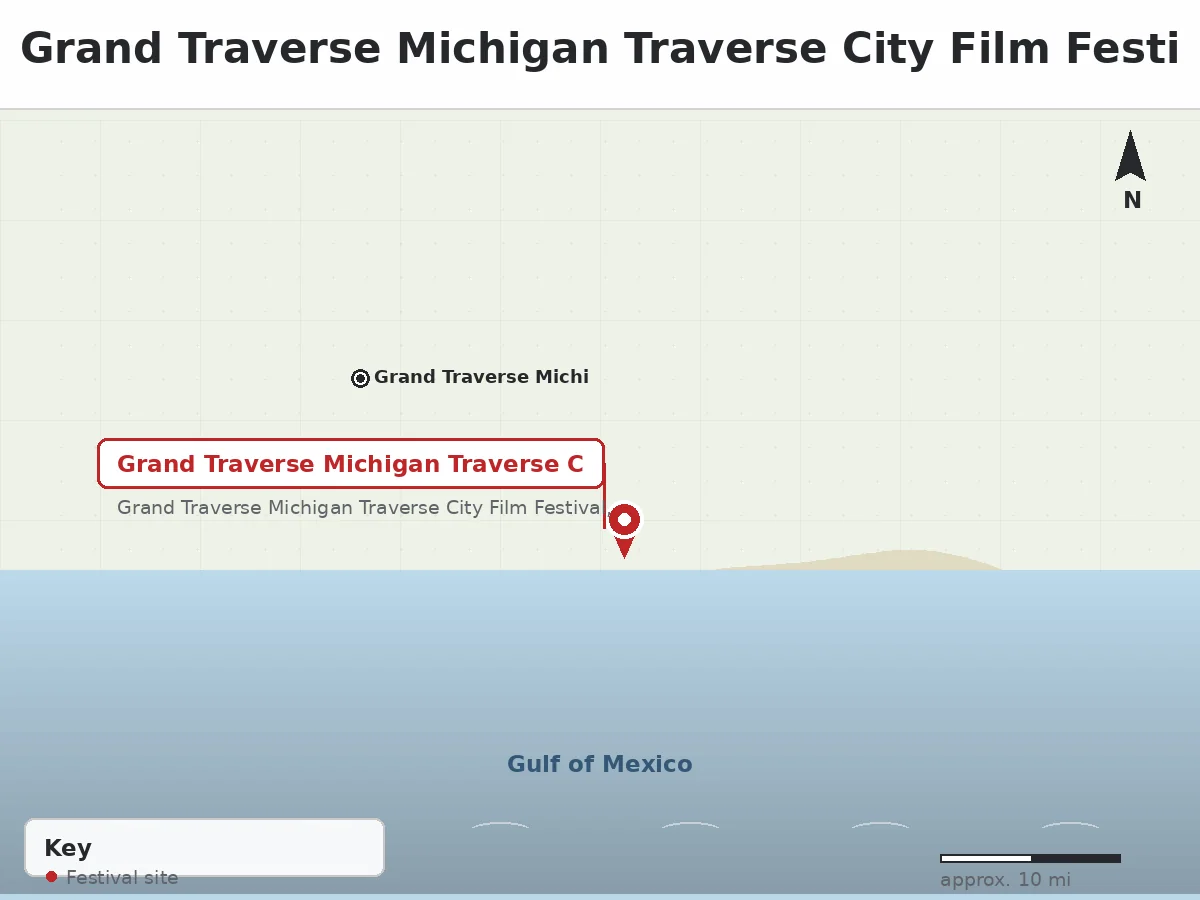
Traverse City, the host, is the county seat of Grand Traverse County, a position a county reference layer confirms. The festival’s screens were downtown: the State Theatre, the Bijou by the Bay, and Open Space Park on Grand Traverse Bay, where the outdoor screenings cost nothing to watch. News layers for the 2022 return edition name a festival president and a festival director in working roles; both are recorded here by role alone. Screenings were ticketed, according to the news layers, although none of the layers used prints a single ticket price. The year-round presence mattered in another way too: rooms that showed films in February were the rooms that filled each July, giving this festival a permanent home rather than a hired one.
For a useful comparison, see the Grand Traverse Michigan National Cherry Festival for another county festival.
Quick Facts
| Item | Detail |
| Sheet title | Grand Traverse Michigan Traverse City Film Festival |
| Published name | Traverse City Film Festival (short form TCFF) |
| Host city | Traverse City, Grand Traverse County, Michigan |
| County seat | Traverse City is the Grand Traverse County seat |
| Organiser | A charitable and educational non-profit festival organisation |
| Principal venues | State Theatre; Bijou by the Bay; Open Space Park outdoor screenings |
| First documented edition | 27 to 31 July 2005 |
| Latest documented edition | Return edition, 26 to 31 July 2022 |
| Current status | Listed as on hiatus in a reference layer; nothing after 2022 documented |
| Admission position | Screenings ticketed; no general admission price stated in the layers read |
History
Reference and oral-history layers agree that the festival was created in 2005 to help save the cinema as an art form. Three documented co-founders stand behind it in the festival’s own record: an Oscar-winning filmmaker, an author and a photographer, and their founding purpose shaped a programme that treated film as culture rather than product. The first festival ran from 27 to 31 July 2005, and an oral-history layer gives its scale as fifty-four screenings of thirty-one films drawing about fifty thousand admissions, a striking reach for an opening year in a small lakeside city.
One confusion from that first summer needs separating out. The oral-history layer also mentions a rival festival, hastily organised in 2005, and that event is not this one; the Traverse City Film Festival is the festival whose editions the reference layers then list by number. The second edition followed from 31 July to 6 August 2006. The ninth ran from 30 July to 4 August 2013, the twelfth from 26 to 31 July 2016, the thirteenth from 25 to 30 July 2017, the fourteenth from 31 July to 5 August 2018 and the fifteenth from 30 July to 3 August 2019, each occupying the same late-July window.
The reference record is selective rather than complete. It dates the editions it names and leaves the intervening years to the ordinal count, so this article reports the editions it can fence to a layer and resists filling the gaps. What the ordinals do establish is momentum: a festival that began in 2005 had reached a fifteenth edition within a decade and a half, a run few volunteer-built events sustain.
The pandemic then broke the sequence. After a two-year pandemic hiatus, the festival returned from 26 to 31 July 2022, with news and public-media layers describing an edition of over forty films presented across a scaled-down set of venues. That return is the last edition any credible layer documents. Beyond it, the trail stops: a reference layer records the status as on hiatus, and the unsupported 2026 projection in a low-credibility dates layer is the only later claim, disowned here for want of corroboration.
What to Expect
A documented festival week revolved around the screening grid. Days moved between the two downtown cinemas, where independent features, foreign titles and documentaries shared the schedule with premieres and classic revivals, while evenings could end at Open Space Park, where family films played outdoors free of charge beside the bay. Between screenings, panel discussions gave filmmakers and audiences a shared room, and parties carried the conversation into the night. Awards punctuated the programme, with the Michigan Filmmaker Award recognising work from the festival’s home state and a Founders Prize carrying the imprint of the three people who started it.
Scale is best judged from the editions the layers quantify. The first festival squeezed fifty-four screenings into five days; the 2022 return, deliberately smaller, still presented over forty films across six days. A visitor in the strong years could build a day entirely around one cinema or roam between venues, mixing a morning documentary, an afternoon classic and an open-air family screening after dark.
Families had their own route through the week. The outdoor screenings at Open Space Park asked nothing of anyone, and a picnic audience could sample the festival without buying a single ticket, while committed filmgoers stacked indoor screenings from morning to midnight. Parties and panels rewarded those who lingered after the credits, when filmmakers and audiences argued about what they had just watched.
Planning Your Visit
Anyone working from this record today should begin from the hiatus. Because the last documented edition closed on 31 July 2022, the first planning step is confirming through the festival’s own channels whether a new edition has genuinely been announced, and disregarding stray dates on low-credibility listings sites. The older guide layers print a telephone number and the festival’s own website, and those routes, rather than any printed calendar, are where a real announcement would surface.
For the festival as documented, the practical shape is clear enough. The venues stood within downtown Traverse City, so a stay near the centre put the State Theatre, the Bijou by the Bay and the Open Space Park lawn within one walkable cluster. Screenings were ticketed individually, and popular premieres rewarded early booking, while the outdoor family screenings asked nothing but a blanket and an evening. Late July also brought peak summer crowds to the bay, so rooms and restaurant tables rewarded the same early attention as the film tickets. Evenings beside the water cool quickly after sunset, so the outdoor screening called for a layer over summer clothes and a blanket thick enough for grass. Anyone driving in for a single day did better to anchor the day on one cinema and walk between sittings, rather than chase screenings across town against the clock.
A Sample Festival Week
On the six-day pattern of the documented editions, an opening day might pair a premiere at the State Theatre with the week’s first panel. The middle days suit a rhythm of two or three screenings daily, a documentary before noon, a foreign feature in the afternoon and a classic revival in the evening, leaving one night for the free outdoor family film at Open Space Park. An awards-minded visitor would hold space near the end of the week for the filmmaker honours, then close with a final screening at the Bijou by the Bay before the last party winds down. Visitors with only a weekend could compress the same shape into two days: a premiere and a classic on Saturday, a documentary and the outdoor family film on Sunday. The editions were built to be sampled as well as swallowed whole, and the grid rewarded anyone who left one slot empty for a recommendation picked up in a queue.
How It Compares
Traverse City hosts another major summer gathering, the National Cherry Festival, and the contrast is instructive. The cherry celebration is an outdoor, harvest-centred week of parades, concerts and waterfront spectacle, whereas this festival turns the same streets inward, toward darkened rooms, ticketed seats and conversation about film. A hastily organised rival event from 2005 sometimes blurs the founding story, but it shares nothing with this festival beyond that first summer. Few American festivals of this size grew from so explicit a rescue mission for cinema itself, and fewer still kept a founding promise as plain as three words about great movies. Its organiser also ran venues all year, so the event grew out of a living cinema culture instead of arriving in town with the tents.
Visitor Checklist
- Confirm the festival’s current status before making any travel commitment
- Treat unconfirmed dates on low-credibility listings layers as unreliable
- Book screening tickets early for premieres during any announced edition
- Keep one evening free for the outdoor family screenings at Open Space Park
- Stay downtown to keep all documented venues within walking distance
- Allow gaps between screenings for panels and post-film discussion
- Remember that the 2022 return used a smaller venue set than earlier years
Beyond the Festival
The festival’s footprint in Traverse City outlasted any single edition. Its organising body also ran year-round venues, according to the magazine layer, so the city’s cinema habit continued through the calendar in the same downtown rooms the festival filled each July. Around those rooms sits a working waterfront city on Grand Traverse Bay, where Open Space Park doubles as the town’s front lawn and the sailing, swimming and eating of a northern Michigan summer carry on whether or not a festival week is running. The bay itself shapes the memory of the place. Screenings ended a short stroll from the water, and the park that hosted free films by night was a swimming and picnic ground by day, so the festival never felt sealed away from the summer happening around it.
Why It Matters
The Traverse City Film Festival matters because it proved a small Great Lakes city could sustain a serious film festival on the strength of an idea. Fifty thousand admissions at a first edition, fifteen numbered editions across the reference record and a return after a two-year pandemic break all speak to an audience that kept showing up. Its awards kept a particular eye on Michigan filmmakers, its free outdoor screenings kept the gates open to anyone passing the park, and its mission treated cinema as an art worth rescuing. Even in hiatus, that record stands as one of the state’s most distinctive cultural achievements. Its history also carries a warning and a hope in the same breath: a festival can stop, as the present silence shows, yet a festival can also return, as 2022 proved when the screens lit again after two dark summers.
Frequently Asked Questions
How large was the very first Traverse City Film Festival?
The oral-history layer puts the opening edition, held from 27 to 31 July 2005, at fifty-four screenings of thirty-one films, with about fifty thousand admissions across the five days. For a debut organised around a rescue mission for cinema, that figure announced that the audience for such a festival already existed.
Which venues hosted the screenings?
Documented venues are all downtown: the State Theatre, the Bijou by the Bay, and Open Space Park on Grand Traverse Bay, where family films screened outdoors free of charge.
Did every part of the programme need a ticket?
News layers describe the screenings as ticketed, and no layer used here prints any ticket price. The outdoor family films at Open Space Park were the standing exception, presented free.
Why does this article document nothing after 2022?
The 2022 return edition is the last one any credible layer records, and a reference layer lists the festival’s status as on hiatus. A lone low-credibility layer projects 2026 dates, but no stronger source supports it, so it is not relied on.
What to Expect From the Next Grand Traverse Michigan Traverse City Film Festival
How often is Grand Traverse Michigan Traverse City Film Festival held?
Across its documented life the festival kept a yearly late-July rhythm, running from 2005 through its fifteenth edition in 2019, pausing for a two-year pandemic hiatus and returning in 2022. A reference layer now lists it as on hiatus, so that rhythm is a matter of record rather than a current schedule.
When is the next Grand Traverse Michigan Traverse City Film Festival?
Beyond the 2022 return, the layers read document nothing further. That edition closed on 31 July 2022, nothing credible announces a later festival, and the only future dates in circulation come from a low-credibility layer that stronger sources do not back. A genuine revival would need an announcement from the festival organisation itself.
Will the dates change?
Every documented edition sat in the same late-July window, sometimes spilling a few days into early August, so any future edition would most plausibly keep that shape. Until an organiser announces otherwise, though, the honest position is that there are no confirmed dates to change, only a well-established historical pattern.
Closing Note
The Traverse City Film Festival leaves a record many larger events would envy: a clear founding mission, fifteen numbered editions, audiences in the tens of thousands and a comeback from a forced two-year silence. Whether its hiatus proves permanent or merely a long intermission, the documented years already secure its place in Traverse City’s story, and this article will stand corrected by evidence the day a credible layer announces its return.