Fergus County Montana Fair Festival
Fergus County’s fair does not answer to the county’s name. In Lewistown, the county seat near the geographic middle of Montana, the fair calls itself the Central Montana Fair, and it makes that claim from the Fergus County Fairgrounds at 153 Fairgrounds Road. The regional name is not decoration: the fair’s own rules open its exhibit halls to neighbouring counties. What surprises most first-time visitors is the price of walking in. The fair’s published general information states that there is no entrance gate charge for the fair and no charge for parking a vehicle at the fairgrounds. For 2026, the fair’s own book spans Tuesday July 14 to Saturday July 25: the gates open to the public on Wednesday July 15, the first stretch belongs to 4-H, FFA and the horse shows, and the second builds toward two nights of professional rodeo on July 22 and 23, a concert on Friday July 24, and a closing Saturday.
A Fair That Answers to a Region’s Name
Every piece of the fair’s own paper — its premium book, its schedule, its exhibitor information — carries the Central Montana Fair name, while the county’s name rides on the grounds themselves. The bridge between the two names is the town: this is the fair held at the Fergus County Fairgrounds in Lewistown. The fair office handles the summer’s business, and its ticket office moves with the season, sitting in the Trade Center before fair week and under the grandstand once the fair is running.
The exhibitor base is regional by the fair’s own rules rather than by accident. Open exhibits are open to residents of Fergus County or of the counties adjoining it, and the fair’s 4-H division eligibility list, as printed in its 2023 rules, names Fergus, Petroleum, Judith Basin, Wheatland, Musselshell, Golden Valley, Phillips and Chouteau counties. Read that list carefully: it is an entry list, not a masthead. Petroleum County exhibitors, for example, show their animals through this fair’s 4-H division, and the two counties share an Extension programme — an arrangement that gives Petroleum families a fair to exhibit at without making Lewistown’s fair a jointly run enterprise. The fair belongs to Lewistown; the region is invited to compete in it.
Central Montana Fair Quick Facts
| Item | The published record |
| Event | Central Montana Fair |
| Fair town | Lewistown, which is also the county seat of Fergus County |
| Grounds | Fergus County Fairgrounds, 153 Fairgrounds Road, Lewistown, Montana |
| Span in the fair’s own 2026 book | July 14 to 25, 2026, opening to the public on Wednesday July 15 |
| Standing timing | The last full week of July, in the local calendar’s summary |
| Grandstand nights | PRCA rodeo on July 22 and 23, 2026; concert on Friday July 24 |
| Entrance gate charge | None, under the fair’s published general information |
| Parking charge | None, under the same published general information |
| Fair-week camping | Camping packets are collected at the Trade Center on July 14; no rate is published |
| Who may exhibit | Open exhibits take residents of Fergus County or adjoining counties; the 4-H division carries its own eligibility list |
Twelve Days Without a Printed Birthday
The fair’s published record is generous with schedules and silent about birthdays. No founding year and no edition number appears in the fair-side material behind this article, and no theme for 2026 was published in it either, so none is claimed here. An earlier premium book, the 2021 edition, carried the theme “Unmask the Fair” — a detail belonging to that book alone, beyond showing that themes are set edition by edition.
What the record does support is a history of structure. The fair has settled into a two-part rhythm: an opening stretch given to interviews, exhibits and horse shows, then a grandstand week that closes the run. The grounds tell the same story in buildings — a Trade Center, a Livestock Pavilion, an Ag Building, a grandstand arena, a midway with its gazebo, and a 4-H Food Booth. A fair accumulates that much permanent plant only by returning, year after year, to the same ground in the same weeks of July. That continuity, rather than any printed anniversary, is the history the evidence holds.
For a useful comparison, see the Fallon County Montana Fair Festival for another county festival.
What to Expect
The Opening Stretch Belongs to the Show Ring
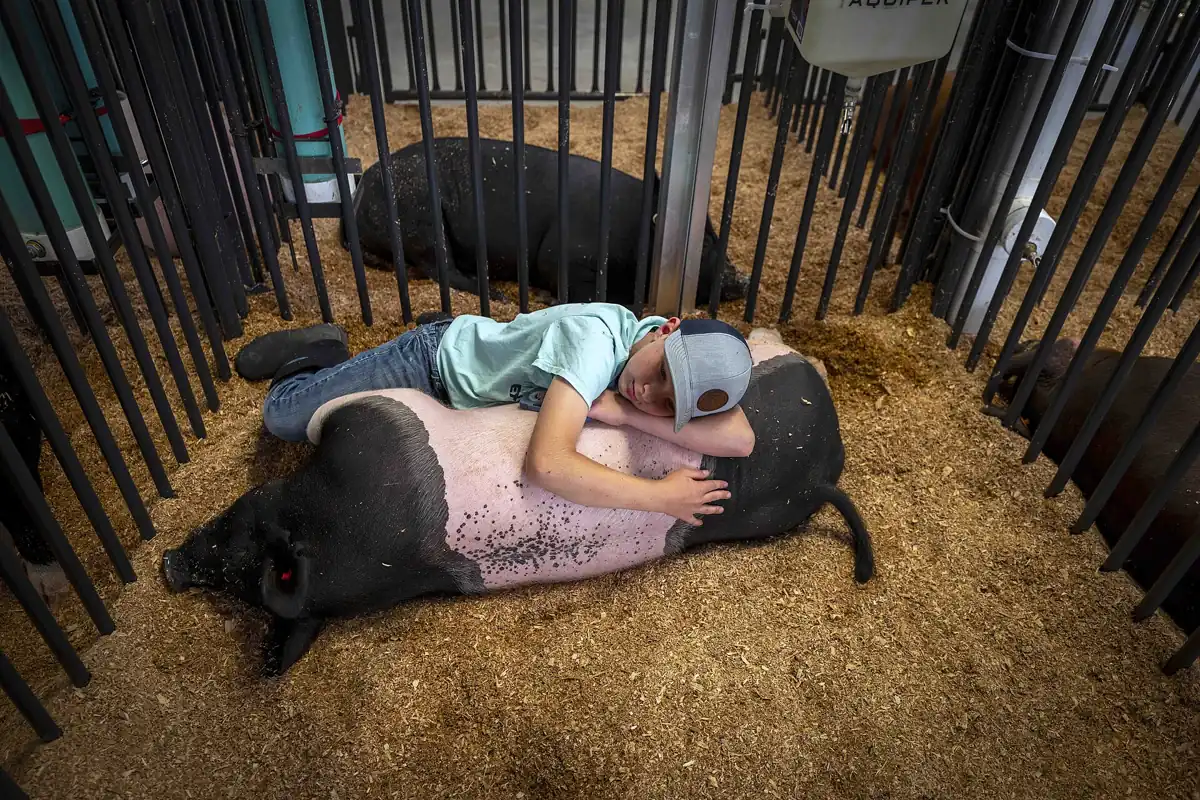
The fair’s machinery starts before the public gates open: camping packets are picked up and 4-H interview judging takes place on Tuesday July 14, and Extension’s guidance requires Animal Quality Assurance certification for every member showing animals. Once the fair opens on Wednesday July 15, the livestock programme takes the first stretch — swine, sheep and goat shows in the pavilion, and a deep bench of horse events: ranch horse and performance horse shows, plus an open horse show. Smaller exhibitors get their own stage in the pocket pet and cat show, and the 4-H Food Booth keeps the barns fed. This is the working half of the fair, where a year of feeding and fitting is judged in public.
The Midway Wakes Up
The carnival opens at noon on July 15 alongside indoor and outdoor vendors, and the grounds shift from show-ring quiet to fair noise. The published schedule puts a magician on the midway stage during the day, and the programme adds a beer garden and Farm Olympics — farm skills turned into spectator sport. Exhibits fill the Ag Building and Trade Center while the midway runs, so the fair’s two halves overlap: judged work indoors, entertainment outdoors.
Two Nights of Professional Rodeo
The grandstand week is the fair’s loud finish. The Central Montana PRCA Rodeo runs two nights, Wednesday and Thursday July 22 and 23, and the schedule’s billing gives those nights their texture: a memorial breakaway roping event honouring Shari Gardner, mutton bustin’ for the youngest riders, and a Tough Enough to Wear Pink night. The rodeo slack is billed with free admission in the fair’s schedule. None of this touches the gate — there is no gate — but the grandstand seats themselves are ticketed.
The Closing Build
Friday July 24 belongs to the concert: the artist’s own listing names Chris Cagle as the 2026 headliner, with a 7 p.m. start — a booking belonging to the 2026 edition and no other year. The local event calendar’s description of the fair adds a demolition derby to the closing build before the fair wraps on Saturday July 25. By then the fortnight has run its full arc: interviews and horse shows at one end, rodeo and a headline concert at the other.
Planning Your Visit
Nothing at the Gate, Nothing to Park
The fair’s exhibitor general information, in its published edition, states the policy in plain words: there is no entrance gate charge for the fair, and there is no charge for parking your vehicle at the fairgrounds. No 2026 document in the record reverses that position, so it is carried here as the fair’s own published rule. Families can walk in and watch the daytime programme without spending anything at the fence — the budgeting question is not whether you can afford to enter, but what you choose to buy seats for.
What the Grandstand Costs
The grandstand is where the fair charges. For the 2026 rodeo, the fair’s own listing prices a ticket at $20 per person for either night, a combined Wednesday and Thursday ticket at $35, and children aged 6 to 12 at $12; a Christmas-special combined ticket at $30 ran through December 31, 2025, and belongs to that offer only. Wednesday doubles as Military and Pioneer Night: seniors aged 70 and older and military visitors with identification receive a complimentary ticket. Concert and rodeo tickets are event tickets — they buy a seat for a night, never admission to the grounds.
Camping Packets and Paperwork
Fair-week camping is part of the fair’s own schedule — its first line has campers collecting their camping packets at the Trade Center at 8 a.m. on Tuesday July 14. The offer plainly exists, with packets and paperwork attached; what the record does not publish is a rate, so no figure is quoted here and campers should confirm terms with the fair office before bringing a rig to Lewistown. Exhibitors work to the same rhythm: the entry system’s window for the 2026 division sits slightly wider than the book’s span — machinery dates, not public fair days.
A Shape for the Fortnight
The fair rewards two visits more than one long day. Come first during the opening stretch, when the barns and exhibit buildings are the show: walk the livestock pavilion during the swine, sheep and goat shows, watch a ranch horse class, and give the Ag Building exhibits a slow look before the crowds build. Return for grandstand week with seats chosen in advance — rodeo on Wednesday or Thursday night, then the concert on Friday. If you can manage only one evening, make it a rodeo night, and arrive early enough to eat from the 4-H Food Booth first.
Free at the Fence, Ticketed at the Grandstand
Set this fair beside the more common Montana model and its structure stands out. Many fairs charge at the gate by the day or the week, then price the rodeo and concert on top. Lewistown’s fair inverts the first half of that model and keeps the second: entry and parking carry no charge under its published policy, while the professional entertainment is sold as seated events. The comparison that matters is not free versus paid; it is where the fence sits. Here it sits at the grandstand steps, and everything short of it is open to anyone who walks in.
Before You Set Out
- Budget for seats, not for entry — the fair’s published policy charges nothing at the gate and nothing to park, while rodeo and concert nights are ticketed.
- Pick your rodeo night with the offers in mind: $20 a night or $35 for both in 2026, children 6 to 12 at $12, and Wednesday’s Military and Pioneer Night gives seniors 70 and older and military visitors a complimentary ticket.
- Do not wait for a camping price to appear in print — the fair publishes the packet pickup, not a rate, so confirm camping terms with the fair office directly.
- Check which ticket office you need: it sits in the Trade Center before fair week and under the grandstand during the fair.
- Treat the concert bill as one edition’s booking — the headliner named for 2026 belongs to that year alone.
- If you are exhibiting from a neighbouring county, confirm your class eligibility against the fair’s own rules before entering.
- Keep January separate: the winter event on these same grounds is a different fair in a different season.
Beyond the Fairgrounds
Lewistown sits near the middle of Montana, and the fairgrounds on Fairgrounds Road are part of the town’s working furniture rather than a field used once a year. The same grounds host a separate winter fair each January, run under its own organisation — nothing about that January event belongs to the summer fair’s programme. During fair fortnight, cafés and motels take the overflow, and the drive in crosses the ranch country whose families fill the entry lists.
Why This Fair Carries a Region’s Weight
A free gate is a policy, and policies say who a fair thinks it belongs to. By charging nothing to enter and nothing to park, the Central Montana Fair keeps its exhibit halls and show rings open to every family in its wide trade area — including the neighbouring-county exhibitors its own rules invite in and the Petroleum County youngsters who show through its 4-H division. The professional end pays its way at the grandstand instead: the judged work stays public, and the spectacle carries a ticket price like spectacle anywhere. In the centre of a big state, that makes the fair less a county’s possession than a region’s meeting — two weeks when central Montana’s year’s work is brought to one set of grounds to be compared and celebrated.
Frequently Asked Questions
Is it really free to get into the Central Montana Fair?
Under the fair’s published general information, yes at the fence: there is no entrance gate charge, and parking at the fairgrounds carries no charge either. What costs money is a grandstand seat — the rodeo and the concert are ticketed events — along with the ordinary spending of a fair day.
When does the fair run, and when should a visitor come?
The fair’s own book spans July 14 to 25, 2026, and the local calendar summarises its standing slot as the last full week of July. The public opening is Wednesday July 15, when the carnival and vendors start; livestock and horse shows fill the opening stretch, and the grandstand nights land on July 22, 23 and 24. The longer span printed by the entry system is exhibitor machinery, not extra public days.
What do the rodeo nights cost in 2026?
The fair’s listing for 2026 prices one rodeo night at $20 per person, both nights together at $35, and children aged 6 to 12 at $12. Wednesday is Military and Pioneer Night, when seniors aged 70 and older and military visitors with identification can collect a complimentary ticket. The rodeo slack is billed as free admission in the fair’s schedule.
Can exhibitors from outside Fergus County take part?
Yes, within the fair’s own rules. Open exhibits accept residents of Fergus County or adjoining counties, and the 4-H division’s eligibility list reaches further, naming eight counties — which is how Petroleum County exhibitors, who share an Extension programme with Fergus, come to show at Lewistown. Eligibility is an entry arrangement; it does not change whose fair this is.
What to Expect From the Next Fergus County Montana Fair Festival
How often is the Fergus County Montana Fair Festival held?
The Central Montana Fair is held once a year in Lewistown, running across roughly two weeks of July: judging, exhibits and horse shows first, then a grandstand week to close.
When is the next Fergus County Montana Fair Festival?
On the fair’s standing pattern, expect the last full week of July, as the local calendar summarises it — with the edition’s machinery beginning a few days earlier, as the 2026 book opened on July 14 ahead of its July 15 public start. The fair publishes each year’s exact span in its own book and schedule, and those are the dates to plan against.
Will the dates change?
The shape is steadier than the numbers: the fair’s identity is tied to late July, but the calendar span moves as the month requires — the book’s span, the public opening and the entry window already sit a day or two apart within a single edition. Treat the published span for the year ahead as the authority.
A fair that charges nothing at its gate and still fills two weeks is making an argument about itself: that the region’s work, shown in public, is attraction enough. The rodeo and concert bring the crowds in; the exhibit halls and show rings are why the fair carries a region’s name. Walk in free, by all means — then stay for the judging.
One Comment