Fayette County Kentucky Railbird Festival
Two racetrack grounds frame the short life of this festival so far. The Railbird Festival brings more than thirty acts of Americana, roots, indie-folk and country music to three stages in Lexington, the seat of Fayette County, Kentucky, across one weekend each time it is held. Newspaper layers sometimes print a longer name, Railbird Music Festival, and both forms stand in the record side by side, neither absorbed into the other. Few young festivals leave such a layered trail behind them: a reference layer fixes the chronology, newspaper layers carry the lineups and the weather, a music-press layer preserves the first weekend in detail, and trade layers explain who built the event. Read together, those layers describe an inaugural edition at Keeneland, a cancellation, a difficult return, a pause, a change of address across town, and a fully documented edition at the new home in two thousand twenty-six.
About
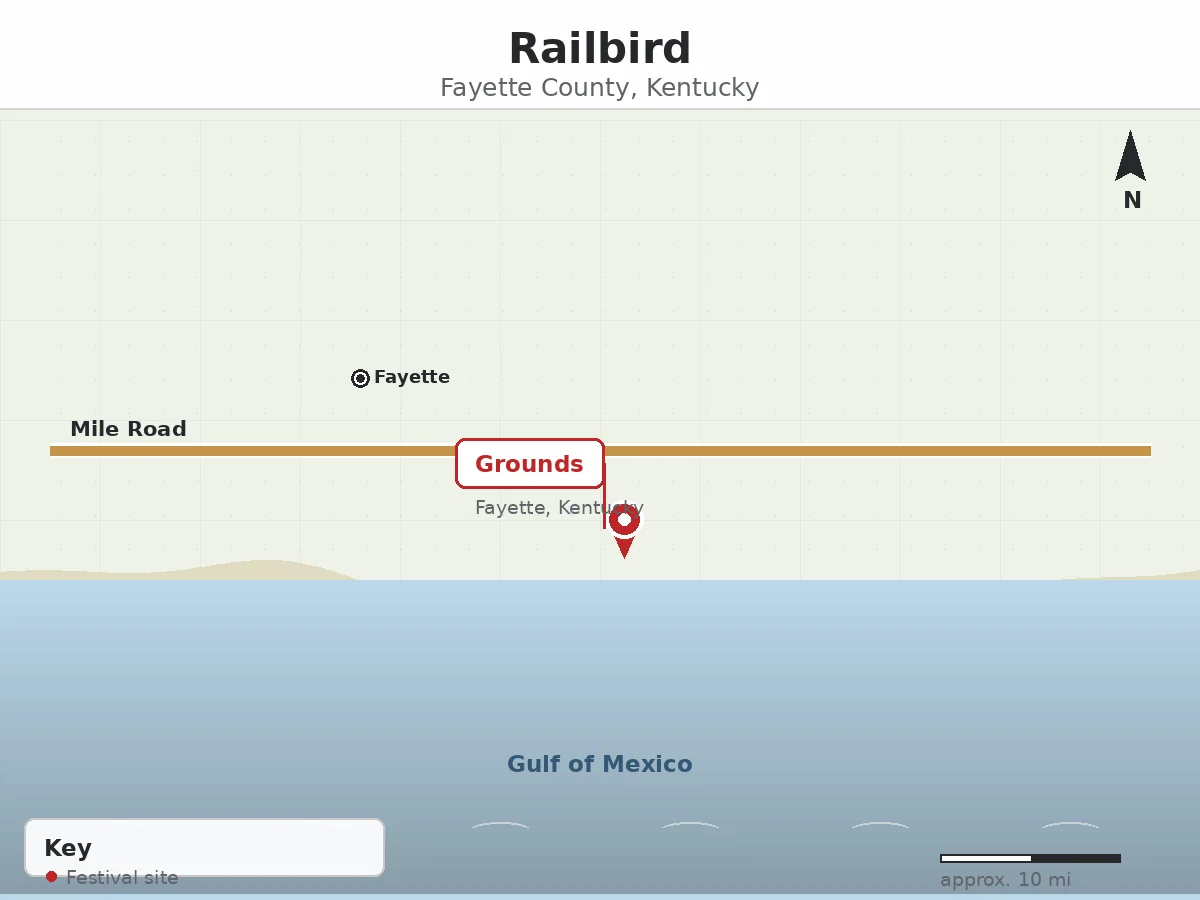
The sheet behind this article names the event with a county prefix, Fayette County Kentucky Railbird Festival, yet no layer read prints that longer form. The published record knows two names: Railbird Festival, used by a reference layer and by newspaper layers, and Railbird Music Festival, used in newspaper and music-press layers. This article keeps both exactly as printed rather than blending them into a single tidy title. Lexington hosts the festival, and reference layers confirm the city as the county seat of Fayette County, the community the sheet’s title points to. Two homes appear in the record. The Grounds at Keeneland hosted the editions of two thousand nineteen and two thousand twenty-one, according to a reference layer. From two thousand twenty-three onward, newspaper layers place the festival at The Infield at Red Mile, also printed as The Infield at The Red Mile, on Red Mile Road; the street address printed in those layers is not reproduced here. The producing credit also splits by period. A reference layer names AC Entertainment for two thousand nineteen, and trade layers call that company the festival’s producer at launch, working alongside a local co-producer. The same reference layer names C3 Presents from two thousand twenty to the present. Both credits are reported for their own periods and left unmerged, and the festival itself is a ticketed production throughout, with no layer describing free entry at any point in its history.
Quick Facts
| Item | Detail |
| Published names | Railbird Festival; Railbird Music Festival |
| Host city | Lexington, Fayette County, Kentucky |
| County seat | Lexington serves as the county seat of Fayette County |
| First edition | Tenth to eleventh of August, two thousand nineteen |
| First home | The Grounds at Keeneland |
| Present home | The Infield at Red Mile, on Red Mile Road |
| Stages | Three stages, including the named Limestone Stage |
| Musical focus | Americana, roots, indie-folk and country performances |
| Admission | Ticketed; two-day general admission started at two hundred sixty-five dollars for two thousand twenty-six, per a festival-preview layer |
| Producers as printed | AC Entertainment at launch; C3 Presents from two thousand twenty onward |
History
A reference layer and newspaper layers agree on where the story opens: the first Railbird Festival was held on the tenth and eleventh of August, two thousand nineteen, at Keeneland. Trade layers describe a launch by AC Entertainment together with community partners, and a music-press layer fills in the weekend itself — more than thirty acts spread across three stages, headlined by The Raconteurs and Hozier, with Tyler Childers, Brandi Carlile, Gary Clark Jr. and Old Crow Medicine Show also on the bill. The same music-press layer describes tiered general admission and VIP pass structures for that first edition, a sign the event arrived as a fully commercial production rather than a casual gathering. The second chapter closed before it opened. A lineup was announced for August two thousand twenty, but a reference layer records that the edition was cancelled because of the COVID-19 pandemic. The festival returned to Keeneland in two thousand twenty-one, where a newspaper layer’s account dwells less on the music than on the conditions: long lines and a lack of water in extreme heat. Two thousand twenty-two brought no edition at all; a newspaper-derived layer reports that the organisers announced a pause and a move to the Red Mile. When the festival resurfaced, its address had changed. Newspaper layers place it at the Red Mile infield from two thousand twenty-three onward, and a newspaper layer counts the two thousand twenty-six edition as the fourth year at that venue, a published billing reported here as printed rather than converted into any larger claim about the festival’s age.
What to Expect
Music fills nearly every corner of the documented programme. Newspaper layers describe Americana, roots, indie-folk and country performances spread across three stages, and a newspaper schedule layer names one of them: the Limestone Stage. Beyond the performances, the same newspaper layers list curated bourbon experiences and local food offerings, giving the weekend a Kentucky flavour away from the microphones. The fullest picture comes from the two thousand twenty-six edition, held on the sixth and seventh of June at The Infield at Red Mile. Newspaper layers report The Lumineers headlining on Saturday the sixth of June and Tyler Childers headlining on Sunday the seventh of June, with Caamp, Mt. Joy, Zach Top, Ella Langley, Sam Barber, Stephen Wilson Jr., Watchhouse, The Wallflowers, Muscadine Bloodline, Houndmouth, Shane Smith & the Saints, Shakey Graves, Margo Price and others completing a bill of more than thirty acts across the three stages. Tyler Childers appears in both fully documented lineups, two thousand nineteen and two thousand twenty-six, a thread of continuity between the Keeneland beginning and the Red Mile present. A music-press layer’s account of the inaugural weekend shows the same shape — headliners at the top, a deep undercard beneath, and three stages running in parallel — so the structure reported for two thousand twenty-six follows the pattern set at Keeneland rather than inventing a new one. Visitors should picture a large commercial festival rather than a small town fair: tiered passes, headline draws on separate days, and a crowd spread across an infield rather than gathered along a main street.
Planning Your Visit
Tickets frame every plan for this festival, because Railbird is a ticketed event and no layer read describes free entry. A festival-preview layer states that two-day general admission tickets started at two hundred sixty-five dollars for the two thousand twenty-six edition, and that a presale opened on the twenty-second of October, two thousand twenty-five; both details belong to that layer and that year rather than standing as permanent prices. The tiered structure reported for two thousand nineteen, with general admission and VIP passes described by a music-press layer, suggests buyers should compare tiers carefully before choosing. Timing matters in another way. The Keeneland editions sat in August, while the documented Red Mile edition ran on the sixth and seventh of June, so the month itself has moved between eras and deserves checking against the current year’s announcement. The two thousand twenty-one newspaper account of long lines and scarce water in extreme heat is the record’s own planning lesson: arrive hydrated, expect queues, and build slack into the day. Ticketing and contact routes exist on the organiser’s own channels, noted here by their existence only. Because the venue is a working racing property, the Red Mile’s own racing programme continues outside the festival weekend and belongs to the venue, not to this event, so racing fixtures should never be mistaken for festival programming.
For a useful comparison, see the Fayette County Kentucky Mayfest Arts Fair Festival for another county festival.
A Sample Itinerary
A sample weekend follows the documented shape of the two thousand twenty-six edition at the Red Mile infield. On Saturday, arrive early enough to learn the layout of the three stages before the crowds thicken, then divide the afternoon among the Americana, roots and country sets, leaving space for the curated bourbon experiences and local food offerings the newspaper layers describe. Keep the evening clear for the Saturday headliner, The Lumineers, whose closing set the newspaper layers place at the top of the sixth of June bill. Sunday can run at a gentler pace: revisit a stage missed the day before, catch the Limestone Stage named in the newspaper schedule layer, and graze the food offerings between sets. The weekend closes with Tyler Childers headlining on Sunday the seventh of June, the same artist who appeared on the inaugural bill at Keeneland in two thousand nineteen, which makes the Sunday finale a fitting bookend for anyone who followed the festival from its first weekend.
How the Two Eras Compare
Railbird’s own history offers the fairest comparison, because the festival has lived two distinct lives. The Keeneland era, documented for two thousand nineteen and two thousand twenty-one, belonged to August heat: an ambitious launch with more than thirty acts, then a return remembered in print for long lines and scarce water. The Red Mile era, documented from two thousand twenty-three onward, belongs to early June and a different footprint, the infield of a harness racing property rather than the grounds at Keeneland. The producing credit changed across the same span: AC Entertainment at the launch, then C3 Presents from two thousand twenty onward, as a reference layer prints the two periods. What stayed constant is the formula — three stages, a bill mixing Americana, roots, indie-folk and country names, and headliners strong enough to anchor separate days. Measured against its own first edition, the two thousand twenty-six festival reads as a continuation under new stewardship at a new address, not a reinvention of what the launch weekend established.
A Visitor Checklist
- Confirm the current year’s dates before booking, since the festival month has shifted between eras.
- Buy tickets through the organiser’s own channels, and note the tier differences before paying.
- Carry water and plan for heat, remembering the two thousand twenty-one reports of long lines.
- Map the three stages on arrival, including the Limestone Stage, so favourites are not missed.
- Leave time between sets for the bourbon experiences and local food offerings.
- Decide in advance which headliner matters more, Saturday or Sunday, and protect that evening.
- Keep presale dates in mind; the two thousand twenty-six presale opened the previous October.
Beyond the Festival Grounds
Step outside the infield and the setting explains much of the festival’s identity. Lexington is the county seat of Fayette County, and the festival has always been an urban event anchored to racing ground rather than a county fairground: first The Grounds at Keeneland, then The Infield at Red Mile on Red Mile Road. The Red Mile’s own racing programme is the venue’s year-round business and remains separate from the festival, which borrows the infield for its weekend. That borrowing shapes the experience — stages on open infield grass, sightlines across a track property, and a site built for crowds who gather around a rail. A visitor with time beyond the music is still in a working county seat, and the festival’s bourbon experiences and local food offerings carry a taste of the surrounding city onto the grounds themselves. Even the festival’s two eras are separated by only a short cross-town journey, so its whole documented life has unfolded within the same Lexington landscape.
Why Railbird Matters
Railbird matters because its record shows how a modern festival survives its own interruptions. Launched by AC Entertainment with community partners, in the words of trade layers, it lost its second year to a pandemic cancellation, endured a difficult return in extreme heat, paused entirely in two thousand twenty-two, and still came back at a new venue with a bill strong enough to fill three stages. The reference layer’s split producing credit — AC Entertainment, then C3 Presents from two thousand twenty onward — marks the handover that carried it through. For Fayette County, the festival adds a large ticketed music weekend to a city whose grounds are better known for racing, and its two fully documented lineups, two thousand nineteen and two thousand twenty-six, bookend the story neatly: a familiar name recurs in Tyler Childers, the three-stage format holds, and only the address changes.
Frequently Asked Questions
Which acts headlined the very first Railbird weekend?
A reference layer and a music-press layer describe the inaugural festival at Keeneland on the tenth and eleventh of August, two thousand nineteen, headlined by The Raconteurs and Hozier, with Tyler Childers, Brandi Carlile, Gary Clark Jr. and Old Crow Medicine Show among more than thirty acts.
Why did the festival disappear for a year in two thousand twenty-two?
A newspaper-derived layer reports that the organisers announced a pause that year together with a move to the Red Mile, and newspaper layers place the festival at the Red Mile infield from two thousand twenty-three onward, where it has remained in the documented record since.
What did a two-day general admission ticket start at for two thousand twenty-six?
A festival-preview layer states that two-day general admission tickets started at two hundred sixty-five dollars for the two thousand twenty-six edition, with a presale on the twenty-second of October, two thousand twenty-five; that figure belongs to that layer and that year alone.
Has the company behind the festival changed since the launch?
A reference layer names AC Entertainment for two thousand nineteen and C3 Presents from two thousand twenty to the present, while trade layers describe AC Entertainment as the producer at launch alongside a local co-producer; the two credits are reported for their own periods and are not merged.
What to Expect From the Next Fayette County Kentucky Railbird Festival
How often is Fayette County Kentucky Railbird Festival held?
Each documented edition has filled a single two-day weekend, but the run has not been unbroken: the two thousand twenty edition was cancelled after its lineup announcement, and no edition was held in two thousand twenty-two.
When is the next Fayette County Kentucky Railbird Festival?
The layers gathered here document editions through the sixth and seventh of June, two thousand twenty-six, and carry word of no later date, so the next edition’s timing rests on a future announcement through the organiser’s own channels.
Will the dates change?
They already have. The Keeneland editions sat in August, in two thousand nineteen and two thousand twenty-one, while the fully documented Red Mile edition ran in early June, so a future move of weekend or month would follow precedent rather than break it.
Closing Thoughts
From a Keeneland launch through cancellation, heat, pause and relocation, Railbird’s documented trail is unusually complete for a festival of its age. What the record promises is not permanence but resilience: three stages, a deep bill, and a Lexington infield ready for the next announced weekend.