Doña Ana County New Mexico Fair Festival
Every autumn, the borderland’s fair season gathers at one set of grounds west of Las Cruces, and the event waiting there carries a bigger name than any single county. The Southern New Mexico State Fair and Rodeo is the fair of record for Doña Ana County: a regional state fair run by volunteers, drawing exhibitors from eight counties across two states, and staged over five days at the turn of September into October. Visitors who search for a fair under the county’s own name find this one, because no event published as a Doña Ana County Fair exists in its place. What exists instead is something larger — a fair that belongs to a whole region yet stands, in every practical sense, as Las Cruces’ own.
A State Fair With a County Address
The published name matters here, and the article keeps it exact: Southern New Mexico State Fair and Rodeo. The fair is organised by the fair itself, a non-profit corporation governed by an all-volunteer board of directors, and its published service area reaches well beyond the county line. Exhibitors come from Doña Ana, Grant, Hidalgo, Luna, Otero, Sierra and Catron counties in New Mexico, and from El Paso County in Texas, to show at Las Cruces. That reach makes the fair a shared institution, though it never absorbs the separate county fairs those places hold on their own grounds in their own weeks.
The grounds sit about twelve miles west of Las Cruces, reached from Interstate 10, at 12125 Robert Larson Boulevard. Las Cruces is the seat of Doña Ana County, and the fairgrounds stand at the county’s western edge, close enough that the fair functions as the city’s fair while serving a countryside that stretches to the Arizona line and the Mexican border. One further distinction protects readers from the commonest mix-up in New Mexico fair coverage: this is not the New Mexico State Fair, which belongs to Albuquerque and EXPO New Mexico. The southern fair is its own event, with its own board, its own grounds and its own season.
Quick Facts
| Item | Detail |
| Published event name | Southern New Mexico State Fair and Rodeo |
| Fair town | Las Cruces, at fairgrounds west of the city |
| County seat | Las Cruces |
| Grounds | Southern New Mexico State Fairgrounds, 12125 Robert Larson Boulevard |
| Organiser | The fair itself, a non-profit run by an all-volunteer board of directors |
| Season | Five days at the turn of September into October, Wednesday to Sunday; 2026 public days September 30 to October 4, as published by the fair |
| 2026 billing | 60th Annual Fair, as billed by the fair |
| Admission, 2026 layer | Adults fifteen dollars; children seven to fourteen ten dollars; ages six and under free |
| Rodeo | Ranch Rodeo and PRCA performances, included in general admission |
| Camping | No public camping rate is published |
A History Told by Its Own Billing
The fair’s history, as its own record tells it, is best read through the way it presents itself rather than through dates nobody has published. In 2026 the fair billed itself as the 60th Annual Fair. That billing is carried here exactly as billing: annual counts skip years, pause and restart across the life of a fair, and no founding year is calculated from this one. An article that turned the number into a birth year would be inventing the very fact it claimed to report.
What the record does support is continuity of form. The fair has long been organised as a volunteer-run non-profit, governed by a board rather than by the county, and its service to the surrounding counties is written into its own sponsor material. Its general rules tradition treats the rodeo, the concerts and the speedway as part of what a general admission ticket buys, a habit that still shapes how the modern fair is priced. Exhibitors arrive before the public does, checking livestock in on the Tuesday ahead of opening day, which is why some documents print a span beginning a day earlier than the public run. That earlier day belongs to the barns, not to visitors.
For a useful comparison, see the De Baca County New Mexico DeBaca County Fair Festival for another county festival.
What to Expect
Rodeo Nights Inside the Gate
The rodeo is the fair’s anchor entertainment, and it is included in general admission rather than sold as a separate ticket. The documented shape for 2026 runs a Ranch Rodeo on Thursday night, PRCA rodeo performances on Friday and Saturday nights, and a closing performance on Sunday afternoon. For families pricing a visit, that inclusion is the fair’s defining value: the evening’s main show costs nothing beyond the gate.
Livestock, the Auction and the Show Rings
Exhibitors from eight counties fill the barns, and the competitive week peaks on Friday evening with the Junior Livestock Auction, set for six in the evening on October 2 in the fair’s own 2026 schedule. Youth exhibitors show the animals they have raised through the week, and the auction converts a season of feeding and fitting into the fair’s most consequential hour. Around it sit the livestock shows themselves, the royalty pageant and the exhibit halls that carry the region’s baking, sewing, art and produce.
Midway, Music and the Speedway Tradition
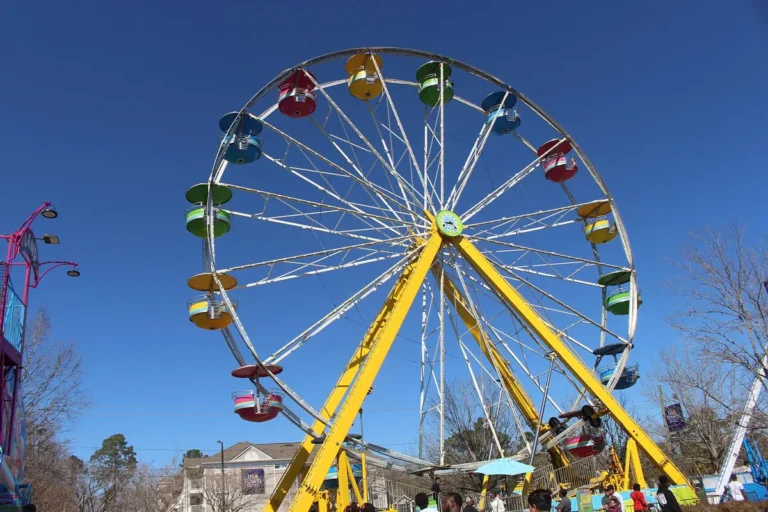
A carnival midway runs through the fair’s five days, and live music plays daily on multiple stages, with local and regional acts carrying much of the programme. The fair’s own rules tradition also embraces speedway elements at the grounds, part of a long-standing habit of folding several kinds of entertainment into one admission. Wednesday, the opening day in 2026, was billed as Sisbarro Day, a sponsor day in the fair’s official schedule, and it carried discounted admission across the whole day.
Hours Across the Five Days
The hours published for 2026 in local layers run Wednesday from nine in the morning to ten at night, Thursday from nine to eleven, Friday and Saturday from nine to midnight, and Sunday from ten in the morning to six in the evening. Those hours belong to that edition and are printed here as its shape, not as a promise for any other year. The pattern worth remembering is simpler: mornings belong to the barns and exhibits, and the fair runs latest on its two weekend nights.
Planning Your Visit
Getting to the Grounds
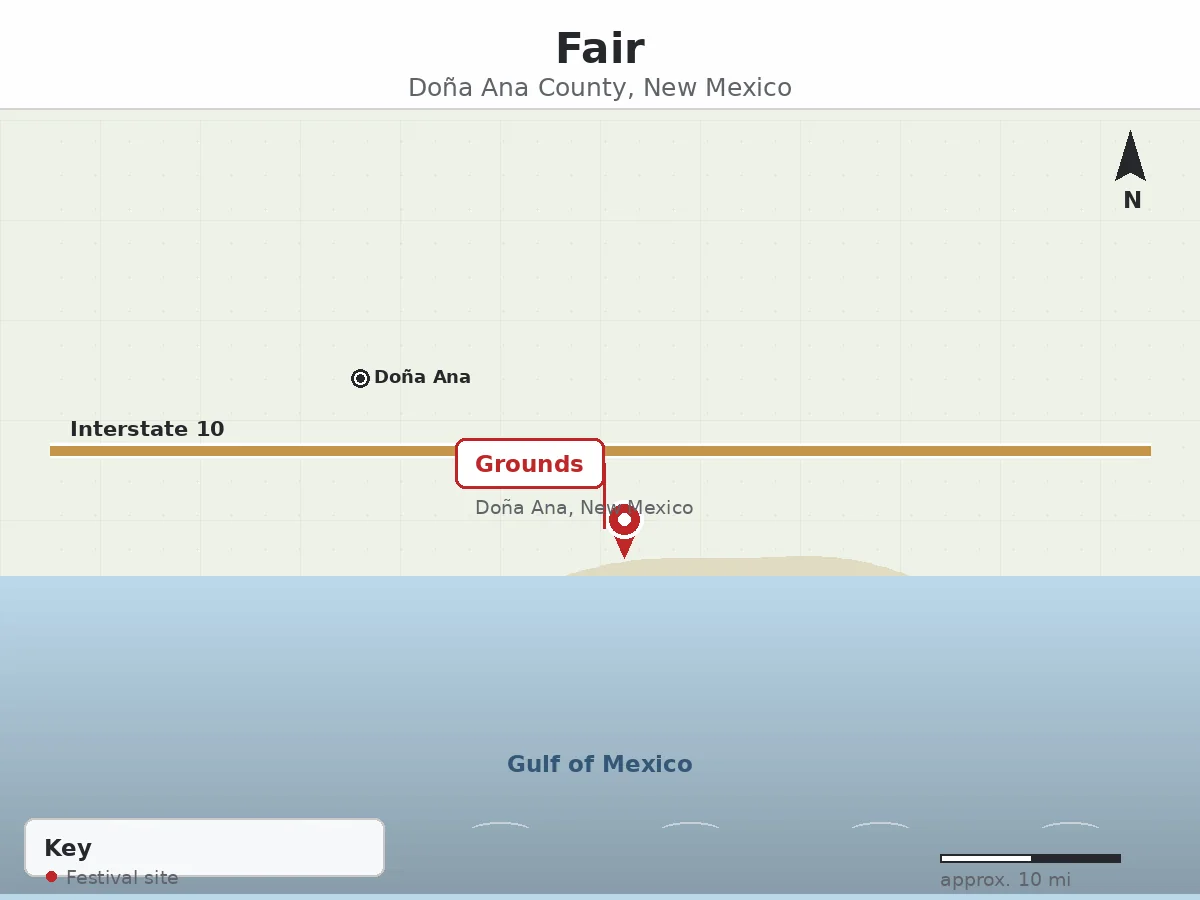
The fairgrounds stand west of Las Cruces at 12125 Robert Larson Boulevard, about twelve miles from the city, with Interstate 10 the natural approach. Visitors based in Las Cruces should treat the trip as a short highway drive rather than a cross-town errand, and allow time at the gate on Friday and Saturday evenings, when the rodeo crowds arrive. Exhibitor traffic moves on its own schedule from Tuesday, so the roads near the grounds are busiest before the public gates even open.
What Admission Costs in the Current Layer
A directly published fair-side price list for 2026 was not part of the record this article rests on; the current figures come from local layers reporting the fair’s official 2026 schedule, and they are carried hedged to that edition. Adults pay fifteen dollars, children from seven to fourteen pay ten dollars, and children six and under enter free. Five dollars comes off admission all day Wednesday and until two in the afternoon on Thursday and Friday. Saturday brings a discount for military members and first responders showing valid identification, though the amount is not stated in the layer that reports it. Carnival rides sit outside these figures in the fair’s documented pattern, so a family budget should treat the midway as a separate line.
A Sample Day at the Fair
Arrive on a Friday morning soon after the nine o’clock opening and walk the livestock barns while the air is still cool, watching exhibitors wash, brush and settle animals before judging. Late morning belongs to the exhibit halls, where the region’s quilts, preserves and photography are displayed at their freshest. Take lunch from the food row, then return to the show rings for an afternoon of judging before the grounds shift toward evening. By six, be in place for the Junior Livestock Auction, the emotional centre of the fair’s week. Stay on as the lights come up for the PRCA rodeo that night, already paid for in your admission, and finish with a slow pass down the midway before the midnight close.
Staying Over and Camping
No public camping rate for fair week is published in the fair’s record, and none is quoted here. Visitors travelling in recreational vehicles should arrange a commercial park or a Las Cruces hotel rather than counting on a fairgrounds hookup, since the camping machinery visible in the fair’s rules tradition serves the exhibitor side of the event. The city holds the nearest full range of lodging, roughly twelve miles east of the gates.
How This Fair Compares
Set beside a typical single-county fair, the Southern New Mexico State Fair and Rodeo operates at a different scale: its exhibitor base spans eight counties and two states, its run stretches five days, and its headline entertainment is a PRCA rodeo folded into the ticket rather than bolted on. Set beside the New Mexico State Fair in Albuquerque, it is the smaller and more regional of the two, run by volunteers rather than a state enterprise, and priced through local discount windows that reward weekday and early-arrival visits. The comparison that flatters it most is with its own past pricing: earlier editions sold admission through complicated ladders that changed by the hour, while the current layer is a single adult and child price with clearly posted moments when five dollars comes off.
Checklist for Fair Week
- Confirm the current edition’s dates and hours before travelling, since each year’s schedule is published fresh
- Carry identification if you plan to claim the Saturday military or first responder discount
- Arrive before two in the afternoon on Thursday or Friday to catch the five-dollar discount window
- Budget the carnival midway separately from admission
- Be seated by six on Friday evening for the Junior Livestock Auction
- Remember that the Tuesday before opening is exhibitor check-in, not a public day
- Book Las Cruces lodging early, as no public fair camping rate is published
- Bring sun protection for the morning barns and a layer for the evening rodeo
Beyond the Fairgrounds
Las Cruces rewards the visitor who adds a day. The city’s historic Mesilla district, with its plaza, church and adobe storefronts, sits a short drive from the fairgrounds’ side of town, and the Organ Mountains rise to the east with trailheads that fill a cool morning. The region’s chile harvest season overlaps the fair’s dates, and farm stands and roasters along the valley sell the crop the whole borderland celebrates each autumn. Hatch, the village up the valley famous for its own chile festival over Labor Day weekend, runs a separate event from this fair; travellers who time a longer trip can catch both, but the two are not the same occasion and neither is part of the other’s programme.
Why This Fair Matters to the Borderland
A fair that draws exhibitors from eight counties does work none of those counties could do alone. It gives a young stockman from Luna County or a quilter from Sierra County a bigger stage than a home-county show can offer, and it concentrates the region’s agricultural year into one week of judging, selling and comparison. Because a volunteer board rather than a government runs it, the fair also stands as a piece of civic self-organisation: neighbours raising the money, setting the rules and staffing the gates for an institution older in spirit than any single edition’s billing. For Las Cruces, it anchors the autumn calendar, pulling hotel nights, restaurant tables and fair-week wages into the city at the moment the chile harvest peaks.
Frequently Asked Questions
Is this fair actually called the Doña Ana County Fair?
No. The published name is the Southern New Mexico State Fair and Rodeo, and the fair is never styled with the county’s name. Doña Ana County enters the picture because Las Cruces, its seat, hosts the grounds and because county exhibitors show here alongside those from seven other counties.
What does a family pay to get in?
On the current layer reporting the fair’s official 2026 schedule, adults pay fifteen dollars and children from seven to fourteen pay ten dollars, with ages six and under free. Five dollars comes off all day Wednesday and until two in the afternoon Thursday and Friday, and the rodeo is included rather than charged on top.
Is the rodeo a separate ticket?
It is not, on the documented record. The fair’s own rules tradition includes the rodeo in general admission, and the local layer for 2026 states the same for the Ranch Rodeo, the Friday and Saturday PRCA performances and the Sunday afternoon show. Carnival rides, by contrast, are priced apart from admission.
Is camping available at the grounds during fair week?
No public camping rate is published, so visitors should not plan around one. Camping arrangements in the fair’s own rules serve the exhibitor side of the event. Everyone else is better placed in a Las Cruces hotel or a commercial park in the valley.
What to Expect From the Next Doña Ana County New Mexico Fair Festival
How often is the Doña Ana County New Mexico Fair Festival held?
The fair is held once a year, as a five-day event running Wednesday to Sunday. Its rhythm is agricultural rather than commercial: exhibitors check animals in on the Tuesday, the public days follow, and the week closes with the Sunday afternoon rodeo performance and an earlier evening close than the weekend nights.
When is the next Doña Ana County New Mexico Fair Festival?
The next edition is expected in the fair’s established season, at the turn of September into October, following the pattern the fair’s own site published for 2026. Exact dates are announced by the fair for each edition, and readers should confirm them on the fair’s own channels before booking travel, since the span is set fresh every year.
Will the dates change?
Dates can shift modestly from year to year, because a Wednesday-to-Sunday fair anchored to the turn of September and October lands on different calendar days each cycle. The season itself has been consistent in the record, so travellers can plan around late September and early October while treating the precise span as unconfirmed until the fair publishes it.
Closing
The fair west of Las Cruces asks visitors to hold two ideas at once: it is Doña Ana County’s fair in every way that matters to a traveller, and it is proudly something bigger, a state fair for the whole southern borderland. Come for the rodeo that the gate already covers, stay for the auction that rewards a year of young work, and time a weekday arrival so the discount window does part of the paying. Few fairs anywhere let one ticket stretch across eight counties’ worth of exhibitors, and none stretches it further than this one does at the edge of the desert.