Dallas County Alabama Alabama Tale Tellin’ Festival
Selma has a claim on the American story that few small cities can match, but there is a quieter tradition here that has outlasted most of them. For nearly five decades, the Alabama Tale Tellin’ Festival has turned the spoken word into an annual gathering, drawing professional storytellers to a city that has always known the power of a well-told tale. It is one of the oldest continuous storytelling festivals in the state, and it belongs to the Black Belt as surely as the river that runs beside it.
What makes this festival unusual is its intimacy. There is no midway, no vendor grid stretching for blocks. There is a stage, a room full of listeners, and a lineup of tellers whose craft is making an audience lean in. Founded by one of Alabama’s most beloved writers, the event carries a literary pedigree that most small-town festivals cannot claim, and it has kept that character for almost fifty years.
| Festival name | Kathryn Tucker Windham Alabama Tale Tellin’ Festival |
| Location | Downtown Selma, Dallas County, Alabama |
| Typical timing | Mid-October |
| Founded | 1978 |
| Format | Evening storytelling performances, plus school outreach |
| Venue | Carneal Cultural Arts Center, 3 Church Street |
| Organizer | ArtsRevive, with state arts and tourism support |
| Signature feature | The Swappin’ Ground, where community members tell their own tales |
About the Tale Tellin’ Festival
The Tale Tellin’ Festival is an annual celebration of storytelling held in downtown Selma each October. Professional tellers from across the region perform over two evenings, mixing folk tales, family history, humor, and music. Since 1978 it has been a fixture of the city’s cultural calendar, and it is unusual among Alabama festivals in that its entire program is built on the oral tradition rather than on food, crafts, or commerce.
The event is organized by ArtsRevive, a Selma arts nonprofit, and supported by the Alabama State Council on the Arts and the state tourism department. It draws its identity from Kathryn Tucker Windham, the Selma author and storyteller who founded it, and who became famous for her ghost-story collections and her role as a keeper of Southern folklore. For a reader who wants to see how another Alabama community turns local tradition into a public celebration, the Dale County Alabama Claybank Jamboree Arts & Crafts Festival offers a different model: a daytime arts fair built around a courthouse square, rather than an evening of stories in a cultural hall.
Each edition pairs the main performances with an outreach program called Tellin’ in the Schools. Visiting tellers spend the days before the festival in local classrooms, sharing stories with students and encouraging them to find their own voices. The program has reached well over a thousand students and nursing-home residents in a single year, and it is central to the festival’s purpose.
A Festival Built on a Storyteller’s Legacy
Kathryn Tucker Windham grew up in Thomasville, in neighboring Clarke County, and settled in Selma, where she raised a family and built a career as a journalist, photographer, and author. She collected ghost stories from across Alabama and the South, publishing books that made her a household name among readers of regional folklore, and she became a regular presence on public radio and at storytelling events nationwide. Her warm, unhurried delivery and her ear for local speech made her an ambassador for a tradition that was fading from everyday life.
In 1978, that enthusiasm became a festival. Over the decades the event grew from a small gathering into a respected stop on the national storytelling circuit, drawing tellers who also perform at major festivals in Tennessee and Georgia. The festival has honored Windham’s legacy since her death, and long-time friends and collaborators from the Selma arts community have kept it going. A recent edition marked the forty-seventh year, and the event has continued to evolve while holding to its founder’s conviction that stories are meant to be shared aloud.
Dallas County and the Black Belt Setting
Dallas County was created on February 9, 1818, and covers about 975 square miles of west-central Alabama. It sits in the Black Belt, the band of dark, fertile soil that runs across the middle of the state, and it is watered by two notable rivers: the Alabama, which forms the city’s western edge at Selma, and the Cahaba, which flows through the county’s north. Selma is both the county seat and the largest city, and U.S. Highway 80 is the main artery through the area.
The county has been central to two great chapters of American history. Cahaba, just south of Selma, served as Alabama’s first state capital, and the region’s river plantations made it one of the wealthiest parts of the antebellum South. A century later, Selma became the flashpoint of the voting-rights movement, and the Edmund Pettus Bridge remains a national landmark. That layered past gives the county a depth of material that storytellers find irresistible, and the festival draws on it without ever becoming a history lecture.
What Happens at the Festival
Tellers and performances
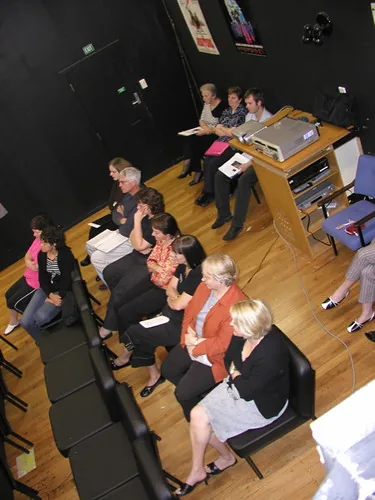
The heart of the festival is the evening program. Each night features a small roster of professional storytellers, usually three acts, whose styles range from folk tales and historical fiction to personal memoir and outright comedy. Tellers who have appeared here read like a who’s who of the craft, including performers honored by national storytelling organizations and veterans of the National Storytelling Festival. Sets are typically an hour or so, and the format rewards listeners who stay for the whole evening.
The Swappin’ Ground
Before the headliners take the stage, the festival opens its microphone to the community. This segment, known as the Swappin’ Ground, gives local residents a chance to tell their own stories in a supportive setting. It is the most democratic part of the weekend and often the most moving, a reminder that the oral tradition belongs to everyone, not only to professionals.
Music, food, and the school program
Music is woven through the program, with regional folk and gospel performers sharing the stage with the tellers. A catered meal is included in the ticket in recent years, and the festival has partnered with local caterers to serve the audience between sets. Meanwhile, the Tellin’ in the Schools program sends the visiting tellers into Selma-area classrooms during the days surrounding the performances, extending the festival’s reach far beyond the ticketed audience.
Planning Your Visit
Getting to Selma
Selma is about fifty miles west of Montgomery, reached most easily by U.S. Highway 80. Alabama Highway 22 and Highway 14 also serve the city, and U.S. Highway 80 crosses the Alabama River on the Edmund Pettus Bridge. The downtown arts venues sit within walking distance of one another near Water Avenue and Church Street. The nearest major airport is Montgomery Regional, roughly an hour east.
Where to stay
Selma has a modest but comfortable set of hotels and inns, and the larger lodging inventory is in Montgomery for visitors who prefer a wider choice. Because the festival runs in the evening, an overnight stay lets you enjoy the full program without a late drive. Booking early is wise during festival week, when rooms in the city fill with attendees and performers.
Parking and logistics
Downtown Selma is compact, and on-street parking near the cultural arts venues is usually available in the early evening. Arriving before the doors open gives you time to park, find your seat, and settle in before the Swappin’ Ground begins. The two-evening format means you can choose one night or attend both.
Tickets, costs, and refreshments
Tickets have been sold in the range of about twenty-eight dollars in recent years and typically include a meal, with proceeds supporting the festival and its school program. They have been available online and at a local gallery in downtown Selma. Because pricing and the meal arrangement can change, confirm the details with the organizer before the event.
Weather and what to wear
October in the Black Belt is mild, with warm afternoons and cooler evenings along the river. An evening performance calls for a light layer or jacket. Comfortable shoes are useful if you plan to walk the historic downtown before or after the show, and an umbrella is worth packing in case of autumn rain.
A Tale Tellin’ Weekend Plan
- Friday afternoon: arrive in Selma and walk the historic downtown along Water Avenue.
- Friday evening: catch the Swappin’ Ground, then stay for the first night’s tellers.
- Saturday morning: visit Sturdivant Hall, the Old Depot Museum, or the Edmund Pettus Bridge.
- Saturday evening: return for the second program and the closing performances.
Nearby Festivals to Compare
Dallas County’s calendar is full beyond the Tale Tellin’ Festival. The Bridge Crossing Jubilee each March commemorates the voting-rights marches and brings visitors from across the country. The Selma Pilgrimage and Antique Sale opens historic homes in the spring, and the Battle of Selma re-enactment draws history enthusiasts later in the year. The city also hosts a growing film festival in the spring and a mural festival in the fall, giving the county a genuinely varied lineup of cultural events.
What to Bring
- A light jacket for cool evenings by the river.
- Cash for gallery purchases and local shops.
- A notebook if a story sparks an idea of your own.
- Comfortable shoes for the historic downtown.
- A camera for the riverfront and the architecture.
Beyond the Festival — Exploring Selma and Dallas County
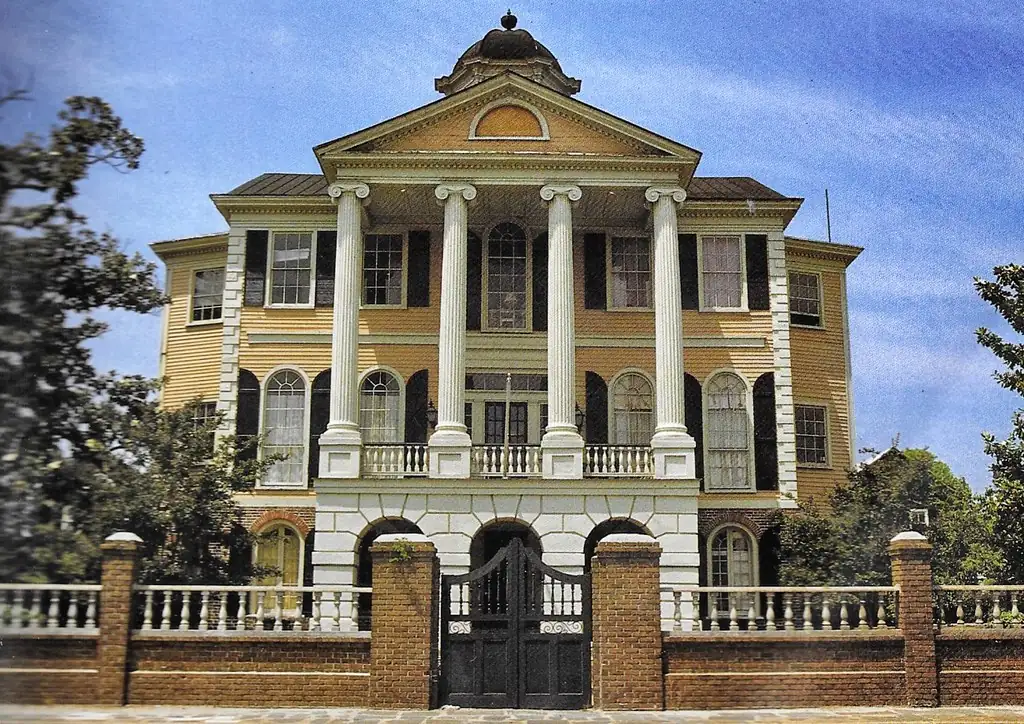
Selma rewards a longer stay. The city holds the largest historic district in Alabama, with more than a thousand structures on the state and national registers, and the Old Town district is best seen on foot. Sturdivant Hall, a Greek Revival mansion from the 1850s, is considered one of the finest examples of antebellum architecture in the state. The Edmund Pettus Bridge and the National Voting Rights Museum anchor the civil-rights story, while the Vaughan-Smitherman Museum and the Old Depot Museum cover the city’s broader past.
Outside the city, the county opens into farmland and river bottom. Cahaba, Alabama’s first capital, lies just to the south, and the rural communities of Orrville and Marion Junction preserve a slower pace rooted in cotton and cattle. The Alabama River offers fishing and boating, and the surrounding Black Belt countryside is quietly beautiful in the fall.
The Significance of the Festival
The Tale Tellin’ Festival matters because it keeps an art form alive in the place that shaped it. Storytelling is easy to take for granted, but it is a craft, and festivals like this one give it a stage, a standard, and an audience. The school program extends that mission to children who might otherwise never see a professional teller perform. For Selma, the event is also a piece of cultural tourism that draws visitors downtown and supports local arts organizations, and it reinforces the city’s identity as a place where stories are taken seriously.
Festival Area Map
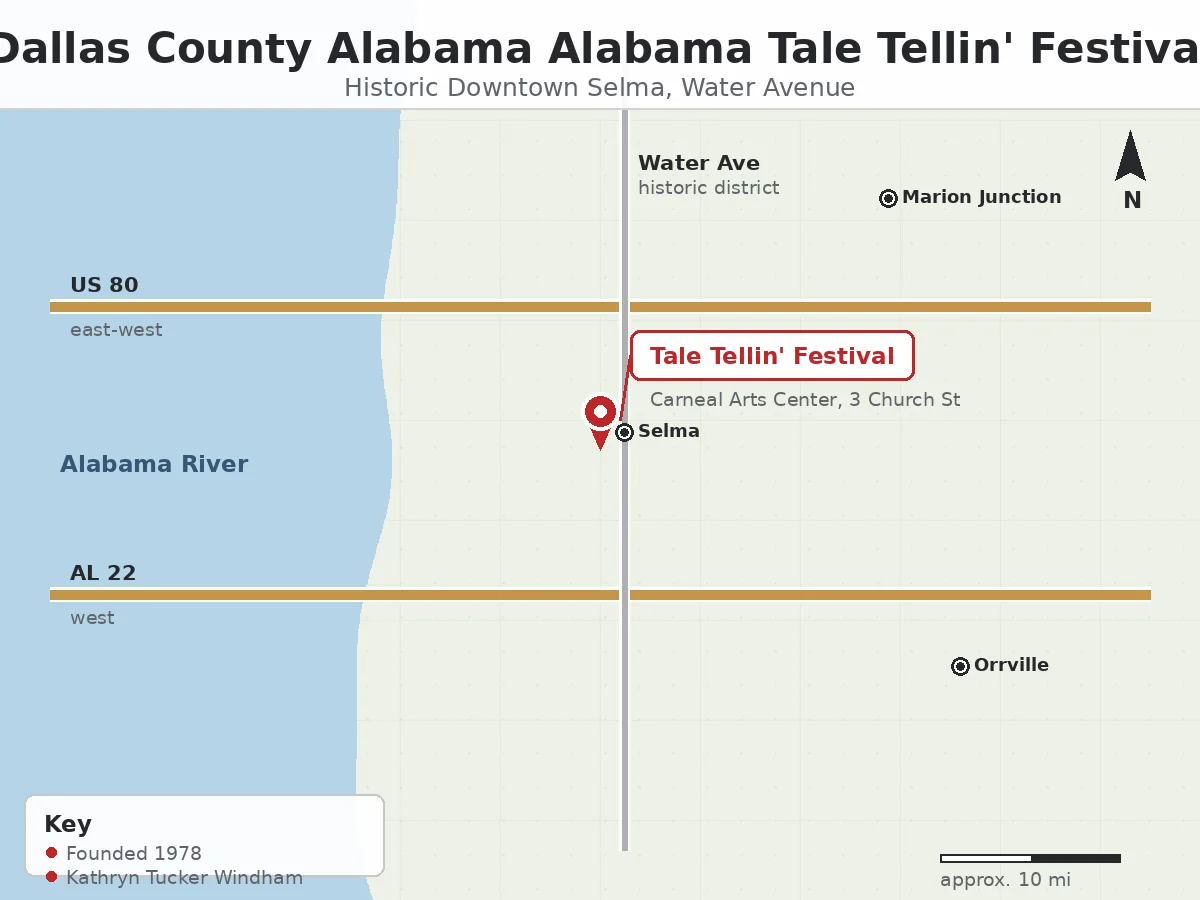
The festival is held in downtown Selma, Dallas County, near Water Avenue and Church Street just off U.S. Highway 80.
Frequently Asked Questions
When is the Tale Tellin’ Festival?
The festival is traditionally held in mid-October, with performances on two evenings. A recent edition took place on October 16, and the following year’s event was set for October 15. Confirm the exact date with the organizer before you travel, since it shifts slightly each year.
Where is the festival held?
It is held in downtown Selma, Dallas County, Alabama, most often at the Carneal Cultural Arts Center on Church Street. In some years the festival has moved to a larger venue in the city, so check the current location before attending.
Who founded the Tale Tellin’ Festival?
The festival was founded in 1978 by Kathryn Tucker Windham, a Selma author and storyteller known for her collections of Southern ghost stories and folklore. It is named in her honor.
How much are tickets?
Tickets have been priced around twenty-eight dollars in recent years and have included a meal. Prices can change, so confirm with the organizer or the ticket listing before the event.
Is the festival good for children?
Yes. The festival is a family-friendly event, and its school outreach program is designed for young audiences. The evening performances suit older children and adults, and the material is chosen to appeal across ages.
What is Selma, Alabama known for?
Selma is known as the starting point of the 1965 Selma-to-Montgomery voting-rights march and for the Edmund Pettus Bridge. It also has the largest historic district in Alabama, along with landmarks such as Sturdivant Hall and Brown Chapel A.M.E. Church.
Can I tell a story myself at the festival?
Yes. The Swappin’ Ground segment gives community members a chance to tell their own stories before the featured performers take the stage. It is open to amateurs and is one of the festival’s most popular traditions.
What should I bring to the festival?
Bring a light jacket for the evening, comfortable shoes for walking downtown, and cash for local shops and galleries. An umbrella is useful in case of autumn rain.
What to Expect From the Next Tale Tellin’ Festival
The Tale Tellin’ Festival is an annual event and has run for nearly fifty years, so visitors can count on a gathering each October in most years. The timing follows mid-October, and the format of two evenings of storytelling with a school-outreach program has been stable for decades. Recent editions have added musical acts and a catered meal, and the festival has continued to draw nationally known tellers.
Because the date shifts slightly from year to year, confirm the weekend with the organizer before booking travel. Lodging in Selma is limited, so visitors who want a wider choice often stay in Montgomery. Arriving early in the evening remains the best way to find parking and to catch the Swappin’ Ground before the headliners begin.
How often is the Tale Tellin’ Festival held?
It is an annual event, held every October for nearly five decades. It is not an occasional or one-time festival.
When is the next Tale Tellin’ Festival?
The next edition is expected in mid-October, following the festival’s established pattern. Check with the organizer for the confirmed date.
Will the dates change?
The festival is held in mid-October, so the date moves slightly each year. Venue and scheduling details can also change, so confirm close to the date.
Last updated: October 2026
The Tale Tellin’ Festival is a reminder that some of the best things a community can offer cost very little to stage and leave a lasting mark. If you are anywhere near Selma in October, take a seat, listen closely, and let a good storyteller do what storytellers have always done.