Dade County Georgia State of Dade Heritage Festival
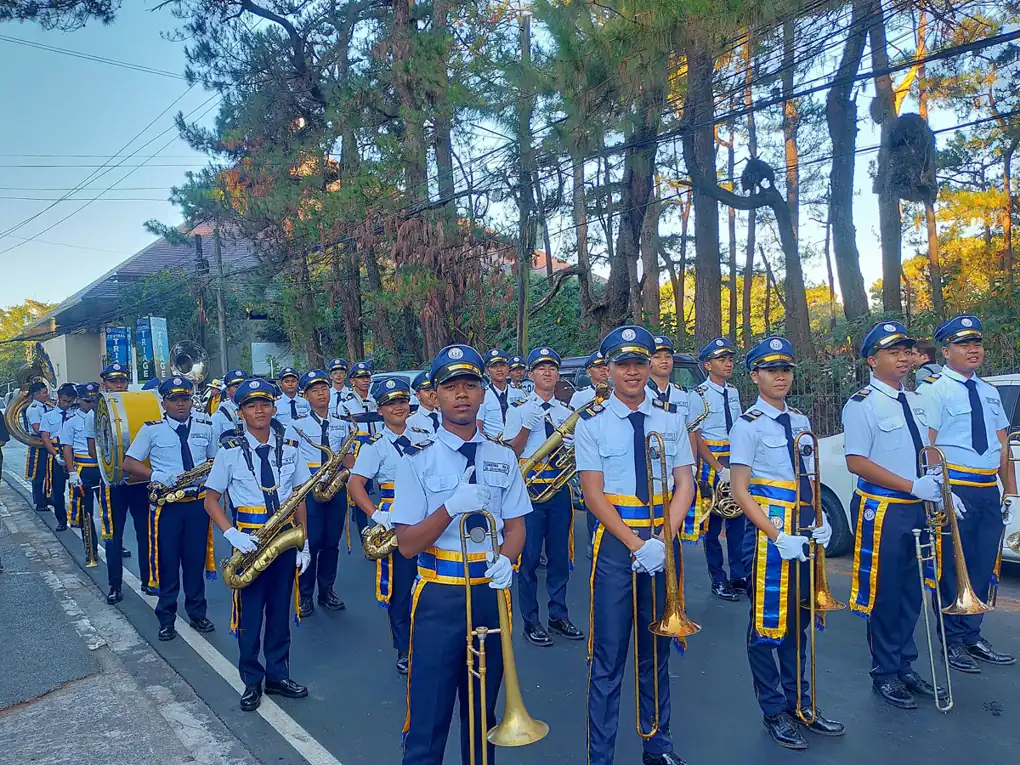
Trenton sits in the far northwest corner of Georgia, where the state narrows to a point, Lookout Mountain rises up behind town, and Tennessee is just up the road. It is the seat of Dade County, a county of 16,251 people as of the 2020 census, spread across 174 square miles of ridge, valley, and hardwood. Once a year, that whole corner of Georgia turns out to celebrate a piece of local lore so odd it has outlived nearly everyone who started it: the old claim that Dade County walked away from Georgia — and from the Union — and stayed its own stubborn “State of Dade” for generations.
The State of Dade Heritage Festival is the town’s way of telling that story out loud. It is not a giant event with corporate sponsors and wristbands. It is a hometown weekend: folding chairs on the square, smoke off a grill, a fiddle somewhere, kids running between vendor tents, and older residents explaining to newcomers exactly why the county line is where it is. If you have ever wanted to understand what makes the northwest corner of Georgia different from the rest of the state, this is the weekend to find out.
State of Dade Heritage Festival Facts Worth Knowing First
Before you point the car toward Trenton, here is the short version of what you are driving into.
| Town | Trenton, Georgia |
| County | Dade County, Georgia |
| County seat | Trenton |
| County population | 16,251 (2020 census) |
| Region | Northwest Georgia, Lookout Mountain country, near the Tennessee line |
| Typical timing | Held annually; check the county’s community calendar for the current year’s date |
| Admission | Typically free to attend, with food, crafts, and raffles sold on site |
| Setting | Downtown Trenton, with the mountain ridge as a backdrop |
| Features | Heritage displays, live music, local food, craft vendors, family activities |
| Organizer | Local volunteers and community heritage groups |
What the State of Dade Heritage Festival Is All About
At its heart, this is a heritage festival, which means the point is not the rides or the headliners. The point is memory. Vendors set up with handmade goods, canned preserves, quilts, woodwork, and the kind of objects that get passed down rather than bought new. Somebody usually has a table of old photographs and family histories. There are almost always demonstrations — spinning, blacksmithing, wood carving, the sorts of skills that were ordinary household knowledge a hundred years ago and are now something you stop and stare at.
The festival also functions as a reunion. Dade County is small enough that a good share of the people walking the grounds know each other, and the ones who moved away tend to come back for this. You will hear “I haven’t seen you since…” more than once. Visitors from Chattanooga, from across the Tennessee line, and from the surrounding northwest Georgia counties drift in too, drawn by the mountain drive and the promise of a genuine small-town afternoon.
What it is not is a slick production. Expect grass, gravel, folding tables, and hand-lettered signs. That informality is the charm, and it is also why the event feels less like attending a festival and more like being invited to somebody’s family gathering.

How the “State of Dade” Story Shaped a Trenton Tradition
To understand the festival, you have to understand the joke that turned into a legend. In 1860, as the country split apart, Dade County held a meeting and voted to secede — not just from the Union, but from the state of Georgia itself. The county’s delegates reportedly marched down to the courthouse, and the story goes that they declared Dade a free and independent state. The move was partly earnest and partly theatrical, the product of a mountain community that had always felt a little removed from the decisions made in Atlanta and Washington.
What happened next is the part everyone repeats: according to local telling, nobody ever formally voted the county back in. For decades afterward, Dade was jokingly called “the State of Dade,” and travelers passing through claimed to be leaving Georgia behind. The legend grew teeth in 1945, when — as the story is told around town — a group of locals and a visiting governor staged a ceremony to officially re-admit the county to the state and the nation, complete with a flag and a good deal of laughing.
Whether you take the tale literally or not, it says something true about this corner of Georgia. Dade County has always been a place that identifies with the ridge and the river valley more than with any capital city. The heritage festival grew out of that identity — an annual excuse to retell the secession story, honor the families who stayed, and remind everyone that being from Dade County is its own kind of citizenship.
What a Day at the Trenton Festival Actually Feels Like
Arrive in the morning and the grounds are still quiet, tents half-raised, coffee in paper cups. By midday it is full: a low hum of conversation, the smell of fryers and barbecue, kids cutting across the grass, someone testing a microphone. The crowd thins toward late afternoon, then picks back up as the music gets going. Most people come for a few hours, wander, eat, talk, and leave happy.
Food and Drink Along the Trenton Vendor Rows
Food at the State of Dade Heritage Festival is small-town fair food done by people who actually cook: smoked pork and chicken, hamburgers and hot dogs, funnel cakes, fried pies, boiled peanuts, homemade cakes sold by the slice, and sweet tea in quantities that would alarm a dietitian. Church groups and civic clubs often run the food tents, which means the money stays local and the recipes tend to be family ones.
Come hungry but come early for the popular items — the best desserts and the last of the barbecue tend to disappear by mid-afternoon. Bring cash. Some vendors may take cards, but a small festival on a Saturday is no place to discover your phone is dead and the card reader is on a weak signal. Coolers and outside food policies vary, so ask before you haul a picnic in.
Music, Storytelling, and Mountain Stage Traditions
The entertainment leans acoustic and local. Expect bluegrass, gospel, old-time string band music, country standards, and maybe a solo singer with a guitar and a folding chair. Between sets, you may get storytelling — the secession tale retold for the hundredth time, memories of the old school, jokes about the county being its own country. It is the kind of program where the emcee knows half the performers by their first names.
Bring a lawn chair or a blanket if you plan to settle in for the music. Shade is limited in the middle of the day, so many families post up under a tree at the edge of the grounds and treat the stage as background until evening.
Family Activities for Kids and Grandparents Alike
This is an easy festival to bring children to. There is usually room to run, games and simple contests, craft tables, and demonstrations that hold a kid’s attention longer than you would guess — watching someone shape iron or turn wool into yarn is genuinely mesmerizing. Grandparents tend to love it for the opposite reason: it is flat, walkable, unhurried, and full of people they know.
Strollers work fine on the main paths but struggle on grass and gravel after rain. Bring sunscreen, hats, and water bottles; a small folding chair solves most comfort problems in one purchase.
Planning Your Trip to Dade County, Georgia
Dade County is rural, and Trenton is a small town. That is a feature, not a flaw — but it does mean a little planning goes a long way.
Getting to Trenton From Chattanooga, Atlanta, and Beyond
Trenton is in Georgia’s far northwest corner, just south of the Tennessee line and within easy reach of Chattanooga, which makes the Tennessee city the most convenient gateway for out-of-town visitors. From there, the drive climbs toward the ridge and into Dade County. From Atlanta, plan on a longer haul up the interstate and then west toward the mountain.
There is no major airport in Dade County; the nearest commercial service is in Chattanooga, with Atlanta’s airport as the bigger alternative. Once you are in the area, a car is essentially required. Cell service can be spotty in the hollows, so download your directions before you leave the highway.
Where to Stay Near Lookout Mountain and Trenton
Lodging inside Dade County is limited, and what exists tends to book early for festival weekend. Most visitors base themselves in the Chattanooga area, where the hotel and motel choices are far broader, then drive down for the day. Cabin rentals on and around Lookout Mountain are another popular option, especially for families or couples making a weekend of it.
If you want to stay close to Trenton, reserve well ahead. If you are flexible, staying in Chattanooga and treating the festival as a day trip works perfectly well and gives you a city’s worth of restaurants and attractions for the rest of the weekend.
Parking Around Downtown Trenton
Parking at a small-town festival is usually a matter of finding a spot along a side street or in a lot near the grounds and walking a few blocks. Arrive before the late-morning rush and you will barely notice the traffic. Arrive at noon and you may circle once or twice.
Follow any directional signs or volunteers guiding cars — local organizers know their own streets best. Do not park on private property without permission, and be careful not to block driveways. Trenton is the kind of town where somebody will notice, and probably knows your cousin.
Admission, Vendors, and What Things Cost
Admission to the State of Dade Heritage Festival is typically free, with the event supported by vendor fees, food sales, donations, and sometimes raffles or auctions. That means your main costs are what you eat, what you buy from crafters, and whatever you toss in the donation jar.
Set a budget for handmade goods, because the crafts are the point and it is hard to walk past a good quilt or a hand-turned bowl. Bring small bills. Cash keeps the line moving and is friendlier to vendors than a card reader fighting for signal.
Dade County Weather and What to Wear
This is mountain-adjacent country, and the weather reflects it. Mornings can be cool even when the afternoon turns warm, and a passing shower is always a possibility. Dress in layers, wear shoes you do not mind getting dusty or muddy, and pack a light rain jacket rather than an umbrella if you plan to be near the stage.
Summer heat in the valley can be real, so if the festival falls in a warm stretch, plan your heaviest walking for the morning and find shade in the afternoon. In cooler months, a jacket and a thermos make the day far more pleasant.
A Sample Weekend Built Around the Festival
Friday evening: Drive into the Trenton area and check in. If you are coming from Chattanooga, take the slower route over the ridge and stop at a lookout for the view. Eat dinner in town or back in the city, then turn in early — festival Saturdays start sooner than you think.
Saturday morning: Arrive in downtown Trenton before the crowd. Park, walk the vendor rows while they are still uncrowded, and get coffee and something fried for breakfast. This is the best hour for actually talking to crafters and reading the heritage displays.
Saturday midday: Eat lunch from the food tents, then settle in for music with a lawn chair. Let the kids run. Buy the thing you keep walking past.
Saturday afternoon: Take a break from the grounds and drive a nearby country road, or visit a local landmark. Come back for the late-afternoon music and the cooler, friendlier crowd.
Sunday: Sleep in, then explore the surrounding area — a state park, a scenic drive, a small diner breakfast — before heading home. The drive out along the ridge is half the trip.
How Trenton Compares With Other Northwest Georgia Towns
Trenton is not Chattanooga, and it is not trying to be. Chattanooga, just over the line in Tennessee, offers riverfront festivals, a big aquarium, and a downtown full of restaurants — a full city weekend. Trenton offers the opposite: a slow, walkable, deeply local afternoon where you will likely talk to the person who made what you bought.
Compared with other northwest Georgia county seats such as Ringgold or Dalton, Trenton feels smaller and more remote, tucked against the mountain rather than sitting on a busy corridor. Dalton leans industrial and international; Ringgold feels like a classic courthouse town on the way to somewhere else. Trenton feels like the end of the road in the best sense — the last town before the state line, with a story to tell about it.
A Practical Checklist for Festival Day in Trenton
Fold this into your phone before you leave: cash in small bills, a lawn chair or blanket, sunscreen and a hat, water bottles, layered clothing, comfortable walking shoes, a light rain jacket, a tote bag for purchases, a charged phone with downloaded directions, and a cooler in the car if you plan to buy anything perishable.
Also worth doing: check the current year’s date and any schedule changes before you drive, since small festivals shift details from year to year. Fill the gas tank before you get into the rural stretches. And leave a little room in the day — the best parts of a festival like this are the unplanned conversations.
Beyond the Festival: Lookout Mountain, Canyons, and Country Roads
Dade County is 174 square miles of ridge and valley, and much of it is worth a detour. Lookout Mountain defines the landscape, with overlooks that stretch across the Tennessee Valley and roads that switchback up through hardwood forest. Cloudland Canyon, one of Georgia’s best-known state parks, sits in this corner of the state and draws hikers, photographers, and anyone who wants to stand at the edge of something dramatic.
Smaller pleasures are everywhere: country churches with full cemeteries, roadside produce stands, barbecue joints with gravel lots, and the kind of winding two-lane roads that make driving itself the activity. Civil War history runs deep through this region, and Chattanooga’s battlefields and museums are close enough for an afternoon.
Give yourself an extra half day. The festival explains the county’s personality; the landscape explains why that personality formed in the first place.
What the State of Dade Heritage Festival Means to Dade County
In a county of 16,251 people, a festival is not just an event — it is infrastructure. It is where the historical society finds new members, where the volunteer fire department raises a little money, where a teenager sells the first thing they ever made by hand, and where a ninety-year-old gets to tell the secession story one more time to somebody who has never heard it.
It also keeps a genuinely unusual piece of American history alive. The State of Dade legend could easily have faded into a footnote. Instead, it gets retold every year in the town where it happened, by people whose grandparents were part of it. That is a rare thing, and it is the reason the festival matters more than its size suggests.
Where the State of Dade Heritage Festival Happens
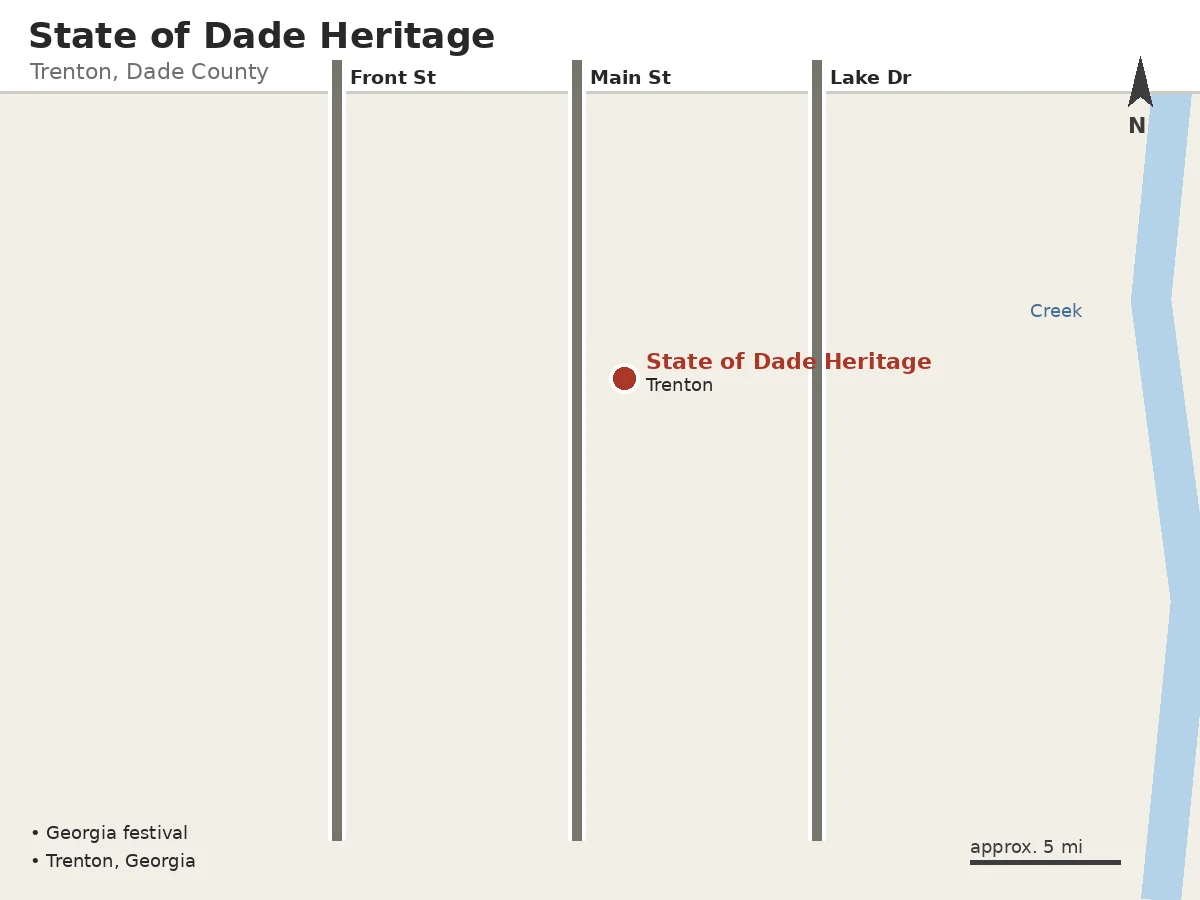
The State of Dade Heritage Festival takes place in Trenton, the county seat of Dade County, Georgia, in the state’s far northwest corner near the Tennessee line.
State of Dade Heritage Festival Questions, Answered
When is the festival held each year?
The festival is an annual event, and the date shifts from year to year. Check Dade County’s community calendar or local announcements for the current year’s schedule before you plan your trip, and confirm start and end times the week of the event.
Is there an admission charge?
Admission is typically free, with the festival supported by vendors, food sales, and donations. Your spending will mostly be on food, crafts, and anything you choose to give. Bring cash in small bills for the smoothest experience.
Is the festival suitable for young children?
Yes. The grounds are walkable, there is usually space to run, and craft demonstrations tend to fascinate kids. Bring sunscreen, water, and a stroller you can push over grass and gravel, and keep an eye on little ones near any cooking equipment or roads.
Can I bring my dog?
Policies on pets vary, so ask before you arrive or check local announcements. If dogs are welcome, keep yours leashed, pick up after it, and be mindful of crowded food areas and small children. On a warm day, leave pets at home rather than in a hot car.
What happens if it rains?
Small outdoor festivals usually carry on through light rain and pause or adjust for severe weather. Bring a rain jacket, wear shoes that can handle mud, and check for updates if storms are forecast. Vendors and organizers generally make the call on the day.
How do I get to Trenton from out of town?
Most visitors fly into Chattanooga or Atlanta and drive. Trenton sits in Georgia’s far northwest corner just south of the Tennessee line, so Chattanooga is the closest gateway. A car is necessary once you are in the area, and downloading directions before you leave the highway is wise.
Is there anything to do nearby after the festival?
Plenty. Lookout Mountain scenery, Cloudland Canyon, Chattanooga’s attractions, and miles of rural two-lane roads make the area worth an extra day. Many visitors turn the festival into a full weekend of hiking, scenic driving, and small-town eating.
Do I need to buy tickets in advance?
For a free community festival, advance tickets are generally not part of the equation. Your planning should focus on lodging, since options in and near Dade County are limited and fill quickly on festival weekends. Book early if you want to stay close to Trenton.
The Next Chapter for Trenton’s Heritage Weekend
Small festivals live or die on volunteers, and Dade County’s heritage weekend is no exception. The coming years will likely bring the same questions every rural community faces: how to draw a younger crowd without losing the character that makes the event worth attending, how to keep craft traditions alive when the people who know them age out, and how to share the State of Dade story with visitors who have never heard it.
The ingredients are already here. A distinctive story, a mountain setting, a county that still shows up for its own, and a location within easy reach of a mid-sized city. As long as Trenton keeps telling the tale, the festival has a reason to exist — and a reason for travelers to make the drive up to the corner where Georgia ends.
Last updated: October 2026
If you go, go slowly. Eat something fried, buy something handmade, and ask an old-timer about the day Dade County quit Georgia. You will leave with a better story than you arrived with, and that is exactly what a heritage festival is for.




One Comment