Cumberland County North Carolina International Folk Festival
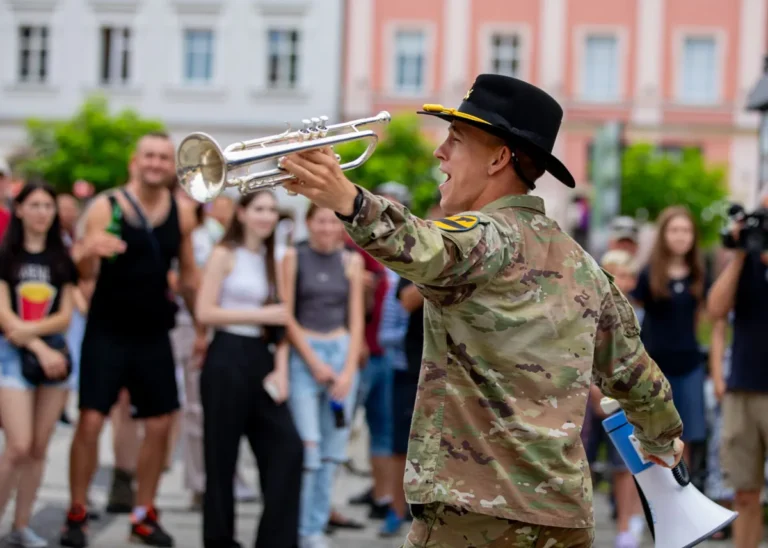
Every late September, downtown Fayetteville turns into a moving map of the world. The International Folk Festival takes over Festival Park and Hay Street for a weekend of parades, food, music and dance, all of it free to attend. It is not a county fair: no livestock barns, no midway rides, no grandstand. At its centre is the Parade of Nations, more than a thousand marchers in traditional dress walking Hay Street on Saturday morning before pouring into Festival Park.
Presented by The Arts Council of Fayetteville/Cumberland County, it is billed as the Council’s biggest annual event. The most recent documented edition, the 48th Annual, took place on September 25 and 26, 2026. Friday evening is the Fiesta en la Calle with El Centro Hispano; Saturday is the parade, the International Café, the stages, the Arts Market and the Kids Area. Food and goods are pay-as-you-go; the festival itself costs nothing to attend.
About the Festival
The International Folk Festival is a free downtown folk festival in Fayetteville, the county seat of Cumberland County, North Carolina, held at Festival Park, 335 Ray Avenue, and the adjoining stretch of Hay Street. The published name is the International Folk Festival, shortened to IFF in organiser and press layers, and the governing organiser form is The Arts Council of Fayetteville/Cumberland County. Other published forms of the name exist — a headline form with a vertical bar, an ampersand form in older press layers, and a comma form in the 2021 return releases — but they are the same body under its era’s styling.
The festival was formed to spotlight the diversity of Fayetteville and Cumberland County, a city shaped by its military community and universities and its history as a crossroads town. The parade is that purpose made visible: neighbours marching as their own cultures, not hired entertainers. Press layers stress that performers are community members performing their own traditions, from Okinawan dance to Latin dance to Hawaiian hula, and that food stalls are run by the same groups.
One distinction matters most. Cumberland County has a separate agricultural fair, the Cumberland County Fair at the Crown Complex, which runs earlier in the same month in the same city. That fair is a different event with its own dates, admission, livestock and rides, and nothing about it belongs in a visit plan for the folk festival, whose address is Festival Park and Hay Street, never the Crown Complex.
For a useful comparison, see the Craven County North Carolina NC Plein Air Art Festival for another county festival.
Quick Facts
| Item | Detail |
| Festival | International Folk Festival, downtown Fayetteville |
| County seat | Fayetteville, which hosts the festival |
| Grounds | Festival Park, 335 Ray Avenue, and Hay Street |
| Organiser | The Arts Council of Fayetteville/Cumberland County |
| Current edition | 48th Annual, September 25 to 26, 2026 |
| Admission | Free and open to the public |
| Signature event | Parade of Nations, Saturday morning on Hay Street |
| Friday evening | Fiesta en la Calle with El Centro Hispano |
| Food | International Café on the Festival Park Promenade, pay-as-you-go |
| Parking | Not published event-side |
How a Downtown Festival Grew From a 1978 Idea
The festival’s origin, as current press layers tell it with the Arts Council’s own spokespeople, begins with an inaugural event in 1978, formed by Martha Duell and former councilwoman Mildred Evans to spotlight the diversity of Fayetteville and Cumberland County. Duell and Evans are the named founders in the record; the Arts Council must never be described as the festival’s 1978 founder. The Council’s own spokesman, in a 2024 layer, dates the Council’s organising role to 2000: the first festival took place in 1978 and the Council started organising the event in 2000. Other press layers present the Council as the festival’s long-standing host, and the two wordings stand side by side, neither rewritten into the other. The Council itself is older than its organising role: its own institutional layer states that it was founded in 1973 as a link between artists, arts and cultural organisations and the greater community, funded in part by the City, the County and the state Arts Council. That 1973 date is the Council’s founding, never the festival’s. The City and the County appear as supporters and funders, never the organiser.
The edition billings carry their own honest puzzle, kept open here rather than solved. The billings run 32nd in 2010, 36th in 2014, 38th in 2016, 39th in 2017, 43rd year in 2021, 44th in 2022, 45th in 2023, 46th in 2024, 47th in 2025 and 48th in 2026, while the organiser’s 2026 page words it as celebrating 48 years. An uninterrupted count from 1978 would make 2010 the 33rd year and 2026 the 49th, so the billings run consistently one behind that count, and no source explains the offset. No founding year may therefore be computed from any edition, and no edition from 1978.
The gaps are documented, not smoothed. The festival was cancelled in 2020 for the COVID-19 pandemic, according to the Arts Council’s 2021 return release. That release announced a return for September 25 and 26, 2021, as the 43rd year, yet a 2022 preview bills the 44th Annual as back after a two-year hiatus, wording that fits a last-held edition in 2019 rather than a held 2021 edition. No recap layer resolves whether the announced 2021 edition ran as billed, so neither a verified 2021 return nor a two-year gap is asserted. The Parade of Nations was cancelled for weather in 2023 and again in 2025, but the festival itself went ahead both years; neither was a festival cancellation.
What to Expect
The Parade of Nations
Saturday morning is the festival’s centre of gravity. The Parade of Nations steps off on Hay Street at ten in the morning in the 2026 layer, with more than twenty-five nations and over a thousand marchers in the 2026 preview, and more than thirty cultural groups in the organiser’s own edition description. Marchers walk in traditional dress, flags carried, music playing, and the procession opens into Festival Park around noon. The parade hour is not timeless — ten in 2023, 2025 and 2026, ten thirty in 2017, nine in a 2022 preview — so always check the current year’s hour.
The International Café
Once the parade reaches Festival Park, the International Café takes over the Festival Park Promenade: the festival’s food market, where community groups and vendors sell the cuisines of their cultures. Recent layers name Guyanese, Philippine, Indian and Puerto Rican cooking, and earlier years add Thai, Liberian, Venezuelan, Ghanaian, Honduran and Salvadoran food, Jamaican patties and Native American fry bread. The lists change year to year; none is a standing menu. Food here is pay-as-you-go, the festival’s only general visitor cost.
Stages and Cultural Performances
From noon to seven on Saturday, Festival Park fills with cultural performances. The organiser’s own 2026 list names Alex Weiss and Different Drum, Aloha Ka’Naka O Hula Halau, the Azerbaijan Friendship Organization, Fayetteville Okinawa Kenjikai, Fayetteville Latin Dance, Hui Aroha Ura, Jazmin Tabla, Takiri Folclor Latino and Luke Vandergriff. Friday evening, six to nine, belongs to El Centro Hispano, the Raleigh-based non-profit the Council partners with for the Fiesta en la Calle layer, opening the 2026 Friday schedule as local businesses stay open late. Performer lists are year-fenced: acts named for one year are never the next year’s programme.
Arts Market and Kids Area
Alongside the stages, the Arts Market lines Ray Avenue with art and craft vendors, and the Kids Area gives younger visitors their own corner. Recent layers describe the Instrument Petting Zoo, where children try instruments, and Skoolie Xpress, a converted school bus turned play space, alongside a bounce house in the 2026 preview. The Kids Area’s contents change by year, and the 2023 paid play area and Taste of the World voucher, four food samples for twenty dollars, belong to 2023 only: the voucher was never admission.
Planning Your Visit
Admission and What Costs Money
Admission is free, in the organiser’s own words and in press layers alike, and the parade is free and open to the public. That is worth stating plainly because the county’s separate agricultural fair, earlier in the same month, does charge admission, and the two events are so often confused. Inside, food and goods are pay-as-you-go, and any workshop or special ticketed element is the exception. No general admission charge exists in any year, and no vendor or participant fee is a visitor price.
Getting There and Around
Festival Park sits at 335 Ray Avenue in downtown Fayetteville, with the parade route along Hay Street. The Arts Council’s own building on Hay Street is the organisation’s home and gallery, not the festival venue, and should not be used as the festival address. Downtown is walkable, and the Friday shape ties into the evening, with local businesses open late. Parking is not published event-side, so this article does not describe it as free or priced: check the current year’s guidance before travelling, and expect downtown parking to fill on parade morning.
When to Arrive
The current shape is two days, Friday evening and Saturday. Friday runs six to nine; Saturday runs from eight in the morning, when the Run Around the World sets off, through the ten o’clock parade and the noon-to-seven park programme. Parade-watchers should be on Hay Street well before ten, and food lovers should arrive as the parade reaches the park at noon. The festival is rain-or-shine in the organiser’s own terms, and the 2025 edition went ahead in rainy weather even though its parade was lost, so a wet forecast means pack a jacket, not assume a cancellation.
A Saturday at the Festival
A good Saturday starts early: arrive before eight for the Run Around the World from Festival Park, then find a spot on Hay Street for the ten o’clock Parade of Nations. Follow the parade into the park at noon, and make the International Café your first stop: pick two or three untried stalls, and let the stages set the afternoon’s pace. Spend midday between the stages and the Arts Market, then finish at the promenade before the seven o’clock close. The whole day costs nothing but the food you buy.
How It Compares
Set beside the county’s agricultural fair, the folk festival is the opposite kind of event: free where the fair is ticketed, downtown where the fair is at a complex, cultural where the fair is agricultural, built around a parade and a food promenade rather than livestock and rides. Beside other festivals in this series it stands out the same way: most are fairs or single-theme food festivals. None of its free downtown cousins carries a parade of nations at its centre.
Checklist
- Check the current year’s parade hour; it has varied
- Arrive on Hay Street well before the Saturday parade steps off
- Bring a jacket: the festival is rain-or-shine
- Budget only for food and goods; admission and the parade are free
- Do not use the Arts Council’s Hay Street building as the festival address
- Do not confuse this festival with the Cumberland County Fair at the Crown Complex
- Expect downtown parking to fill on parade morning; terms are unpublished
- Follow the parade into the park at noon for the liveliest stalls
- Allow time for the Kids Area and Instrument Petting Zoo
- Let the stages set the pace; no single headliner defines the weekend
Beyond the Festival Grounds
Festival Park and Hay Street sit in the heart of historic downtown Fayetteville, and the weekend is a good excuse to linger in the city. The streets around the park hold museums, galleries and restaurants, plus the Arts Council’s own gallery, and the Friday evening shape, with local businesses open late, is designed to pull visitors into those streets rather than keeping them inside a fence. Fayetteville’s wider story is visible in the festival itself, but the city beyond the weekend repays a slower look.
Why It Matters
The festival matters because it does something few civic events attempt: it lets a city introduce itself to itself. Founded by two women who wanted Fayetteville’s diversity visible, it remains, nearly five decades later and in the organiser’s billing, the Council’s biggest annual event and the region’s longest-standing family festival. That longevity is not a tidy unbroken run — the record holds a pandemic cancellation, a disputed return year and two weather-lost parades — but persistence through those gaps is part of its character. It keeps coming back to the same streets, with the same parade at its centre.
Frequently Asked Questions
Is the International Folk Festival really free?
Yes. Admission is free in the organiser’s own words and in press layers alike, and the parade is free and open to the public. Food and goods are pay-as-you-go, the only general visitor cost.
Where is the festival held?
At Festival Park, 335 Ray Avenue, and along Hay Street in downtown Fayetteville. The parade runs down Hay Street on Saturday morning and opens into the park at noon. The Arts Council’s Hay Street building is the organisation’s home and gallery, not the venue.
What is the Parade of Nations?
The signature event: a Saturday morning procession down Hay Street of more than a thousand marchers representing thirty or more nations and cultural groups, in traditional dress, with flags and music. In 2026 it steps off at ten in the morning and opens into the park at noon. The parade was cancelled for weather in 2023 and 2025, while the festival went ahead both years.
Is this the same event as the Cumberland County Fair?
No. The Cumberland County Fair is a separate ticketed agricultural fair at the Crown Complex, earlier in the same month, with livestock, rides and its own admission. This festival is a free downtown folk festival at Festival Park and Hay Street; the two share nothing but a county and a month.
What to Expect From the Next Cumberland County North Carolina International Folk Festival
How often is the Cumberland County North Carolina International Folk Festival held?
The festival is annual, each late September in downtown Fayetteville. The shape has varied — three days in some years, Friday and Saturday in the current edition — so confirm the next shape from the current year’s schedule.
When is the next Cumberland County North Carolina International Folk Festival?
The 48th Annual took place on September 25 and 26, 2026. The next edition is undated in the record used for this article; confirm its dates from the organiser’s published schedule when they appear. Late September is the established season, but no specific next date is asserted here.
Will the dates change?
The late-September season has held, but exact days and shape have changed: three-day editions, a Friday Fourth Friday plus Saturday shape, and the current two-day shape have all appeared, and the parade hour has varied. Treat late September as the season and confirm exact dates and shape from the current year’s schedule.
The International Folk Festival is Fayetteville introducing itself, in music and food and traditional dress, on the streets where its people live. Come for the Saturday parade, stay for the promenade food, and leave with a truer picture of the city.