Clarke County Georgia Asian Lunar Festival

Clarke County Georgia Asian Lunar Festival: Essential Details
Before the story of one family’s day, here is the short version of what this celebration is and where it sits on the map of East Central Georgia.
| Town | Athens, Georgia |
| County | Clarke County |
| County seat | Athens |
| Population | 128,671 (2020 census) |
| Region of the state | East Central Georgia |
| Typical timing | Late January or February, timed to the Lunar New Year |
| Admission | Typically free to enter; food, drinks, and crafts are sold by vendors |
| Setting | A walkable outdoor celebration in Athens, with vendor stalls, a performance area, and hands-on craft tables |
| Signature features | Lion and dragon dances, lantern making, dumpling and noodle vendors, calligraphy tables, games for children |
| Organizer | Local cultural groups and community volunteers based in Athens |
A Lunar New Year Celebration Built in Athens
The Tran-Lewis family begins Lunar New Year the way a lot of households in Clarke County do: with a pot of broth simmering before sunrise. Minh Tran-Lewis learned to make phở from his grandmother, and he still measures the spices by smell rather than by spoon. His wife, Dana, handles the sticky rice and the red envelopes. Their two children, Ava and Theo, are mostly interested in whether the lion dancers will come close enough to touch.
By mid-morning the family is in the car, heading toward the heart of Athens, the county seat of Clarke County and the anchor of a county of 128,671 people counted in the 2020 census. What they are driving toward is the Clarke County Georgia Asian Lunar Festival, a gathering that folds Vietnamese, Chinese, Korean, and other East and Southeast Asian new year traditions into one shared, walkable day.
The festival is not a ticketed arena show. It is the kind of event where the street becomes the venue: vendor tents, a stage or open performance space, craft tables set at kid height, and a steady flow of neighbors moving between them. Admission is typically free, which matters in a county where the celebration doubles as a first introduction to Lunar New Year for many attendees and as a homecoming for others.
For the Tran-Lewis family, the day has a rhythm they have refined over several years. Arrive before the crowds, eat first, watch the dancing while the kids still have energy, then slow down for crafts and a final plate of something sweet. That rhythm is what this article follows, from the first parking spot to the last lantern carried back to the car.

From Kitchen Tables to City Blocks: Lunar New Year in Athens
Lunar New Year in Clarke County did not begin as a public festival. It began in living rooms. Families who came to Athens through study, work, and resettlement marked the new year privately, with food, altars, and phone calls to relatives in other time zones. Those gatherings were small, but they were consistent, and over time they grew into potlucks that needed bigger rooms.
The next step was the obvious one. Once several families were cooking for the same table, someone suggested opening the door. Community volunteers began organizing a shared celebration that could welcome anyone curious enough to show up, and the event moved outward from private kitchens into public space in Athens.
The festival has grown in layers rather than in leaps. Food came first, because food is the easiest invitation. Performances followed, as dance and martial arts groups from the area found an audience. Craft tables came next, aimed squarely at children who needed something to do with their hands. Each layer was added by people who had been part of the earlier one, which is why the day still feels assembled by neighbors rather than produced by a company.
The timeline of that growth is best understood in phases rather than dates: household observances, then community potlucks, then a public gathering, then a full day of programming with vendors, stages, and volunteer shifts. The festival’s continuity depends on the last of those phases continuing to attract people willing to staff a table for a few hours.
Walking Through the Day with the Tran-Lewis Family
What follows is what a typical festival day looks like on the ground, organized the way a family actually experiences it: through the nose, then the ears, then the hands.
Food: Steam, Smoke, and Sugar Along the Vendor Row
Food is where most visitors start, and the Tran-Lewis family is no exception. Theo gets a steamed bun before anyone else has decided anything, because a five-year-old with a warm bun is a five-year-old who will walk patiently for another twenty minutes. Dana heads for the noodles, and Minh makes a lap of the entire row before committing, which is his usual method and which Ava finds deeply inefficient.
Vendors at a Lunar New Year gathering in Athens typically cover a wide range: dumplings and potstickers, noodle bowls, rice cakes, grilled skewers, spring rolls, bubble tea, and sweets built around sesame, coconut, and red bean. Some stalls are run by local restaurants, others by families cooking a handful of dishes from recipes that travel with them. Portions tend to be small enough that grazing across four or five stalls is a reasonable plan, and that is exactly what this family does.
The practical advice Minh offers to anyone who asks: eat before noon. Lines grow as the day goes on, and the most popular stalls are the ones with the longest history at the festival.
Music and Entertainment: Drums, Strings, and Lion Dances
The lion dance is the moment the whole crowd reorganizes itself. Drums start somewhere off to the side, heads turn, and a path opens as if by instinct. Ava and Theo both want to be at the front, and both want to be held, which creates a brief logistical crisis that Dana solves by hoisting Theo onto her shoulders.
Around the lion and dragon dances, the performance schedule typically mixes traditional and contemporary acts: folk dance, drumming ensembles, martial arts demonstrations, string and wind instruments, and occasionally pop or karaoke-style sets that get the younger half of the crowd singing along. Introductions between acts often explain what a piece means or where a tradition comes from, which turns the performance area into an informal classroom for anyone who has never attended a Lunar New Year event before.
For families, the useful tip is to check the day’s schedule early and build around it rather than trying to catch everything. Two or three performances watched properly beat six performances watched from the back of a crowd.
Family Activities: Lanterns, Calligraphy, and Games for Small Hands
The craft area is where the day slows down. Children decorate paper lanterns, try brush calligraphy on practice sheets, cut zodiac animals from red paper, and color in worksheets about the twelve-year cycle. Volunteers sit at the tables and show rather than instruct, which keeps the atmosphere loose.
Theo’s lantern is mostly tape by the end. Ava’s is neat, deliberate, and slightly over-decorated. Both are carried carefully back to the car and hung in the kitchen when they get home, where they stay until the paper gives out.
Games and small activities usually round out the family programming, and red envelopes with small tokens or treats are a common giveaway. Nothing here requires registration or an extra fee, which is part of why the festival works for families with young children who cannot commit to a fixed schedule.
Plan Your Own Athens Lunar New Year Trip
The Tran-Lewis family has the advantage of living in the county. Visitors coming from elsewhere in East Central Georgia need a little more planning, and this section covers the pieces that matter most.
Getting to Athens from Across East Central Georgia
Athens is the county seat of Clarke County and sits in the East Central region of the state, which makes it reachable by car from most of the surrounding counties in under an hour. Driving is the simplest option, and the festival’s walkable layout means once you park, you stay parked. Rideshare drop-off works well for anyone who would rather not deal with parking at all, and visitors staying overnight in Athens can often walk or take a short ride from their hotel.
Where to Stay Overnight in Athens
Overnight options cluster around the downtown area and the main travel corridors into the city, ranging from full-service hotels to smaller inns and short-term rentals. Because Lunar New Year timing overlaps with a busy stretch on the local calendar, booking several weeks ahead is wise, especially if you want to be within walking distance of the celebration. Families traveling with children usually find that a room with a refrigerator earns its keep, if only for leftovers.
Parking Around the Festival Grounds
Parking in Athens means decks, surface lots, and street spaces, and on festival day the closest options fill first. Arriving in the morning is the single most effective strategy. Expect to walk a few blocks, wear shoes you can stand in for hours, and note where you parked, because the streets look different when the tents come down. If you have mobility concerns, drop your group near the entrance and let one driver handle the parking.
Admission and What Things Cost
Admission to the Clarke County Georgia Asian Lunar Festival is typically free, which keeps the day accessible for large families and for students. Your spending happens at the vendor stalls and, occasionally, at craft or merchandise tables. Bringing a mix of cash and card is the pragmatic move, since some smaller vendors may prefer one over the other. Setting a rough budget per person before you arrive prevents the classic mid-afternoon realization that you have eaten your way through the entire row.
Weather and What to Wear in a Georgia February
Lunar New Year falls in late January or February, which in this part of Georgia means cool mornings, unpredictable afternoons, and a real chance of rain. Layering is the answer: a warm base layer, a jacket you can carry, and comfortable shoes that can handle damp pavement. Hats and gloves are worth having in the car even if you leave them behind by noon. If rain is in the forecast, a compact umbrella beats a poncho when you are standing under a tent eating noodles.
A Sample Saturday, Hour by Hour, in Athens
Morning: arrive early, park, and walk the vendor row once without buying anything. This lap tells you what you actually want and where the shortest lines are. Grab coffee or tea, then start with a savory item rather than a sweet one.
Late morning: position yourself for the first lion dance. Find a spot near the edge of the performance area so children can see without being in the middle of the crowd. Stay through the next act if the crowd is manageable, then move on.
Midday: eat a proper meal. Noodles, dumplings, or a rice dish, plus something shared. This is also the right time to sit down, even if sitting means a curb, because the afternoon is long.
Early afternoon: crafts and games. Lantern decorating, calligraphy, paper cutting. Let the children set the pace here rather than rushing them toward the next performance.
Late afternoon: one more performance, one more snack, and a slow walk back through the stalls to pick up anything you decided against in the morning. Leave before the final rush, or stay for the closing act if the weather is kind and the kids are still upright.
How Athens Compares with Nearby Georgia Celebrations
Athens offers a county-seat scale that larger metro celebrations cannot replicate. Events in the Atlanta area draw bigger crowds and longer performance rosters, but they also mean traffic, parking costs, and a day that requires more logistics than a family with small children may want. Clarke County’s version trades spectacle for walkability.
Closer to home, smaller community observances in neighboring counties tend to be shorter and more informal, often built around a single performance or a shared meal rather than a full day of programming. Athens sits between those poles: more organized than a potluck, more intimate than a metro festival.
For visitors deciding where to spend the day, the honest answer is that Athens rewards people who want to talk to vendors, watch children make lanterns, and eat without standing in a half-hour line. Anyone chasing the largest possible production should look toward the bigger cities, and anyone who wants a quiet, homey observance should check what their own county is doing.
A Practical Prep List for Festival Day in Athens
Before you leave the house, confirm the day’s schedule and location, charge your phone, and put a refillable water bottle in your bag. Pack layers, a light rain jacket, and sunscreen if the forecast is bright, because Georgia winters can turn sunny and mild by early afternoon. Bring cash in small bills alongside a card.
For children, add wipes, a small snack in case lines are long, and a bag for the crafts they will inevitably accumulate. If you are meeting people, pick a specific landmark as a rendezvous point, since cell service gets congested in crowds. Finally, leave a little room in the car for lanterns, leftovers, and whatever someone talked you into buying.
Beyond the Lanterns: The Rest of Athens and Clarke County
Clarke County covers 121 square miles, and the festival occupies only a small slice of one day in it. Families who make a weekend of the trip can spend the rest of their time exploring a compact downtown, historic residential streets, and the green space that rings the city. Coffee shops, bookstores, and restaurants within walking distance of the celebration make it easy to extend the afternoon without getting back in the car.
The Tran-Lewis family usually finishes the day with a walk rather than a drive. It gives the children time to burn off the last of their energy and gives the adults time to talk about what they ate and what they will eat next year. For out-of-town visitors, that same walk is the easiest way to turn a festival afternoon into a full weekend.
What This Festival Means to Clarke County’s 128,671 Residents
A county of 128,671 people, as counted in the 2020 census, contains a lot of different kitchens. The Clarke County Georgia Asian Lunar Festival is one of the few days when those kitchens set up next to each other in public, and that is its real function. It gives families who celebrate Lunar New Year at home a place to do it out loud, and it gives everyone else an easy, low-pressure invitation to learn something.
It also does quieter work. Volunteers who spend a shift at a craft table meet neighbors they would otherwise never speak to. Children who grow up attending the festival treat the lion dance as a normal part of their year rather than an exotic curiosity. That normalization is the part that lasts beyond a single Saturday in February.
Pinpointing the Celebration in Athens
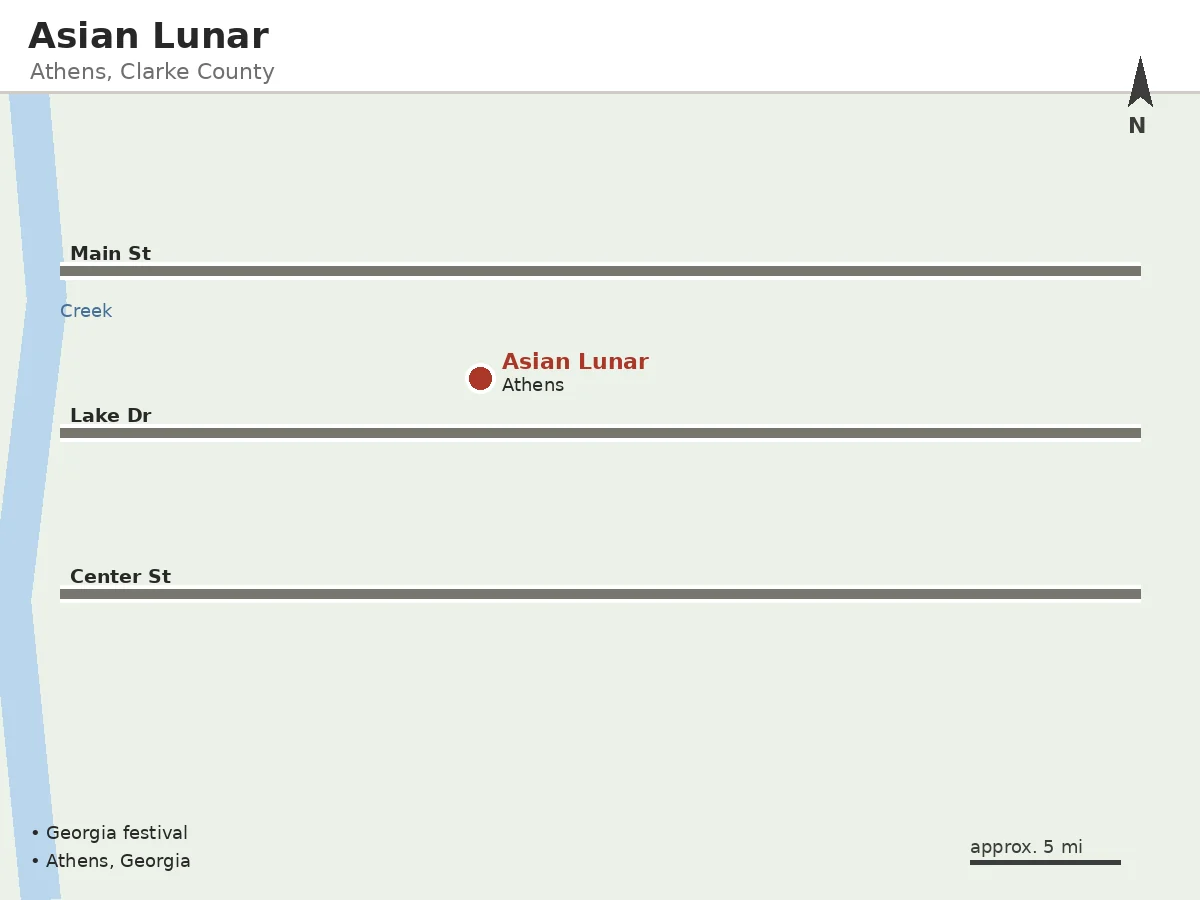
The festival takes place in Athens, the county seat of Clarke County, in the East Central region of Georgia.
First-Timer Questions About the Athens Lunar Festival
Is the Clarke County Georgia Asian Lunar Festival free to attend?
Admission is typically free. You pay only for what you choose to buy, which generally means food, drinks, and any crafts or merchandise from vendors. That structure keeps the event open to large families, students, and anyone who wants to look around before deciding to spend.
When does the festival usually happen in Athens?
It is timed to the Lunar New Year, which falls in late January or February depending on the year. Because the date shifts with the lunar calendar, the best approach is to check the current year’s schedule rather than assuming a fixed weekend.
Is the celebration suitable for young children?
Yes. Craft tables, games, and the lion dance are the main draws for younger attendees, and the walkable layout means you are never far from an exit or a place to sit. Bring a stroller if your child still uses one, and keep an eye on the performance schedule so you can position yourselves near the front.
Do I need to know anything about Lunar New Year before I go?
No. Introductions between performances and the volunteers at craft tables explain what is happening and why. Curiosity is the only requirement, and asking questions is generally welcomed rather than awkward.
What should I eat first at the festival?
Start savory. Dumplings, noodles, or a rice dish will carry you through the first hours better than sweets, and it leaves the sesame balls, rice cakes, and bubble tea for later in the day when you want something light. Walking the row once before buying also helps you spot the stalls with the shortest lines.
How crowded does the Athens celebration get?
Crowds build through the middle of the day and thin again toward the late afternoon. Arriving in the morning gives you the easiest parking, the shortest food lines, and a clear view of the first performances, which is why so many local families treat an early arrival as non-negotiable.
Can I bring my dog to the festival?
Because the event is outdoors and walkable, leashed dogs are often present, but crowded food areas and performance space are not ideal for animals that get nervous. If you do bring a dog, plan to keep it close and step away from the densest part of the crowd during the lion dance.
What if it rains on festival day?
Georgia winters bring rain often enough that organizers and attendees both plan for it. Tents cover the vendor and craft areas, so a light drizzle rarely stops the day. Bring an umbrella, wear shoes that handle wet pavement, and check ahead in case severe weather forces a schedule change.
The Next Cycles: Where the Athens Festival Goes From Here
The festival’s future depends less on grand plans than on the mundane work of volunteer recruitment, vendor coordination, and keeping the day free to enter. Those are the same three things that built it. As long as families in Clarke County keep showing up to staff tables and cook for a crowd, the celebration in Athens should continue to grow the way it always has: one added layer at a time.
For the Tran-Lewis family, the outlook is simple. Ava wants to try calligraphy with a real brush next year instead of a practice sheet. Theo wants to be closer to the drums. Minh wants to arrive earlier. Dana wants everyone to eat before the lines get long. None of that requires the festival to change, only for it to come around again.
Last updated: October 2026
If you go, go early, eat first, and stay for the drums. The Clarke County Georgia Asian Lunar Festival is at its best when you let it move at the pace of a family walking through it: one stall, one performance, and one paper lantern at a time.


One Comment