Cheshire County New Hampshire Cheshire Fair Festival
Anyone writing to this fair addresses the envelope to Keene, and anyone driving to it travels somewhere else entirely. The Cheshire Fair fills four days at the turn of July into August on the Cheshire Fairgrounds in Swanzey, a town just south of the county seat, where the programme still rests on the twin pillars it began with nearly ninety years ago: animals pulling heavy loads, and farm families showing the stock they raised. Between those pillars the modern edition fits a full midway, a deep bench of 4-H competition, exhibit halls judged for premiums, music on two stages, and a demolition derby that closes the fair on Sunday under its own separate grandstand ticket.
The Fair Behind the Post Box
The event’s real published name is simply the Cheshire Fair, and the body behind it is the Cheshire Fair Association, Inc., which has run the fair as its own organisation since the spring of 1938. The association’s paperwork travels through a post office box in Keene, which explains the confusion, but that box is a mailing address and nothing more. Keene holds the county’s courthouse and its seat of government; it does not hold this fair, and it never has in the fair’s modern life. The grounds sit in Swanzey, and exhibitors bringing animals or entries use Gate 3, the fair’s designated exhibitor entrance, rather than the public gates. Across the rest of the year the same fairgrounds host other gatherings promoted by other people, and those occasions belong to their own organisers; the Cheshire Fair itself occupies its one long weekend and no other.
Quick Facts
| Item | Detail |
| Fair | Cheshire Fair |
| Host town | Swanzey, New Hampshire |
| County seat | Keene, which holds the association’s post box but not the fair |
| Grounds | Cheshire Fairgrounds, 247 Monadnock Highway, Swanzey |
| Organiser | Cheshire Fair Association, Inc. |
| 2026 dates | Thursday, July 30 to Sunday, August 2 |
| Season | Four days, Thursday to Sunday, where July meets August |
| General admission | Adults fifteen dollars; children five to twelve, five dollars; under five free |
| Signature events | Horse, oxen, truck and tractor pulls, and a Sunday demolition derby |
| Camping | General and exhibitor camping on site; camping charges never include admission |
A Field Day That Outgrew Its Parent
The fair began as somebody else’s picnic. In 1935 the Cheshire County Farm Bureau held its annual Farmers Field Day in Wheelock Park in Keene, and Edwin R. Chamberlain, the county agricultural agent, arranged horse and ox pulling as part of the day. The pulling proved the seed of something larger. Through 1936 and 1937 the gathering was enlarged and moved to Safford Park in Swanzey, running at small losses that the Farm Bureau quietly absorbed while the crowds justified the experiment. In the spring of 1938 the Farm Bureau’s directors, together with C.J. Ahern, organised the Cheshire Fair Association as a body in its own right, with Gilman C. Gunn as its first president, and the fair has belonged to that association ever since. The record carries no annual numbering for the modern fair, and a seventy-fifth anniversary marked in an older layer belongs to 2013 alone; nothing in the fair’s own history licenses counting forward from it to brand the present edition. What the history does show is continuity of shape: the Swanzey ground, the pulling contests, and the livestock judging that anchored a Farm Bureau field day still anchor the fair its founders’ successors run today.
What to Expect
Weight, Muscle and Willing Teams on the Pulling Track
Pulling is this fair’s oldest language. Draft horses and oxen lean into the stone boat in the working-animal classes that descend directly from the 1935 field day, while horse, truck and tractor pulls bring the mechanical generations onto the same track. Antique tractors appear both as working pullers and in demonstrations, so a visitor can watch a restored machine earn its keep before walking past it parked in a display line. The pulls run across the fair rather than in one block, which means the track is rarely quiet for long.
Barns Full of Youth Work
The livestock side mixes open showing with one of the fuller 4-H programmes in the region. Extension’s schedule for the fair runs goat, beef, sheep, dairy, poultry and small-animal shows through the barns, then lightens the judging with inventions of its own: a robotics demonstration, a Milk Shake Competition, Cow Plop Bingo, stick-horse racing, a scavenger hunt, Fence Talks, and contests for the Beautiful Bovine and the best Potato Disguise. A young exhibitor can spend the whole four days moving between a serious show ring and a contest whose entire point is a potato in costume, and the fair treats both as worth a ribbon.
For a useful comparison, see the Carroll County New Hampshire Sandwich Fair Festival for another county festival.
Midway Lights, Two Stages and the Exhibit Halls
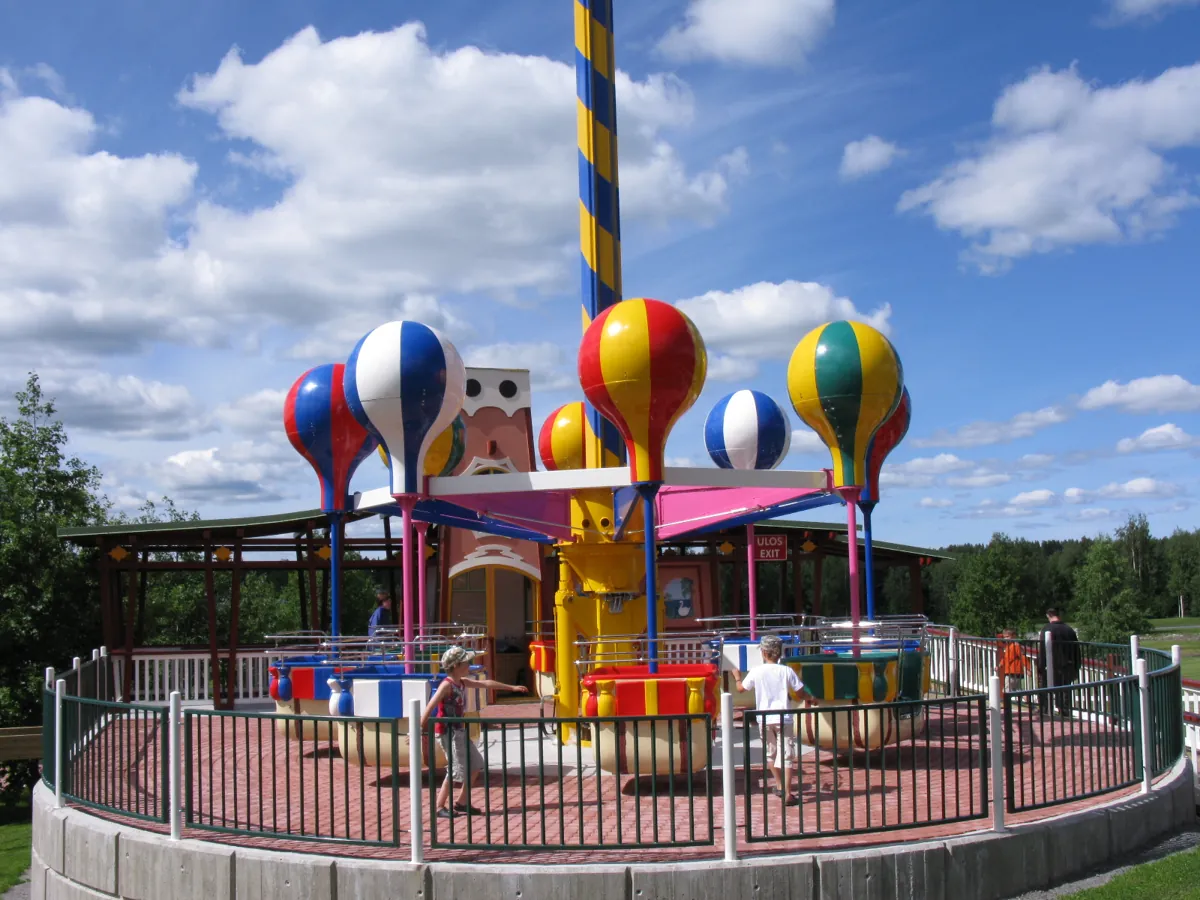
Fanelli Amusements works the midway with rides and games, and live music plays from the Tavern Stage and the Community Stage rather than a single grandstand bill. Indoors, the home arts, baking and agricultural competitions fill the exhibit halls with judged work, and the fair’s own art premium schedule puts a Best in Show award of twelve dollars and a trophy at the top of its classes. The balance is deliberate: the commercial midway and the judged quilt sit a short walk apart, and each draws its own loyal crowd.
Sunday Ends With Bent Metal
The fair closes on Sunday with its demolition derby, the one headline act a visitor must budget for separately. Grandstand admission to the derby is sold apart from fair admission, on its own ticket, and the fair’s gate price never includes it. Treat the derby as a second, smaller event bolted onto the fair’s final afternoon: the grounds ticket gets a visitor to the fence, and the derby ticket gets them a seat.
Planning Your Visit
The Gate, Read Carefully
The fair’s own 2026 ladder charges adults fifteen dollars for one day, children from five to twelve five dollars, and nothing for a child under five. Seniors aged sixty-two and older pay five dollars, and military visitors showing identification enter free. The local paper’s fair-week coverage adds two concessions worth planning around: children of eleven and under were admitted free on opening day, and seniors of sixty-two and over were admitted free on Sunday. One honest wrinkle deserves noting, because two fair-season sources state it differently: the association’s own form sets the five-dollar youth band at ages five to twelve, while the paper prints it as five to eleven. Families with a twelve-year-old should expect the form’s version to govern at the gate and be pleasantly surprised if it does not. No fair-side source in the record publishes a parking price, so parking belongs in the budget as an unknown rather than as a free extra or an invented figure.
Two Campgrounds Wearing One Name
Camping exists at this fair in two distinct layers that should never be merged into one rate. The general camping offered to the public runs on hookups of water and twenty-amp electricity, priced in the fair’s own form with a tent site at forty dollars for one night, surcharges of twenty-five dollars per side for a slide-out or awning, ten dollars a night to step up to thirty-amp service and fifteen dollars a night for fifty-amp service, and a house rule against air conditioners and electric heaters. Exhibitors camp on their own separate terms through the exhibitor system, and exhibitors also buy their own passes at rates below the public gate; both arrangements are machinery for the people showing animals, not bargains available at the public entrance. Whichever layer a camper uses, one rule applies to all of it: the camping fee never includes fair admission, and a night on the grounds and a day inside the fence are always two separate purchases.
A Sample Saturday on the Grounds
Arrive mid-morning and start where the fair started, at the pulling track, while the day’s early classes are still fresh. Give the late morning to the barns, catching a 4-H livestock show and one of the lighter contests if the schedule offers one, then eat lunch from the fairground vendors before the midway crowds thicken. Spend the early afternoon in the exhibit halls, where the judged baking, home arts and art entries reward a slow pass, and return outside for a truck or tractor pull as the light softens. Finish with music from whichever of the two stages is playing into the evening, and leave the derby for Sunday if the trip allows a second day.
How It Compares
The closest comparison runs the same weekend a county away. The Belknap County Fair at Belmont is a two-day fair billed by its own history as the smallest of New Hampshire’s recognised agricultural fairs, while Cheshire spreads four days across a full midway, pulling programme and derby at Swanzey. Both fairs share one quirk of geography: neither sits in its county seat, since Belknap’s fair avoids Laconia just as Cheshire’s avoids Keene. A visitor choosing between them on that crowded weekend is really choosing a scale — the compact two-day fair or the longer, louder four-day one — because the distance between the two grounds makes doing both in a single day a poor bargain.
Checklist
- Confirm the year’s exact dates with the fair before booking anything around them.
- Carry the gate ladder in mind: fifteen dollars for adults, five for children five to twelve, under five free.
- Ask at the gate about the opening-day and Sunday concessions if travelling with children or seniors.
- Budget the demolition derby as a separate grandstand ticket on top of admission.
- Book camping early, and remember the camping fee never includes admission.
- Leave parking money uncommitted, since the fair publishes no parking price.
- Enter exhibits through the exhibitor system and Gate 3 rather than the public gates.
- Ignore any source that places this fair in Keene; the grounds are in Swanzey.
Beyond the Fairgrounds
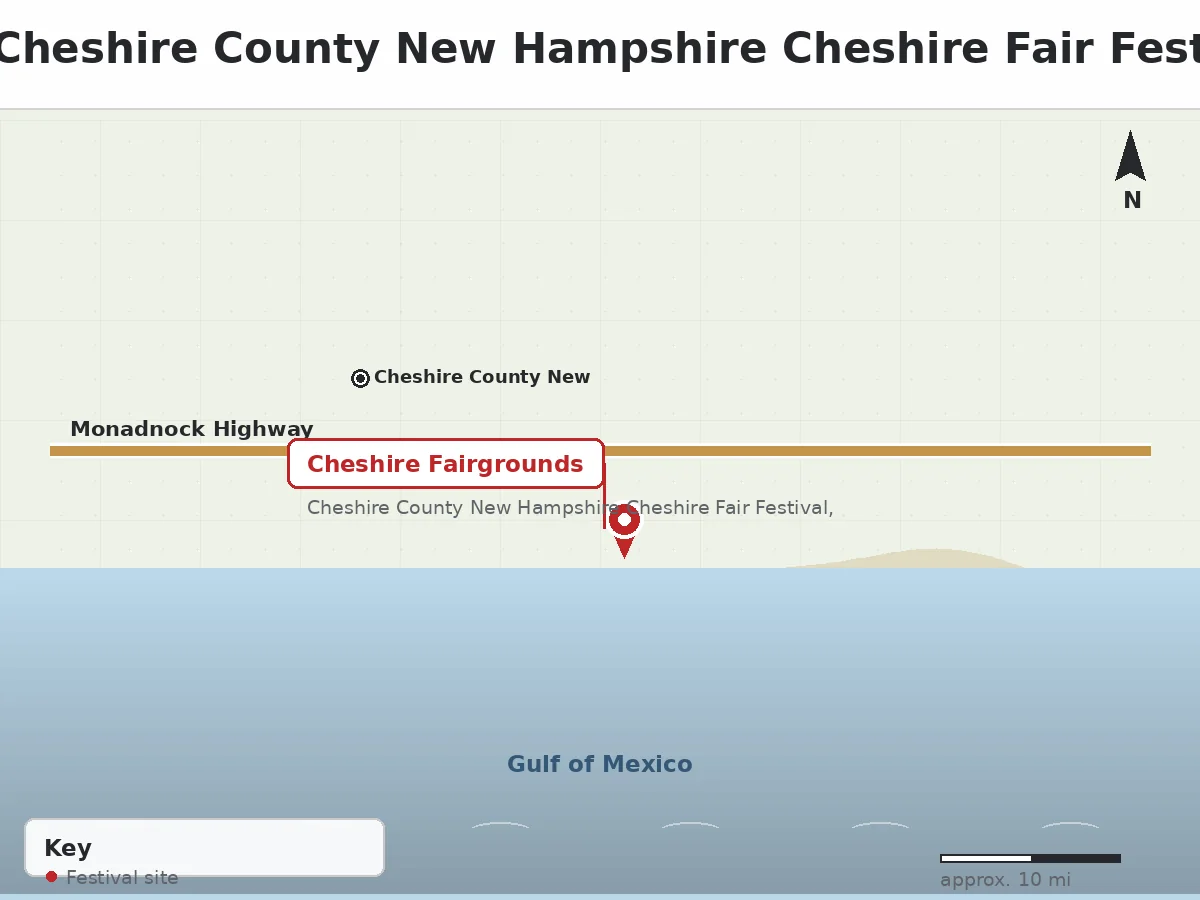
Swanzey sits in the Monadnock region of southwestern New Hampshire, along the highway that carries the mountain’s name, and the fairgrounds stand a short drive south of Keene. That geography gives a fair trip two natural extensions. Keene itself holds Wheelock Park, where the fair’s whole story began as a Farm Bureau field day in 1935, and the seat’s downtown makes an easy meal stop before or after a fair day. Within Swanzey, the rural roads around the grounds pass the kind of farmland the fair exists to celebrate, and the town has been the fair’s home since the enlarged gatherings of 1936 and 1937 first moved it out of the county seat. A visitor with a spare hour does better wandering these two poles of the fair’s own history than hunting for a second attraction.
Why This Fair Matters
Plenty of fairs were founded; this one was spun off. The Cheshire Fair survives as the rare case of a promotion that outgrew the organisation created to host it, because the Farm Bureau’s field day drew more than a field day could hold and the farmers involved responded by building it a permanent association of its own in 1938. That volunteer ownership explains the fair’s character: the pulls and livestock classes that justified it in 1935 were never displaced by the midway that arrived later, and the 4-H programme runs deeper than decoration. For Cheshire County, the fair is the one weekend each year when the county’s agricultural minority, which works in relative quiet the rest of the summer, takes over a fairground in full public view.
Frequently Asked Questions
Is the Cheshire Fair held in Keene?
No. The fair takes place at the Cheshire Fairgrounds in Swanzey, on Monadnock Highway south of the city. Keene is the county seat and holds the Cheshire Fair Association’s post office box, which is why the seat’s name appears on the fair’s paperwork, but no part of the fair itself happens there.
What does it cost to get in for the day?
The fair’s own published ladder charges adults fifteen dollars, children aged five to twelve five dollars, and nothing for children under five, with seniors of sixty-two and older at five dollars and military visitors with identification admitted free. Local coverage adds free admission for children of eleven and under on opening day and for seniors on Sunday. The demolition derby costs extra on top of any of those figures.
Can I stay overnight at the fairgrounds?
Yes, camping is offered on the grounds, but it is sold in two separate layers with different terms: general camping for the public on water and twenty-amp hookups, and a separate exhibitor camping arrangement tied to the exhibitor pass system. Neither layer includes fair admission, so campers still buy their day at the gate like everyone else.
Does my admission cover the demolition derby?
It does not. The derby closes the fair on Sunday, and its grandstand admission is sold separately from fair admission. Plan on two purchases that day: the gate ticket for the grounds, and the derby ticket for a seat at the closing event.
What to Expect From the Next Cheshire County New Hampshire Cheshire Fair Festival
How often is the Cheshire County New Hampshire Cheshire Fair Festival held?
The fair is held once a year, across four days running from Thursday to Sunday. Its settled place in the calendar is the turn of the summer, where July gives way to August, and it has kept that late-season slot through its modern history under the association.
When is the next Cheshire County New Hampshire Cheshire Fair Festival?
The documented edition ran from Thursday, July 30 to Sunday, August 2, 2026, and the fair returns in the same seasonal position the following year. The association publishes each edition’s exact dates on its own forms and schedules, so the four-day pattern at the end of July is the reliable guide and the fair’s own announcement is the authority for the precise days.
Will the dates change?
They can drift by a few days from one year to the next, because a Thursday-to-Sunday fair follows the calendar rather than fixed dates, and the exact span moves as the weekends move. The season itself is the stable part: anyone planning ahead should hold the end of July and the first days of August, then confirm the precise span once the fair publishes it.
The envelope goes to Keene and the fair happens in Swanzey, and that small confusion is the first thing worth knowing about the Cheshire Fair. Everything after it is straightforward: four days of pulls, livestock, youth showing and midway noise on grounds the fair has called home since before the Second World War, run by an association of the county’s own making since 1938. Go for the oxen, stay for the barns, and keep a little money back for Sunday’s derby.

One Comment