Chatham County Georgia Savannah Jazz Festival

Savannah Jazz Festival: A Returning Visitor’s Guide to Chatham County
Savannah Jazz has a way of pulling you back. The first visit is about discovery: finding the stages, learning the rhythms of the weekend, and realizing that jazz in Savannah is not confined to a single concert hall. The second visit is about strategy. By the third, you know which squares feel best at dusk, which side streets lead to a quiet bite between sets, and why Chatham County’s county seat has become such a natural home for a festival built on improvisation. Savannah is the county seat of Chatham County, Georgia, a county founded in 1777 and named for William Pitt. With a population of 295291 and 632 square miles of land, Chatham County stretches from the historic city grid out toward marsh and coast. Savannah Jazz sits right in the middle of that landscape, part civic celebration, part musical pilgrimage, and part Lowcountry night out.
For returning visitors, the appeal is not just the lineup. It is the way the festival folds into Savannah itself. You can spend an afternoon under live oaks, walk a few blocks for shrimp and grits, then settle in for a brass-heavy set as the air cools. The event has the easy confidence of a city that has been hosting music for generations, and the insider pleasure of knowing where to stand, when to linger, and how to pace yourself across a multi-day schedule. This guide is written for the traveler who has already fallen for Savannah Jazz and wants to experience it more deeply, as well as for the curious first-timer who wants to arrive with a returning visitor’s calm.
Savannah Jazz Festival Essentials for Chatham County Travelers
| Town | Savannah |
| County | Chatham County, Georgia |
| County seat | Savannah |
| Population | 295291 |
| Region | Coastal Georgia / Lowcountry |
| Typical timing | Annual, multi-day; check the current schedule for exact dates |
| Admission | Many events are free; some performances may be ticketed |
| Setting | Historic Savannah parks, squares, and indoor venues |
| Features | Live jazz, regional and touring artists, jam sessions, community events |
| Organizer | Community-based jazz presenters and volunteers |
What Savannah Jazz Is, Beyond the Brochure
Savannah Jazz is best understood as a movable feast. It is not one gate, one wristband, and one main stage. It is a series of performances and gatherings that use Savannah’s public spaces and music rooms as a backdrop. Some events feel like a neighborhood picnic with a horn section. Others are seated, attentive, and close enough to hear the brushes on a snare drum. That range is exactly why the festival rewards repeat visits. You can build a weekend around large outdoor sets, then disappear into a smaller venue where the music feels like a conversation.
The festival also functions as a meeting point for Savannah’s jazz community and its visitors. Local players share bills with regional and touring artists. Students and longtime listeners sit in the same audience. The result is a program that respects tradition while staying open to what jazz is becoming. For a returning visitor, the pleasure is in noticing those connections: the same bassist you heard in a square on Friday showing up in a club on Saturday, or a young vocalist holding her own beside a veteran horn player. Savannah Jazz does not treat jazz as a museum piece. It treats it as living music, shaped by the city around it.

A Chatham County Sound Story: Savannah Jazz Through the Years
Chatham County’s story begins in 1777, when the county was founded and named for William Pitt. Savannah, its county seat, grew into a port city with a complex cultural life, and music was never far from its streets. Jazz arrived in Savannah the way it arrived in so many Southern cities: through traveling musicians, local clubs, church music, brass bands, and the steady exchange of ideas along the coast. By the twentieth century, Savannah had a vibrant circuit of performers and listeners, and that foundation made a jazz festival feel less like an invention and more like a continuation.
Over the years, Savannah Jazz has grown into a multi-day tradition that draws on the city’s historic squares, parks, and indoor stages. The festival has likely evolved in scope and format, as most community-rooted events do, but its core impulse has remained consistent: bring jazz into public life and let people experience it together. Returning visitors often remark that the festival feels both polished and informal, a rare combination. You can hear world-class playing, then turn a corner and find a trio playing for passersby. That blend is part of Savannah’s character, and it is why the event has become a fixture in Chatham County’s cultural calendar.
It also helps that Savannah itself is a walkable, story-rich setting. The city’s squares, brick sidewalks, and riverfront give the music a sense of place. Jazz has always been a music of cities, and Savannah Jazz lets the city participate. The result is a festival that feels less like a stop on a tour and more like a seasonal homecoming for anyone who loves the music.
What Returning Visitors Notice at Savannah Jazz
Lowcountry Flavors Between Savannah Jazz Sets
Food is not a side note at Savannah Jazz. It is part of the rhythm. Returning visitors learn to build meals around the schedule rather than against it. A long afternoon of outdoor music calls for something substantial but not heavy: shrimp and grits, a fried green tomato sandwich, crab cakes, or a bowl of she-crab soup. Savannah’s restaurant scene ranges from casual counter service to white-tablecloth dining, and the festival period is a good excuse to try both. The smart move is to eat early or late, avoiding the exact moment when a major set lets out and every nearby table fills at once.
Between sets, coffee and pastries can carry you through the afternoon, while a late-night plate of oysters or a slice of pie can extend the evening. Because many Savannah Jazz events take place in and around the historic district, you are rarely far from a place to eat. Bring a little patience, keep an eye on wait times, and treat the meal as part of the festival rather than a interruption. The best returning-visitor tip is simple: pick one meal each day that you are genuinely excited about, and let the music fill the rest.
The Sound of Savannah Jazz: Brass, Bebop, and Late-Night Jams
The music itself is the main draw, and Savannah Jazz typically offers a broad survey of the jazz spectrum. You might hear straight-ahead standards, soulful organ trios, New Orleans-style brass, Latin jazz, bebop, and contemporary improvisation. Some sets are built for dancing; others are built for listening. Returning visitors know to check the schedule for venue type as much as artist name. An outdoor square set has a different energy from a seated club performance, and both are worth experiencing.
Jam sessions and informal collaborations are often where the festival’s spirit shows most clearly. Musicians who have played together for years trade choruses with visitors from out of town, and the audience becomes part of the exchange. If you are new to jazz, do not worry about knowing every tune. Let the rhythm guide you. If you are a longtime listener, you will appreciate the chance to hear familiar standards reworked in a room full of people who care about the music. The festival’s scale keeps it human: you are never too far from the bandstand, and the applause feels shared.
Bringing the Whole Family to Savannah Jazz
Savannah Jazz is generally welcoming to families, especially during daytime and outdoor events. Children can move a little, dance on the grass, and experience live music without the pressure of a formal concert hall. For parents and grandparents, the key is to choose the right set. A mid-afternoon performance in a park is usually easier than a late-night club show. Bring a blanket, sunscreen, water, and a snack, and have an exit plan if the youngest listener runs out of steam.
Older kids and teenagers often respond to the improvisational energy of jazz once they see it live. The festival can be a gentle introduction to listening closely, watching musicians communicate, and understanding that a song can change shape from night to night. Returning families often make a tradition of one outdoor set, one meal, and one low-key evening. That pace keeps everyone happy and leaves room for the music to be the memory rather than the marathon.
Planning a Savannah Jazz Trip in Chatham County
Getting to Savannah and Chatham County
Savannah is the county seat of Chatham County, and it is reachable by car, plane, and train. Interstate 16 connects the city to inland Georgia, while Interstate 95 runs along the coast and puts Savannah within easy reach of other Southeastern destinations. Savannah/Hilton Head International Airport serves the region, and Amtrak’s station in Savannah offers another option for travelers who prefer not to drive. Once you are in the historic district, many festival-related venues and public spaces are walkable, which is one of the great pleasures of a Savannah Jazz weekend.
If you are driving in from out of town, build in extra time for coastal traffic, especially around check-in hours. Rideshare and taxis are useful for getting between neighborhoods, but walking is often faster in the historic grid. Returning visitors learn to park once and leave the car behind. Comfortable shoes matter more than a detailed driving plan.
Where Returning Visitors Stay for Savannah Jazz
The historic district is the most convenient base for Savannah Jazz, with inns, boutique hotels, and rental units within walking distance of many venues and squares. Staying there means you can step out for a set, return to your room for a break, and head back out without worrying about parking. Midtown Savannah offers more chain hotels and easier car access, while properties near the airport suit travelers who are flying in and out quickly. For a returning visitor, the best choice depends on how much you value spontaneity. If you want to follow the music without a schedule, stay close to the center.
Book early if your visit coincides with a popular festival weekend. Savannah is a year-round destination, and accommodations in the historic district can fill quickly. Consider a place with a kitchen or at least a good coffee setup, because festival days often start slow and end late. A balcony or courtyard is a bonus, but location beats luxury when you are trying to catch multiple sets in one day.
Parking in Historic Savannah During Savannah Jazz
Parking in historic Savannah can be tight at the best of times, and festival weekends add extra demand. City garages and surface lots are the most predictable option, but they may fill during headline events. Meters and residential zones have time limits and enforcement, so read signs carefully. If your hotel offers parking, use it and walk. If you are driving to a specific venue, arrive early, expect to circle, and keep a garage address as a backup.
Rideshare is a good alternative for evening events, especially if you plan to enjoy a drink or stay out late. Bicycles and scooters can work for shorter hops, but the historic district’s brick streets and pedestrian traffic require caution. The simplest returning-visitor strategy is to choose one parking spot for the day and treat the rest of your movement as a walking tour.
Admission, Costs, and the Free-to-Ticketed Mix
Savannah Jazz typically includes a mix of free and ticketed events. Many community performances and outdoor sets are open to the public, while some indoor concerts or special programs may require a ticket or reservation. Because the exact structure can change from year to year, check the current schedule before you finalize your plans. Budget for meals, drinks, parking, and perhaps one or two ticketed shows, but do not assume you need a large entertainment budget to enjoy the festival.
Returning visitors often build a flexible spending plan: one paid event, several free sets, and a little extra for a memorable meal. If you are traveling with a group, decide together which performances are must-sees and which you can discover spontaneously. The free-to-ticketed mix is part of what makes Savannah Jazz accessible, and it rewards travelers who are willing to go with the flow.
Savannah Weather and What to Wear
Coastal Georgia weather can be warm and humid, especially in the shoulder seasons. Evenings may be mild, but a light layer is useful for breezy squares and air-conditioned venues. Rain is always possible, so pack a compact umbrella or a light rain jacket. Comfortable walking shoes are essential, not optional. If you plan to be outdoors for several hours, bring sunscreen, a hat, and a refillable water bottle.
Dress in Savannah tends to be relaxed but put-together. You will see everything from jeans and sneakers to smart casual outfits. For evening performances, a collared shirt or a simple dress works well. The goal is to be comfortable enough to walk, stand, and sit through multiple sets without fussing over your clothes. Returning visitors know that versatility beats formality.
A Returning Visitor’s Weekend Itinerary for Savannah Jazz
Start Friday with an early check-in and a walk through the historic district. Pick up the festival schedule, mark two or three sets that interest you, and leave room for surprise. In the late afternoon, find a square or park for an outdoor performance. Bring a blanket or folding chair if allowed, and settle in as the light turns golden. For dinner, choose a Lowcountry restaurant near your evening venue. After the show, take a slow walk back to your hotel and listen for music spilling out of bars and courtyards.
Saturday is the fullest day. Begin with coffee and a pastry, then catch a midday set. Use the early afternoon for a museum, a house tour, or a stroll along the river. Eat a late lunch to avoid the dinner rush. In the evening, attend a ticketed or headline performance, then follow the crowd to a jam session or a quiet nightcap. If you are traveling with family, swap the late show for an early evening outdoor set and a dessert stop.
Sunday should be slower. Start with brunch, then choose one final performance that fits your mood. If the weather is fine, walk through one of Savannah’s squares and let the festival’s afterglow settle in. Before you leave, note what you missed for next year: a venue you meant to try, a restaurant that was booked, or a musician whose name you want to remember. That list is how a first visit becomes a returning tradition.
Savannah Jazz Alongside Charleston, Beaufort, and Hilton Head
Savannah Jazz sits in a region rich with music and travel options. Charleston, South Carolina, is a larger city with its own deep jazz and performing arts scene, and it can feel more formal and spread out. Beaufort, South Carolina, offers a smaller, waterfront music culture with a relaxed Lowcountry pace. Hilton Head Island leans toward resort entertainment, golf, and beach time, with live music woven into hotel and marina settings. Each has its own appeal, but Savannah Jazz stands out for its walkable historic setting and the way the festival blends public squares with intimate rooms.
If you have extra days, you could pair Savannah Jazz with a day trip to Beaufort or a beach afternoon toward Tybee Island. Charleston is close enough for a longer side trip, though you may want a full weekend there on its own. For returning visitors, the comparison is useful because it clarifies what makes Savannah special: the festival is not just a series of concerts, it is a way to experience Chatham County’s county seat as a living, music-making place.
Savannah Jazz Packing and Prep List for Chatham County
Pack comfortable walking shoes, a light rain jacket, sunscreen, a hat, and a refillable water bottle. Bring a small blanket or folding chair if outdoor seating is allowed at the sets you plan to attend. Keep a portable phone charger in your bag, because festival days are long and you will use your phone for schedules, tickets, and photos. A crossbody bag or small backpack is easier than a large purse in crowded squares.
Before you go, check the current Savannah Jazz schedule, confirm which events require tickets, and make dinner reservations for the nights you care most about. Download any tickets or passes to your phone, and screenshot the schedule in case service is spotty. Tell your group where you will meet if you split up. Finally, leave one evening unscheduled. The best festival moments often happen when you follow a sound you did not plan to hear.
Beyond the Stages: Chatham County Between Sets
Chatham County covers 632 square miles, and Savannah is only one part of its landscape. Between festival sets, explore the historic district’s squares, browse the shops along River Street, or visit one of the city’s museums and historic homes. If you have a car, drive out toward the coast for marsh views, seafood shacks, and a slower pace. Tybee Island offers beach time and a classic coastal atmosphere, while the county’s inland areas reveal a different side of Georgia’s Lowcountry.
Food lovers can spend hours exploring Savannah’s restaurants, from casual lunch counters to refined Southern kitchens. Architecture fans will find plenty to admire in the city’s preserved streetscapes. Nature lovers can seek out parks and waterways. The point is that Savannah Jazz does not require you to stay in one place. The festival is a reason to move through Chatham County, not just a reason to sit in a single venue.
The Role of Savannah Jazz in Chatham County’s Cultural Life
Savannah Jazz matters because it keeps a living art form in public view. It gives local musicians a stage, invites visitors into the city’s cultural rhythm, and creates moments of shared attention in an era of endless distraction. The festival also supports the broader idea that Savannah is not only a historic destination but a contemporary music city. For Chatham County residents, it can be a point of pride and a chance to see neighbors and newcomers together in the same audience.
Community events like this depend on many hands: performers, volunteers, venue staff, sponsors, and listeners who show up ready to participate. That participation is what makes the festival feel alive. When a crowd applauds a solo, laughs at a musical joke, or stays quiet for a tender ballad, everyone is part of the performance. Savannah Jazz strengthens that bond year after year, and it gives returning visitors a way to belong to Savannah, even for a weekend.
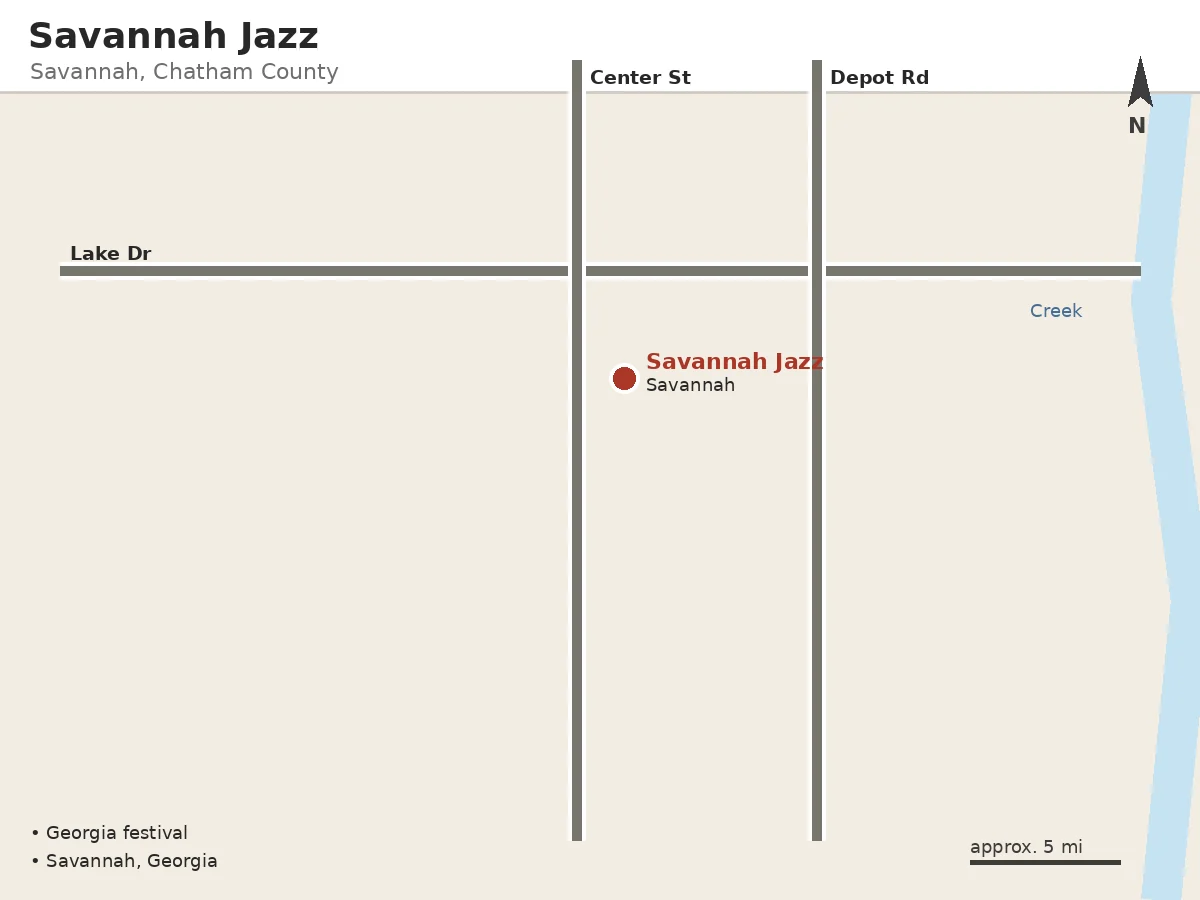
Where Savannah Jazz Takes Place in Chatham County
Savannah Jazz unfolds in Savannah, the county seat of Chatham County, Georgia, with performances typically centered in and around the city’s historic district and public squares.
Savannah Jazz: Answers for Returning and First-Time Visitors
Is Savannah Jazz free to attend?
Many Savannah Jazz events are free and open to the public, especially outdoor and community performances. Some indoor concerts or special programs may require tickets. Check the current schedule for each event so you know what to expect.
When is Savannah Jazz usually held?
Savannah Jazz is typically held as an annual, multi-day event. Exact dates can vary, so consult the current-year schedule before booking travel or making plans around specific performances.
Where do most Savannah Jazz events take place?
Performances are generally centered in Savannah’s historic district, using public squares, parks, and indoor music venues. The exact locations depend on the year’s program, so review the schedule for addresses and venue details.
Do I need to buy tickets in advance?
For ticketed events, advance purchase is often a good idea, particularly for headline shows or limited-capacity venues. Free events may not require tickets, but arriving early can help you get a good spot. Always confirm the policy for each performance.
Is Savannah Jazz family-friendly?
Yes, many daytime and outdoor performances are suitable for families. Children can enjoy the music, move around, and experience a live jazz setting without strict concert-hall rules. For late-night club shows, use your judgment about age and attention span.
What should I bring to an outdoor set?
Bring water, sunscreen, a hat, and a light layer for changing weather. A blanket or folding chair can be useful if seating is not provided and the venue allows it. Check the event details before bringing large items.
How do I get around Savannah during the festival?
Walking is often the easiest way to move between venues in the historic district. Rideshare and taxis work well for longer hops or late nights. If you drive, plan to park once and leave the car behind whenever possible.
Can I combine Savannah Jazz with a Chatham County beach day?
Yes. Chatham County’s coastal location makes it possible to pair festival events with a beach visit or a marsh-side drive. Just allow enough travel time, especially on busy weekends, and check the schedule so you do not miss a set you really want to see.
Looking Ahead for Savannah Jazz in Chatham County
Savannah Jazz has built a durable place in Chatham County’s cultural calendar by staying rooted in the city and open to change. Future editions will likely continue to balance free community performances with ticketed concerts, outdoor gatherings with intimate indoor sessions, and local talent with visiting artists. For returning visitors, the outlook is simple: expect the same warm Savannah welcome, the same walkable rhythm, and the same chance to hear something unforgettable. The festival’s strength is its flexibility, and that should serve it well in the years ahead.
Last updated: October 2026
Whether you are planning your second Savannah Jazz weekend or your tenth, the festival rewards the traveler who slows down, listens closely, and lets the city set the tempo. Book early, pack light, keep one evening open, and trust the music to lead you through Chatham County’s most musical season.