Burt County Nebraska Fair Festival
Every July, the agricultural year of one of Nebraska’s Missouri River counties gathers itself into five days on a single set of grounds. The Burt County Fair fills the Burt County Fairgrounds in Oakland, at 505 West Fulton Street, running from a Friday through the following Tuesday in the shape its own open class book documents. It is a county fair in the fullest sense: an open class competition drawing entries from the county’s five towns, a 4-H programme that begins with contests a fortnight beforehand, a coronation, a parade, a grandstand concert and a demolition derby, and a livestock auction that closes the week. The fair is run by the Burt County Ag Society, whose board directs the event and whose name stands behind the premium checks exhibitors receive. Its own 2026 open class book bills the occasion with a phrase worth repeating exactly as printed: 114 Years of Fair Bounty. That is the fair’s billing for itself, offered here as billing only.
One Fair, Two Bodies, Two Different Jobs
Two organisations stand behind the Burt County Fair, and they are not interchangeable. The Burt County Ag Society is the organiser. Extension’s own fair pages record that 4-H premium checks are mailed from the society, and the county newspaper has recorded its board, including its vice president, at work on the fair’s business. When this article says the fair is run by someone, it means the society and its board.
The second body is the Burt County Fair Foundation, a separate charitable organisation whose stated purpose is to support the Burt County Fair and raise funds for the enhancement and upkeep of its grounds. The foundation does not run the fair. Its name appears on the Fair Foundation Pavilion, where the public fashion show, the special awards presentations and the 4-H Coronation are held, and that building is the visible product of its side of the partnership. Listings and resale pages sometimes mash the county’s names into longer forms the fair itself does not use; the fair’s own published name is simply the Burt County Fair, and this article keeps it and the society’s exactly as the record gives them.
The grounds those two bodies share are a working fairground rather than a field with fences. The record names a 4-H Building where static exhibits are entered and judged, a Livestock Arena that hosts the animal shows, the Fair Foundation Pavilion, a Poultry Barn, and a beer garden area that older published schedules called Left Field. Beyond that named fabric, this article claims nothing.
Quick Facts
| Item | Detail |
| Fair | Burt County Fair |
| Fair town | Oakland, Nebraska |
| County seat | Tekamah, which hosts no part of the fair itself |
| Venue | Burt County Fairgrounds, 505 West Fulton Street, Oakland |
| Season | Mid-July, five days running Friday to Tuesday in the documented current shape |
| Organiser | Burt County Ag Society |
| Support body | Burt County Fair Foundation, a separate organisation that funds grounds upkeep |
| Open class reach | Entries drawn from Craig, Decatur, Lyons, Oakland and Tekamah |
| Admission | No gate price is published for the current fair in its own record |
| The fair’s own billing | 114 Years of Fair Bounty, from the fair’s 2026 open class book |
A History the Fair Bills but Does Not Date
Most county fairs can point to a founding year, and most articles about them repeat it. The Burt County Fair’s own record offers something more interesting and less tidy: two pieces of billing, fourteen years apart, that do not reconcile into a birthday, and this article declines to force them into one.
For a useful comparison, see the Buffalo County Nebraska Fair Festival for another county festival.
The fair’s 2026 open class book celebrates 114 Years of Fair Bounty. The fair’s own schedule card from 2012 celebrated a hundredth anniversary in that year. Both statements come from the fair itself. Counted backwards naively, they suggest two different starting points, and no fair-side source fetched for this article settles which anchor, if either, marks a first fair. So the honest history is this: the fair has run long enough that its own bookkeepers describe it in well over a century of bounty, its open class tradition reaches into every town in the county, and the published record leaves the first edition’s year open. A resale page’s talk of a 113th edition is a ticket seller’s arithmetic, not the fair’s.
What the record does show clearly is continuity of form. The fair of the 2012 card already ran on these grounds with a gate that edition billed as free, and the fair of the 2026 book runs a five-day week built around the same bones: exhibits judged, animals shown, a community crowned and paraded, and a sale at the end. The shape has held.
What to Expect
A Fortnight of Contests Before the Fair Proper
The Burt County Fair does not really begin on its opening Friday. For roughly two weeks beforehand, its competitive machinery is already moving around the county. Extension’s calendar for the current edition lists a Favorite Foods Contest and a Tractor Driving Contest in the first week of July, a Pie Day held in Oakland, a Pre-Fair Clean-Up Day when the grounds are readied by the people who will fill them, a Clothing Judging Day held in Tekamah, a Rocket Launch Contest, and a Shooting Sports Contest just before the fair. A visitor who only arrives on Friday sees the finished article; the county has been competing for a fortnight already.
Thursday and Friday: Entries, Small Animals and a Coronation
The fair’s documented week opens on a Thursday that belongs to the exhibitors: rabbits and dogs are shown that day, static exhibits are entered, and poultry is checked in. Friday is the judging core of the indoor fair: static entries are judged inside the 4-H Building while beef, goats, sheep and swine are checked in, and the Livestock Arena hosts the poultry, cat and companion animal shows. Friday then changes register entirely. In the evening the Fair Foundation Pavilion hosts the Public Fashion Show, special awards are presented, and the 4-H Coronation takes place, the week’s ceremonial high point arriving before the first full day of livestock showing has begun.
Saturday, Sunday and the Public Face of the Fair
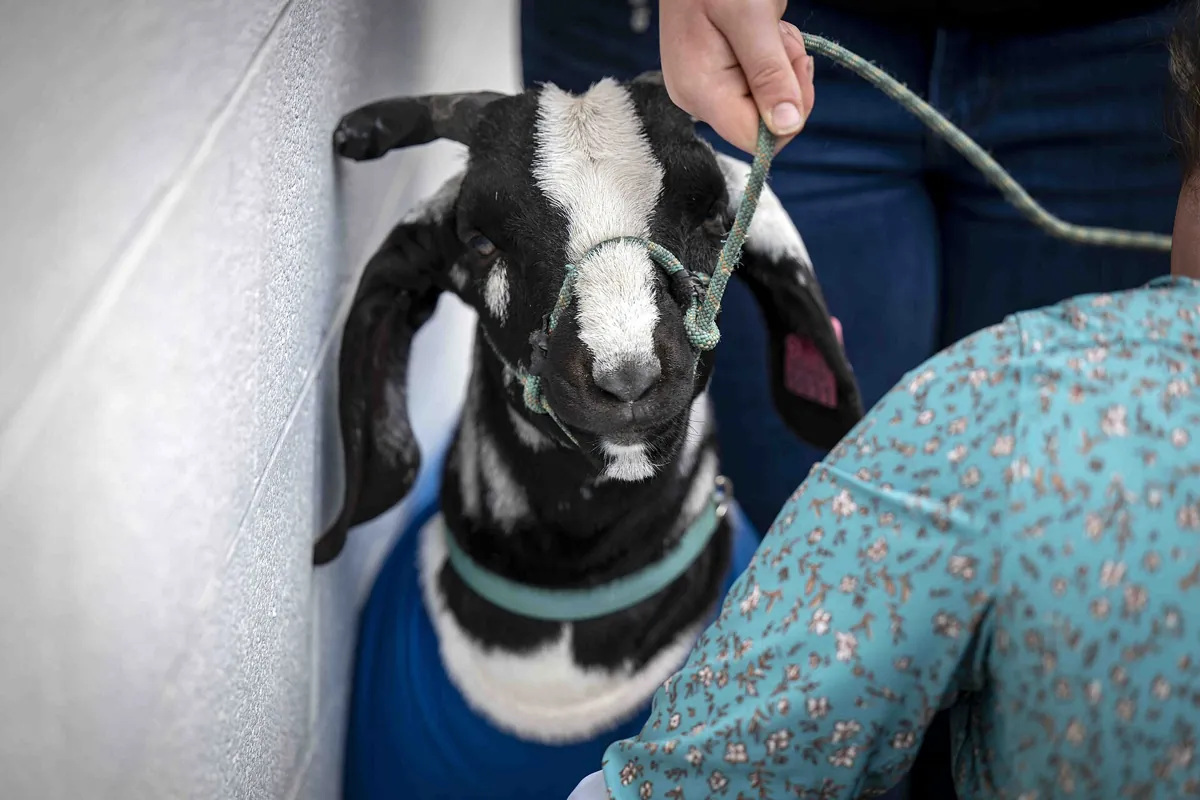
Saturday is given to the pig and sheep barns: the swine show, the meat goat and dairy goat show, the sheep show, and the interviews that accompany the bottle lamb, bottle goat and bucket calf projects, where the youngest exhibitors account for the animals they have raised. Sunday brings the beef show, activities for Clover Kid members, and the parade, the fair’s most public hour.
Wrapped around that 4-H spine, the fair’s own poster record for its current edition adds the attractions a general audience comes for: a concert by Tyler Braden and Logan Mize, a demolition derby, and a travelling display honouring America’s fallen service members. Those attractions are carried here exactly as the fair’s posters document them for that edition, not as permanent fixtures. Monday completes the showing with the horse show, a livestock judging contest and the 4-H and FFA Olympics, and exhibits and livestock are released. On Tuesday the week resolves as Nebraska fair weeks so often do: special awards are presented and the 4-H and FFA Livestock Auction sells the projects the county’s young exhibitors have spent a season raising.
Planning Your Visit
Getting to Oakland and the Grounds
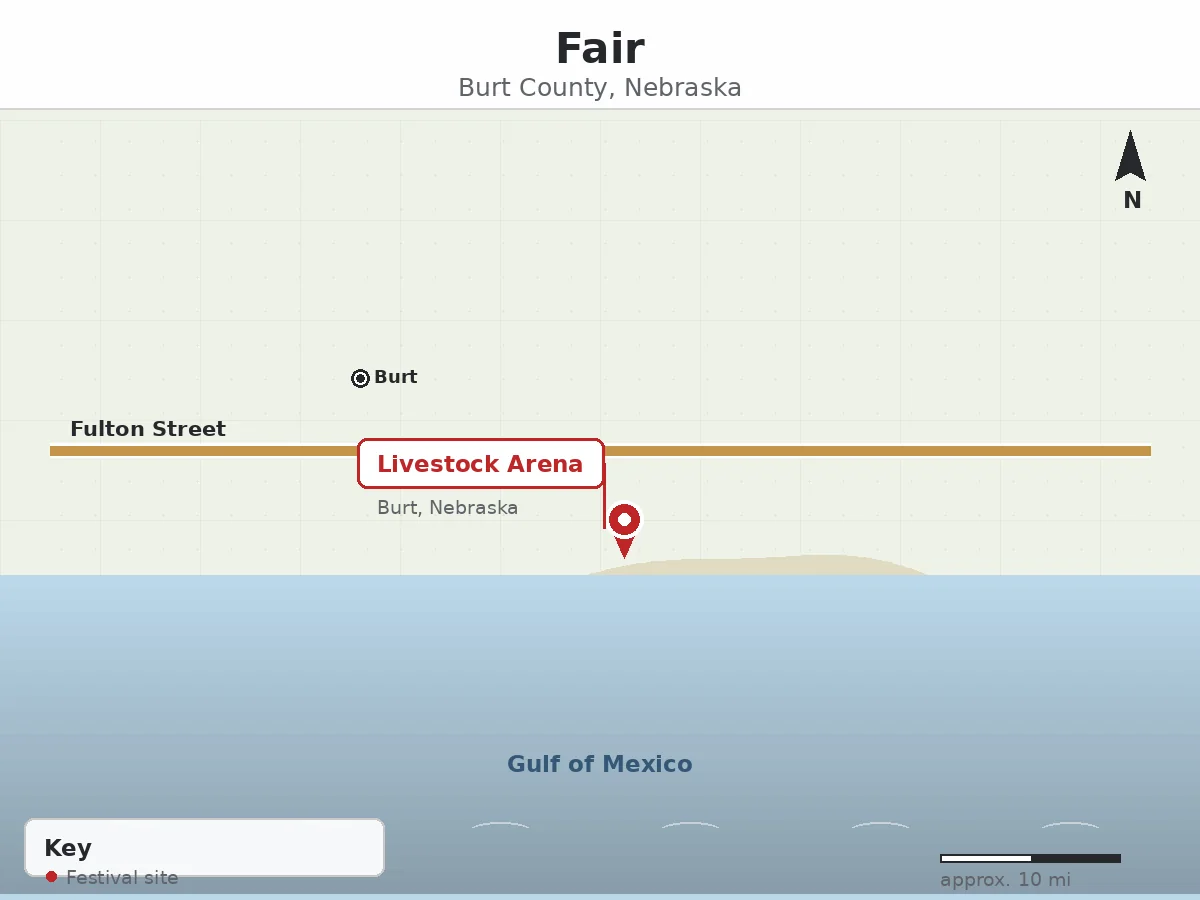
Oakland sits in the western part of Burt County, and the fairgrounds stand at 505 West Fulton Street. One navigation warning matters more than any route: do not aim for Tekamah. Tekamah is the county seat and the town where the county Extension office sits, and it hosts one pre-fair judging day, but the fair itself has never been there. Every event described in this article happens in Oakland, and a traveller who follows a county-seat instinct will spend the fair’s opening morning driving back across the county.
The Gate Question, Answered Honestly
No admission price for the current fair appears in the fair’s own published record, and this article prints none. It also refuses the opposite shortcut. The fair’s 2012 schedule card billed free admission at the gate, and that was that edition’s position; it is not evidence about the modern fair, which is therefore not described anywhere here as free. The concert and the demolition derby likewise carry no prices in the fair-side record. Expect that some parts of the week may be ticketed, carry cash, and confirm the current year’s arrangements with the fair before travelling.
Staying Over
No fair-week camping offer appears in any fair-side source behind this article, so none is promised. Oakland is a small town with limited lodging, and the county’s other towns are close at hand. Visitors staying for the full five days should arrange rooms early rather than assume a pitch on the grounds will be waiting.
A Saturday at the Fair
Arrive in the morning and start in the Livestock Arena, where the day’s showing opens with swine. Cross to the goat pens for the meat goat and dairy goat judging, then find the sheep show before lunch. Spend the early afternoon inside the 4-H Building, reading the judged static exhibits slowly, because by Saturday the ribbons are hung and the county’s best work is on the tables. Watch the bottle lamb and bucket calf interviews to see the youngest exhibitors defend their season’s work in their own words. Take the evening as it comes on the grounds, and leave knowing the beef show and the parade still wait on Sunday.
How This Fair Differs From the Usual County Story
Two contrasts define this fair against the standard pattern. The first is geography: Nebraska county fairs usually sit in the county seat, and this one does not, because Oakland rather than Tekamah holds the fairgrounds and the tradition. The second is structure. Many fairs are run by a single board; this one runs on a society that stages it and a foundation that funds its fabric, and merging those two bodies into one invented organisation would misdescribe the fair at its foundation. Set beside the bare listings that give Oakland a fair in July and stop, the fair’s own book tells a richer story: five days, a fortnight of contests, and a county’s agricultural year in one week on Fulton Street.
Fair Week Checklist
- Confirm the current year’s dates and any ticketed events with the fair before travelling
- Aim for Oakland, not Tekamah, when setting out for the grounds
- Carry cash, since no current gate or event prices are published in the fair’s own record
- Arrive on Thursday or Friday to see entries judged rather than only displayed
- Stay for the Friday evening fashion show and coronation at the pavilion
- Give Saturday morning to the livestock arena and the afternoon to the exhibit building
- Do not leave before the parade on Sunday if a full fair day is the goal
- Book lodging ahead, because no fair-week camping is published for the grounds
Beyond the Fairgrounds
The fair’s open class book names the geography a visitor is really entering: Craig, Decatur, Lyons, Oakland and Tekamah, the five towns whose kitchens, gardens, workshops and barns supply its entries. A trip to the fair repays being treated as a trip to the county. Decatur sits on the Missouri River at the county’s eastern edge, the river town of the five. Lyons and Craig are the small farming communities of the interior, and Tekamah, the county seat, is worth a side trip for the county’s civic centre. The pre-fair fortnight scatters its contests across this same map, so the fair’s footprint is county-wide even though its grounds are in one town.
Why This Fair Holds Its County Together
A county of small towns needs occasions that belong to all of them at once, and this fair is built to be one. Its open class draws from five communities rather than one, its 4-H programme gives the county’s children a single shared stage, and its calendar stitches the towns together for a fortnight before the fair even opens. The Ag Society supplies the organisation, the Fair Foundation supplies the upkeep, and the exhibitors supply the substance. Fairs like this one are not entertainment laid on for a county; they are the county presenting its own work to itself.
Frequently Asked Questions
Where exactly is the Burt County Fair held?
At the Burt County Fairgrounds, 505 West Fulton Street, in Oakland, Nebraska. Oakland is the fair town. Tekamah, the county seat, is home to the Extension office and hosts a pre-fair clothing judging day, but no part of the fair itself takes place there.
Who runs the Burt County Fair?
The Burt County Ag Society runs it, through its board; Nebraska Extension’s fair pages record that exhibitor premium checks are mailed from the society. The Burt County Fair Foundation is a separate support organisation that raises funds for the grounds and their upkeep, and it is not the organiser.
What is known about the price of admission?
The fair’s own current record publishes no gate price, and this article will not invent one. A schedule card from the fair’s 2012 edition billed free admission at the gate, but that was that year’s position and cannot honestly be presented as today’s. Check the current year’s arrangements with the fair before you go, and carry cash in case parts of the week are ticketed.
What are the biggest moments of the week?
The Friday evening programme at the Fair Foundation Pavilion, with the public fashion show and the 4-H Coronation, is the week’s ceremonial peak. The Sunday parade is its most public hour, and the Tuesday livestock auction its working climax, when the season’s market projects are sold. Current-edition posters also document a headline concert and a demolition derby as grandstand draws.
What to Expect From the Next Burt County Nebraska Fair Festival
How often is the Burt County Nebraska Fair Festival held?
It is an annual event, held once each year in mid-July. The documented current shape runs five days, Friday through the following Tuesday, with contests and judging machinery beginning a fortnight earlier.
When is the next Burt County Nebraska Fair Festival?
The next edition is expected in mid-July of the coming year, following the fair’s established midsummer place in the Nebraska calendar. Exact dates are announced by the fair itself in its own book and calendar, and those announcements, rather than any listing, are the ones to plan around.
Will the dates change?
The fair’s midsummer timing has been consistent across its documented editions, in both the fair’s older card and its current book. Small shifts of a few days either way are normal as each year’s calendar is set, so the season is dependable even where the precise days move.
Closing
The Burt County Fair asks a little more of its visitors than most: aim for the right town, arrive before the weekend, and take its week in the order the county itself lives it. In return it offers the complete anatomy of a Nebraska county fair, from a rabbit show on Thursday to an auctioneer’s chant on Tuesday.