Bottineau County North Dakota Fair Festival
Come to Bottineau in the second week of June and you will find a county fair that still works the way a county fair is supposed to work. The Bottineau County Fair fills the Bottineau County Fairgrounds in Bottineau, the county seat and largest city in Bottineau County, with livestock judging, a Junior Point Show, a small carnival, bands in a beer garden, a rodeo arena, and a Sunday afternoon that ends with a demolition derby and a horse pull. It is run by volunteers, opens with a free supper served by its own fair board, and charges one admission at the gate covering the attractions inside. Even its age is told honestly here, in conflicting versions, because the fair’s own records do not agree.

About the Fair
The Bottineau County Fair is the June fair of the Bottineau County Agricultural Society, held at the Bottineau County Fairgrounds in Bottineau. Bottineau is the county seat of Bottineau County, and every fair-side layer places the fair in Bottineau itself. The fair’s own website bills it as North Dakota’s oldest fair, and that billing is repeated here exactly as billing. Whether the claim can be measured is another matter, and the history section lays out why no single founding year can be printed as settled fact.
The society appears in the record under more than one spelling, kept separate here. The fair’s own rules and its president’s signature use Bottineau County Agricultural Society. The body of the president’s legislative testimony spells the same society Bottineau County Agriculture Society. A local newspaper history shortens it to BACS and later to BCAS.
The fair board, in the president’s 2025 account, is nine volunteers from each district in the county, plus a secretary and a part-time maintenance worker. Bottineau County funds the fair in part, but the county is a funder, not the organiser. The Dakota College at Bottineau Foundation and Bottineau County Veterans man the two main gates. Extension staff help run the Parade of Champions, city bars bid to run the beer gardens, and local businesses sponsor the free opening supper. All are supporting roles. The organiser is the society alone.
Quick Facts
| Detail | Bottineau County Fair |
| Host town | Bottineau, North Dakota |
| County seat | Bottineau, the seat of Bottineau County |
| Grounds | Bottineau County Fairgrounds, Bottineau |
| Organiser | Bottineau County Agricultural Society |
| Season | June, usually the second week, over Father’s Day weekend |
| Most recent dated edition | June 18 to 21, 2026 |
| Gate model in the 2025 record | One-time admission covering attractions inside |
| Current site ticket ladder | Adults fifteen dollars, kids five dollars, six and under free |
History
The history of this fair is unusually well documented, and unusually hard to pin down. The local newspaper history written for the fair’s 125th year tells the story in three distinct dated steps, kept distinct here: a first fair on September 12, 1887, when the city of Bottineau hosted a fair during the North Dakota Cavalry’s encampment at Camp Tyner, the site where Bottineau High School stands today; the Bottineau County Agricultural Society, shortened to BACS in that history, organised on August 18, 1888, with William Stewart Sr. as president and J. H. Thompson as secretary, to operate a county fair; and the first county fair in the fall of 1889, held through downtown Bottineau businesses. Those are three different events in three different years, and they must not be collapsed into a single founding year. William Stewart Sr. and J. H. Thompson belong to the 1888 layer only, never presented here as current officers.
For a useful comparison, see the Billings County North Dakota Fair Festival for another county festival.
The county’s own 1959 Diamond Jubilee history tells a similar but not identical story: a first fair in the late summer of 1887, the society organised under Wm. Squire Stewart. The two histories disagree about the grounds. The newspaper history says the board purchased forty acres, the present-day fairgrounds, in 1902, with a grandstand seating eleven hundred people and a race track. The 1959 history says the land known as The Fair Grounds was purchased in 1906, the same year a carnival was first engaged there. Neither purchase year is settled here, and neither carnival-first date is settled either: the newspaper history puts the first carnival rides in 1908, while the 1959 history puts the first carnival engagement in 1906.
Two more fair-side chronologies do not reconcile either. The president’s written testimony in 2025 says the Bottineau County Agriculture Society, in that body’s own spelling, was established in 1889, and that the fair was celebrating one hundred thirty-five years in 2024. The fair’s own website, in its current layer, says the fair has provided fun and entertainment since 1875, and its homepage welcomes visitors to the 138th Anniversary of the Bottineau County Fair. The 1875 billing predates the county’s organisation in 1884 and the documented 1887 first fair, and the 138th Anniversary figure does not reconcile with 1875 either. A secondary account even bills the fair as looking ahead to its 150th anniversary in 2025. Each claim stands only in its own layer, and no founding year or current edition number is derived from any of them.
The fair’s older programme ranged widely, from chariot races and horse pulls to rodeos and circuses. Those are historic examples, never a current programme. In 1911, the flyer known as Lucky Bob was engaged for five hundred dollars to fly his Curtis biplane at the fair, a controversial booking that drew the largest crowd the fair had ever seen at that time; he returned in 1912 to an even bigger crowd. In 1912, the Bottineau to Willow City baseball rivalry drew over a thousand spectators. Those crowds are history, and this article prints no fair attendance figure at all.
What to Expect
A working fair, not a showpiece
Expect a fair that is busy rather than polished. The Exhibit Hall is more than fifty years old, sixty feet by one hundred twenty feet with fourteen-foot side walls, and its metal exterior and roof were deteriorating in the president’s 2025 account. The current grandstand replaced the early 1950s grandstand in the early 2000s, and a plan to cover the seating was put on hold after a bid of over two hundred fifty thousand dollars. Policing of the grounds, in the fair’s own rules, is under the Bottineau County Sheriff.
Judging first, spectacle on Sunday
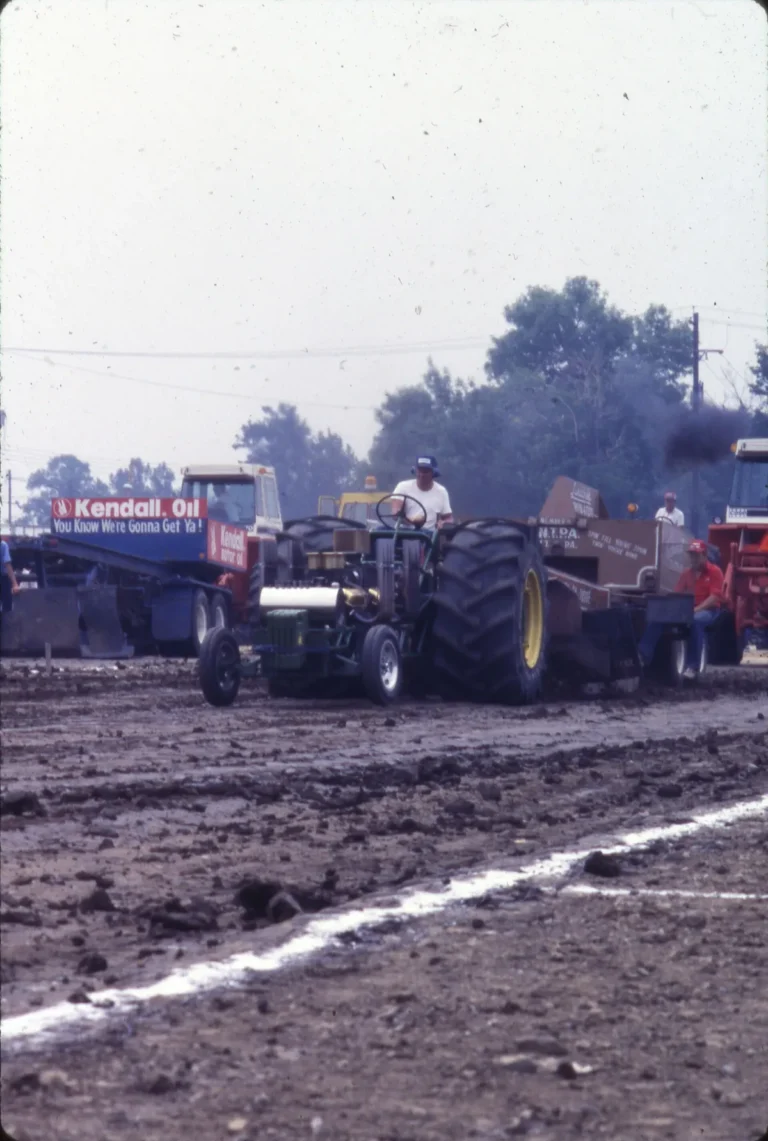
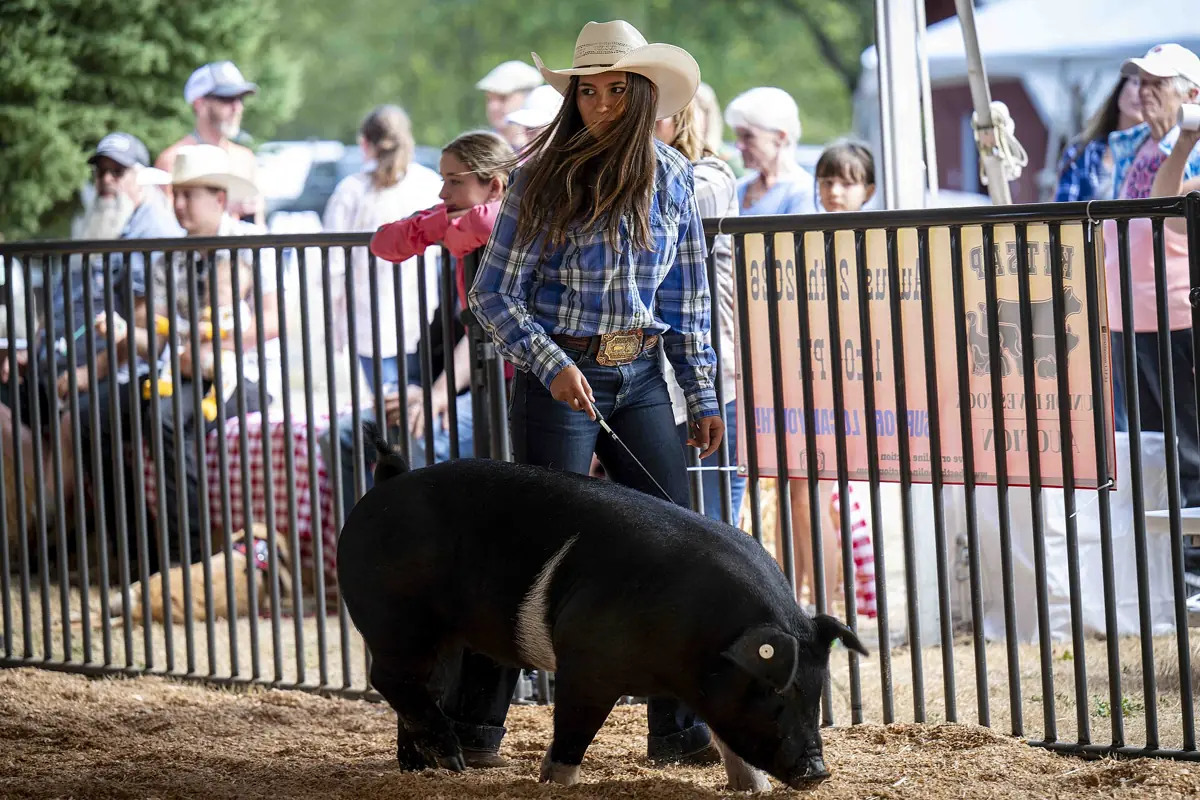
Expect the week to build in a fixed rhythm. The fair opens with judging of 4-H, FFA, and open-class static and animal projects, and officially opens on Thursday morning with livestock judging. Friday and Saturday belong to the two-day Junior Point Show, with hogs, sheep, lambs, goats, and cattle, drawing fifty to sixty competing families. Sunday belongs to the grandstand: a demolition derby in the afternoon, with up to forty vehicles, and a horse pull with small, medium, and large horses. The president’s derby crowd guess, fifteen hundred plus people, is for that event only, never the fair’s attendance.
A small carnival and neighbouring-county bands
Expect a contracted small carnival each year, with approximately ten to twelve rides for all ages, various games, and some food carts. Expect bands from neighbouring counties providing main-stage or bar-band music in the beer garden. Expect miscellaneous acts in booked rooms, racing pigs and axe throwing among them, and approximately ten to twelve outside food and commercial vendors, plus two indoor food vendors.
Planning Your Visit
Getting in
The fair’s own homepage, in its current unyeared layer, lists its ticket ladder as adults fifteen dollars, kids five dollars, and six and under free. That ladder may not be assigned to a named year or blended with any other year’s prices, and the layer does not state which ages the kids price covers beyond the six-and-under line. The gate model behind the ladder comes from the president’s 2025 testimony, fenced to that layer: admission is a one-time cost, so once you enter, the fair does not charge another fee to attend the concerts or special attractions. The testimony publishes no amount, and its model may never be used to price any year.
What exhibitors pay, and what they do not
Exhibitor entry fees must not be mistaken for gate prices. The fair’s own rules require fifteen dollars per animal per lot entered for horse, beef, and dairy exhibits, and ten dollars per animal per lot entered for sheep, swine, and goat exhibits. Those are exhibitor fees in the rules layer, undated on the page, never visitor prices. Open-class entries are open to anyone, and judges’ decisions are final.
The free supper, and the money that is not admission
On Thursday, for supper, the fair provides a free meal for the public, sponsored by local businesses but served by the fair board. That is a sponsored meal in the 2025 testimony layer, never free admission. Other money is likewise fenced away from admission: the carnival fee of twenty-five thousand dollars is a cost the fair pays, never a price charged to visitors; the society’s sixty-thousand-dollar resiliency grant in the 2025 state awards list is infrastructure money, never gate income; and a bid of around thirty-five thousand dollars for Exhibit Hall tin is a maintenance bid. None of these figures is a visitor price.
Where the fairgrounds are, and are not
The fairgrounds are the Bottineau County Fairgrounds in Bottineau. No street address for the fairgrounds is published in any fair-side layer fetched, and none is asserted here. The postal box in the fair’s own rules is the secretary’s entry-mailing address, never a grounds street address. The present fairgrounds are not the 1887 Camp Tyner site or the downtown businesses of the 1889 county fair.
A Sample Fair Week
Arrive on Thursday for the opening livestock judging and the free public supper. Spend Friday and Saturday at the Junior Point Show, watching hogs, sheep, lambs, goats, and cattle shown by the fifty to sixty families in the two-day competition, and catch the Parade of Champions, held Friday morning. Save Sunday for the grandstand demolition derby and the horse pull.
How This Fair Compares
Compared with the large state-fair model, Bottineau is small. Its carnival is contracted at roughly ten to twelve rides, not a midway of dozens. Its entertainment is bands from neighbouring counties and miscellaneous acts in booked rooms, not a headline concert series; no 2024 to 2026 lineup is published. Its judging is the spine of the week, with 4-H, FFA, and open-class exhibitors at the centre and the Junior Point Show as its competitive heart.
Planning Checklist
- Plan for June, usually the second week over Father’s Day weekend, and check the current edition’s dates before travelling
- Use the current site ladder, adults fifteen dollars, kids five dollars, six and under free, only as that layer’s prices
- Do not mistake exhibitor entry fees for visitor admission
- Arrive Thursday for the opening judging and free supper, and plan Friday and Saturday around the Junior Point Show
- Save Sunday afternoon for the demolition derby and the horse pull
- Do not look for a published fairgrounds street address, parking price, or season pass, since none is published
- Do not expect a pageant, fair queen, town parade, fireworks, or premium sale at the modern fair
Beyond the Fairgrounds
Bottineau itself is the county seat, and the fair week fills it. The Junior Point Show families camp, stay in hotels, eat at restaurants, and fuel their vehicles before leaving town, in the president’s 2025 account, and the town’s three hotels are normally at capacity in fair week. The president herself drove around the city camping site at the park during the fair and found all its spaces filled. That observation is recorded as observation: the testimony does not name the park, publish a camping fee, or offer fairgrounds camping, and the site may never be described as a fair camping product or identified as a named park on this evidence. The Exhibit Hall’s winter use as storage for camper units is off-season storage, never camping.
Why This Fair Matters
This fair matters because it is a working institution kept alive by a volunteer board in a small county seat, and because its record is unusually honest about its own messiness. The society has told the state legislature, in writing, how it pays its bills, how many families its Junior Point Show draws, what its buildings need, and what its gate model is. Its newspaper has told its history in dated detail, even where that detail contradicts the society’s testimony. A fair that publishes its conflicts and its deteriorating hall can be trusted on what it states plainly: it happens in June, in Bottineau, at the county fairgrounds, with judging, a Junior Point Show, a carnival, bands, and a Sunday derby and horse pull.
Frequently Asked Questions
Is the Bottineau County Fair free to enter?
No, not on any layer fetched. The fair’s own homepage, in its current unyeared layer, lists adults fifteen dollars, kids five dollars, and six and under free, and the president’s 2025 testimony describes a one-time gate cost covering attractions inside, without publishing an amount. The free Thursday supper is a sponsored meal, not free admission.
When is the Bottineau County Fair held?
In June, usually in the second week over Father’s Day weekend, in the president’s standing description. The most recent dated edition is June 18 to 21, 2026. Earlier dated layers differ by year. The fair is never held in August; every fair-side layer places it in June.
Who runs the Bottineau County Fair?
The Bottineau County Agricultural Society, a volunteer board of nine district members, with Joan Wettlaufer as president in the 2025 record. Bottineau County funds the fair in part, but none of the supporting bodies is the organiser.
Can visitors camp at the fairgrounds?
No fairgrounds camping offer is published in any layer fetched. The president’s 2025 testimony observes that a city park site fills during fair week, but that site is not named, no fee is published, and it is never a fair product.
What to Expect From the Next Bottineau County North Dakota Fair Festival
How often is Bottineau County North Dakota Fair Festival held?
Every year, in June, usually in the second week over Father’s Day weekend, in the president’s standing description. The week shape, Thursday opening, Friday and Saturday Junior Point Show, Sunday derby and horse pull, holds across the testimony and rules layers.
When is the next Bottineau County North Dakota Fair Festival?
The most recent dated edition in the record is June 18 to 21, 2026, and no later edition’s dates are published in any layer fetched. Readers planning ahead should watch for the fair’s own announcement for the next June edition.
Will the dates change?
Yes, within the June shape. The fair’s dated editions fall on different June weekends from year to year, June 12 to 15 in 2014, June 17 to 20 in the rules page’s 2021 layer, and June 18 to 21 in 2026. Each year’s announcement is the only safe guide to its exact days.
The Bottineau County Fair does not need a settled birthday to deserve a visit. It needs a June weekend, young exhibitors, and a demolition derby on Sunday afternoon.